
目录:
太长不看
味噌千万别煮沸,要在关火后加进去搅开,否则鲜味和营养都没了。买的时候注意选未经高温消毒的鲜味噌,不同颜色和原料的味道差很多。这种发酵糊状物在许多日本料理中都有使用。你可以在汤、酱料或作为蘸料中找到它。味噌在各种汤品中非常百搭,比如味噌汁或著名的拉面。在味噌拉面中,汤底是用大豆糊制作的。但也有许多其他种类的拉面会用到味噌。这种糊状物也适合作为蘸料。由于其高盐分含量,味噌保存性很好。因此,在制作味噌汁时,通常只需要用很少的咸味糊。
用味噌制作的料理
味噌非常百搭,在日本料理中占据核心地位。最著名的菜肴大概就是味噌汁,这道经典味噌汤几乎出现在每个日本早餐的餐桌上。搭配豆腐、裙带菜和青葱,是开始一天轻盈又营养的方式。喜欢面条的话,味噌拉面不可错过:其浓郁鲜美的汤底来自大量味噌糊,通常会与高汤混合。你可以在我的博客上找到一个简单的拉面食谱。
但味噌不局限于用来做汤。味噌黄瓜是一道清爽的小菜,用黄瓜条搭配味噌蘸酱。如果你喜欢吃鱼,不妨试试味噌奶油三文鱼,味噌糊能带来极佳的鲜味包裹。味噌还非常适合用在火锅(日本锅物)里,为汤底增添更多层次感。其他经典菜品还包括味噌田乐(烤豆腐或茄子刷上甜味噌酱)、猪肉味噌汤(蔬菜猪肉味噌汤)、以及像西京烧这类用味噌腌制的烤鱼。如果你对日本发酵感兴趣,味噌是探索这项神奇美食传统的绝佳起点。
重要烹饪提示:绝不能让味噌煮沸!
烹饪味噌时最重要的一点:千万不能让它煮沸!在制作味噌汁或其他菜肴时,一定要在最后再加入味噌糊,并立即将锅从火上移开。煮沸会损害味噌细腻的风味,以及其中宝贵的营养成分,尤其是未经加热的味噌里有益的酶类和益生菌。只需要把味噌糊搅入温热(但不沸腾)的液体中使之完全溶解即可。这样你既能得到满满的鲜味,也能保留所有健康益处。
味噌的种类变化
味噌根据其原料、颜色和风味可分为不同类别。基础原料总是大豆。豆味噌(豆味噌 = Mamemiso)只用大豆制作。米味噌(米味噌 = Komemiso)则会添加米,麦味噌(麦味噌 = Mugimiso)使用大麦。颜色上的差异主要取决于发酵时长。味噌可以储存多年,甚至几十年。唯重要的是要密封保存。要注意的一点:存储时间越长,味道越浓郁。
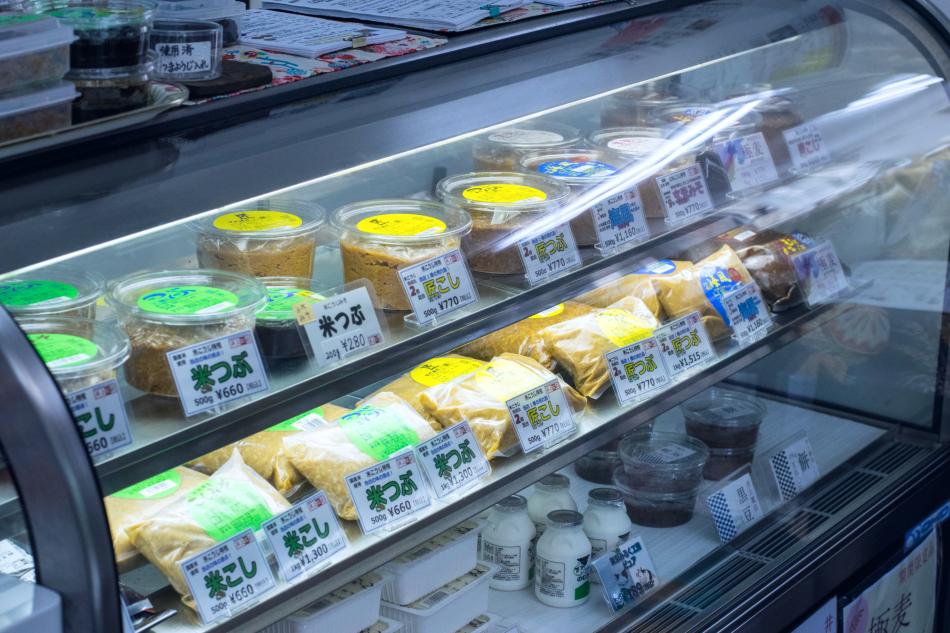
A refrigerated display case in a Japanese specialty shop, packed with tubs and bags of miso. Clear plastic containers sit on angled glass shelves under a bright strip of light, each topped with a hand-lettered price tag in Japanese. The labels distinguish varieties by their koji: rice koji (米こうじ) and barley koji (麦こうじ), with prices like ¥660 and ¥770 for 500-gram tubs and darker, pricier pastes on the upper shelves reaching over ¥1,800. The lower shelves hold soft pouches of pale yellow miso, some with green and yellow stickers, alongside small plastic bottles of a milky white drink and a few tubs of dark paste. The curved glass front reflects the light, giving the case the look of a deli counter, but everything inside is soybean paste in its many forms.
A refrigerated display case in a Japanese specialty shop, packed with tubs and bags of miso. Clear plastic containers sit on angled glass shelves under a bright strip of light, each topped with a hand-lettered price tag in Japanese. The labels distinguish varieties by their koji: rice koji (米こうじ) and barley koji (麦こうじ), with prices like ¥660 and ¥770 for 500-gram tubs and darker, pricier pastes on the upper shelves reaching over ¥1,800. The lower shelves hold soft pouches of pale yellow miso, some with green and yellow stickers, alongside small plastic bottles of a milky white drink and a few tubs of dark paste. The curved glass front reflects the light, giving the case the look of a deli counter, but everything inside is soybean paste in its many forms.
图片中的可见文字
味噌汁
米こうじ 500g ¥280
麹こし 500g ¥770
米こうじ 500g ¥770
米こうじ 500g ¥660
麹こうじ 500g ¥1,150
麹こし 500g ¥770
米こうじ 500g ¥1,300
米こうじ 500g ¥660
米こうじ 500g ¥770
麹こうじ 500g ¥1,150
豆
发酵初期,糊状物为白色,被称为白味噌(白味噌 = Shiro-Miso)。此时仍能品尝到大豆味道,风味较为中性。红味噌(赤味噌 = Aka-Miso)则属于中度发酵类型。发酵时间更长的味噌颜色会更深,风味更加浓烈。著名的例子有来自爱知的八丁味噌(八丁味噌 = Hatcho-Miso),至少要发酵两年。还有其他风味类型:辣味噌(辛味噌 = Kara-Miso)、甜味噌(甘味噌 = Ama-Miso),以及多种味噌混合的调和味噌(合わせ味噌 = Awase-Miso)。
味噌有多健康?
一般来说,味噌和所有发酵食品一样,非常健康。味噌糊含有丰富的维生素和营养,如蛋白质、维生素B2、维生素E、各种酶、异黄酮、胆碱、卵磷脂。但这只适用于新鲜味噌。由于味道会不断变化,新鲜味噌不适合超市销售。为防止这种情况,市售味噌通常会被加热杀菌。这样味噌不再继续发酵,也能保持较为恒定的风味。但在加热过程中,很多营养会流失。因此建议选择新鲜味噌。如果能买到,价格并不便宜,而且保质期短。开封后要尽快吃完,否则容易发霉。当然有时你可能正好想要更强烈的风味。
常见问题:关于味噌的FAQ
味噌是素食的吗? 是的,味噌本身是完全素食的,只由大豆、曲霉、盐以及有时的大米或大麦组成。但要注意部分现成味噌产品:有些专为味噌汁设计,已经添加了高汤(鱼汤)。所以如果你需要纯植物性产品,一定要仔细看成分表。
打开后的味噌能保存多久? 由于味噌含有高盐分,非常耐储。打开后放冰箱可以保存好几个月,有时甚至长达一年。每次取用请务必用干净的勺子,且要密封好。如果表面长了霉,务必丢弃。
味噌能冷冻吗? 味噌是可以冷冻的!因其含水量极低,冷冻后也不会变得非常硬,即使从冷冻室取出也能轻松分块。冷冻不仅能延长保质期,对未经加热的味噌来说,还能几乎完全中断发酵过程。如果想保留某种风味,冷冻是不错的选择。
工作坊:自己动手做味噌

Blocks of koji rice are stacked in neat rows behind the glass of a refrigerated display case. Each block is wrapped in plastic and looks like a dense, crumbly pale beige cake, with the fine fuzzy texture of mold-grown rice visible across the surface. Two rows of the cakes sit on white shelves, and a faint reflection in the glass shows the space in front of the case. A strip of Japanese labels runs along the bottom edge of the case. It reads as a shop or production setting in Japan where koji, the fermented rice used as the base for miso and other Japanese ferments, is sold by the block.
Blocks of koji rice are stacked in neat rows behind the glass of a refrigerated display case. Each block is wrapped in plastic and looks like a dense, crumbly pale beige cake, with the fine fuzzy texture of mold-grown rice visible across the surface. Two rows of the cakes sit on white shelves, and a faint reflection in the glass shows the space in front of the case. A strip of Japanese labels runs along the bottom edge of the case. It reads as a shop or production setting in Japan where koji, the fermented rice used as the base for miso and other Japanese ferments, is sold by the block.
图片中的可见文字
*No text is clearly readable in this image.*
在日本,烹饪课很常见。就连学校班级,也经常开设此类课程作为日常学习的调剂。参加味噌工作坊真的值得,毕竟这种人气糊状物的制作过程对大多数人都是陌生的。不需要自带材料或厨具,所有材料和工具都会提供。要注意的是:这些课程通常只用日语授课,因此最好具备一定的语言基础或使用翻译软件辅助。
有一点要提前告诉大家:这个工作坊的实际操作很辛苦,而且不能马上品尝成果。你的味噌糊至少半年,甚至一年后才能食用。
那么,下面来说说流程。首先将大豆用手搅成泥,然后搓成小团分层放入桶中。接着加入曲霉:正是这种霉才能让发酵发生。只有消费或加热杀菌时,霉菌的活动才会终止。之后加盐,这是味道和保存的重要保障。最后将桶密封起来。
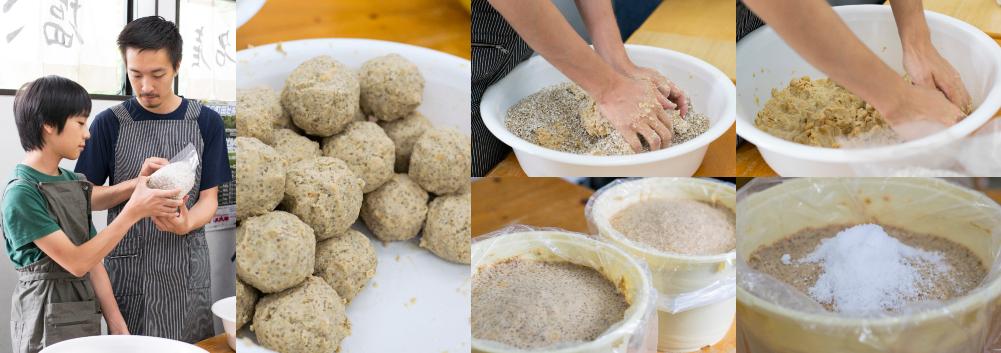
This collage shows a hands-on miso-making course in six photos. In the largest shot, a young man in a striped apron holds up a clear bag of koji rice while a boy in a green shirt and dark apron watches closely, both standing in a workshop with Japanese calligraphy on the wall behind them. The other panels follow the process. Hands knead a coarse, grainy mixture of mashed soybeans and koji in wide white basins, working it until it comes together. A bowl holds finished miso rolled into uniform round balls. The last two photos show the paste packed into plastic fermentation containers, smoothed down, sealed with plastic wrap, and topped with a mound of coarse white salt, ready for storage.
This collage shows a hands-on miso-making course in six photos. In the largest shot, a young man in a striped apron holds up a clear bag of koji rice while a boy in a green shirt and dark apron watches closely, both standing in a workshop with Japanese calligraphy on the wall behind them.
The other panels follow the process. Hands knead a coarse, grainy mixture of mashed soybeans and koji in wide white basins, working it until it comes together. A bowl holds finished miso rolled into uniform round balls. The last two photos show the paste packed into plastic fermentation containers, smoothed down, sealed with plastic wrap, and topped with a mound of coarse white salt, ready for storage.
图片中的可见文字
No clearly readable text.
接下来考验你的耐心:至少需要等六个月才能尝到自己做的味噌糊。在此期间它会被存放在地下仓库,常年保持低温环境。
工作坊结束后,还能短暂参观味噌工厂,那里的味噌是要对外销售的。你可以看到不同成熟阶段的糊状物。如果喜欢,还可以现场购买各种味噌制品,味道比超市的更浓郁更有层次。
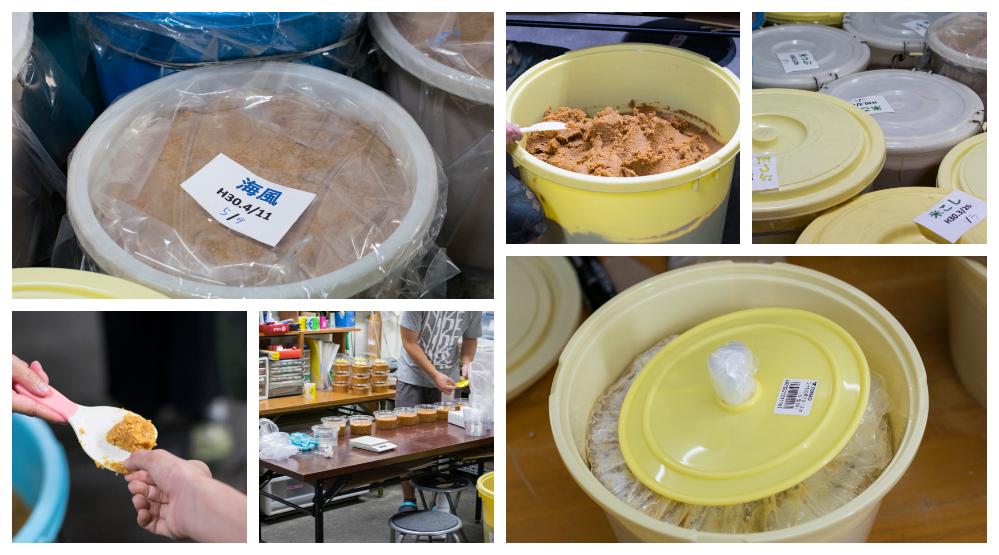
A six-photo collage from a miso workshop in Japan, built around big buckets of fermenting soybean paste. The largest frame shows an open white bucket packed with dense brown miso, its surface sealed under plastic wrap and marked with a handwritten Japanese label carrying a date. Next to it, rows of white and yellow lidded tubs hold other batches, one labeled in Japanese as rice koji. The remaining close-ups stay tight on the paste: a yellow bucket filled with smooth, caramel-colored miso with a small spoon resting in it, and a large yellow tub with its lid pushed aside to reveal plastic-wrapped miso inside. Two frames bring people in. One shows a hand offering a scoop of miso on a white spatula with a pink handle, held out over a blue bucket for a taste. In the other, a man in a gray t-shirt stands at a long table portioning miso into neat rows of small plastic containers, with shelves and a whiteboard behind him.
A six-photo collage from a miso workshop in Japan, built around big buckets of fermenting soybean paste. The largest frame shows an open white bucket packed with dense brown miso, its surface sealed under plastic wrap and marked with a handwritten Japanese label carrying a date. Next to it, rows of white and yellow lidded tubs hold other batches, one labeled in Japanese as rice koji. The remaining close-ups stay tight on the paste: a yellow bucket filled with smooth, caramel-colored miso with a small spoon resting in it, and a large yellow tub with its lid pushed aside to reveal plastic-wrapped miso inside.
Two frames bring people in. One shows a hand offering a scoop of miso on a white spatula with a pink handle, held out over a blue bucket for a taste. In the other, a man in a gray t-shirt stands at a long table portioning miso into neat rows of small plastic containers, with shelves and a whiteboard behind him.
图片中的可见文字
海風
H30.4.11
我对工作坊的感受:

A man and a woman stand behind a table, each holding up a small round container of miso paste toward the camera. The man on the left wears a dark top with a black shoulder bag across his chest and holds a container of pale yellow miso. The woman on the right wears a dark shirt under a light apron and presents a container of darker reddish-brown miso. On the table in front of them sit a few more containers, one holding what looks like miso mixed with other ingredients. Behind them, the wall is covered with printed posters carrying Japanese text, one with a bright green title, suggesting a workshop or classroom setting for a miso-making course.
A man and a woman stand behind a table, each holding up a small round container of miso paste toward the camera. The man on the left wears a dark top with a black shoulder bag across his chest and holds a container of pale yellow miso. The woman on the right wears a dark shirt under a light apron and presents a container of darker reddish-brown miso. On the table in front of them sit a few more containers, one holding what looks like miso mixed with other ingredients. Behind them, the wall is covered with printed posters carrying Japanese text, one with a bright green title, suggesting a workshop or classroom setting for a miso-making course.
图片中的可见文字
普通の我が家です
天然酵母パン教室
如果你对日本美食感兴趣,并且有机会参加此类味噌工作坊,一定要试试看。我之前真的没想到,一种看似普通的产品竟然背后有这么多工序。最有趣的是了解各种味噌的种类与分类方式。最重要的是,我们学到了怎样在料理时用味噌,让味噌变得真正美味。

评论
漂亮的文章。我自己做味噌,因为我附近买不到像样的味噌。自己动手制作,又是一次全新的体验,让我真正了解了味噌以及它的多样性。推荐给所有喜欢日本料理和美味风味的人。
嗨 Kilian, 听起来太棒了,快在我们的 Facebook 页面上分享一下你的成果吧 :) 祝好,Matthias
在用 Google 搜索味噌时偶然发现了你们的博客——非常有启发性 :-) 刚刚下单了你们的韩国书,十分期待!
Hallo Birgit, 太棒了,我们非常高兴,我们确实花了很多心思 :) 非常非常感谢您的支持。 此致敬礼,RyuKoch的Ryusei
非常详细的文章。 但是,例如在汤中煮味噌的时候,味噌里的乳酸菌会发生什么呢? 我对乳酸菌很感兴趣,但如果这些菌在加热时被破坏,那么味噌所承诺的效果就无法实现了。
Hallo Klaus, 首先非常感谢你的反馈,我们确实花了很多心思。 乳酸菌大多数情况下已经消失了。就像泡菜一样,味噌也会经过巴氏杀菌,也就是高温加热,这样可以防止发酵继续进行。好处是发酵不会继续,产品的口味也能保持一致。当然,问题在于这样会导致部分维生素和乳酸菌流失。 假设你拿到的味噌是未经过巴氏杀菌的,那么在做味噌汤(Miso Shiru)时,一定要最后才加入味噌。非常重要的一点是:汤必须已经停止沸腾几分钟了。这样味噌汤的温度已经降到70度以下,乳酸菌和维生素就能相对保存下来。其实我一般都推荐采用这种做法,因为这样味噌的香气和味道更能保留在汤里,而不是被煮掉。 味噌汤做法参考:https://ryukoch.com/de/rezepte/miso-shiru/ 希望这些内容对你有所帮助 :) 此致敬礼 RyuKoch的Ryusei