
目录:
太长不看
日本发酵不只是纳豆和味噌,它是一套让食材变出鲜味、酸味和保存力的传统手艺。其中米麹、麦麹这类麹是味噌、酱油、甘酒等很多发酵食品的共同起点。别把发酵食品当神奇保健品,它们只是风味丰富、钠可能偏高的日常食材,适量吃就好。发酵是日本料理中默默无闻的基础之一。早餐时,你会在natto中、在一碗miso汤中、在米饭旁的腌菜中,以及在那些让日常食物尝起来比配料表所暗示的更深邃的调味料中遇到它。它不是一种风味或一种产品。它是一系列技术,将大豆、大米、大麦、蔬菜和水果变成更具香气、鲜味、酸度或保存能力的食物。
在我看来,大约十年前,发酵在日常对话中变得不那么常见了。它从未从日本厨房中消失,但我现在通过注重健康的烹饪、专门店、品鉴会和工坊更多注意到它。这种重新受到关注是有益的,因为它帮助我们超越时尚的标签,理解为什么这些食物能在如此长的时间里一直是日常生活的一部分。
为什么发酵在日本料理中很重要
发酵始于经过精心管理的微生物作用于食物。在日本料理中,重要的类群包括koji霉菌、酵母、乳酸菌、natto细菌和醋酸菌。它们的作用可以保存食物,并产生氨基酸和其他能让风味更加复杂的化合物。Kōji(麹),即以Aspergillus oryzae(米曲霉)培养的大米、大麦或大豆,尤其对miso、shoyu、mirin和sake至关重要。[1]

The image shows a close-up view of a refrigerated display case in a Japanese food shop, filled with neatly stacked packages of koji (fermented grain used for making miso, amazake, and other fermented foods). No people are visible; the frame is entirely occupied by the merchandise. Main content and arrangement The display consists of rectangular, vacuum-sealed blocks of grain, each wrapped in clear plastic and labeled with a white sticker. They are arranged in roughly vertical columns, with the color of the grain changing from left to right: Left columns: pale, whitish packages labeled “米こうじ” (rice koji). Several packages in this section are stacked about four to five high. Center columns: slightly darker, tan-colored packages labeled “麦こうじ” (barley koji). Right columns: darker brown packages labeled “玄米こうじ” (brown rice koji). Each label contains Japanese text including the product name, what appears to be production date information (for example, "20.9.8" can be read on some labels), producer and origin details, a barcode, and small red stamps or markings. The labels on the front-facing packages in the lower left indicate a 500 g weight. Signage and pricing Two printed signs are visible at the top of the display: A black sign on the upper left with red and white text advertising rice, barley, and brown rice koji (“米・麦 玄米”) at "500g ¥1,000 (税込)", meaning 500 g for 1,000 yen tax included. A white sign at the upper right with similar pricing ("¥1,000(税込)") and the text “香川こづち” plus “いつでも米・麦 玄米”. The word “香川” (Kagawa) suggests the product or shop may be associated with Kagawa Prefecture, though this is an inference from the text rather than a confirmed location. Other visible elements Near the top center-left there is a round analog dial, likely a temperature gauge for the refrigerated case, with small colored markings around its edge. The right edge of the frame shows additional products partially cut off: a dark packaged item with Japanese characters (possibly miso or another fermented product, with text resembling “田舎...” which often refers to "country-style" miso), and a label that appears to include “醤油こうじ” (soy sauce koji), suggesting the shop sells other koji-based items. A sheet of clear plastic film or wrap covers part of the display, creating bright diagonal reflections and glare across the middle and lower portions of the image, which slightly obscures some packages. Lighting and composition The scene is brightly lit with cool, typical supermarket-style lighting. The camera angle is straight on or slightly from above, and the products fill the entire frame. The overall impression is of a specialty or health-food store section dedicated to koji for home fermentation use.
The image shows a close-up view of a refrigerated display case in a Japanese food shop, filled with neatly stacked packages of koji (fermented grain used for making miso, amazake, and other fermented foods). No people are visible; the frame is entirely occupied by the merchandise.
Main content and arrangement
The display consists of rectangular, vacuum-sealed blocks of grain, each wrapped in clear plastic and labeled with a white sticker. They are arranged in roughly vertical columns, with the color of the grain changing from left to right:
- Left columns: pale, whitish packages labeled “米こうじ” (rice koji). Several packages in this section are stacked about four to five high.
- Center columns: slightly darker, tan-colored packages labeled “麦こうじ” (barley koji).
- Right columns: darker brown packages labeled “玄米こうじ” (brown rice koji).
Each label contains Japanese text including the product name, what appears to be production date information (for example, "20.9.8" can be read on some labels), producer and origin details, a barcode, and small red stamps or markings. The labels on the front-facing packages in the lower left indicate a 500 g weight.
Signage and pricing
Two printed signs are visible at the top of the display:
- A black sign on the upper left with red and white text advertising rice, barley, and brown rice koji (“米・麦 玄米”) at "500g ¥1,000 (税込)", meaning 500 g for 1,000 yen tax included.
- A white sign at the upper right with similar pricing ("¥1,000(税込)") and the text “香川こづち” plus “いつでも米・麦 玄米”. The word “香川” (Kagawa) suggests the product or shop may be associated with Kagawa Prefecture, though this is an inference from the text rather than a confirmed location.
Other visible elements
- Near the top center-left there is a round analog dial, likely a temperature gauge for the refrigerated case, with small colored markings around its edge.
- The right edge of the frame shows additional products partially cut off: a dark packaged item with Japanese characters (possibly miso or another fermented product, with text resembling “田舎...” which often refers to "country-style" miso), and a label that appears to include “醤油こうじ” (soy sauce koji), suggesting the shop sells other koji-based items.
- A sheet of clear plastic film or wrap covers part of the display, creating bright diagonal reflections and glare across the middle and lower portions of the image, which slightly obscures some packages.
Lighting and composition
The scene is brightly lit with cool, typical supermarket-style lighting. The camera angle is straight on or slightly from above, and the products fill the entire frame. The overall impression is of a specialty or health-food store section dedicated to koji for home fermentation use.
图片中的可见文字
**価格札(中央上)**
自家製米こうじ
米 麹
500g ¥1,000(税込)
**価格札(右上)**
自家製米こうじ 契約ならんで `[uncertain: 契約ならんで]`
米・麦 玄米
100g ¥1,000(税込) `[uncertain: 100g ¥1,000]`
**計器(左上・文字盤の数字)**
50 40 30 20
**各パッケージのラベル(繰り返し)**
左の列(上から下へ):
- 米こうじ
- 米こうじ
- 米こうじ
- 米こうじ
- 米こうじ
- 米こうじ
- 米こうじ
- 米こうじ
第2列(上から下へ):
- 米こうじ
- 米こうじ
- 米こうじ
- 米こうじ
- 米こうじ
- 米こうじ
- 米こうじ
第3列(上から下へ):
- 米こうじ
- 米こうじ
- 麦こうじ
- 麦こうじ
- 米こうじ
- 麦こうじ
- 麦こうじ
第4列(上から下へ):
- 麦こうじ
- 麦こうじ
- 麦こうじ
- 麦こうじ
第5列(上から下へ):
- 玄米こうじ
- 玄米こうじ
- 玄米こうじ
- 玄米こうじ
- 玄米こうじ
右上(上から下へ):
- 麦こうじ
- 玄米こうじ
- 麦こうじ
**ラベルの小さな印字(読み取れる部分のみ)**
品名:米麹(米) 内容量:500g
原材料名:米(国産) `[uncertain: 原材料名:米(国産)]`
栄養成分表示(100g当たり) `[uncertain]`
2 9 8.04.12 12時まで `[uncertain: 2 9 8.04.12]`
賞味期限 `[uncertain]`
TEL `[uncertain: 0942-**-****]`
**右端の商品ラベル**
万能調味料
醤油こうじ
塩 `[uncertain]`
ゆきんこ娘 `[uncertain: ゆきんこ娘]`
田舎みそ `[uncertain: 田舎みそ]`
**右端の縦書き文字**
逸 `[unreadable]`
か `[uncertain: か]`
日本温暖潮湿的气候帮助许多地区性发酵传统发展起来,但仅有气候并不能解释一切。人们经过一代又一代人改良了配方、盐度、容器和熟成时间。这就是为什么甜味的白miso、深色的豆miso、辛辣的米糠腌菜和精致的sake都可以属于日本发酵食品,而味道却截然不同。
发酵食品可以成为整体均衡饮食中宝贵的一部分,但它们不是神奇的药物。MAFF讨论的研究表明,传统的日本发酵食品可能有助于新陈代谢和肠道环境,但每个人的反应不同,其余饮食也很重要。盐也很重要:miso、tsukemono和umeboshi的钠含量可能很高,所以我把它们视为多样化膳食中风味丰富的组成部分,而不是可以无限吃的东西。[2]
Koji:miso、amazake以及更多食品背后的安静起点
Kōji不是一种成品或一种风味。它是用kōji霉菌培养的谷物或豆类,它为生产者提供了让日本发酵如此多才多艺的酶。在商店里,你可能会看到kome kōji(米麹),用精白米制成;genmai kōji(玄米麹),就是用整粒糙米制成的糙米kōji;还有mugi kōji(麦麹),用大麦制成。在miso生产中,米、大麦和大豆kōji是经典基础,每种都会改变最终的香气、甜度和深度。[3]
品尝kōji最友好的方式之一是kome kōji amazake(米麹甘酒),一种由大米和米kōji制成的甜饮料。它与用酒糟(sake kasu(酒粕))制成的amazake不同,所以值得阅读标签,而不是假设每瓶都一样。[4]
我觉得特别令人兴奋的是这种原料能走多远。Kōji现在在日本以外也被探索,包括在高级餐厅厨房中,用于腌料、酱汁、腌制和新的富含鲜味的调味品。这种现代创意仍然始于你在日本小型miso店里看到的同样的耐心培养。[5]
发酵、腌渍,但并不总是一回事
这个区别值得说明,因为英语单词“pickle”可能掩盖很多东西。Tsukemono(漬物)的意思是腌渍的东西,通常是蔬菜,但并非每种tsukemono都经过主动发酵。用醋快速腌制的黄瓜仍然是tsukemono。相比之下,nukazuke(ぬか漬け)在活米糠床中静置,乳酸发酵是这个过程的一部分。[6]
一个非常具有日本特色的细节是,找到nukadoko(ぬか床)——米糠床——的基底是多么容易。当糙米(genmai(玄米))在投币式精米机(koin seimaiki(コイン精米機))中被碾磨成白米时,会产生kome nuka(米ぬか),即米糠。这不是momigara(もみ殻),即外面的稻壳。在某些机器旁或附近的米店,一容器米糠被标明可以免费带回家,这对于开始制作nukadoko来说非常完美。一定要先检查标志或询问,因为收集规则因地点而异。MAFF将米糠认定为碾磨糙米的营养丰富的副产品,也是nukazuke的基础。[7] 例如,一个JA分支机构明确在其投币式精米机旁提供免费米糠。[8]
同样的实用方法也适用于其他地方。Shiozuke使用盐,suzuke使用醋,kasuzuke使用酒糟,shoyuzuke使用酱油,karashizuke使用芥末。有些方法会随着时间推移促进发酵,而其他方法主要关乎调味和保存。了解这些区别会让日本早餐托盘或超市货架更容易看懂。
| 方法 | 日语术语 | 典型基底 | 会发生什么 |
|---|---|---|---|
| Kōji发酵 | 麹, kōji | 大米、大麦或大豆 | 经过管理的培养和熟成,为miso、sake、shoyu等奠定基础。 |
| 米糠腌渍 | ぬか漬け, nukazuke | 蔬菜和米糠床 | 活性nukadoko可以产生乳酸发酵。 |
| 盐腌 | 塩漬け, shiozuke | 蔬菜和盐 | 盐析出水分并保存;发酵可能发生,但不能保证。 |
| 醋腌 | 酢漬け, suzuke | 蔬菜和醋 | 通常用于快速腌渍和调味,而非主动发酵。 |
| 酒糟腌渍 | 粕漬け, kasuzuke | 蔬菜或鱼与酒糟 | 使用发酵原料,尽管腌渍步骤本身不一定是主动发酵。 |
| 酱油腌渍 | 醤油漬け, shoyuzuke | 蔬菜或海鲜与shoyu | 通常是一种借用shoyu发酵深度的调味和保存方法。 |
你最常遇到的日本发酵食品
你可以列一个很长的清单,但这些是大多数游客最先注意到的食品和调味料。把这当作一张地图,而不是它们各自故事的替代品。
Miso
Miso(味噌)是发酵大豆酱,通常由大豆、盐以及米、大麦或大豆koji制成。它是汤、腌料、淋酱和许多家常菜中默默无闻的主心骨。确切的原料和熟成时间会改变它的颜色、咸度、甜度和深度。我详细的miso指南解释了各种类型及其使用方法。
大多数日常miso是为了稳定储存而制作的,通常经过热处理以停止进一步活动并保持风味一致。未经加热的,通常标有nama miso(生味噌),仍然是一个小众的专业品类。它可能会继续发展香气,需要更小心地冷藏保存。品尝它很有趣,但它并不自动“更好”或是一种健康疗法。我会为了它活泼、不断演变的风味以及与其他miso比较的体验而选择它。
如果你在东京,想亲身体验而不是仅仅阅读,我可以在我的东京Miso之旅中加入这种比较。视可用性而定,我们可以参观专门店、比较不同风格、品尝miso菜肴,或参加动手工坊。东京的专门店确实提供需要预约的miso工坊,所以这是这座城市饮食文化中真实的一部分,而不是虚构的旅游活动。[9]
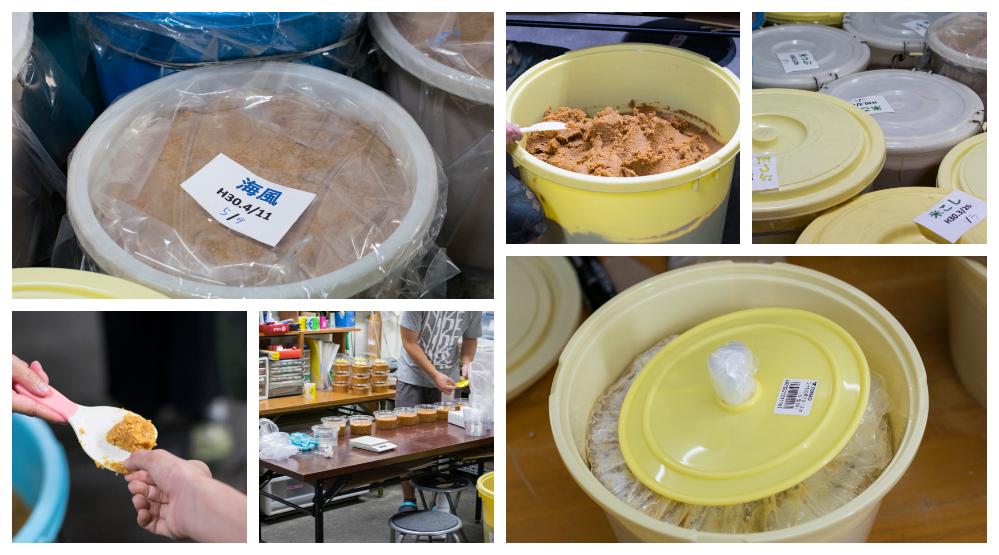
A six-photo collage from a miso workshop in Japan, built around big buckets of fermenting soybean paste. The largest frame shows an open white bucket packed with dense brown miso, its surface sealed under plastic wrap and marked with a handwritten Japanese label carrying a date. Next to it, rows of white and yellow lidded tubs hold other batches, one labeled in Japanese as rice koji. The remaining close-ups stay tight on the paste: a yellow bucket filled with smooth, caramel-colored miso with a small spoon resting in it, and a large yellow tub with its lid pushed aside to reveal plastic-wrapped miso inside. Two frames bring people in. One shows a hand offering a scoop of miso on a white spatula with a pink handle, held out over a blue bucket for a taste. In the other, a man in a gray t-shirt stands at a long table portioning miso into neat rows of small plastic containers, with shelves and a whiteboard behind him.
A six-photo collage from a miso workshop in Japan, built around big buckets of fermenting soybean paste. The largest frame shows an open white bucket packed with dense brown miso, its surface sealed under plastic wrap and marked with a handwritten Japanese label carrying a date. Next to it, rows of white and yellow lidded tubs hold other batches, one labeled in Japanese as rice koji. The remaining close-ups stay tight on the paste: a yellow bucket filled with smooth, caramel-colored miso with a small spoon resting in it, and a large yellow tub with its lid pushed aside to reveal plastic-wrapped miso inside.
Two frames bring people in. One shows a hand offering a scoop of miso on a white spatula with a pink handle, held out over a blue bucket for a taste. In the other, a man in a gray t-shirt stands at a long table portioning miso into neat rows of small plastic containers, with shelves and a whiteboard behind him.
图片中的可见文字
海風
H30.4.11
Natto
Natto(納豆)是通过用natto细菌发酵煮熟的大豆制成的。黏稠的丝状物、刺鼻的香气和咸鲜的味道起初可能令人惊讶,但对于许多人来说,它是熟悉的早餐伴侣,通常搭配热米饭、芥末、酱油和葱花食用。如果你好奇,我的natto文章给了你一个实用的初次尝试,而不会假装每个人都会立刻爱上它。

The image shows a Japanese home-cooked meal arranged on a table covered with a white tablecloth featuring a light orange/beige plaid (checkered) pattern. The photo is taken from above at a slight angle, and several dishes partially enter the frame, suggesting a shared family-style meal. Main subject (center): A round ceramic bowl, cream-colored with irregular green brushstroke bands around the rim and inner wall, filled with what appears to be natto (fermented soybeans). The beans are glossy, amber-brown, and sticky-looking, mixed with plenty of chopped green onion and a light brown seasoning sauce. A spoon or small spatula with a bright pink handle and a flat metal end rests in the bowl, angled toward the upper right. Some sauce smears are visible on the inner sides of the bowl. Surrounding dishes: Upper right: A white bowl containing a simmered dish (likely nimono), with chunky pieces of potato, orange carrot slices, and what appears to be meat, all in a glossy brown broth. Upper left: A small plate with a traditional blue-and-white floral arabesque-style pattern, on which a pair of chopsticks rests. The chopstick tops are decorated with blue and white designs. Left of center: A small white plate with concentric brown rings near its rim, mostly empty, with a few small food crumbs on it. Bottom right corner: A partially visible plate, white with a yellow floral motif near the edge, holding pale sliced pieces that could be potato, sausage, or a similar ingredient (not clearly identifiable). Lighting and atmosphere: The scene is lit with warm indoor lighting, giving the food a homey, casual appearance. No people, text, or brand names are visible. The overall impression is of a typical Japanese weekday dinner, with the seasoned natto bowl as the focal point of the photograph.
The image shows a Japanese home-cooked meal arranged on a table covered with a white tablecloth featuring a light orange/beige plaid (checkered) pattern. The photo is taken from above at a slight angle, and several dishes partially enter the frame, suggesting a shared family-style meal.
Main subject (center): A round ceramic bowl, cream-colored with irregular green brushstroke bands around the rim and inner wall, filled with what appears to be natto (fermented soybeans). The beans are glossy, amber-brown, and sticky-looking, mixed with plenty of chopped green onion and a light brown seasoning sauce. A spoon or small spatula with a bright pink handle and a flat metal end rests in the bowl, angled toward the upper right. Some sauce smears are visible on the inner sides of the bowl.
Surrounding dishes:
- Upper right: A white bowl containing a simmered dish (likely nimono), with chunky pieces of potato, orange carrot slices, and what appears to be meat, all in a glossy brown broth.
- Upper left: A small plate with a traditional blue-and-white floral arabesque-style pattern, on which a pair of chopsticks rests. The chopstick tops are decorated with blue and white designs.
- Left of center: A small white plate with concentric brown rings near its rim, mostly empty, with a few small food crumbs on it.
- Bottom right corner: A partially visible plate, white with a yellow floral motif near the edge, holding pale sliced pieces that could be potato, sausage, or a similar ingredient (not clearly identifiable).
Lighting and atmosphere: The scene is lit with warm indoor lighting, giving the food a homey, casual appearance. No people, text, or brand names are visible. The overall impression is of a typical Japanese weekday dinner, with the seasoned natto bowl as the focal point of the photograph.
图片中的可见文字
No visible text found in the image.

The image shows retail packages of what appears to be a Japanese natto (fermented soybean) making kit, displayed for sale in a shallow round basket made of woven bamboo. The photo is taken from above at a slight angle, showing about eight to ten identical clear plastic bags arranged loosely in the tray. The packages Each bag contains two long bundles of dried rice straw bound with thin purple bands, and beside them a column of small, round, light-tan soybeans is visible through the plastic. The straw-and-beans arrangement suggests the straw serves as the traditional fermenting medium, consistent with a homemade natto kit rather than ready-to-eat natto. Labeling (visible Japanese text) A large pink circular sticker with a dotted pattern sits on the front of each package, with prominent white characters reading "納笑豆", a wordplay combining 納豆 (natto) with 笑 (smile/laugh). Around the circle, smaller text reads 手作りキット (handmade kit), 信州産大豆から (from Shinshu-grown soybeans), and 発酵おうち時間 (fermenting at home / at-home fermentation time). A small cream-colored vertical tag on the bags reads 信州産 ナカカセンナリ, apparently identifying the soybean variety (Nakakasennari) and its Shinshu (Nagano) origin. Each bag also carries a small white sticker shaped like a map outline; text on it appears to include 長野県 (Nagano Prefecture), suggesting the map depicts Nagano. One package shows partially visible vertical bullet-point text (including fragments such as 天然の..., 糸引き..., 味..., 市販...), likely describing product features, and a line near the bottom reads 美しい納豆の作り方はこちら ("for how to make beautiful natto, see here"), pointing to instructions. Setting and composition The basket sits on a surface covered with green artificial turf-like material, and a light wooden frame or box edge is visible in the background at the top. Bright indoor lighting creates strong white reflections on the crinkled plastic wrap. The pink circular labels are the most visually striking element, standing out against the natural beige tones of the straw, soybeans, and bamboo basket. Overall, the image conveys a specialty or regional food product: a do-it-yourself natto fermentation kit made with Shinshu (Nagano-grown) soybeans and rice straw, presented as an attractive artisanal item. This aligns with the stated context of a blog about Japanese fermentation culture, though that context is not itself printed in the image.
The image shows retail packages of what appears to be a Japanese natto (fermented soybean) making kit, displayed for sale in a shallow round basket made of woven bamboo. The photo is taken from above at a slight angle, showing about eight to ten identical clear plastic bags arranged loosely in the tray.
The packages
Each bag contains two long bundles of dried rice straw bound with thin purple bands, and beside them a column of small, round, light-tan soybeans is visible through the plastic. The straw-and-beans arrangement suggests the straw serves as the traditional fermenting medium, consistent with a homemade natto kit rather than ready-to-eat natto.
Labeling (visible Japanese text)
- A large pink circular sticker with a dotted pattern sits on the front of each package, with prominent white characters reading "納笑豆", a wordplay combining 納豆 (natto) with 笑 (smile/laugh).
- Around the circle, smaller text reads 手作りキット (handmade kit), 信州産大豆から (from Shinshu-grown soybeans), and 発酵おうち時間 (fermenting at home / at-home fermentation time).
- A small cream-colored vertical tag on the bags reads 信州産 ナカカセンナリ, apparently identifying the soybean variety (Nakakasennari) and its Shinshu (Nagano) origin.
- Each bag also carries a small white sticker shaped like a map outline; text on it appears to include 長野県 (Nagano Prefecture), suggesting the map depicts Nagano.
- One package shows partially visible vertical bullet-point text (including fragments such as 天然の..., 糸引き..., 味..., 市販...), likely describing product features, and a line near the bottom reads 美しい納豆の作り方はこちら ("for how to make beautiful natto, see here"), pointing to instructions.
Setting and composition
The basket sits on a surface covered with green artificial turf-like material, and a light wooden frame or box edge is visible in the background at the top. Bright indoor lighting creates strong white reflections on the crinkled plastic wrap. The pink circular labels are the most visually striking element, standing out against the natural beige tones of the straw, soybeans, and bamboo basket.
Overall, the image conveys a specialty or regional food product: a do-it-yourself natto fermentation kit made with Shinshu (Nagano-grown) soybeans and rice straw, presented as an attractive artisanal item. This aligns with the stated context of a blog about Japanese fermentation culture, though that context is not itself printed in the image.
图片中的可见文字
**中央のパッケージ(本体ラベル):**
納笑つと豆
「手作りキット」
信州産
稲わら
発酵おうち時間
(わらに付けられた札:)
信州産
ナカセンナリ
**パッケージ裏面のグレー部分(一部見えているテキスト):**
天然の
●糸引
●味 [unreadable]
ロの [uncertain: 口の]
市販
ご [unreadable]
○ [unreadable]
○ [unreadable]
○ [unreadable]
○ [unreadable]
**パッケージ下部のテキスト:**
笑つと納豆の作り方はこちら
**地図ステッカー(長野県の形):**
長野県
信州 [uncertain]
**左側のパッケージ(一部見えている部分):**
納 [unreadable]
発酵お [uncertain: 発酵おうち時間]
[unreadable]ち [uncertain]
時 [uncertain]
(わらに付けられた札:)
信州産
ナカセンナリ
**右上のパッケージ(一部見えているラベル):**
納笑
つと [uncertain]
[unreadable]
Tsukemono and Takuan
Tsukemono涵盖了日本腌菜的广阔世界。它们为米饭、烤鱼或套餐增添对比:咸味、脆感、酸度、颜色,以及每一口之间的清爽重置。Takuan(沢庵)是你经常在寿司或米饭旁看到的亮黄色腌萝卜。它属于更大的tsukemono家族,但它足够常见,值得拥有自己的takuan指南。
Umeboshi
Umeboshi(梅干し)是盐腌的ume果实,极其酸咸,经常被塞进onigiri中或与米饭一起食用。它的红色通常来自shiso。它是那种能迅速展示日本发酵和保存如何在极小分量中产生强大力量的食物之一。关于储存、风味以及实际吃法,请参阅我的umeboshi文章。
Sake、shoyu、mirin和其他日常调味料
发酵在盘面上不明显时也存在。Sake(日本酒)使用大米、水、酵母和koji,而shoyu(醤油)和mirin(みりん)为烹饪带来咸味、甜味、香气和鲜味。Sake是酒精,不是健康食品,所以我把它当作需要负责任地享受的东西。如果你想了解更完整的故事,请从我的sake指南和mirin指南开始。
Shiokara
Shiokara(塩辛)是同一保存传统中一个刻意具有挑战性的例子:海鲜,通常包括腌制和发酵的内脏,具有强烈的香气和浓缩的咸鲜味。通常与米饭一起少量食用,或作为下酒菜。你不需要喜欢它,也能理解它为什么属于日本发酵的更广泛故事。[10]
Imojōchū
Imojōchū(芋焼酎)是一种由红薯制成的蒸馏酒,生产过程中通常使用koji。它不是sake,其更强、更朴实的特征使得当你在酒单上同时看到两者时,值得记住这一区别。与sake一样,享受它的风味和文化,而不是作为健康产品。
在日常生活中尝试日本发酵
从小处开始,选择一个有意义的场景。点一份包含miso汤和tsukemono的套餐,早餐尝试一小份natto配米饭,或者买几包不同的miso,用同样的简单汤底和dashi进行对比。从这种并排品尝中学到的东西会比背诵术语更多。
一个好的日本超市是最容易开始的地方之一。在冷藏区比较miso,拿起一小包natto,看看tsukemono的标签。如果你对非加热miso特别感兴趣,请寻找nama(生)字样,然后阅读储存说明,而不是仅仅依赖一个词。冷藏产品、短保质期以及关于继续熟成的说明都是有用的线索。
如果你更喜欢在有背景的情况下品尝,参观生产者会让差异更加清晰。在东京及其周边,我的东京Miso之旅可以根据可用性包括专门店、对比不同miso风格、miso菜肴或工坊。埼玉Shoyu之旅从另一个角度遵循同样的思路:kōji、盐、大豆、小麦和时间如何成为你每天使用的调味料。如果你正在管理钠摄入量、过敏、孕期相关饮食建议或药物,请检查标签并遵循合格健康专业人士的建议。
最好的切入点是你真正会经常享受的那个。日本的发酵不仅仅是找到最浓烈的natto或最稀有的miso。它在于注意一勺酱、一小块腌菜或一点shoyu如何改变一顿普通的饭。你最喜欢的日本发酵食品是什么?在评论中告诉我。
参考来源:
- 农林水产省:日本发酵的世界(日文): https://www.maff.go.jp/j/pr/aff/2211/spe1_01.html...
- MAFF关于发酵、健康与个体差异的访谈(日文): https://www.maff.go.jp/j/pr/aff/2211/spe1_01.html...
- MAFF关于miso和shoyu原料的指南(日文): https://www.maff.go.jp/j/keikaku/syokubunka/tradit...
- MAFF对日本传统饮料的介绍: https://www.maff.go.jp/e/policies/market/dento_syo...
- El País关于kōji在当代国际烹饪中的应用(西班牙语): https://elpais.com/gastronomia/2025-07-22/el-koji-...
- MAFF关于发酵米糠腌菜的指南(日文): https://www.maff.go.jp/j/heya/kodomo_sodan/0102/04...
- MAFF关于tsukemono的传统食品指南(日文): https://www.maff.go.jp/j/keikaku/syokubunka/tradit...
- JA Asaka-no投币式精米机通知(日文): https://www.ja-asakano.or.jp/archives/2794...
- Sano Miso工坊信息(日文): https://sanomiso.com/workshop/...
- MAFF对日本发酵食品的介绍(PDF,英文): https://www.maff.go.jp/j/keikaku/syokubunka/tradit...
评论
你好,请问在法国的亚洲杂货店能找到KOJI吗,谢谢
你好,Marie, 我对法国的亚洲杂货店不太了解,所以无法回答你的问题。 祝好,Ryusei