目录:
日本的饮食文化是世界上最为多样化的之一。它享誉全球,被认为极其健康且美味。在世界各地,尤其是欧洲和美国,许多餐厅都成功地专注于这种独特的饮食方式。然而,日本美食能够传入我们身边,这一历程却持续了数十年。
这门料理是如何传到我们这里的?
其中最有趣的是,传统的日本料理经历了怎样的发展路径,受到了哪些影响,才成就了我们今天所熟知的模样。
简短历史小课堂:
16世纪时,日本与西方世界有过多次接触,尤其是与荷兰、葡萄牙和西班牙。不过,由于西方国家被视为殖民强国和潜在敌人,双方之间未能建立长久的关系。只有荷兰人成功维系了联系,最终在接下来的两百年内,成为日本与西方世界(及其饮食文化)唯一的接触点。
直到19世纪,随着日本被迫开放国门并签署所谓“不平等条约”,局势发生了变化。这些条约迫使日本向美国、英国、法国和俄罗斯等经济强国开放港口,允许它们与日本进行贸易。自此,世界才更多地接触到了日本文化和日本料理。
19世纪末,一批日本移民开始移居美国。这些人在大城市定居,也让寿司在美国逐渐为人熟知。例如,1972年,纽约市哈佛俱乐部(Harvard Club)开设了一家寿司吧,《纽约时报》 对此进行了深入报道 。 这一浪潮开启了日本料理在世界范围内如今日我们所熟知并喜爱的风靡之路。
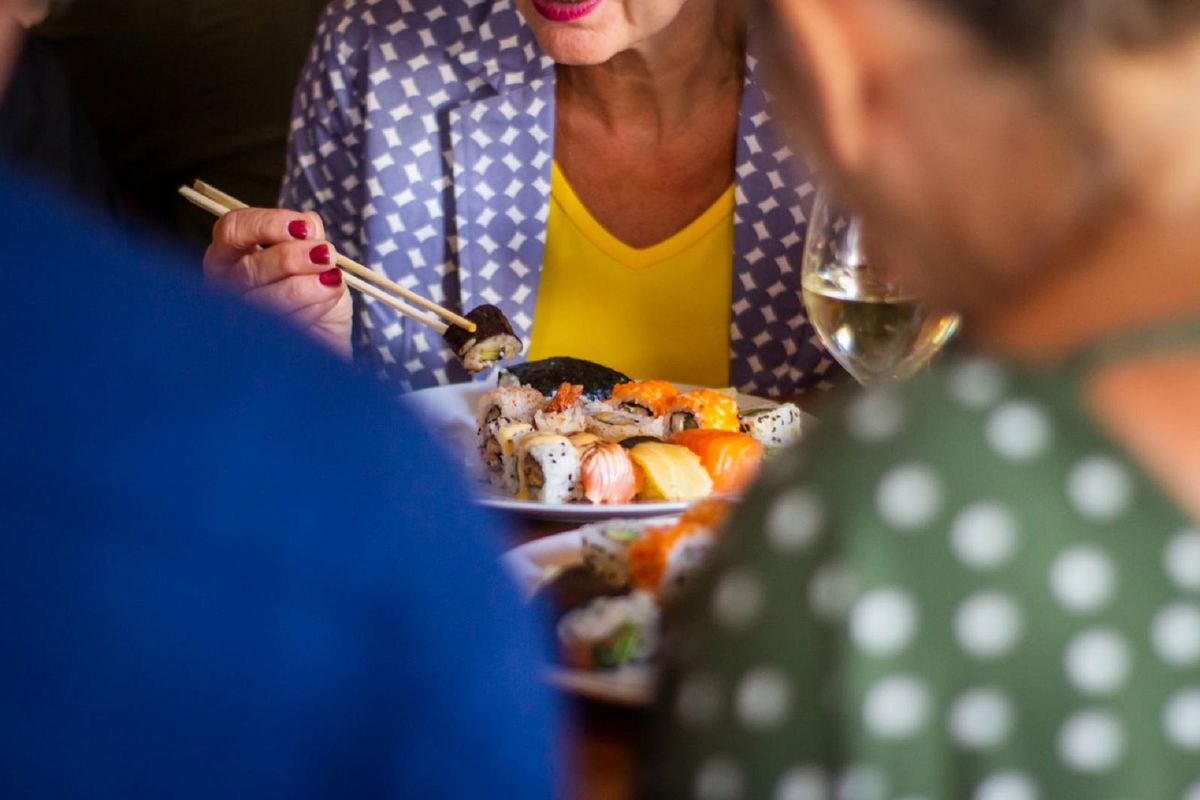
A plate piled with sushi takes center stage as three people share a meal around a table. The woman at the center, seen from the chin down, wears a yellow top under a blue and white patterned jacket and lifts a piece of maki with her chopsticks, a second roll held in her red polished fingers. The platter in front of her is packed with variety: rolls topped with bright orange fish roe, nigiri with salmon and shrimp, and a piece wrapped in dark nori. A glass of white wine stands beside it. The shoulders of two dining companions fill the foreground in soft blur, one in blue and one in green polka dots, keeping the focus on the food and the mid-bite moment at its center.
A plate piled with sushi takes center stage as three people share a meal around a table. The woman at the center, seen from the chin down, wears a yellow top under a blue and white patterned jacket and lifts a piece of maki with her chopsticks, a second roll held in her red polished fingers. The platter in front of her is packed with variety: rolls topped with bright orange fish roe, nigiri with salmon and shrimp, and a piece wrapped in dark nori. A glass of white wine stands beside it. The shoulders of two dining companions fill the foreground in soft blur, one in blue and one in green polka dots, keeping the focus on the food and the mid-bite moment at its center.
图片中的可见文字
No clearly readable text is present in the image.
饮食文化
在日本饮食文化中,“眼睛也要享受美食”这句话真正得到了践行。这里强调的是味道、外观、口感和餐具的整体统一。日本人认为,一天应该尽可能多样地摄入各种食材,这样不仅能满足所有味蕾,还能为身体提供所需的营养。因此,无论早餐、午餐还是晚餐,他们每餐都烹饪多种新鲜食材。即使是早餐,也有可能包含多达30种食材——而我们则通常一天才吃到这么多。
此外,新鲜水果的品质非常高,这比我们国家更加重要。多汁、鲜红且香甜的草莓,在日本超市是常态,而在我们这儿并不常见。为此,日本的水果和蔬菜相对普遍更加昂贵。果汁通常用新鲜水果现榨而成,而非在超市购买成品饮料。榨汁机等厨房设备因此成为 新鲜果汁制作的重要一员。 当然,市面上也有包装好的果汁——只有果含量达到100%才被允许标为“果汁”——但相比之下,日本人更喜欢现榨果汁,而不是我们这里流行的现成饮料。
新鲜水果和其它因素让日本饮食品质本身比我们的更被重视。这也是日本人值得庆祝的理由——比如菜肴会用胡萝卜片摆成蝴蝶、用米饭团做成花朵等,装盘极富艺术感。
在食材、菜肴选择、特色和摆盘方面,日本料理的变化可谓无穷无尽。传统日本美食——和食(Washoku)——的一个显著特征就是与自然的紧密联系,以及丰富多样的地方食材。日本饮食深受季节影响,不同的菜肴、蔬菜、水果和鱼类会随着季节更换。即使在当今,通过进口或温室可以轻易获得各种蔬果,日本人依然非常注重选用本地和应季的农产品,强调与自然的联系,尤其注重饮食健康。难怪日本料理被认为是世界上最健康的饮食方式之一,日本人也因此享有极高的平均寿命。
最重要的餐桌礼仪
正如日本人在食材新鲜度、时令食材、精致摆盘和食材多样性方面有着严格要求一样,他们同样重视餐桌礼仪。虽然大家知道外国客人未必熟悉日本的风俗习惯,也不会刻意要求照做。但如果你在日本用餐或被邀请赴宴,了解一些基本规矩总是没有坏处的。
与我们不同,日本的饭菜不是盛在一只大盘上,而是分装在许多小巧精致的碗碟里。除了对日本人至关重要的主食米饭,各种汤品也是日本料理的重要基础。
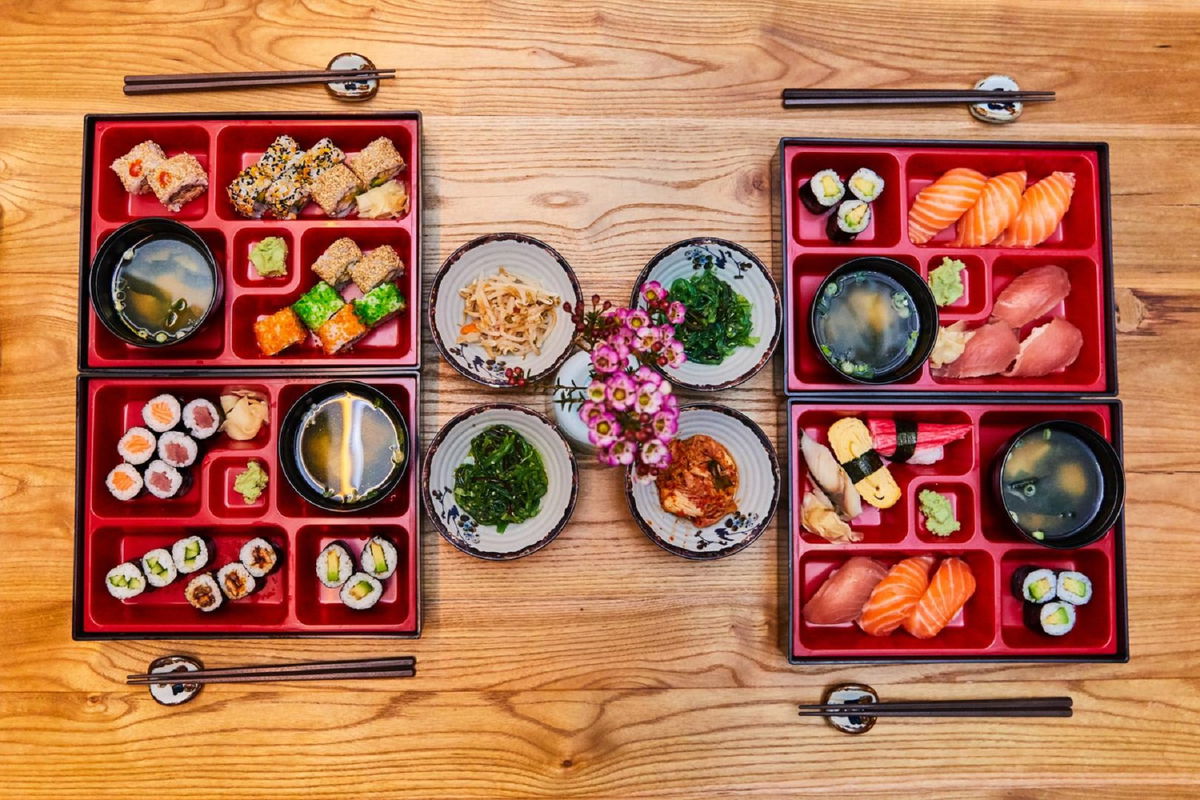
Shot from directly above, a wooden table is set for a Japanese meal with four red compartmentalized bento boxes arranged in two columns. Each box holds an assortment of sushi: inside-out rolls coated in sesame or bright tobiko, maki with cucumber and avocado, and nigiri topped with salmon, tuna, and tamago. A black bowl of miso soup sits in a corner of every box, with small amounts of wasabi and pickled ginger tucked into side compartments. Between the boxes, four small ceramic dishes with blue floral rims hold sides like seaweed salad, bean sprouts, and kimchi, and a tiny vase of pink waxflowers sits at the center of the table. Chopsticks rest on ceramic holders at each of the four place settings, giving the spread a shared, dinner-party feel.
Shot from directly above, a wooden table is set for a Japanese meal with four red compartmentalized bento boxes arranged in two columns. Each box holds an assortment of sushi: inside-out rolls coated in sesame or bright tobiko, maki with cucumber and avocado, and nigiri topped with salmon, tuna, and tamago. A black bowl of miso soup sits in a corner of every box, with small amounts of wasabi and pickled ginger tucked into side compartments. Between the boxes, four small ceramic dishes with blue floral rims hold sides like seaweed salad, bean sprouts, and kimchi, and a tiny vase of pink waxflowers sits at the center of the table. Chopsticks rest on ceramic holders at each of the four place settings, giving the spread a shared, dinner-party feel.
图片中的可见文字
No clearly readable text is present in the image.
日本餐桌礼仪与其他地方大相径庭,因此有很多应当注意的事项。例如,切勿将筷子直插在米饭里,也不要用筷子夹菜直接递给他人,因为这会让人联想到佛教的丧葬仪式。交叉放置筷子也容易引起与死亡相关的联想,因此用完后应将筷子放回筷子架(筷架)上,而不要交叉在桌面上。
在大家欣赏完整体的菜肴和器皿后,等所有人准备好,大家会用谦逊的表达“いただきます”(Itadakimasu,意为“我收下了”)。虽然Itadakimasu最接近德语里的“Guten Appetit”(祝您好胃口),但其含义却有所不同。它既表达了对厨师或主人深深的感谢,也作为用餐即将开始的信号。
除了这些规则外,还有 更多餐桌礼仪 可以了解或遵循。不论你是在日本,还是在附近的餐厅用餐,礼貌始终重要,因此掌握一些基本知识是对文化和主人的一种尊重。
如果你在餐厅用餐过后,可能会发现服务员并不会主动把账单送到桌前。在日本,通常是在餐厅门口的收银处买单,而不是在桌旁。即使服务再周到、菜肴再美味......在日本给小费并不常见,服务员甚至会追上客人,将小费礼貌地退还。
正如前面提到的,日本人不会期待外国人完全遵循他们的餐桌礼仪,但建议大家尽量向主人或身边人的行为看齐。至少应该尝试一下,因为餐桌礼仪往往比我们想象的更能反映日本社会、传统和文化。
图片 - 来源
标题图:unsplash.com © thecupandtheroad 图2:unsplash.com © louishansel 图3:unsplash.com © kofookoo
评论