目录:
太长不看
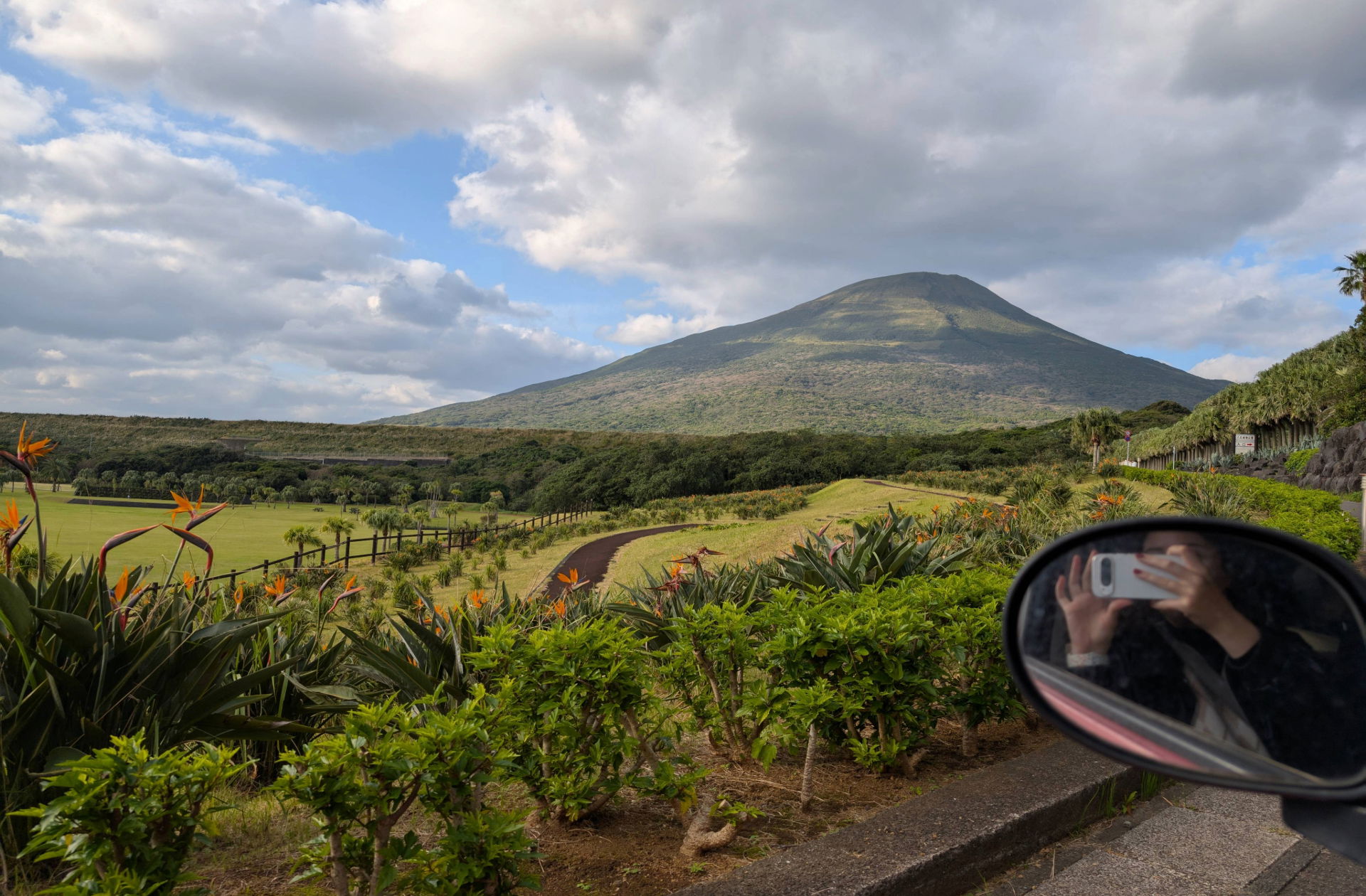
八丈岛是东京以南300公里的火山岛,号称“日本的夏威夷”,亚热带气候让岛上植被茂密得像丛林。从羽田机场飞过去只要45分钟,坐渡轮则要10小时左右,岛上交通基本靠租车,一天约5000日元很划算。这里游客不多,最迷人的就是原始自然风光加上废弃酒店这类怀旧遗迹,适合想避开人潮、慢慢探索的人。八丈岛是一座火山起源的岛屿,位于东京以南约300公里的太平洋上,行政上隶属于日本首都东京。此岛属于伊豆群岛,也是富士-箱根-伊豆国立公园的一部分。与伊豆群岛其他岛屿相比,八丈岛最大的特点是亚热带气候,带来了几乎如热带雨林般繁茂的植被。岛上有未被破坏的自然风光、火山景观、舒适的Onsen以及各类文化景点,展现出独特的融合魅力。
八丈岛拥有引人入胜的历史。考古发现证明,早在绳文时代(约公元前14,000 - 300年)岛上就已有人类居住。在江户时代(1603-1868年)期间,这里被用作流放罪犯和政治犯的地方。最著名的流放者之一是宇喜多秀家,他曾在关原之战中被击败。其后代在1869年明治维新之后才获得赦免。作为流放地的历史深刻影响了当地文化和居民身份,为八丈岛增添了独特的氛围。
对我个人来说,秋天时期的八丈岛格外吸引人——当时东京已开始转凉,而岛上森林茂密、海岸线崎岖,散发着别样的魅力。八丈岛与伊豆其他岛屿相比,旅游开发程度极低。岛上有不少废弃建筑,比如曾经辉煌一时的八丈皇家酒店,也成了今日怀旧与冒险的象征。正是未被破坏的自然与过去遗迹的鲜明对比,让八丈岛对我来说无比有魅力。
八丈岛的交通与出行方式
飞机前往八丈岛
乘坐飞机是最快捷、最舒适的选择。从东京(羽田机场)飞往八丈岛仅需45分钟,途中还能欣赏到富士山雪顶和周边岛屿的壮丽景色。飞行途中,我曾在云海之上见到壮观的日落,富士山巍峨的雪顶一览无余。借助现代智能手机,即使隔着飞机窗户也能轻松拍下这些难忘的瞬间,比如日落、远眺富士山的景色。往返机票约为每人35,000日元,这对于这样难得的岛屿体验来说,性价比很高。

Seen from an airplane window, Mount Fuji rises above a thick blanket of clouds at sunset. The volcano's perfectly shaped cone stands in dark silhouette against a sky glowing in soft orange and peach tones, with its lower slopes fading into the hazy cloud layer below. A curved edge of the aircraft's engine is visible in the bottom left corner, confirming the view from the window seat. Wispy clouds catch the warm light overhead, giving the whole scene a calm, golden glow.
Seen from an airplane window, Mount Fuji rises above a thick blanket of clouds at sunset. The volcano's perfectly shaped cone stands in dark silhouette against a sky glowing in soft orange and peach tones, with its lower slopes fading into the hazy cloud layer below. A curved edge of the aircraft's engine is visible in the bottom left corner, confirming the view from the window seat. Wispy clouds catch the warm light overhead, giving the whole scene a calm, golden glow.
图片中的可见文字
No clearly readable text found in the image.
乘坐渡轮前往八丈岛
除了飞机,还可以选择乘坐渡轮前往八丈岛。渡轮从东京(竹芝码头)以及伊豆群岛其他港口出发,航行时间约为10小时,是一种轻松惬意的出行方式。关于渡轮信息、时刻表和价格,可查阅东海汽船(Tokai Kisen)官网。
租车——在八丈岛的灵活与自由
我们一下飞机就在ENEOS Rent a Car租了一辆紧凑型K-Car。每天5000日元(含保险)的价格对于日本来说很合理。虽然我们的租车不是最新款(里程数几乎达到99,999公里),但完全够用。四天住宿下来,连加油总共花费22,000日元。实用小贴士:因为租车公司同时经营加油站,我们还车时直接加满油,不用担心出发前匆忙加油的麻烦。
在八丈岛,租车几乎不可或缺,便于灵活探索各处。另一个优势是:在机场打个电话,租车公司会直接来接你,这样就省下了一笔打车钱。

A small pink kei car, a boxy Japanese mini hatchback, sits parked at night in a rental car lot on Hachijō-jima. The photo is taken from the side at close range, showing its tall windows, roofline rain guards, and simple silver hubcaps with a Nissan logo. A white sign on the wall behind it reads "レンタカー" (rental car) with a phone number, and other sedans in similar reddish shades are parked around it under bright lot lighting. It is exactly the kind of tiny rental you would pick up to loop around the island.
A small pink kei car, a boxy Japanese mini hatchback, sits parked at night in a rental car lot on Hachijō-jima. The photo is taken from the side at close range, showing its tall windows, roofline rain guards, and simple silver hubcaps with a Nissan logo. A white sign on the wall behind it reads "レンタカー" (rental car) with a phone number, and other sedans in similar reddish shades are parked around it under bright lot lighting. It is exactly the kind of tiny rental you would pick up to loop around the island.
图片中的可见文字
レンタカー-あります
TEL 2-2006
其他交通方式
- 公共巴士: 八丈岛上的公交车班次不多,线路有限。主要有两条线:“Community Bus Route”往返于市中心(冈乡和三根),而“Public Bus Route”则连通全岛五个地区(三根、冈乡、樫立、中之乡、末吉)。时刻表和线路信息可在八丈町公交官网查询。

A white local bus on Hachijō-jima rolls down a sunny street, its side painted with big, playful illustrations of passion fruit and lemons, plus a few small flowers near the front. Japanese characters and the number 156 are printed beside the doors. Behind it stand a low tiled-roof building and tropical greenery under a blue sky with puffy clouds, giving the island its "Japan's Hawaii" feel.
A white local bus on Hachijō-jima rolls down a sunny street, its side painted with big, playful illustrations of passion fruit and lemons, plus a few small flowers near the front. Japanese characters and the number 156 are printed beside the doors. Behind it stand a low tiled-roof building and tropical greenery under a blue sky with puffy clouds, giving the island its "Japan's Hawaii" feel.
图片中的可见文字
八丈島 156
29-19
- 电动自行车: 在市区和部分海岸区域支持电动自行车租赁。适合短途出行及平坦的海岸地带,不太推荐用于崎岖的山区路段。

Three red rental e-bikes stand side by side at a bike-share docking station on a sunny, brick-paved lot. Each bike has a black front basket, a small digital display with a QR code on the handlebars, and a black cover over the rear wheel with stickers and a red reflector. They are the compact, step-through style typical of Japanese city cycles. To the left, a white signboard marks the station: a red bicycle logo, a price of ¥275, the station number 07, and the name of the Kaminato Port parking area in both Japanese and English, identifying the spot as a cycle port on Hachijō-jima. A metal railing and a bit of greenery run behind the bikes.
Three red rental e-bikes stand side by side at a bike-share docking station on a sunny, brick-paved lot. Each bike has a black front basket, a small digital display with a QR code on the handlebars, and a black cover over the rear wheel with stickers and a red reflector. They are the compact, step-through style typical of Japanese city cycles.
To the left, a white signboard marks the station: a red bicycle logo, a price of ¥275, the station number 07, and the name of the Kaminato Port parking area in both Japanese and English, identifying the spot as a cycle port on Hachijō-jima. A metal railing and a bit of greenery run behind the bikes.
图片中的可见文字
八文字島サ
¥275
24
07 神湊港(庁士
駐車場
Kamimato Port (Shokodo) Parking Area
会員登録はアプリから!
バイクシェア アブル
https://docomo-cycle.jp/app_tutorial/
- 出租车: 岛上有出租车,但相比租车或公交要贵不少。
八丈岛住宿推荐
Tiny Camp House 月海
我们此行入住了Tiny Camp House 月海。住宿地距离Sueyoshi区的山地非常僻静,离市中心车程约30分钟,离机场15分钟左右。每天盘山公路的进出都是一段小冒险。著名的展望温泉Miharashi-no-Yu就在附近,但我们住宿期间正好在维修中,未能体验。Tiny Camp House所处环境极其安静,是一天游玩后理想的休憩港湾。站在房间便可俯瞰壮丽的海崖与大海。唯一小小的不便是:住宿地在大自然中,房屋内偶尔会遇到一些小虫。 地图位置请看这里

A cozy little cabin bedroom built around one wide bed with beige bedding. Two rolled-up towels or light blankets sit on the bed, and pillows rest against a dark wall with a rough, black stone texture. A tall paper floor lamp glows beside the head of the bed. On the left, the whitewashed plank wall is covered by a yellow and white striped curtain, a second slim paper lamp stands in front of it, and a door painted in soft pastel patches leads out. Rolled towels in pastel colors wait in a laundry basket on the white plank floor. Everything about the room, from the simple wood construction to the warm lamplight, gives it the feel of a small island retreat like a tiny camp house on Hachijō-jima.
A cozy little cabin bedroom built around one wide bed with beige bedding. Two rolled-up towels or light blankets sit on the bed, and pillows rest against a dark wall with a rough, black stone texture. A tall paper floor lamp glows beside the head of the bed. On the left, the whitewashed plank wall is covered by a yellow and white striped curtain, a second slim paper lamp stands in front of it, and a door painted in soft pastel patches leads out. Rolled towels in pastel colors wait in a laundry basket on the white plank floor. Everything about the room, from the simple wood construction to the warm lamplight, gives it the feel of a small island retreat like a tiny camp house on Hachijō-jima.
图片中的可见文字
No clearly readable text is present in the image.
八丈岛其他住宿选择
除了我们入住的Tiny Camp House,八丈岛还提供各种类型的住宿,适合不同需求和预算的游客。可以选择酒店、传统日式旅馆、民宿或营地。部分热门住宿包括:
- Hachijo View Hotel: 日式传统风格酒店,可远眺大海。
- Hachijojima Park Hotel: 靠近机场,设有舒适客房和餐厅。
- Seadive Dormitory: 经济型旅舍,氛围轻松愉快。
八丈岛活动与景点推荐
八丈岛为自然爱好者、冒险家和文艺青年提供了丰富多样的旅游和体验项目。以下是我们本次旅行中体验的部分亮点:
八丈岛海岸垂钓
八丈岛的海岸线是钓鱼爱好者的天堂。在不规则的礁岩岸边,常见到本地居民与游客一同垂钓。岛上鱼种繁多,远超过我们的预期,我们甚至钓到了许多首次见到的品种。

The photo pairs two night-fishing shots from a harbor on Hachijō-jima. On the left, two freshly caught squirrelfish lie on dark, speckled concrete: one a vivid red with fine white striping along its body and a spiky dorsal fin, the other smaller and more orange-bronze. Both still have their hooks in, with bright red floats and line trailing beside them, and the tip of a rod juts into the frame at the edge. The right half shows the scene the catch came from. A fishing rod leans against the edge of a concrete pier, propped over calm teal water that glows under the harbor lights. A small white boat sits moored across the water near a low seawall lined with streetlights, their reflections shimmering on the surface under a pitch-black sky. Bollards with ropes and a coiled white line sit on the quay in the foreground.
The photo pairs two night-fishing shots from a harbor on Hachijō-jima. On the left, two freshly caught squirrelfish lie on dark, speckled concrete: one a vivid red with fine white striping along its body and a spiky dorsal fin, the other smaller and more orange-bronze. Both still have their hooks in, with bright red floats and line trailing beside them, and the tip of a rod juts into the frame at the edge.
The right half shows the scene the catch came from. A fishing rod leans against the edge of a concrete pier, propped over calm teal water that glows under the harbor lights. A small white boat sits moored across the water near a low seawall lined with streetlights, their reflections shimmering on the surface under a pitch-black sky. Bollards with ropes and a coiled white line sit on the quay in the foreground.
图片中的可见文字
No clearly readable text is present in the image.

A lone fisherman crouches on a dark, jagged volcanic rock ledge above a choppy, glittering sea. He wears a bright yellow bandana and dark clothing and is bent over an open green and white cooler box at his feet, reaching into it with both hands. A fishing rod lies on the rocks beside him. The rest of the frame is filled with wind-ruffled ocean water, its surface streaked with foam and reflected light. The scene is on the rocky coast of Hachijō-jima, a Pacific island south of Tokyo.
A lone fisherman crouches on a dark, jagged volcanic rock ledge above a choppy, glittering sea. He wears a bright yellow bandana and dark clothing and is bent over an open green and white cooler box at his feet, reaching into it with both hands. A fishing rod lies on the rocks beside him. The rest of the frame is filled with wind-ruffled ocean water, its surface streaked with foam and reflected light. The scene is on the rocky coast of Hachijō-jima, a Pacific island south of Tokyo.
图片中的可见文字
No clearly readable text found.

Three photos side by side capture the Hachijō-jima aquarium and botanical garden. On the left, bright magenta bougainvillea blooms spill across a wooden trellis inside a glass-walled greenhouse thick with tropical leaves. The center shot is an underwater close-up of a spotted pufferfish, its huge dark eye and white-dotted body sharp against a blurry seabed of coral rubble and pebbles. The right panel shows the facility's interior: an octagonal hall of warm wooden panels rising to a glass skylight cupola, a raised pool in the middle with two sea turtles resting on a platform, touchscreen display stands in the foreground, framed seascape photos along the walls, and a couple of visitors near a desk at the far end.
Three photos side by side capture the Hachijō-jima aquarium and botanical garden. On the left, bright magenta bougainvillea blooms spill across a wooden trellis inside a glass-walled greenhouse thick with tropical leaves. The center shot is an underwater close-up of a spotted pufferfish, its huge dark eye and white-dotted body sharp against a blurry seabed of coral rubble and pebbles. The right panel shows the facility's interior: an octagonal hall of warm wooden panels rising to a glass skylight cupola, a raised pool in the middle with two sea turtles resting on a platform, touchscreen display stands in the foreground, framed seascape photos along the walls, and a couple of visitors near a desk at the far end.
图片中的可见文字
No clearly readable text found.

A muntjac stands in close-up on Hachijō-jima, its head filling the right side of the frame. The small deer has a rusty orange-brown coat, a dark stripe running down its forehead, and pale ears turned forward. Its mouth is slightly open, showing a hint of its tongue, as if caught mid-chew right next to a black wire fence that runs along the concrete edge on the right. Behind it, two more muntjacs graze with their heads down in a grassy enclosure, softly out of focus. The shallow depth of field keeps all the attention on the near animal's face and its short, coarse fur.
A muntjac stands in close-up on Hachijō-jima, its head filling the right side of the frame. The small deer has a rusty orange-brown coat, a dark stripe running down its forehead, and pale ears turned forward. Its mouth is slightly open, showing a hint of its tongue, as if caught mid-chew right next to a black wire fence that runs along the concrete edge on the right.
Behind it, two more muntjacs graze with their heads down in a grassy enclosure, softly out of focus. The shallow depth of field keeps all the attention on the near animal's face and its short, coarse fur.
图片中的可见文字
No clearly readable text is present in the image.

A sweeping panorama from high on a volcanic peak on Hachijō-jima, looking down on the island's rugged coastline. Steep, densely forested green mountains slope toward the Pacific, their ridgelines softening into a hazy, pale sky. A narrow coastal road winds along the base of the cliffs, crossing a long white viaduct that stands out against the dark slopes. Below, a small town of low white and red-roofed buildings spreads across the green valley floor, and a curved breakwater shelters a harbor at the edge of the calm, silvery sea. The soft, warm light suggests early morning or late afternoon, giving the whole scene a quiet, remote island feel.
A sweeping panorama from high on a volcanic peak on Hachijō-jima, looking down on the island's rugged coastline. Steep, densely forested green mountains slope toward the Pacific, their ridgelines softening into a hazy, pale sky. A narrow coastal road winds along the base of the cliffs, crossing a long white viaduct that stands out against the dark slopes. Below, a small town of low white and red-roofed buildings spreads across the green valley floor, and a curved breakwater shelters a harbor at the edge of the calm, silvery sea. The soft, warm light suggests early morning or late afternoon, giving the whole scene a quiet, remote island feel.
图片中的可见文字
No clearly readable text is present in the image.

Two photos side by side show a volcano climb on Hachijō-jima. In the left one, a hiker in a black jacket with a white hood pulled over their head and a small white shoulder bag walks down a narrow dirt path along a grassy ridge. Tall pale grasses lean across the trail, the ocean spreads out hazy below, and a steep green peak closes off the far end of the ridge under a soft blue sky with scattered clouds. The right photo turns toward the mountain itself. Dense green shrubs and broad leaves fill the foreground, and the low sun catches the rocky crest of the crater rim, lighting the ridgeline in warm orange while the slopes below stay in deep green shadow.
Two photos side by side show a volcano climb on Hachijō-jima. In the left one, a hiker in a black jacket with a white hood pulled over their head and a small white shoulder bag walks down a narrow dirt path along a grassy ridge. Tall pale grasses lean across the trail, the ocean spreads out hazy below, and a steep green peak closes off the far end of the ridge under a soft blue sky with scattered clouds.
The right photo turns toward the mountain itself. Dense green shrubs and broad leaves fill the foreground, and the low sun catches the rocky crest of the crater rim, lighting the ridgeline in warm orange while the slopes below stay in deep green shadow.
图片中的可见文字
No clearly readable text found in the image.
植物园 & 水族馆
八丈岛植物园是每位旅客必访之地。免费开放,园内拥有各种热带、亚热带植物。最有趣的是亲人友善的迷你鹿(侏儒鹿)随意在园中漫步,可近距离观察。水族馆展现了岛上海底世界,最可爱要数活泼的河豚。
八丈富士(西山)——登顶火山鸟瞰全岛
八丈富士,亦称西山,高854米,是岛屿西北的象征。登山需攀爬1280级台阶,尽管辛苦,但山顶景色绝对值得。原生态的火山口、池塘和浅间神社营造了神秘氛围。八丈富士是一座有着万年历史的活火山,最近一次喷发在1605年。2002年火山地震也提醒人们,这里依然是活跃的地质带。

A two-part photo from a moss-draped forest shrine on Hachijō-jima, the subtropical island south of Tokyo. On the left, a weathered stone torii gate stands crooked and gray, its surfaces furred with lichen, framed by gnarled trees hung with strands of pale green beard lichen. Ferns crowd the base, and a sliver of red-and-gold brocade peeks out from behind the trunk. The right panel shows the shrine's stone pile: dozens of smooth round rocks stacked beside a path paved with dark river stones, many of them hand-painted white with Japanese wishes. One large stone reads 健康 (health), another 彼女 (girlfriend). Above the pile, a rough torii built from unhewn logs leans among the twisted trunks, giving the whole scene the feel of a forgotten shrine reclaimed by the forest.
A two-part photo from a moss-draped forest shrine on Hachijō-jima, the subtropical island south of Tokyo. On the left, a weathered stone torii gate stands crooked and gray, its surfaces furred with lichen, framed by gnarled trees hung with strands of pale green beard lichen. Ferns crowd the base, and a sliver of red-and-gold brocade peeks out from behind the trunk.
The right panel shows the shrine's stone pile: dozens of smooth round rocks stacked beside a path paved with dark river stones, many of them hand-painted white with Japanese wishes. One large stone reads 健康 (health), another 彼女 (girlfriend). Above the pile, a rough torii built from unhewn logs leans among the twisted trunks, giving the whole scene the feel of a forgotten shrine reclaimed by the forest.
图片中的可见文字
健康
彼女
田村
Tamaishi——江户时代的时光印记
Tamaishi是江户时代(1603-1868年)遗留下来的圆形石墙,极具历史意义。约有2000名流放者用海岸磨圆的石头建造了这些坚固结构。部分私宅边修复的石墙充分展示了古代的手工艺,每颗石头都经精心挑选和手工砌筑。

Two photos side by side show the characteristic stone walls of Hachijō-jima, built from smooth, rounded boulders stacked in neat rows so they look like giant pebbles. In the left photo, a pair of these walls rises on either side of a mossy, grass-covered path that leads up to a dark traditional wooden building. A vertical wooden sign with Japanese characters stands by the entrance, and a cycad and other subtropical greenery frame the scene under a blue sky with a few clouds. The right photo shows a narrow paved lane curving between taller walls of the same round stones, shaded by a dense canopy of trees, with a reddish wooden house half hidden in the foliage further up the slope.
Two photos side by side show the characteristic stone walls of Hachijō-jima, built from smooth, rounded boulders stacked in neat rows so they look like giant pebbles.
In the left photo, a pair of these walls rises on either side of a mossy, grass-covered path that leads up to a dark traditional wooden building. A vertical wooden sign with Japanese characters stands by the entrance, and a cycad and other subtropical greenery frame the scene under a blue sky with a few clouds. The right photo shows a narrow paved lane curving between taller walls of the same round stones, shaded by a dense canopy of trees, with a reddish wooden house half hidden in the foliage further up the slope.
图片中的可见文字
古民家山茶屋
八丈皇家酒店——历史遗留的废墟
废弃的八丈皇家酒店是岛上昔日旅游繁荣的象征。酒店始建于1963年,曾是日本最大的酒店之一。法式巴洛克风格,曾吸引无数国内宾客。后来旅游热潮过去,2006年关门大吉。现如今,残败建筑已成“废墟爱好者”热门拍照地,也见证了旅游的盛衰。

The Hachijō Royal Hotel rises behind palm trees under a bright blue sky, a large tiered concrete building that looks long abandoned. Each level steps back from the one below, edged with white balustrade terraces that are streaked with grime and stains. The windows are dark and empty, and at least one opening is boarded over with an orange panel. At the top sits a small octagonal tower crowned by a weathered dome, giving the whole structure a grand but decayed silhouette. Two tall palm trunks cross the frame in front of the facade, and dense green foliage fills the lower corners, so the derelict resort is seen partly through tropical vegetation.
The Hachijō Royal Hotel rises behind palm trees under a bright blue sky, a large tiered concrete building that looks long abandoned. Each level steps back from the one below, edged with white balustrade terraces that are streaked with grime and stains. The windows are dark and empty, and at least one opening is boarded over with an orange panel. At the top sits a small octagonal tower crowned by a weathered dome, giving the whole structure a grand but decayed silhouette. Two tall palm trunks cross the frame in front of the facade, and dense green foliage fills the lower corners, so the derelict resort is seen partly through tropical vegetation.
图片中的可见文字
No clearly readable text is present in the image.
Nanbara Senjojiki——火山熔岩地带徒步
Nanbara Senjojiki是八丈岛南海岸约500米长的熔岩平原,约3700年前由东山火山喷发形成。这里黑色火山石与碧蓝大海交相辉映,是视觉盛宴。从大阪隧道展望台可俯瞰整个熔岩地带及相邻的八丈小岛。
徒步、潜水与冲浪
除了上述活动,八丈岛户外爱好者还有很多选择。岛上遍布火山、森林、海岸徒步路径。潜水及浮潜可见丰富的热带鱼类、珊瑚与海龟。冲浪者也能在沿海找到理想海浪。

A hiker walks along a grassy ridge on Hachijō-jima, heading away from the camera into warm evening light. The person wears a white hood, dark jacket, and light pants, with a small white bag slung across the back, following a narrow path along the crest of the hill. Tall susuki grass fills the foreground, its feathery plumes glowing gold against dark green shrubs that blanket the slope. A forested volcanic ridge rises to the left, a small pointed peak sits in the middle distance, and the sky opens up in soft blue with scattered clouds. On the right the horizon fades into haze, a hint of the Pacific far below.
A hiker walks along a grassy ridge on Hachijō-jima, heading away from the camera into warm evening light. The person wears a white hood, dark jacket, and light pants, with a small white bag slung across the back, following a narrow path along the crest of the hill.
Tall susuki grass fills the foreground, its feathery plumes glowing gold against dark green shrubs that blanket the slope. A forested volcanic ridge rises to the left, a small pointed peak sits in the middle distance, and the sky opens up in soft blue with scattered clouds. On the right the horizon fades into haze, a hint of the Pacific far below.
图片中的可见文字
No clearly readable text is present in the image.

A Shinto purification basin fills the frame: a large rectangular trough of speckled dark granite, its rim glistening with moisture and dotted with algae. Dark, still water sits inside, reflecting the wood laid across it. Resting on the rim are five wooden ladles, each a shallow cylindrical cup on a long straight handle, arranged so the handles fan out in different directions over the water. Visitors would use these to scoop water for ritual hand and mouth rinsing before approaching a shrine. Behind the basin, pale gravel covers the ground, and thick tree trunks rise with bark softened by moss. Glossy green leaves hang into the top of the frame, giving the scene the shaded, quiet feel of a shrine grove. The setting is a shrine on Hachijō-jima, the forested island off Tokyo in the Pacific.
A Shinto purification basin fills the frame: a large rectangular trough of speckled dark granite, its rim glistening with moisture and dotted with algae. Dark, still water sits inside, reflecting the wood laid across it. Resting on the rim are five wooden ladles, each a shallow cylindrical cup on a long straight handle, arranged so the handles fan out in different directions over the water. Visitors would use these to scoop water for ritual hand and mouth rinsing before approaching a shrine.
Behind the basin, pale gravel covers the ground, and thick tree trunks rise with bark softened by moss. Glossy green leaves hang into the top of the frame, giving the scene the shaded, quiet feel of a shrine grove. The setting is a shrine on Hachijō-jima, the forested island off Tokyo in the Pacific.
图片中的可见文字
No clearly readable text is present in the image.

A long volcanic coastline on Hachijō-jima fills the frame, where steep cliffs layered with dark basalt drop straight into a calm blue-gray sea. The clifftops are covered in dense green trees and shrubs, with exposed reddish and black rock bands running along the base of the slope. At the foot of the cliffs, a shoreline of dark boulders and pebbles curves around a small cove, and gentle waves wash in with a smooth, silky blur on the right side of the frame. Above, puffy white clouds drift across a bright blue sky, giving the whole scene the lush, rugged feel of a subtropical Pacific island.
A long volcanic coastline on Hachijō-jima fills the frame, where steep cliffs layered with dark basalt drop straight into a calm blue-gray sea. The clifftops are covered in dense green trees and shrubs, with exposed reddish and black rock bands running along the base of the slope. At the foot of the cliffs, a shoreline of dark boulders and pebbles curves around a small cove, and gentle waves wash in with a smooth, silky blur on the right side of the frame. Above, puffy white clouds drift across a bright blue sky, giving the whole scene the lush, rugged feel of a subtropical Pacific island.
图片中的可见文字
No clearly readable text is present in the image.
当地特色美食(Meibutsu)——八丈岛的美食发现
岛上美食推荐
八丈岛有多道让人垂涎的地方美食,以下是部分代表作:
| 菜肴 | 主要原料 | 制作方式 | 哪里能吃到? |
|---|---|---|---|
| Sochu | 红薯、米 | 蒸馏而成 | 当地酒厂、餐厅 |
| Iwanori | 一种海藻 | 采摘、晾干 | 寿司店、特产商店 |
| Shimazushi | 剑鱼(Mekajiki)、赤鲷(Akahata)、岩海苔(Ishinori)、明日叶 | 酱油腌制后置于米饭之上 | 餐厅 |
| Kusaya | 小型鱼(如飞鱼) | 盐腌、晾干、发酵 | 特产商店、餐厅 |
| Budo | 海藻、贝类、鱼、琼脂 | 凝胶化 | 餐厅 |
| Sasayo(Isuzumi) | 青铜鱼 | 烤制、生鱼片 | 餐厅 |
Shochu——岛民的烈酒
Shochu是一种日本传统烈酒,可用红薯、米或大麦制成。在八丈岛主要用红薯酿造。得益于岛上纯净水源及独特蒸馏工艺,八丈Shochu拥有专属风味。每家酒厂都有代代传承的秘方。Shochu可净饮、加冰或兑水饮用。

Rows of brown glass bottles of shochu stand on a store shelf, the local spirit of Hachijō Island. Their white neck labels read "junryō shōchū" and call the drink a specialty of Hachijōjima, and the front labels show a stylized volcano in green with pink flowers around the large calligraphy characters Jūchaku (重椿), the name of the brew. Each bottle carries a green sticker marking it as authentic honkaku shōchū with 25 percent alcohol, and the maker is listed as the Hachijōjima Shuzō brewery. To the right sit taller clear bottles with yellow labels, and to the left a plastic package of dried goods, giving the scene the feel of a small island shop or souvenir aisle.
Rows of brown glass bottles of shochu stand on a store shelf, the local spirit of Hachijō Island. Their white neck labels read "junryō shōchū" and call the drink a specialty of Hachijōjima, and the front labels show a stylized volcano in green with pink flowers around the large calligraphy characters Jūchaku (重椿), the name of the brew. Each bottle carries a green sticker marking it as authentic honkaku shōchū with 25 percent alcohol, and the maker is listed as the Hachijōjima Shuzō brewery. To the right sit taller clear bottles with yellow labels, and to the left a plastic package of dried goods, giving the scene the feel of a small island shop or souvenir aisle.
图片中的可见文字
八丈島名産
醇良焼酎
八丈島酒造合名会社製
本格焼酎
アルコール分 25
25度以上 26度未満
秀醇無比
重椿
原材料名 米(国産)
さつま芋(八丈島)
米こうじ
内容量 1.8
製造者 八丈島酒造合名会社
東京都八丈島八丈町大賀郷 1576
TEL 04996-2-2855
品目 本格焼酎
製造者 八丈興発株式会社
八
2094
Iwanori——风味浓郁的当地产海藻
Iwanori是一种在八丈岛近海采集的特色海藻,风味鲜咸且口感爽脆,在寿司与各类本地菜肴中颇受欢迎。传统上由人工采收并晾晒处理。

A big black bowl of hot noodle soup sits on a black lacquered tray, heaped with a tangle of dark green iwa nori, the rock seaweed that Hachijō-jima is known for. Under the seaweed are crispy deep-fried ashitaba leaves, a slice of pink-rimmed fish cake, a piece of fried tofu, and bright green vegetable stems in a dark soy-based broth. Next to the bowl the tray holds a small fluted dish of sliced scallions and cucumber, a shaker of brown seasoning powder, and chopsticks still wrapped in paper. A glass of water and a small glass of green tea stand at the edge of the frame, rounding out a simple, hearty lunch at a casual island restaurant.
A big black bowl of hot noodle soup sits on a black lacquered tray, heaped with a tangle of dark green iwa nori, the rock seaweed that Hachijō-jima is known for. Under the seaweed are crispy deep-fried ashitaba leaves, a slice of pink-rimmed fish cake, a piece of fried tofu, and bright green vegetable stems in a dark soy-based broth. Next to the bowl the tray holds a small fluted dish of sliced scallions and cucumber, a shaker of brown seasoning powder, and chopsticks still wrapped in paper. A glass of water and a small glass of green tea stand at the edge of the frame, rounding out a simple, hearty lunch at a casual island restaurant.
图片中的可见文字
No clearly readable text is present in the image.
Shimazushi——带有岛屿风味的传统寿司
Shimazushi是一款八丈岛传统寿司,主要用三种典型鱼类制作:
- Mekajiki(剑鱼): 岛上特产,肉质柔软清甜。
- Akahata(赤鲷): 以结实的白肉和细腻口感见长。
- Ishinori(岩海苔): 为寿司增添特别风味,略带海盐感。
另外,Shimazushi通常会加入明日叶(Ashitaba)——一种以健康著称的叶菜,并用特色酱油腌制。鱼肉腌制后摆在饭团上。与其他寿司相比,Shimazushi风味更为浓郁,主打本地原材料。

A close-up of a black plastic tray of shimazushi, the island-style nigiri from Hachijō-jima. Most pieces are topped with slices of soy-marinated fish, the amber flesh glazed and glistening over rounded mounds of white rice. In the front row, two pieces carry the island's signature topping, a thick black seaweed paste spread across the rice. A small plastic chrysanthemum garnish in yellow and green sits tucked between the pieces. The tray has a gold floral pattern along its edges and rests on a rustic wooden table.
A close-up of a black plastic tray of shimazushi, the island-style nigiri from Hachijō-jima. Most pieces are topped with slices of soy-marinated fish, the amber flesh glazed and glistening over rounded mounds of white rice. In the front row, two pieces carry the island's signature topping, a thick black seaweed paste spread across the rice. A small plastic chrysanthemum garnish in yellow and green sits tucked between the pieces. The tray has a gold floral pattern along its edges and rests on a rustic wooden table.
图片中的可见文字
No clearly readable text is present in the image.
Kusaya——味道浓烈的鱼类特产
Kusaya是一道用盐腌制、晾晒并发酵而成的传统鱼制品,多采用飞鱼等小型鱼制作。先将鱼清理干净,入特制的咸水(Kusaya-jiru)腌渍。这种卤汁世代相传,赋予Kusaya浓郁独特的气味与风味。腌好后在日光下晾晒。Kusaya经常烘烤或油煎食用,味道极其浓烈、独特,有点类似奶酪。
Budo——富有凝胶感的海鲜料理
Budo是结合多种海鲜和海藻的八丈岛特有菜肴。混合各类海藻、贝类、鱼类后,用琼脂调和,让菜品呈现独特胶质感。味道清爽,常作为前菜或小菜出现。
Sasayo——颇受欢迎的食用鱼
Sasayo,也称Isuzumi(青铜鱼),是八丈岛餐桌上很常见的鱼类。通常以碳烤或刺身呈现,肉质白嫩,口味温和,深受渔民喜爱。
八丈岛的可持续发展实践
八丈岛非常重视可持续旅游和环境保护。岛民深知独特动植物资源的珍贵,自发投身各类保护与可持续发展项目。主要举措包括:
- 海龟保护: 八丈岛沿海为海龟的重要产卵地。当地有相关保护项目,向游客和居民宣传海龟保护知识。
- 推广生态旅游: 岛上开发了大量生态友好的旅行活动,让游客在不破坏环境的前提下深入了解自然与文化。
- 减少垃圾和回收利用: 岛上高度重视垃圾减量及回收利用。
总结:八丈岛——难忘的离岛体验
八丈岛是一块令人着迷的旅游目的地。这里有原生态的自然、火山景观、人文艺迹和丰富美食。岛上可以让人远离喧嚣、体验独特的日本文化。不论是钓鱼、徒步、享受Onsen还是探访废墟,都能获得别样惊喜。
八丈岛最打动我的是原始大自然与历史遗迹的结合。岛上人烟稀少,完全没有日本热门景区的人潮,独特的宁静与真实令人沉醉。无论是与热情岛民的交流、探索火山地貌,还是品尝原汁原味的当地料理,都让这段旅程难以忘怀。
| 方面 | 说明 |
|---|---|
| 地理位置 | 距东京300公里,太平洋上 |
| 面积 | 63平方公里 |
| 人口 | 7,522(2018年3月数据) |
| 气候 | 亚热带,温和宜人 |
| 交通 | 飞机(羽田机场)、渡轮 |
| 岛内出行 | 租车、电动自行车、巴士、出租车 |
| 住宿 | 酒店、民宿、度假屋 |
| 活动 | 徒步、钓鱼、潜水、浮潜、Onsen、探访废墟 |
| 景点 | 八丈富士、植物园、Tamaishi、八丈皇家酒店、Nanbara Senjojiki |
| 美食特产 | Shochu、Iwanori、Shimazushi、Kusaya、Budo、Sasayo |
旅行实用信息与贴士
- 最佳旅行季节: 八丈岛最佳旅行时间为春季和秋季,温和舒适。
- 语言: 岛上使用日语,部分旅游设施能用英语。部分居民还会说濒临消失的Hachijō语,与琉球语系有关。
- 货币: 日本货币为日元(JPY)。
- 上网: 大多数酒店和部分咖啡厅有Wi-Fi。
- 电力: 日本电压为100V。欧洲设备需使用转换插头。
- 健康保障: 岛上有医院,建议提前购买旅游医疗险。
- 安全: 八丈岛极为安全,犯罪率极低。

评论