

Mô tả chi tiết
TL;DR
Một chuyến đi trong ngày từ Tokyo đến một thị trấn núi yên tĩnh không có điểm check-in nổi tiếng, không có đền chùa lớn, nhưng đó chính là điểm hay. Bạn sẽ tự tay làm giấy washi truyền thống 1.300 năm tuổi, trượt xuống chiếc cầu trượt dài 203 mét giữa rừng, và ăn những món địa phương giản dị. Nếu bạn muốn một ngày không tối ưu cho du lịch, chỉ có núi rừng, sự tĩnh lặng và niềm vui trẻ con, tour này là lý do đủ để đi.Mục lục:

At dusk in Ogawa, a small Japanese town spreads across a valley floor, its low houses and shops with tiled and metal roofs clustering along quiet streets. Utility poles and a handful of larger flat-roofed buildings break up the residential patchwork, and a dark car sits parked near a small blue shed in the foreground. Behind the town, layers of forested hills give way to bigger blue-grey mountains that fill the horizon. The sky above is a soft wash of pale orange and grey, with the last light of day catching a faint cloud near the ridgeline, giving the whole scene a calm, end-of-summer evening feel.
At dusk in Ogawa, a small Japanese town spreads across a valley floor, its low houses and shops with tiled and metal roofs clustering along quiet streets. Utility poles and a handful of larger flat-roofed buildings break up the residential patchwork, and a dark car sits parked near a small blue shed in the foreground. Behind the town, layers of forested hills give way to bigger blue-grey mountains that fill the horizon. The sky above is a soft wash of pale orange and grey, with the last light of day catching a faint cloud near the ridgeline, giving the whole scene a calm, end-of-summer evening feel.
Văn bản nhìn thấy trong hình
No clearly readable text.
Cách Tokyo 70 phút, có một thị trấn mà đa số du khách sẽ không bao giờ đặt chân đến. Không phải vì nó bị che giấu—mà vì ở đó chẳng có gì hò hét đòi sự chú ý. Không có ngôi đền nổi tiếng. Không có điểm sống ảo. Không có lý do để đến, trừ khi bạn tự tìm cho mình một lý do.
Tour này chính là lý do đó.
Ogawa-machi nằm trong một lòng chảo nhỏ được bao quanh bởi các dãy sườn núi ngoài cùng của dãy núi Chichibu. Những dòng sông cắt qua các thung lũng rừng rậm. Những ngôi nhà gỗ cổ nằm san sát dọc những con phố yên tĩnh. Không khí ở đây mang mùi vị khác biệt—trong lành hơn, và xưa cũ hơn theo cách nào đó. Đây là nước Nhật từng tồn tại trước thời tàu cao tốc, trước các cửa hàng tiện lợi, trước khi mọi thứ được tối ưu hóa cho du khách.
Nghệ thuật Washi: 1.300 năm làm giấy
Truyền thống làm giấy của Ogawa kéo dài hơn 1.300 năm. Kỹ thuật—có tên gọi Hosokawa-shi—chỉ dùng đúng ba nguyên liệu tự nhiên: vỏ cây kōzo (cây dâu), nước từ các dòng sông địa phương và cái lạnh của mùa đông. Năm 2014, nghề thủ công này đã được ghi danh là [1].
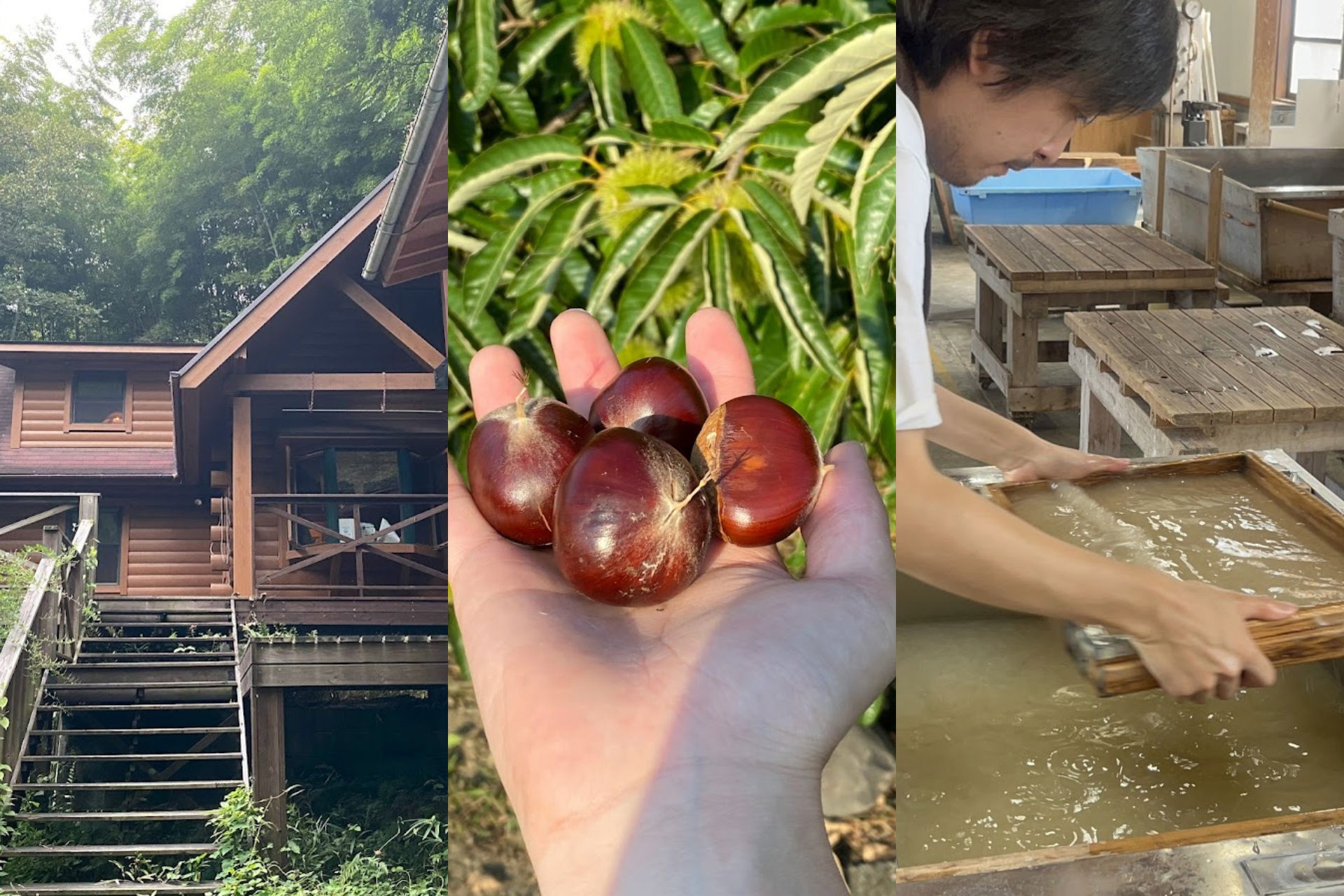
Nếu bạn quan tâm, chúng ta có thể ghé một trong những xưởng làm giấy địa phương để bạn tự tay thử làm giấy. Quá trình này mang tính thiền định một cách đáng ngạc nhiên: nhúng khung gỗ vào dung dịch xơ sợi màu trắng đục, tìm đúng nhịp điệu, nhìn lớp giấy mỏng dần định hình. Đôi bàn tay bạn sẽ học được điều mà trí óc khó lòng nắm bắt trọn vẹn.

In a wood-beamed papermaking workshop, two men lean over a large stainless vat filled with cloudy pulp and water, lifting a wooden papermaking frame together. The older man, in a blue t-shirt, guides the younger one, who wears a white shirt with a towel slung around his neck, as they tilt the bamboo screen so the watery fibers spread evenly across it. A white ridge of pulp forms along one edge of the frame mid-motion. The space around them has the feel of a working craft studio: slatted wooden ceiling beams with strip lights, wooden work tables, blue plastic tubs, and a large window letting in daylight on the right. This is the traditional sheet-forming step of washi papermaking in Ogawa, where visitors try the craft under an instructor's hands.
In a wood-beamed papermaking workshop, two men lean over a large stainless vat filled with cloudy pulp and water, lifting a wooden papermaking frame together. The older man, in a blue t-shirt, guides the younger one, who wears a white shirt with a towel slung around his neck, as they tilt the bamboo screen so the watery fibers spread evenly across it. A white ridge of pulp forms along one edge of the frame mid-motion.
The space around them has the feel of a working craft studio: slatted wooden ceiling beams with strip lights, wooden work tables, blue plastic tubs, and a large window letting in daylight on the right. This is the traditional sheet-forming step of washi papermaking in Ogawa, where visitors try the craft under an instructor's hands.
Văn bản nhìn thấy trong hình
No text is clearly readable in the image.

A man in a blue t-shirt holds up a large wooden frame fitted with a finely woven bamboo screen, the traditional sieve used in Japanese washi papermaking. His hand is damp, and he lifts the frame above the deep vats that dominate the workshop: one lined with stainless steel, another painted blue, both set into long wooden stations where sheets of paper are formed. The room is a working craft studio with dark wood ceiling beams, bamboo poles, and drying racks hanging from above. Daylight pours in through a wall of windows, and shelves of plastic tubs and buckets line the back wall. The setting is a traditional washi paper workshop in Ogawa, where the pulp-and-water mixture is scooped and swayed in these screens to build each sheet by hand.
A man in a blue t-shirt holds up a large wooden frame fitted with a finely woven bamboo screen, the traditional sieve used in Japanese washi papermaking. His hand is damp, and he lifts the frame above the deep vats that dominate the workshop: one lined with stainless steel, another painted blue, both set into long wooden stations where sheets of paper are formed.
The room is a working craft studio with dark wood ceiling beams, bamboo poles, and drying racks hanging from above. Daylight pours in through a wall of windows, and shelves of plastic tubs and buckets line the back wall. The setting is a traditional washi paper workshop in Ogawa, where the pulp-and-water mixture is scooped and swayed in these screens to build each sheet by hand.
Văn bản nhìn thấy trong hình
No clearly readable text.
Vào cuối buổi, bạn sẽ có một tờ giấy washi do chính tay mình làm ra—không hoàn hảo, mang đậm dấu ấn cá nhân, và hoàn toàn thuộc về bạn để mang về nhà. Các nghệ nhân địa phương đã làm nghề này qua bao thế hệ. Một số xưởng trưng bày những tờ giấy có tuổi đời hàng thế kỷ, vẫn nguyên vẹn, vẫn đẹp. Có điều gì đó khiến người ta thấy nhỏ bé khi cầm trên tay thứ vật liệu sẽ trường tồn lâu hơn cả mình.

Freshly made sheets of washi paper rest on a wide wooden drying board in a traditional papermaking workshop. The pale, cream-colored sheets are still damp, laid over plastic sheeting: a small stack of rectangular pages on the left and one large, softly curving sheet on the right, its edges slightly wavy from drying. The board sits on a worn wooden worktable, and in the lower right corner a wooden tool handle juts into the frame. Behind the table, several flat papermaking brushes with pale bristles hang from the wall by their handles, next to a household washing machine that papermakers often use to press water from new sheets. The whole scene reads as the quiet aftermath of a morning's work in a washi workshop.
Freshly made sheets of washi paper rest on a wide wooden drying board in a traditional papermaking workshop. The pale, cream-colored sheets are still damp, laid over plastic sheeting: a small stack of rectangular pages on the left and one large, softly curving sheet on the right, its edges slightly wavy from drying. The board sits on a worn wooden worktable, and in the lower right corner a wooden tool handle juts into the frame. Behind the table, several flat papermaking brushes with pale bristles hang from the wall by their handles, next to a household washing machine that papermakers often use to press water from new sheets. The whole scene reads as the quiet aftermath of a morning's work in a washi workshop.
Văn bản nhìn thấy trong hình
45

At a washi paper museum in Ogawa, a dark wooden display cabinet with a glass top holds an arrangement of traditional Japanese papers. The top layer is laid out like a paper merchant's stock: an open book of thick blank white sheets at the center, patterned folders in indigo and black stenciled designs beside it, a rolled scroll tied with cord, and stacks of aged, yellowed sheets and envelopes marked with Japanese calligraphy, including a label for a daifuku-chō, the old-style merchant account book. Below the glass, two shallow drawers stand open to show more of the collection: neat stacks of pink, olive, and gold papers, heavily textured cream sheets, small printed booklets, and a fat roll of white paper. The case presents washi as both a working material and a decorated craft, spanning plain writing stock to ornate patterned covers.
At a washi paper museum in Ogawa, a dark wooden display cabinet with a glass top holds an arrangement of traditional Japanese papers. The top layer is laid out like a paper merchant's stock: an open book of thick blank white sheets at the center, patterned folders in indigo and black stenciled designs beside it, a rolled scroll tied with cord, and stacks of aged, yellowed sheets and envelopes marked with Japanese calligraphy, including a label for a daifuku-chō, the old-style merchant account book. Below the glass, two shallow drawers stand open to show more of the collection: neat stacks of pink, olive, and gold papers, heavily textured cream sheets, small printed booklets, and a fat roll of white paper. The case presents washi as both a working material and a decorated craft, spanning plain writing stock to ornate patterned covers.
Văn bản nhìn thấy trong hình
武州封筒
大福帳

A large round wooden tea table sits on tatami flooring in a traditional Japanese room, set for a gathering. The table is dressed with handmade washi paper placemats in colorful tie-dye patterns, each holding a small ceramic cup and a plate. In the center, a rough paper-lined basket holds lacquerware bowls, and a rustic wooden tray carries a few wrapped candies. A teapot and a tall bottle wrapped in decorative dyed paper stand on a bamboo mat, next to a silver kettle. Four small drinking glasses are lined up in front, and a remote control rests at the table's edge. The scene has the warm, lived-in feel of a farmhouse tea service, likely part of a washi paper experience in the Ogawa area.
A large round wooden tea table sits on tatami flooring in a traditional Japanese room, set for a gathering. The table is dressed with handmade washi paper placemats in colorful tie-dye patterns, each holding a small ceramic cup and a plate. In the center, a rough paper-lined basket holds lacquerware bowls, and a rustic wooden tray carries a few wrapped candies. A teapot and a tall bottle wrapped in decorative dyed paper stand on a bamboo mat, next to a silver kettle. Four small drinking glasses are lined up in front, and a remote control rests at the table's edge. The scene has the warm, lived-in feel of a farmhouse tea service, likely part of a washi paper experience in the Ogawa area.
Văn bản nhìn thấy trong hình
No text is clearly readable in this image.
Núi non, Rừng xanh & Cầu trượt lăn nổi tiếng
Một trong những điểm nhấn mà Ogawa mang lại là Công viên đồi Sengen (Mt. Sengen Hill View Park), nằm phía trên thị trấn và có thể tiếp cận qua một con đường mòn rừng thoai thoải. Nếu bạn chịu khó đi bộ một đoạn ngắn (khoảng 30–40 phút), phần thưởng không chỉ là tầm nhìn—mà còn là điều đang chờ đón ở đỉnh đồi.
Cầu trượt.
Dài 203 mét, đây là một trong những cầu trượt lăn dài nhất Nhật Bản. Bạn lấy một tấm lót, ngồi xuống và để trọng lực lo phần còn lại. Nghe thì nực cười. Nhưng nó cũng thực sự vui—thứ niềm vui hồn nhiên thuần khiết mà người lớn hiếm khi cho phép mình trải nghiệm. Cầu trượt uốn lượn giữa rừng, và trong khoảng hai phút, bạn chỉ đơn giản là... đang trượt. Không điện thoại. Không ràng buộc. Chỉ có cây cối vụt qua mờ ảo. Nếu thời tiết thuận lợi, đây có thể là khoảnh khắc đáng nhớ nhất trong ngày của bạn.

A long, turquoise roller slide winds down a forested hillside on tall green posts, curving from the left of the frame toward the lower right. At the upper left stands the wooden start platform, a two-story structure with large windows and a roof that shelters the top of the slide. The slide is railed along its whole length and supported on slender columns above dense summer greenery. Beyond the trees, the view opens onto a sprawling town in the valley below, with layers of hazy blue mountains on the horizon under a partly cloudy sky. Trunks of leafy trees frame the foreground, giving the scene a quiet, wooded overlook feel.
A long, turquoise roller slide winds down a forested hillside on tall green posts, curving from the left of the frame toward the lower right. At the upper left stands the wooden start platform, a two-story structure with large windows and a roof that shelters the top of the slide. The slide is railed along its whole length and supported on slender columns above dense summer greenery.
Beyond the trees, the view opens onto a sprawling town in the valley below, with layers of hazy blue mountains on the horizon under a partly cloudy sky. Trunks of leafy trees frame the foreground, giving the scene a quiet, wooded overlook feel.
Văn bản nhìn thấy trong hình
No clearly readable text.

A young man in a black t-shirt and dark shorts rides a long roller slide down a grassy slope, holding a small sled board flat across his lap as he glides toward the camera. The slide runs the full length of the frame, its green side rails framing rows of pale metal rollers, and it curves out of sight at the top of the hill behind him. Thick summer growth lines both sides: tall grass at the rails, dense trees beyond, with one tree near the crest covered in bright pink crepe myrtle blossoms. The scene is the leafy hillside of Ogawa's giant roller slide, a quiet green setting that makes the ride's length the clear centerpiece.
A young man in a black t-shirt and dark shorts rides a long roller slide down a grassy slope, holding a small sled board flat across his lap as he glides toward the camera. The slide runs the full length of the frame, its green side rails framing rows of pale metal rollers, and it curves out of sight at the top of the hill behind him. Thick summer growth lines both sides: tall grass at the rails, dense trees beyond, with one tree near the crest covered in bright pink crepe myrtle blossoms. The scene is the leafy hillside of Ogawa's giant roller slide, a quiet green setting that makes the ride's length the clear centerpiece.
Văn bản nhìn thấy trong hình
No text is clearly readable in the image.

A hand holds up a white plastic sliding board, the kind used for riding down a roller slide, gripping the rounded handle cutout at its top. The sled, with its wide flat body and narrow neck, is viewed from behind and fills the left side of the frame. It stands on the dark wooden floor of an open observation tower built from heavy brown timbers with X-shaped cross bracing and slatted railings. Through the tower's open sides, sunlit green trees fill the view, and a faint hint of distant hills and countryside shows beyond the foliage, suggesting the slide starts high on a hillside. This is the sled for the giant roller slide in Ogawa, held at the top before the ride down.
A hand holds up a white plastic sliding board, the kind used for riding down a roller slide, gripping the rounded handle cutout at its top. The sled, with its wide flat body and narrow neck, is viewed from behind and fills the left side of the frame. It stands on the dark wooden floor of an open observation tower built from heavy brown timbers with X-shaped cross bracing and slatted railings. Through the tower's open sides, sunlit green trees fill the view, and a faint hint of distant hills and countryside shows beyond the foliage, suggesting the slide starts high on a hillside. This is the sled for the giant roller slide in Ogawa, held at the top before the ride down.
Văn bản nhìn thấy trong hình
No clearly readable text is present in the image.
Ẩm thực địa phương: Đơn giản, Chân thật, Ngon miệng
Ogawa không phải là điểm đến dành cho tín đồ ẩm thực. Ở đây không có sao Michelin, không có đầu bếp nổi tiếng. Thay vào đó, vùng đất này mang đến những món ăn do những người đã nấu đi nấu lại cùng một món suốt hàng chục năm—đôi khi là qua nhiều thế hệ—chế biến.
Tùy theo sở thích của bạn, chúng ta có thể thử udon làm thủ công—sợi mì lúa mì dày dùng kèm nước dùng thanh nhẹ, loại món ngon đến mức vượt xa diện mạo mộc mạc của nó. Hoặc có thể là cà ri Nhật, ninh nhỏ lửa và được phục vụ mà không chút màu mè. Địa điểm cụ thể sẽ tùy thuộc vào ngày hôm đó, tâm trạng của bạn và quán nào đang mở cửa. Đó cũng chính là một phần của trải nghiệm: ăn ở nơi người dân địa phương ăn, chứ không phải ở nơi du khách bị đưa đến.

A generous bowl of udon sits on a dark wooden tray in a restaurant in Ogawa, Japan. The thick white noodles are mostly hidden under an abundance of toppings: a tall mound of golden, crispy tempura rises above the rim, while a bright green shiso leaf, a scatter of shredded nori seaweed, wispy pink bonito flakes, and a raw egg yolk rest across the center. The bowl itself is white ceramic with fine vertical blue stripes around its sides. At the lower left edge of the frame, a small pile of pale grated condiment with a tiny ceramic spoon sits ready as a garnish, and the dark wood of the table around the tray gives the meal a warm, traditional feel.
A generous bowl of udon sits on a dark wooden tray in a restaurant in Ogawa, Japan. The thick white noodles are mostly hidden under an abundance of toppings: a tall mound of golden, crispy tempura rises above the rim, while a bright green shiso leaf, a scatter of shredded nori seaweed, wispy pink bonito flakes, and a raw egg yolk rest across the center. The bowl itself is white ceramic with fine vertical blue stripes around its sides. At the lower left edge of the frame, a small pile of pale grated condiment with a tiny ceramic spoon sits ready as a garnish, and the dark wood of the table around the tray gives the meal a warm, traditional feel.
Văn bản nhìn thấy trong hình
No text is clearly readable in the image.

A generous curry platter is served on a wide, pale green stoneware plate set on a dark wooden table at a restaurant in Ogawa, Japan. Shredded, spiced meat curry is mounded over a large blanched green leaf, studded with three glossy quail eggs and finished with pink peppercorns and crumbled dried herbs. Around it are arranged smaller components: a minced keema style curry topped with a dark berry, a scoop of creamy white rice porridge, golden curried chickpeas, a small pile of shredded cabbage and carrot with a dark purple wrapped bite, a dollop of orange pickle, and a white ramekin of clear, herb flecked broth. Amber curry sauce pools around the meat, and water glasses with an iced drink sit softly out of focus at the top of the frame.
A generous curry platter is served on a wide, pale green stoneware plate set on a dark wooden table at a restaurant in Ogawa, Japan. Shredded, spiced meat curry is mounded over a large blanched green leaf, studded with three glossy quail eggs and finished with pink peppercorns and crumbled dried herbs. Around it are arranged smaller components: a minced keema style curry topped with a dark berry, a scoop of creamy white rice porridge, golden curried chickpeas, a small pile of shredded cabbage and carrot with a dark purple wrapped bite, a dollop of orange pickle, and a white ramekin of clear, herb flecked broth. Amber curry sauce pools around the meat, and water glasses with an iced drink sit softly out of focus at the top of the frame.
Văn bản nhìn thấy trong hình
There is no clearly readable text in this image.
Những góc yên bình: Đền chùa & con đường ít ai biết
Xen kẽ giữa các hoạt động, luôn luôn có không gian để lang thang—và ở Ogawa, đó chính là lúc một số khám phá tuyệt vời nhất xảy ra. Thị trấn có những ngôi đền nhỏ nép mình giữa các mái nhà, những lối mòn dẫn ra bờ sông, những quang cảnh bất ngờ mở ra trước mắt. Không có gì ở đây được biển chỉ dẫn cho du khách. Phần lớn trong số đó, nếu không biết mà tìm, bạn sẽ đi ngang qua mà không hề hay biết.
Nếu bạn thích, tôi có thể dẫn bạn đến vài góc yên bình thương mến của tôi. Hoặc chúng ta cứ đơn giản đi theo sự tò mò và xem ngày hôm nay đưa chúng ta đến đâu.

A two-story wooden temple bell tower stands at the center of the frame in Ogawa, Japan, framed by forested green hills. The dark timber structure has two tiers of tiled roofs with upswept eaves, and a bronze bell hangs in the open upper level beneath a plaque bearing Japanese calligraphy. A concrete path leads straight through the open ground floor of the tower, flanked by two stone lanterns and low trimmed shrubs. To the right, a tree with soft pink blossoms leans over a white-walled temple building with a dark tiled roof, while a wooden information signboard stands in a planted bed to the left. The wide gravel courtyard in the foreground and the quiet, tree-covered hills behind give the scene the calm, rural temple atmosphere of the Ogawa countryside.
A two-story wooden temple bell tower stands at the center of the frame in Ogawa, Japan, framed by forested green hills. The dark timber structure has two tiers of tiled roofs with upswept eaves, and a bronze bell hangs in the open upper level beneath a plaque bearing Japanese calligraphy. A concrete path leads straight through the open ground floor of the tower, flanked by two stone lanterns and low trimmed shrubs. To the right, a tree with soft pink blossoms leans over a white-walled temple building with a dark tiled roof, while a wooden information signboard stands in a planted bed to the left. The wide gravel courtyard in the foreground and the quiet, tree-covered hills behind give the scene the calm, rural temple atmosphere of the Ogawa countryside.
Văn bản nhìn thấy trong hình
瑞龍山
Tour Này Không Dành Cho Tất Cả Mọi Người
Nói thẳng luôn: nếu bạn đang tìm kiếm những điểm nổi bật, thì đây không phải là nơi. Không có đền thần với hàng nghìn cánh cổng torii. Không có điểm ngắm cảnh nào đang gây sốt trên mạng xã hội. Không có gì để bạn gạch tên vào danh sách.
Điều Ogawa mang lại thì chậm rãi hơn. Tinh tế hơn. Đó là kết cấu của những sợi giấy ướt giữa các ngón tay bạn. Là mùi gạo lên men trong một cơ sở ủ rượu địa phương. Là âm thanh ngoài gió và nước chẳng còn gì khác. Những điều này chụp lên không đẹp. Chúng không tạo ra nội dung hấp dẫn. Nhưng chúng sẽ theo bạn rất lâu.
Tour Này Dành Cho Ai
| Tour này dành cho bạn nếu... | Tour này KHÔNG dành cho bạn nếu... |
|---|---|
| Bạn tò mò về nghệ thuật thủ công truyền thống và cách mọi thứ được làm ra | Bạn muốn tham quan các địa danh nổi tiếng |
| Bạn yêu thiên nhiên, đi bộ đường dài và hoạt động ngoài trời | Bạn thích ở lại khu vực đô thị |
| Bạn thoải mái với những ngày chậm rãi, yên tĩnh | Bạn cần sự kích thích liên tục |
| Bạn muốn trải nghiệm Nhật Bản ngoài tuyến du lịch thông thường | Bạn muốn một lịch trình lên hình đẹp để khoe Instagram |
| Bạn chấp nhận được việc đi bộ và đứng trong khoảng thời gian dài | Bạn gặp khó khăn lớn trong việc di chuyển |
Thông Tin Thực Tế
Cần Mang Theo Gì
- Giày thoải mái để đi bộ trên địa hình gồ ghề và đường mòn trong rừng
- Quần áo mà bạn không ngại bị ướt nhẹ (việc làm giấy washi có sử dụng nước)
- Khuyến nghị mặc quần dài khi chơi cầu trượt
- Tiền mặt (một số cửa hàng địa phương không chấp nhận thẻ)
Yêu Cầu Về Thể Chất
Tour này bao gồm khoảng 3–4 giờ đi bộ và đứng, trong đó có chuyến đi bộ 30–40 phút trong rừng đến cầu trượt. Địa hình có một số đoạn đường chưa lát và cầu thang. Nếu bạn có lo lắng về khả năng di chuyển, vui lòng liên hệ trước khi đặt chỗ.
Thời Tiết
Tour vẫn diễn ra dù trời mưa hay nắng—Ogawa đẹp trong mọi điều kiện thời tiết. Sương mù phủ trên núi, mùi mưa thấm trên nền gỗ cổ. Chúng tôi sẽ điều chỉnh chương trình trong ngày dựa theo điều kiện thực tế: cầu trượt hoạt động khi mưa nhỏ nhưng đóng cửa khi có bão lớn. Một số hoạt động phù hợp hơn trong điều kiện thời tiết nhất định, và chúng tôi sẽ điều chỉnh tương ứng. Hãy mang theo quần áo phù hợp.
Tìm Hiểu Thêm Về Ogawa
Bạn muốn biết thêm về những gì Ogawa mang lại trước khi tham gia tour? Hãy xem hướng dẫn du lịch chi tiết của tôi:
Nguồn:
- Di sản văn hóa phi vật thể UNESCO: https://ich.unesco.org/en/RL/01001...


Bình luận