Mục lục:
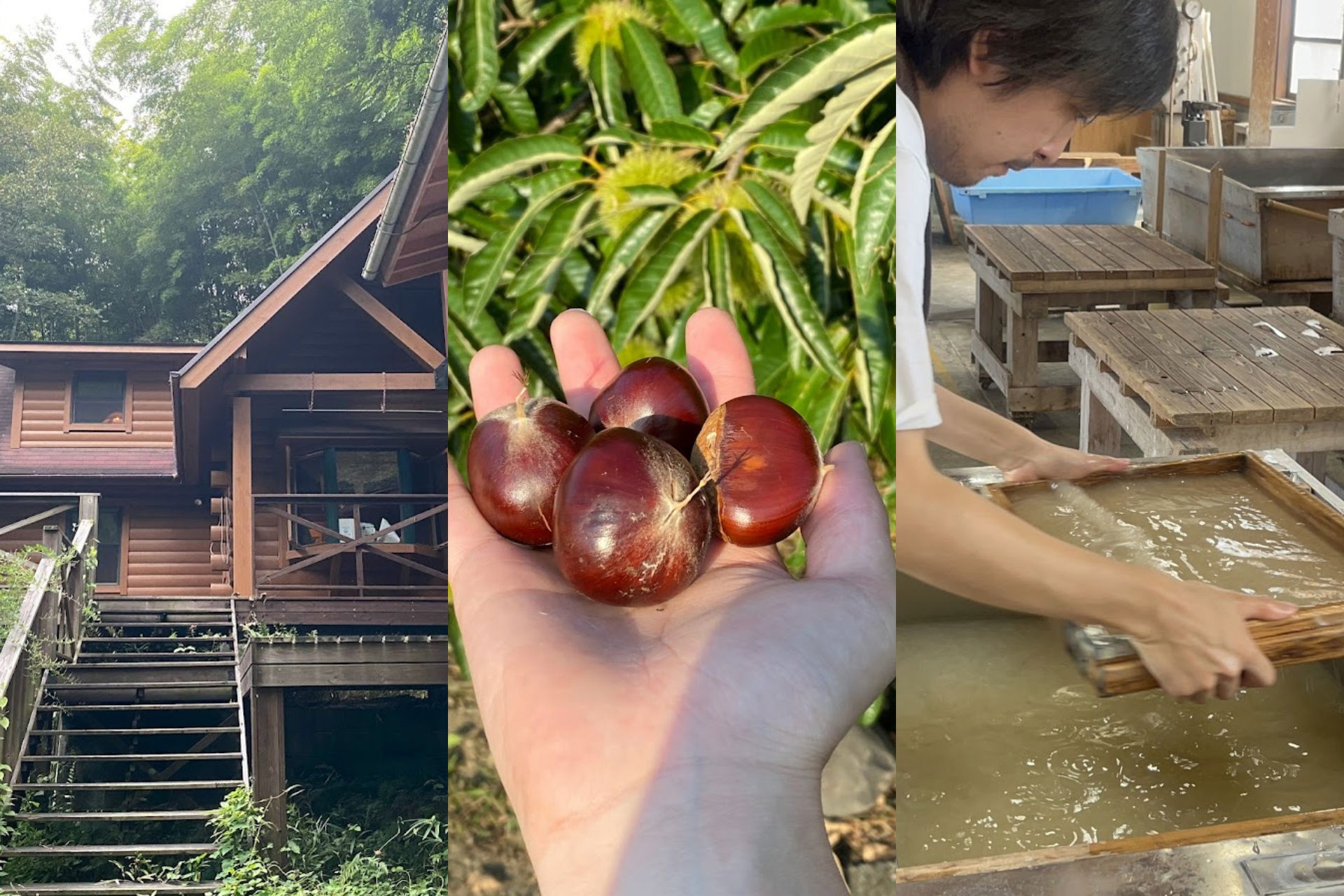
Trong bài viết blog này, tôi chia sẻ trải nghiệm du lịch đến Ogawa ở Saitama! Tỉnh láng giềng của Tokyo thoạt nhìn có thể trông khá bình dị, nhưng nơi đây có rất nhiều hoạt động và ẩm thực hấp dẫn để khám phá. Bài viết này đặc biệt thú vị dành cho những ai yêu thiên nhiên và tò mò về nghệ thuật làm Washi (giấy truyền thống).
Từ Tokyo đến Ogawa
Bằng ô tô
Nếu bạn dự định đi bằng ô tô, chuyến lái xe từ Tokyo đến Ogawa mất khoảng 1,5 đến 2 giờ. Gần như bằng thời gian đi tàu. Hành trình rất dễ chịu, nhưng trên đường có các trạm thu phí. Tốt nhất bạn nên kiểm tra Google Maps trước để biết chi phí hoặc trạm thu phí có thể phát sinh. Ngay tại Tokyo cũng có nhiều nơi cho thuê ô tô. Vì Ogawa khá nông thôn nên đương nhiên có lợi thế là bạn sẽ linh hoạt hơn nhiều khi có xe tại chỗ.
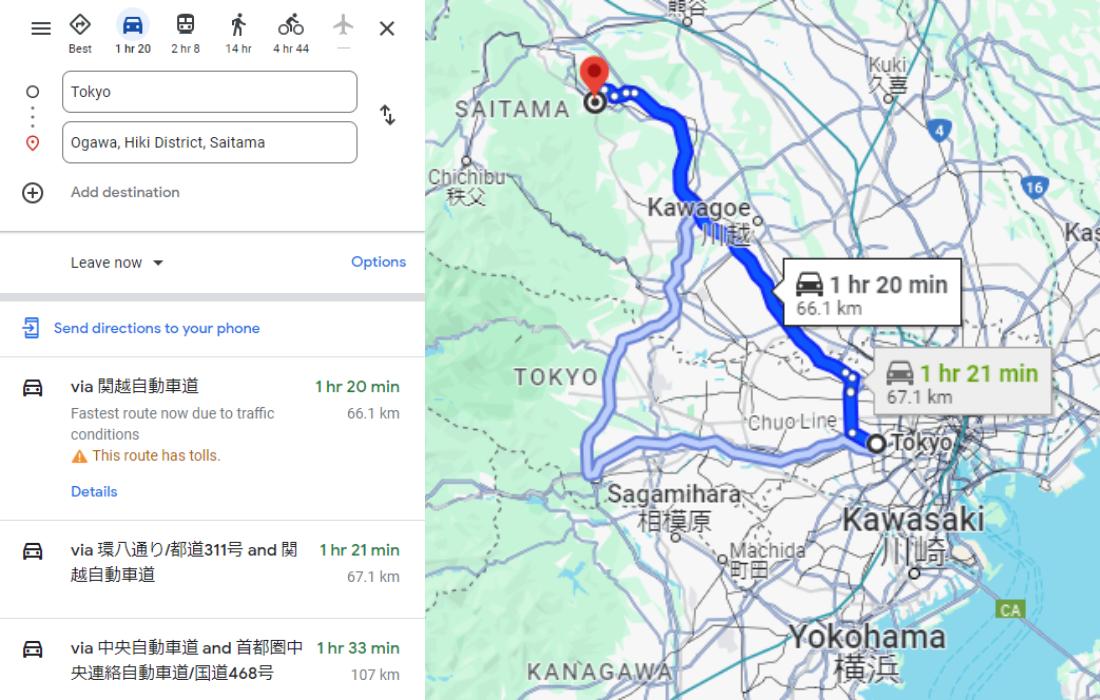
A screenshot of a driving directions search from Tokyo to Ogawa in Saitama Prefecture. The left panel lists three car routes: the fastest takes 1 hr 20 min over 66.1 km via the Kan-Etsu Expressway and is marked with a warning that the route has tolls, while the alternatives run 1 hr 21 min for 67.1 km and 1 hr 33 min for 107 km. A row of icons at the top compares other ways to travel, with transit at 2 hr 8, cycling at 4 hr 44, and walking at 14 hr. On the map itself, a thick blue route line runs northwest out of central Tokyo, passes the Kawagoe area, and ends at a red destination pin in Saitama, with a callout confirming the 1 hr 20 min, 66.1 km trip. A lighter alternate route swings much farther west through Sagamihara before rejoining near Tokyo. Labels for Kawasaki, Yokohama, and the prefectures of Saitama, Tokyo, and Kanagawa give the wider geographic context.
A screenshot of a driving directions search from Tokyo to Ogawa in Saitama Prefecture. The left panel lists three car routes: the fastest takes 1 hr 20 min over 66.1 km via the Kan-Etsu Expressway and is marked with a warning that the route has tolls, while the alternatives run 1 hr 21 min for 67.1 km and 1 hr 33 min for 107 km. A row of icons at the top compares other ways to travel, with transit at 2 hr 8, cycling at 4 hr 44, and walking at 14 hr.
On the map itself, a thick blue route line runs northwest out of central Tokyo, passes the Kawagoe area, and ends at a red destination pin in Saitama, with a callout confirming the 1 hr 20 min, 66.1 km trip. A lighter alternate route swings much farther west through Sagamihara before rejoining near Tokyo. Labels for Kawasaki, Yokohama, and the prefectures of Saitama, Tokyo, and Kanagawa give the wider geographic context.
Văn bản nhìn thấy trong hình
Best
1 hr 20
2 hr 8
14 hr
4 hr 44
Tokyo
Ogawa, Hiki District, Saitama
Add destination
Leave now
Options
Send directions to your phone
via 関越自動車道 1 hr 20 min
Fastest route now due to traffic conditions 66.1 km
This route has tolls.
Details
via 環八通り/都市311号 and 関越自動車道 1 hr 21 min
67.1 km
via 中央自動車道 and 首都圏中央連絡自動車道/国道468号 1 hr 33 min
107 km
SAITAMA
Kuki
久喜
Chichibu
秩父
Kawagoe
川越
TOKYO
1 hr 20 min
66.1 km
1 hr 21 min
67.1 km
Chuo Line
Tokyo
Sagamihara
相模原
Machida
町田
Kawasaki
川崎
Yokohama
横浜
KANAGAWA
4
16
CA
Bằng tàu điện
Đi từ Tokyo đến Ogawa bằng tàu điện rất thoải mái và chỉ mất khoảng 2 giờ trên tuyến tàu địa phương. Tuy nhiên, lưu ý rằng các nhà ga trong và xung quanh Ogawa không có cổng soát vé. Điều đó nghĩa là bạn không cần xuất trình vé để ra vào sân ga. Thay vào đó, tại nhà ga bạn sẽ thấy các máy dùng cho thẻ IC như PASMO hoặc SUICA, dùng để thanh toán cho hành trình của mình.
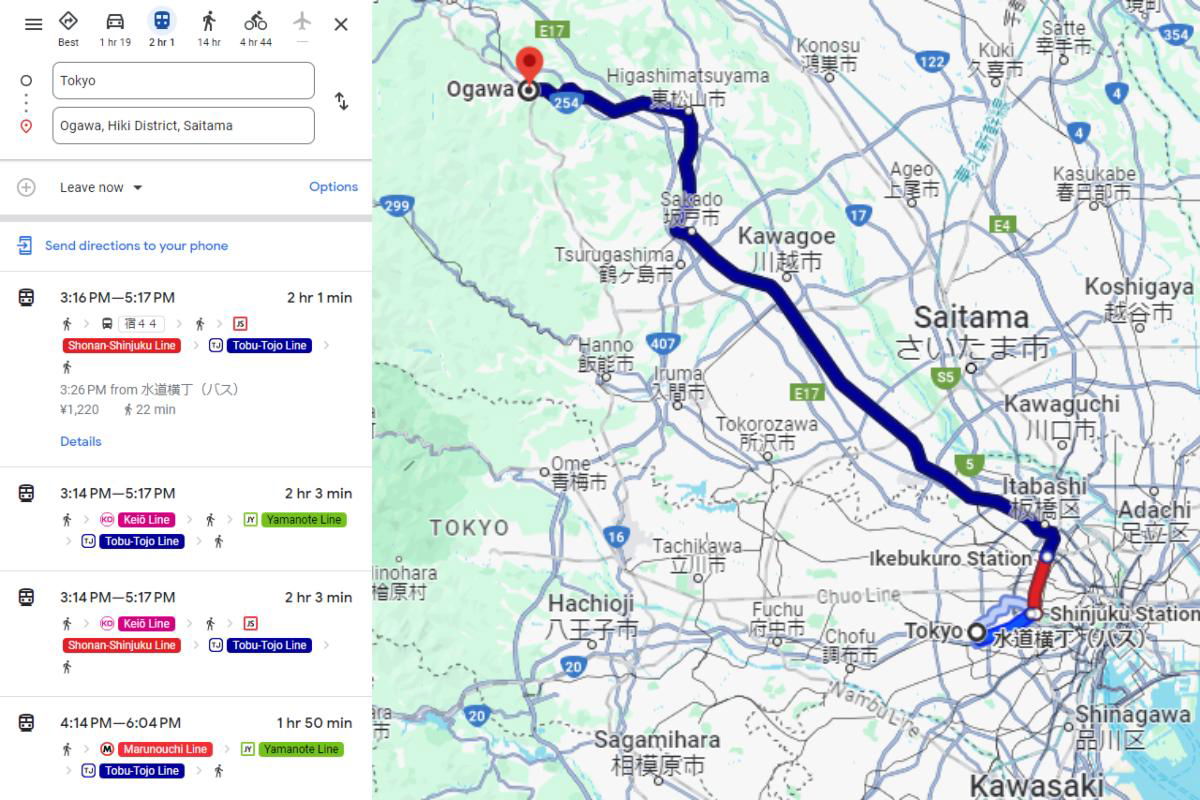
A Google Maps directions screenshot showing train routes from Tokyo to Ogawa in Saitama. The left panel lists four transit options, all leaving in the mid to late afternoon and taking roughly two hours. The fastest suggestion runs from 3:16 PM to 5:17 PM via the Shonan-Shinjuku Line and Tobu-Tojo Line for ¥1,220; the others use combinations of the Keio, Yamanote, Marunouchi, and Tobu-Tojo lines, with the quickest at 1 hour 50 minutes. The map on the right covers the greater Tokyo area and Saitama Prefecture, with city labels for Kawagoe, Saitama, Kawaguchi, and Hachioji. A thick dark blue route line traces the trip northwest from central Tokyo through Ikebukuro and Sakado, ending at a red pin in Ogawa, while a short red segment near Shinjuku Station marks the first stretch of the journey.
A Google Maps directions screenshot showing train routes from Tokyo to Ogawa in Saitama. The left panel lists four transit options, all leaving in the mid to late afternoon and taking roughly two hours. The fastest suggestion runs from 3:16 PM to 5:17 PM via the Shonan-Shinjuku Line and Tobu-Tojo Line for ¥1,220; the others use combinations of the Keio, Yamanote, Marunouchi, and Tobu-Tojo lines, with the quickest at 1 hour 50 minutes.
The map on the right covers the greater Tokyo area and Saitama Prefecture, with city labels for Kawagoe, Saitama, Kawaguchi, and Hachioji. A thick dark blue route line traces the trip northwest from central Tokyo through Ikebukuro and Sakado, ending at a red pin in Ogawa, while a short red segment near Shinjuku Station marks the first stretch of the journey.
Văn bản nhìn thấy trong hình
Tokyo
Ogawa, Hiki District, Saitama
Leave now
Options
Send directions to your phone
Best
1 hr 19
2 hr 1
14 hr
4 hr 44
3:16 PM—5:17 PM 2 hr 1 min
宿4 4
Shonan-Shinjuku Line
Tobu-Tojo Line
3:26 PM from 水道橋丁 (バス)
¥ 1,220 22 min
Details
3:14 PM—5:17 PM 2 hr 3 min
Keiō Line
Yamanote Line
Tobu-Tojo Line
3:14 PM—5:17 PM 2 hr 3 min
Keiō Line
Shonan-Shinjuku Line
Tobu-Tojo Line
4:14 PM—6:04 PM 1 hr 50 min
Marunouchi Line
Yamanote Line
Tobu-Tojo Line
E17
Ogawa
Higashimatsuyama
東松山市
254
Konosu
鴻巣市
Satte
幸手市
354
Kuki
久喜市
122
4
Ageo
上尾市
Kasukabe
春日部市
4
299
Sakado
坂戸市
Kawagoe
川越市
17
Tsurugashima
鶴ヶ島市
E4
Koshigaya
越谷市
Saitama
さいたま市
Hanno
飯能市
407
Iruma
入間市
E17
S5
Kawaguchi
川口市
Tokorozawa
所沢市
5
Ome
青梅市
TOKYO
16
Tachikawa
立川市
Ikebukuro Station
Itabashi
板橋区
Adachi
足立区
inohara
檜原村
Hachioji
八王子市
Fuchu
府中市
Chuo Line
Chofu
調布市
Tokyo
水道橋丁 (バス)
Shinjuku Station
20
Nambu Line
Shinagawa
品川区
Sagamihara
相模原市
Kawasaki
20
Thị trấn Ogawa
Ogawa là một thị trấn nhỏ quyến rũ thuộc tỉnh Saitama, nằm trong vùng nông thôn và đương nhiên nhỏ hơn, thư thái hơn Tokyo rất nhiều. Được bao quanh bởi thiên nhiên cùng nhiều cơ hội cho các hoạt động ngoài trời, tôi thực sự thích khoảng thời gian ở đây! Trong các phần tiếp theo, bạn sẽ biết tất cả những điều có thể làm tại Ogawa.
Nạp năng lượng với Udon
Ngay khi đến Ogawa, chúng tôi quyết định ghé ăn nhẹ tại một nhà hàng Udon tên là 武州めん 本店 (Bushu Men). Bất ngờ thay, tôi đã được thưởng thức một trong những bát Udon ngon nhất trong thời gian qua tại đây! Nhà hàng nổi tiếng với món ăn chuẩn vị và chất lượng nguyên liệu. Nếu bạn thích ẩm thực Nhật Bản hay đơn giản chỉ muốn thử một món Udon ngon miệng, tôi rất khuyên bạn đến nhà hàng 武州めん 本店.
Google Maps: https://maps.app.goo.gl/bjcx9nAQ9AWuPT2f6
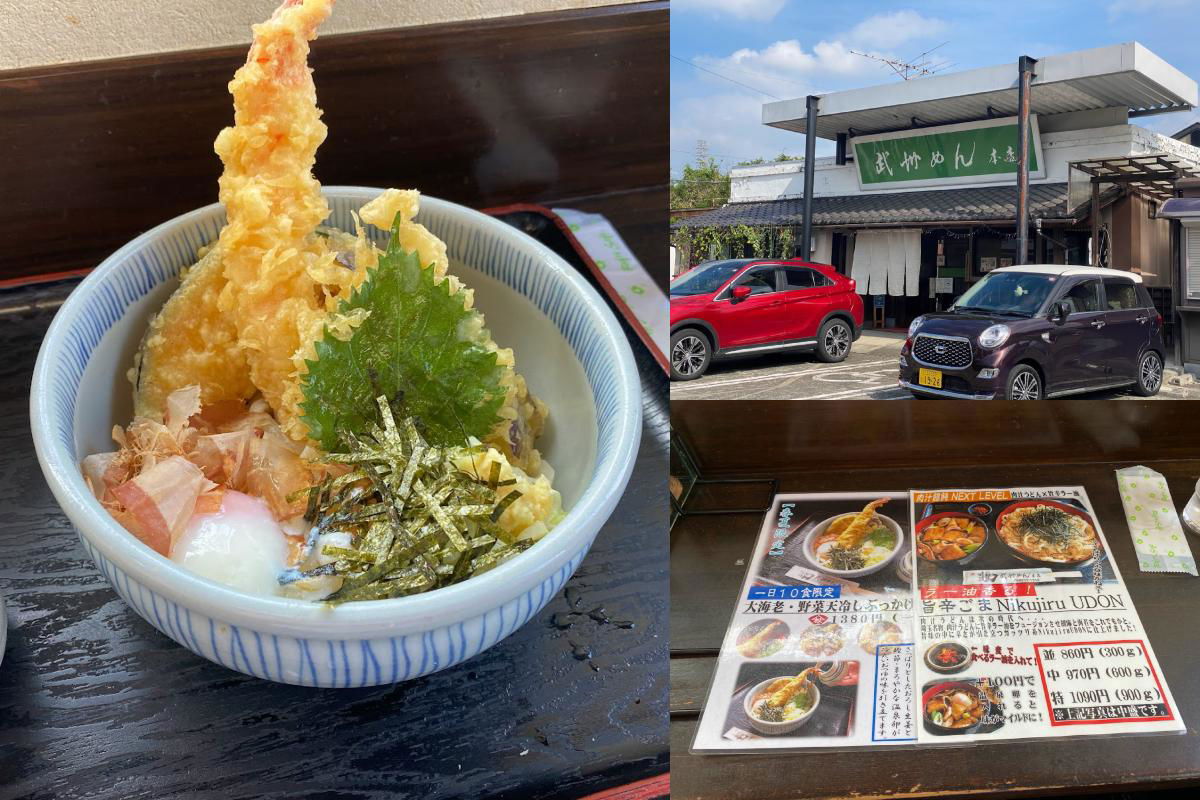
A three-photo collage from a udon restaurant in Ogawa, Saitama. The large photo on the left is the star: a blue-and-white striped ceramic bowl of cold udon piled with toppings, dominated by a tall, lacy golden shrimp tempura standing upright. Around it sit a raw egg yolk, bonito flakes, shredded nori seaweed, grated toppings, and a bright green shiso leaf. The bowl rests on a dark lacquered tray. The top right photo shows the shop itself, a low single-story building with a green Japanese sign over a doorway hung with white noren curtains and two cars parked out front under a blue sky. The bottom right photo shows a laminated menu lying on the wooden table, illustrated with photos of noodle dishes and listing the Nikujiru UDON in three sizes: 300 g for 800 yen, 600 g for 970 yen, and 900 g for 1,090 yen.
A three-photo collage from a udon restaurant in Ogawa, Saitama. The large photo on the left is the star: a blue-and-white striped ceramic bowl of cold udon piled with toppings, dominated by a tall, lacy golden shrimp tempura standing upright. Around it sit a raw egg yolk, bonito flakes, shredded nori seaweed, grated toppings, and a bright green shiso leaf. The bowl rests on a dark lacquered tray.
The top right photo shows the shop itself, a low single-story building with a green Japanese sign over a doorway hung with white noren curtains and two cars parked out front under a blue sky. The bottom right photo shows a laminated menu lying on the wooden table, illustrated with photos of noodle dishes and listing the Nikujiru UDON in three sizes: 300 g for 800 yen, 600 g for 970 yen, and 900 g for 1,090 yen.
Văn bản nhìn thấy trong hình
ラー油 NEXT LEVEL
一日10食限定
大海老・野菜天冷しうどん 1380円
旨辛ごま Ni.kujiru UDON
並 800円(300g)
中 970円(600g)
特 1090円(900g)
旨辛月見は中華です
+100円で麺を替えられます
Trải nghiệm làm Washi 和紙 (giấy truyền thống)
Ở Ogawa, chúng tôi đã tận dụng cơ hội làm giấy truyền thống của Nhật Bản, còn gọi là 和紙 (Washi). Loại giấy này được làm từ một loại sợi đặc biệt chiết xuất từ vỏ cây Kozo. Loại sợi này sau đó được mút thủ công và chế biến theo phương pháp truyền thống để tạo ra loại giấy chất lượng cao và bền. Washi được dùng cho nhiều mục đích khác nhau, chẳng hạn như dự án nghệ thuật, văn phòng phẩm, origami, thậm chí cả phục chế tài liệu lịch sử. Nó được biết đến với chất lượng cao, độ bền và kết cấu độc đáo mang lại vẻ cuốn hút đặc biệt. Nghề làm Washi là một hình thức nghệ thuật đã được gìn giữ suốt nhiều thế kỷ tại Nhật Bản và mang ý nghĩa văn hóa vô cùng quan trọng.
Google Maps: https://maps.app.goo.gl/Km5owQ73wS95kR9J7
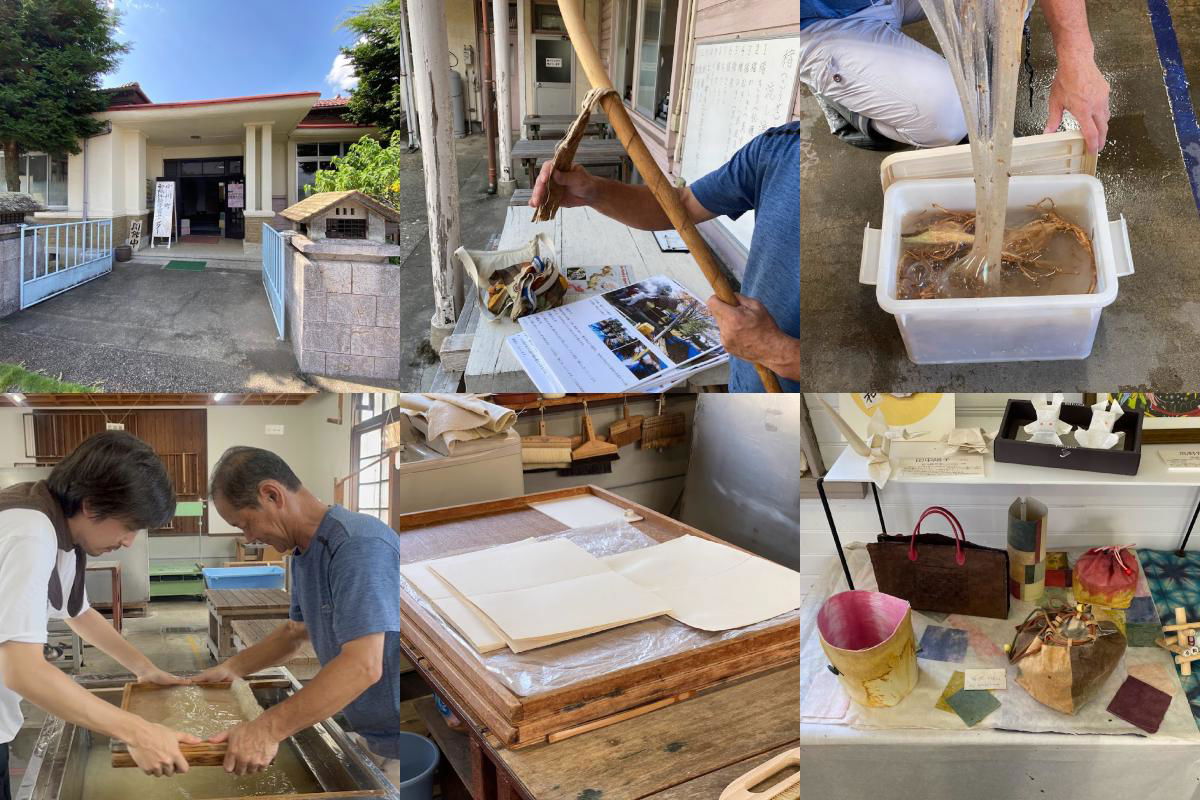
A six-photo collage captures a visit to a Washi paper workshop in Ogawa, Saitama. The top row shows the single-story workshop building with a noren curtain over its entrance and stone gateposts out front, a man in a blue shirt pulling strips of bark fiber off a long bamboo pole outside, and a pair of hands lifting a rootlike bundle of fiber from a white tub of cloudy water. The bottom row moves inside. Two men raise a bamboo papermaking screen together from a vat, water and pulp streaming beneath it. Next to that, fresh white sheets of paper lie stacked on a large wooden board, with brushes and paddles hanging on the wall above. The last photo shows the shop display: a brown washi handbag with red handles, a pink and yellow cylinder box, colorful paper squares, and small folded paper ornaments arranged on a black tray.
A six-photo collage captures a visit to a Washi paper workshop in Ogawa, Saitama. The top row shows the single-story workshop building with a noren curtain over its entrance and stone gateposts out front, a man in a blue shirt pulling strips of bark fiber off a long bamboo pole outside, and a pair of hands lifting a rootlike bundle of fiber from a white tub of cloudy water.
The bottom row moves inside. Two men raise a bamboo papermaking screen together from a vat, water and pulp streaming beneath it. Next to that, fresh white sheets of paper lie stacked on a large wooden board, with brushes and paddles hanging on the wall above. The last photo shows the shop display: a brown washi handbag with red handles, a pink and yellow cylinder box, colorful paper squares, and small folded paper ornaments arranged on a black tray.
Văn bản nhìn thấy trong hình
見学中
Lưu trú tại Airbnb giữa rừng
Một điểm nhấn chắc chắn trong chuyến đi ngắn ngày của tôi là lưu trú tại một căn Airbnb giữa rừng. Chỗ ở là một cabin gỗ ấm cúng nằm nép mình trong thiên nhiên – nhưng không có điều hòa. Dù nhiệt độ bên ngoài lên tới 33 độ và không có điều hòa, trải nghiệm vẫn thật độc đáo và khó quên. Là một người yêu thiên nhiên, tôi đặc biệt thích kỳ nghỉ này. Bạn không thường xuyên có cơ hội ngủ đêm ngay giữa lòng thiên nhiên đâu.
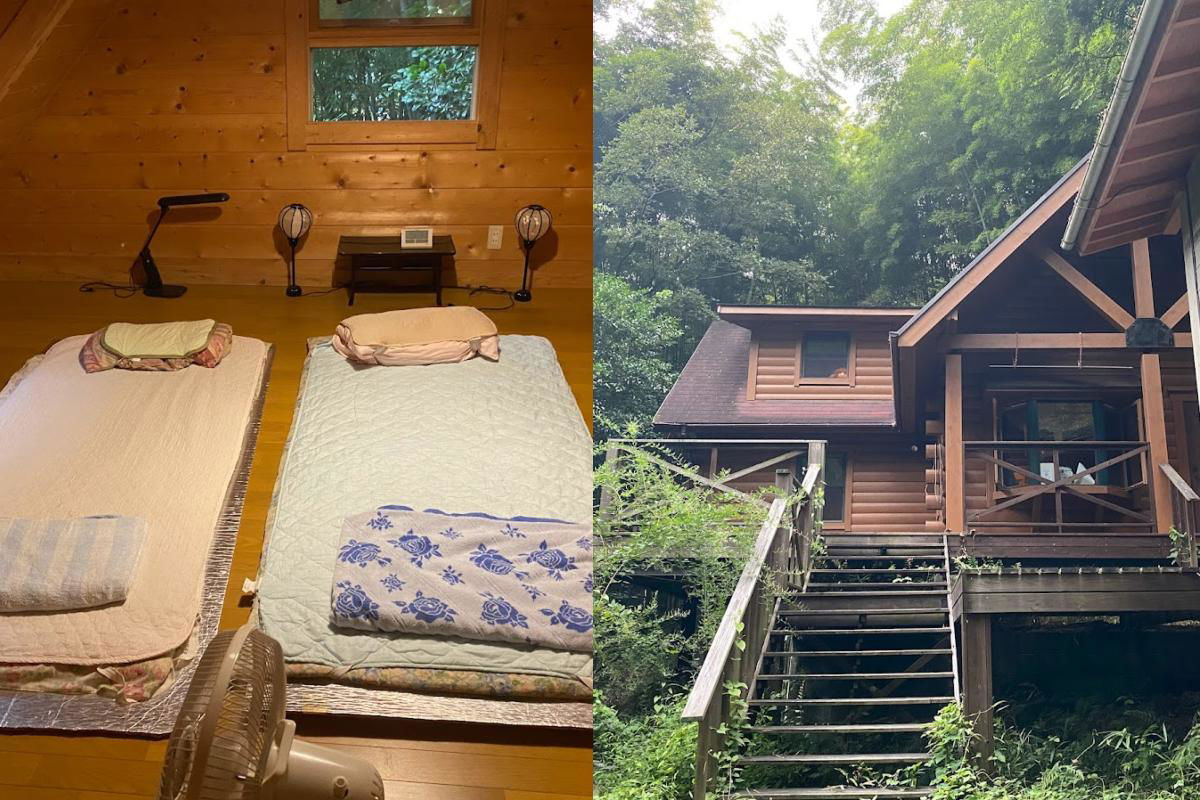
A side-by-side pair of photos showing a cozy wooden cabin stay in Ogawa, Saitama. On the left, a loft-style bedroom with warm pine walls and ceiling, two futons laid out on the wood floor, a small black side table with a clock, a reading lamp, and an electric fan in the foreground. On the right, the cabin's exterior seen from below: a log-style building with a dark shingled roof and a wooden deck and staircase, surrounded by dense green trees and bamboo on a hillside.
A side-by-side pair of photos showing a cozy wooden cabin stay in Ogawa, Saitama. On the left, a loft-style bedroom with warm pine walls and ceiling, two futons laid out on the wood floor, a small black side table with a clock, a reading lamp, and an electric fan in the foreground. On the right, the cabin's exterior seen from below: a log-style building with a dark shingled roof and a wooden deck and staircase, surrounded by dense green trees and bamboo on a hillside.
Văn bản nhìn thấy trong hình
No clearly readable text is present in the image.
Tìm thêm khách sạn ở Ogawa
Liên kết tiếp thị liên kết: Nếu bạn đặt khách sạn trên Booking.com thông qua widget hoặc liên kết của tôi, tôi sẽ nhận được một khoản hoa hồng nhỏ. Bạn không phải trả thêm bất kỳ chi phí nào, và bạn đang góp phần ủng hộ blog của tôi. Tôi rất biết ơn và chúc bạn thật vui vẻ trong những chuyến đi (^_^)Mt Sengen Hill View Park
Nếu bạn thích các hoạt động ngoài trời, Mt Sengen Hill View Park (Sengenyama Miharashi no Oka Koen) là một gợi ý rất đáng tham khảo! Công viên không chỉ mang đến tầm nhìn ngoạn mục ra cảnh quan tuyệt đẹp của Saitama mà còn có cả một chiếc cầu trượt. Trượt xuống chiếc cầu trượt này thật sự vui và chắc chắn là trải nghiệm phù hợp cho mọi lứa tuổi. Tuy nhiên, "chặng đường" đi bộ dưới cái nắng 33 độ thực sự là một thử thách, vì công viên cách ga tàu gần nhất tới 45 phút đi bộ. Do khi đó là giữa tháng 9, chúng tôi đã tìm thấy một số cây hạt dẻ rất lớn xung quanh công viên.
Google Maps: https://maps.app.goo.gl/fyGuCrxfrQaLKnez7
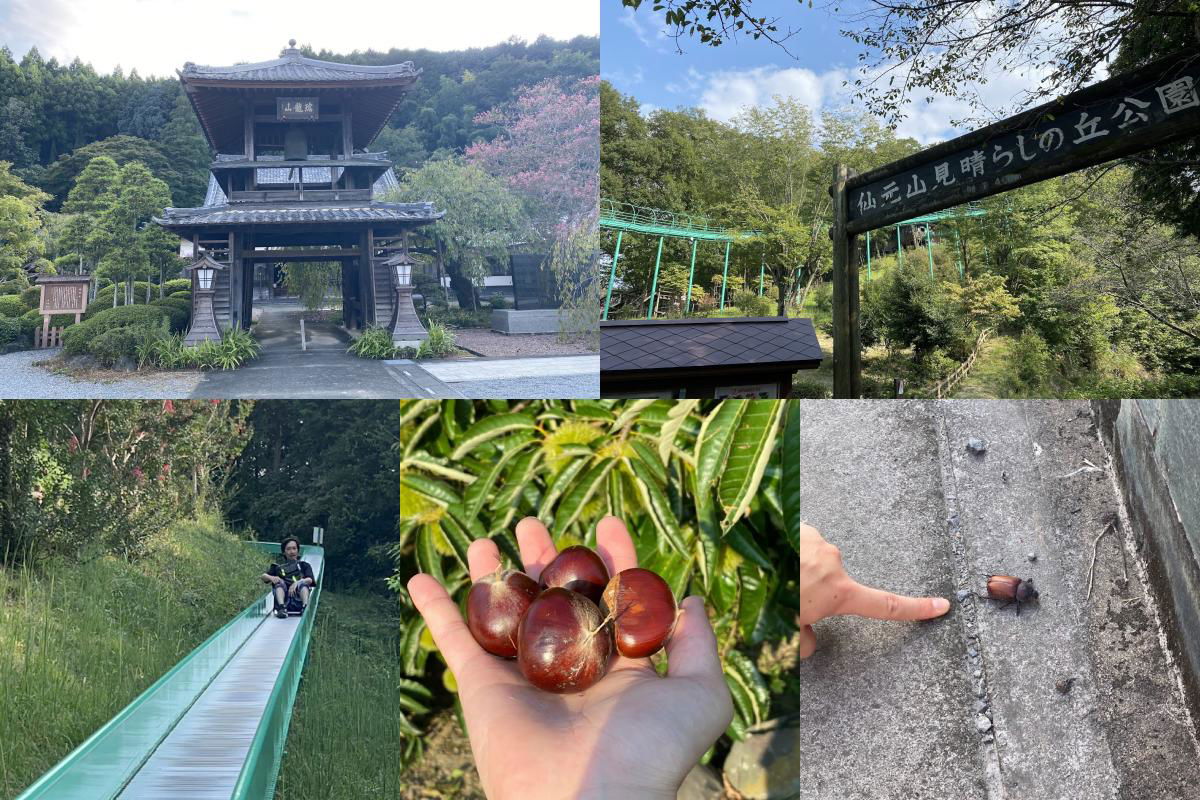
A five-photo collage from Mt. Sengen Hill View Park in Ogawa, Saitama, mixing temple scenery with small moments from a day out. The top left photo shows a wooden temple gate with a two-tiered tiled roof and a bell hanging beneath the upper story. Stone lanterns stand at the entrance, a willow and a tree with pink blossoms frame the scene, and forested hills rise behind it. In the top right, a dark wooden sign bears the park's Japanese name, 仙元山見晴らしの丘公園, while a long green roller slide snakes down the tree-covered slope in the background. The bottom row captures the visit itself. A rider in dark clothes speeds down that same roller slide as it cuts through a grassy hillside. A hand holds a few glossy brown chestnuts, with spiky green burrs still clustered on the branch behind them. In the last shot, a finger points at a rhinoceros beetle making its way across a concrete path.
A five-photo collage from Mt. Sengen Hill View Park in Ogawa, Saitama, mixing temple scenery with small moments from a day out.
The top left photo shows a wooden temple gate with a two-tiered tiled roof and a bell hanging beneath the upper story. Stone lanterns stand at the entrance, a willow and a tree with pink blossoms frame the scene, and forested hills rise behind it. In the top right, a dark wooden sign bears the park's Japanese name, 仙元山見晴らしの丘公園, while a long green roller slide snakes down the tree-covered slope in the background.
The bottom row captures the visit itself. A rider in dark clothes speeds down that same roller slide as it cuts through a grassy hillside. A hand holds a few glossy brown chestnuts, with spiky green burrs still clustered on the branch behind them. In the last shot, a finger points at a rhinoceros beetle making its way across a concrete path.
Văn bản nhìn thấy trong hình
仙元山見晴らしの丘公園
Ăn Curry tại CURRY&NOBLE
Một gợi ý ẩm thực nữa của tôi là món curry tại CURRY&NOBLE. Nhà hàng có không khí ấm cúng và nhân viên rất thân thiện, chu đáo. Thực đơn có nhiều loại curry khác nhau và vô số đánh giá tích cực trên Google quả là hoàn toàn xứng đáng!
Google Maps: https://maps.app.goo.gl/vd3yg9QMhTfDgvzp9
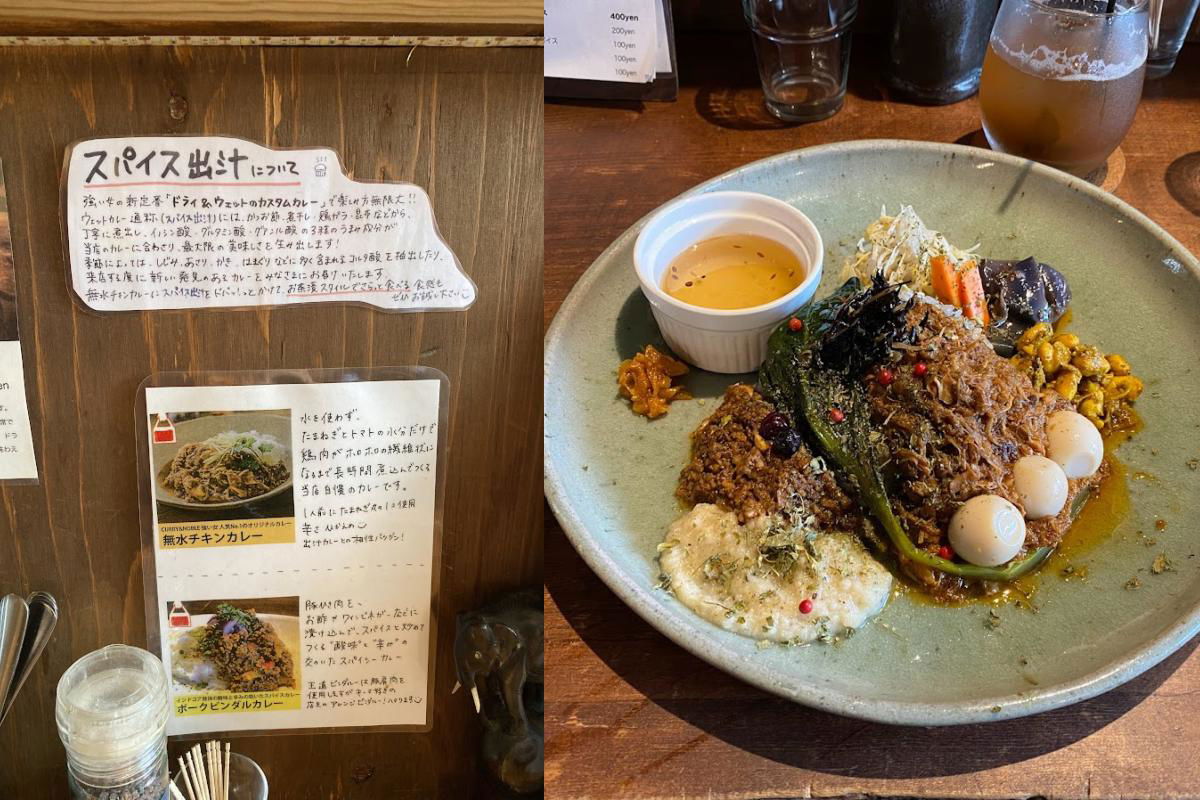
A plate of curry is the focus, served on a wide rustic green ceramic dish. The curry itself is a dark, richly spiced keema-style scoop laid over wilted leafy greens, surrounded by three peeled quail eggs, yellow pickles, shredded vegetables, a slice of carrot, pink peppercorns, and a pale scoop flecked with dried herbs. A small white ramekin of golden broth sits at the top of the plate. On the wooden table behind it are drinking glasses, one filled with an amber beverage, and a small price list. The left half of the photo shows the restaurant's wooden wall, covered with handwritten Japanese notes about the spice broth that forms the base of the curry, along with printed menu cards featuring a chicken curry and a pork vindaloo curry. The scene is from a cozy spice curry restaurant in Ogawa, Saitama.
A plate of curry is the focus, served on a wide rustic green ceramic dish. The curry itself is a dark, richly spiced keema-style scoop laid over wilted leafy greens, surrounded by three peeled quail eggs, yellow pickles, shredded vegetables, a slice of carrot, pink peppercorns, and a pale scoop flecked with dried herbs. A small white ramekin of golden broth sits at the top of the plate. On the wooden table behind it are drinking glasses, one filled with an amber beverage, and a small price list.
The left half of the photo shows the restaurant's wooden wall, covered with handwritten Japanese notes about the spice broth that forms the base of the curry, along with printed menu cards featuring a chicken curry and a pork vindaloo curry. The scene is from a cozy spice curry restaurant in Ogawa, Saitama.
Văn bản nhìn thấy trong hình
スパイス出汁 にこむ
400yen
200yen
100yen
100yen
100yen
当店自慢のカレーです
辛双子キノンカレー
ポークビンダルカレー
Yakiniku ở Yorii
Ở thị trấn lân cận Yorii, chúng tôi đã thưởng thức món Yakiniku rất ngon. Lần này là cá nướng, rất tươi và ăn kèm cơm thì tuyệt hảo. Tự tay nướng cá là một trải nghiệm tuyệt vời và cũng rất độc đáo! Nếu bạn thích cá, nhất định nên thử món này.
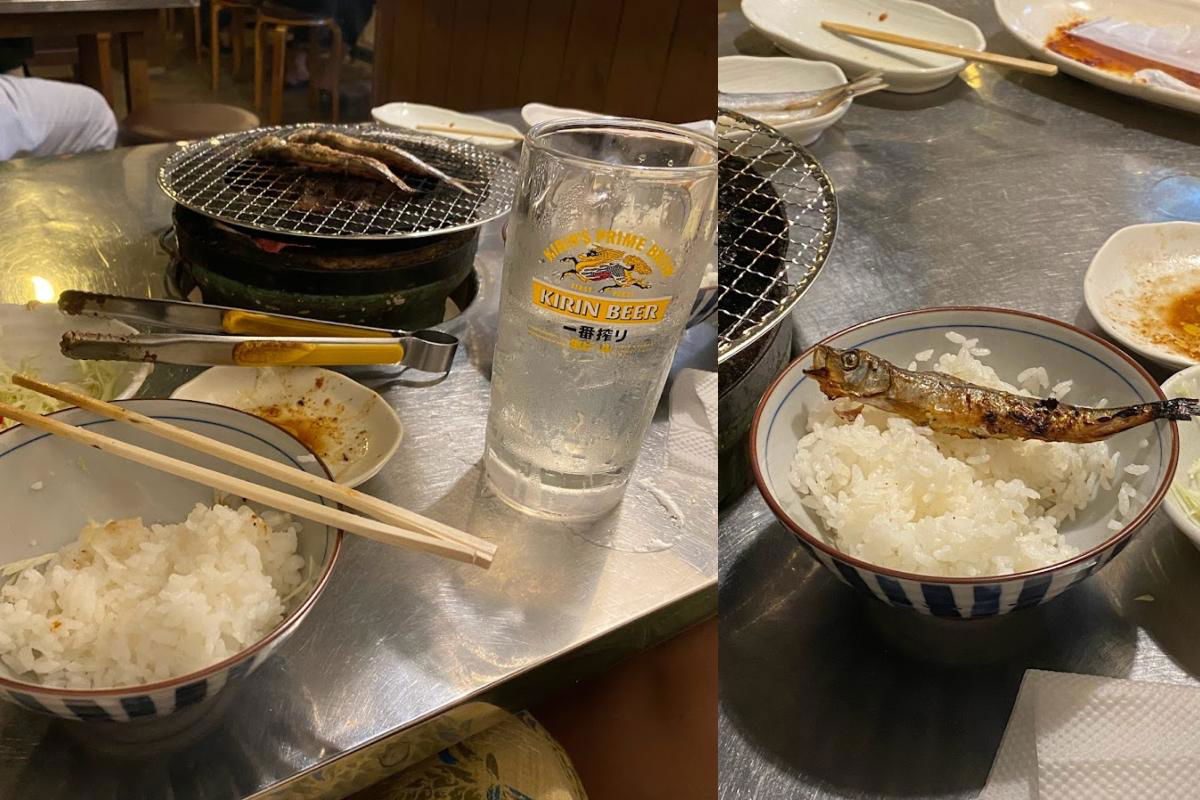
Two side-by-side shots from the same dinner at a casual izakaya. In the left photo a small tabletop charcoal grill sits on a steel table, its wire rack holding split salt-grilled fish with a second fish beside it. Metal tongs with yellow handles rest in front, and a tall frosted glass of Kirin Ichiban Shibori beer stands next to the grill. A striped ceramic bowl of white rice with wooden chopsticks across it sits in the foreground, alongside small sauce dishes and shredded cabbage. The right photo focuses on the bowl itself: a whole grilled fish, head and tail intact, laid across a mound of white rice. Behind it the edge of another charcoal grill peeks in, with empty plates, leftover fish bones, and chopsticks scattered on the steel table. The wooden walls and stools in the background give the scene a relaxed, well-used restaurant feel.
Two side-by-side shots from the same dinner at a casual izakaya. In the left photo a small tabletop charcoal grill sits on a steel table, its wire rack holding split salt-grilled fish with a second fish beside it. Metal tongs with yellow handles rest in front, and a tall frosted glass of Kirin Ichiban Shibori beer stands next to the grill. A striped ceramic bowl of white rice with wooden chopsticks across it sits in the foreground, alongside small sauce dishes and shredded cabbage.
The right photo focuses on the bowl itself: a whole grilled fish, head and tail intact, laid across a mound of white rice. Behind it the edge of another charcoal grill peeks in, with empty plates, leftover fish bones, and chopsticks scattered on the steel table. The wooden walls and stools in the background give the scene a relaxed, well-used restaurant feel.
Văn bản nhìn thấy trong hình
KIRIN BEER
一番搾り
Kết luận
Chuyến đi đến Ogawa Saitama là một trải nghiệm khó quên mà tôi muốn giới thiệu cho bất cứ ai. Việc lưu trú trong cabin gỗ giữa thiên nhiên đặc biệt là điểm nhấn cá nhân của tôi. Làm giấy truyền thống (Washi) là trải nghiệm độc đáo mà bạn có thể có ở Ogawa. Về ẩm thực, tỉnh Saitama có rất nhiều điều để khám phá và theo tôi chắc chắn rất đáng ghé thăm!


Bình luận