
Mục lục:
TL;DR
Thực phẩm lên men Nhật Bản không phải một món hay một hương vị duy nhất, mà là cả một kỹ thuật xoay quanh nấm koji, từ miso, nước tương cho đến amazake. Đừng coi chúng là thuốc, hãy ăn như món ăn thường ngày và để ý lượng muối.Lên men là một trong những nền tảng thầm lặng của ẩm thực Nhật Bản. Bạn gặp nó vào bữa sáng trong natto, trong một tô súp miso, bên cạnh cơm dưới dạng dưa muối, và trong những gia vị khiến món ăn hàng ngày đậm đà hơn danh sách nguyên liệu gợi ý. Đó không phải là một hương vị hay một sản phẩm. Đó là một họ các kỹ thuật biến đậu nành, gạo, lúa mạch, rau củ và trái cây thành thực phẩm giàu hương thơm, umami, vị chua hoặc khả năng bảo quản hơn.
Theo góc nhìn của tôi, lên men trở nên ít được nhắc đến trong các cuộc trò chuyện hàng ngày khoảng một thập kỷ trước. Nó chưa bao giờ biến mất khỏi những căn bếp Nhật Bản, nhưng giờ đây tôi nhận thấy nó nhiều hơn qua nấu ăn chú trọng sức khỏe, các cửa hàng chuyên doanh, buổi nếm thử và hội thảo. Sự quan tâm mới này rất hữu ích vì nó giúp chúng ta nhìn vượt qua cái nhãn thời thượng và hiểu tại sao những thực phẩm này vẫn là một phần của đời sống hàng ngày lâu dài đến vậy.
Tại sao lên men quan trọng trong ẩm thực Nhật Bản
Lên men bắt đầu khi các vi sinh vật được quản lý cẩn thận tác động lên thực phẩm. Trong ẩm thực Nhật Bản, các nhóm quan trọng bao gồm nấm koji, nấm men, vi khuẩn axit lactic, vi khuẩn natto và vi khuẩn axit axetic. Công việc của chúng có thể bảo quản thực phẩm và tạo ra axit amin cùng các hợp chất khác khiến hương vị phức tạp hơn. Kōji (麹) là gạo, lúa mạch hoặc đậu nành được nuôi cấy với Aspergillus oryzae , đóng vai trò đặc biệt trung tâm đối với miso, shoyu, mirin và sake. [1]

The image shows a close-up view of a refrigerated display case in a Japanese food shop, filled with neatly stacked packages of koji (fermented grain used for making miso, amazake, and other fermented foods). No people are visible; the frame is entirely occupied by the merchandise. Main content and arrangement The display consists of rectangular, vacuum-sealed blocks of grain, each wrapped in clear plastic and labeled with a white sticker. They are arranged in roughly vertical columns, with the color of the grain changing from left to right: Left columns: pale, whitish packages labeled “米こうじ” (rice koji). Several packages in this section are stacked about four to five high. Center columns: slightly darker, tan-colored packages labeled “麦こうじ” (barley koji). Right columns: darker brown packages labeled “玄米こうじ” (brown rice koji). Each label contains Japanese text including the product name, what appears to be production date information (for example, "20.9.8" can be read on some labels), producer and origin details, a barcode, and small red stamps or markings. The labels on the front-facing packages in the lower left indicate a 500 g weight. Signage and pricing Two printed signs are visible at the top of the display: A black sign on the upper left with red and white text advertising rice, barley, and brown rice koji (“米・麦 玄米”) at "500g ¥1,000 (税込)", meaning 500 g for 1,000 yen tax included. A white sign at the upper right with similar pricing ("¥1,000(税込)") and the text “香川こづち” plus “いつでも米・麦 玄米”. The word “香川” (Kagawa) suggests the product or shop may be associated with Kagawa Prefecture, though this is an inference from the text rather than a confirmed location. Other visible elements Near the top center-left there is a round analog dial, likely a temperature gauge for the refrigerated case, with small colored markings around its edge. The right edge of the frame shows additional products partially cut off: a dark packaged item with Japanese characters (possibly miso or another fermented product, with text resembling “田舎...” which often refers to "country-style" miso), and a label that appears to include “醤油こうじ” (soy sauce koji), suggesting the shop sells other koji-based items. A sheet of clear plastic film or wrap covers part of the display, creating bright diagonal reflections and glare across the middle and lower portions of the image, which slightly obscures some packages. Lighting and composition The scene is brightly lit with cool, typical supermarket-style lighting. The camera angle is straight on or slightly from above, and the products fill the entire frame. The overall impression is of a specialty or health-food store section dedicated to koji for home fermentation use.
The image shows a close-up view of a refrigerated display case in a Japanese food shop, filled with neatly stacked packages of koji (fermented grain used for making miso, amazake, and other fermented foods). No people are visible; the frame is entirely occupied by the merchandise.
Main content and arrangement
The display consists of rectangular, vacuum-sealed blocks of grain, each wrapped in clear plastic and labeled with a white sticker. They are arranged in roughly vertical columns, with the color of the grain changing from left to right:
- Left columns: pale, whitish packages labeled “米こうじ” (rice koji). Several packages in this section are stacked about four to five high.
- Center columns: slightly darker, tan-colored packages labeled “麦こうじ” (barley koji).
- Right columns: darker brown packages labeled “玄米こうじ” (brown rice koji).
Each label contains Japanese text including the product name, what appears to be production date information (for example, "20.9.8" can be read on some labels), producer and origin details, a barcode, and small red stamps or markings. The labels on the front-facing packages in the lower left indicate a 500 g weight.
Signage and pricing
Two printed signs are visible at the top of the display:
- A black sign on the upper left with red and white text advertising rice, barley, and brown rice koji (“米・麦 玄米”) at "500g ¥1,000 (税込)", meaning 500 g for 1,000 yen tax included.
- A white sign at the upper right with similar pricing ("¥1,000(税込)") and the text “香川こづち” plus “いつでも米・麦 玄米”. The word “香川” (Kagawa) suggests the product or shop may be associated with Kagawa Prefecture, though this is an inference from the text rather than a confirmed location.
Other visible elements
- Near the top center-left there is a round analog dial, likely a temperature gauge for the refrigerated case, with small colored markings around its edge.
- The right edge of the frame shows additional products partially cut off: a dark packaged item with Japanese characters (possibly miso or another fermented product, with text resembling “田舎...” which often refers to "country-style" miso), and a label that appears to include “醤油こうじ” (soy sauce koji), suggesting the shop sells other koji-based items.
- A sheet of clear plastic film or wrap covers part of the display, creating bright diagonal reflections and glare across the middle and lower portions of the image, which slightly obscures some packages.
Lighting and composition
The scene is brightly lit with cool, typical supermarket-style lighting. The camera angle is straight on or slightly from above, and the products fill the entire frame. The overall impression is of a specialty or health-food store section dedicated to koji for home fermentation use.
Văn bản nhìn thấy trong hình
**価格札(中央上)**
自家製米こうじ
米 麹
500g ¥1,000(税込)
**価格札(右上)**
自家製米こうじ 契約ならんで `[uncertain: 契約ならんで]`
米・麦 玄米
100g ¥1,000(税込) `[uncertain: 100g ¥1,000]`
**計器(左上・文字盤の数字)**
50 40 30 20
**各パッケージのラベル(繰り返し)**
左の列(上から下へ):
- 米こうじ
- 米こうじ
- 米こうじ
- 米こうじ
- 米こうじ
- 米こうじ
- 米こうじ
- 米こうじ
第2列(上から下へ):
- 米こうじ
- 米こうじ
- 米こうじ
- 米こうじ
- 米こうじ
- 米こうじ
- 米こうじ
第3列(上から下へ):
- 米こうじ
- 米こうじ
- 麦こうじ
- 麦こうじ
- 米こうじ
- 麦こうじ
- 麦こうじ
第4列(上から下へ):
- 麦こうじ
- 麦こうじ
- 麦こうじ
- 麦こうじ
第5列(上から下へ):
- 玄米こうじ
- 玄米こうじ
- 玄米こうじ
- 玄米こうじ
- 玄米こうじ
右上(上から下へ):
- 麦こうじ
- 玄米こうじ
- 麦こうじ
**ラベルの小さな印字(読み取れる部分のみ)**
品名:米麹(米) 内容量:500g
原材料名:米(国産) `[uncertain: 原材料名:米(国産)]`
栄養成分表示(100g当たり) `[uncertain]`
2 9 8.04.12 12時まで `[uncertain: 2 9 8.04.12]`
賞味期限 `[uncertain]`
TEL `[uncertain: 0942-**-****]`
**右端の商品ラベル**
万能調味料
醤油こうじ
塩 `[uncertain]`
ゆきんこ娘 `[uncertain: ゆきんこ娘]`
田舎みそ `[uncertain: 田舎みそ]`
**右端の縦書き文字**
逸 `[unreadable]`
か `[uncertain: か]`
Khí hậu ấm áp, ẩm ướt của Nhật Bản đã giúp nhiều truyền thống lên men vùng miền phát triển, nhưng khí hậu thôi thì chưa phải là toàn bộ câu chuyện. Con người đã tinh chỉnh công thức, mức muối, vật chứa và thời gian ủ chín qua nhiều thế hệ. Đó là lý do tại sao một loại miso trắng ngọt, một loại miso đậu sẫm màu, một loại dưa muối cám gạo chua gắt và một loại sake thanh nhẹ đều có thể thuộc về nền lên men Nhật Bản trong khi hương vị lại hoàn toàn khác nhau.
Thực phẩm lên men có thể là một phần giá trị của chế độ ăn cân bằng tổng thể, nhưng chúng không phải là thần dược. Các nghiên cứu do MAFF thảo luận cho thấy thực phẩm lên men truyền thống Nhật Bản có thể hỗ trợ trao đổi chất và môi trường đường ruột, tuy nhiên mỗi người phản ứng khác nhau và phần còn lại của chế độ ăn cũng quan trọng. Muối cũng quan trọng: miso, tsukemono và umeboshi có thể chứa nhiều natri, vì vậy tôi coi chúng là những thành phần tạo hương vị của một bữa ăn đa dạng, chứ không phải thứ để ăn không giới hạn. [2]
Koji: men giống thầm lặng đứng sau miso, amazake và nhiều hơn nữa
Kōji không phải là một sản phẩm hoàn chỉnh hay một hương vị. Nó là một loại hạt hoặc cây họ đậu được nuôi cấy với nấm kōji, và nó trao cho nhà sản xuất những enzyme khiến nền lên men Nhật Bản đa năng đến vậy. Trong cửa hàng, bạn có thể thấy kome kōji (米麹), làm từ gạo xát trắng; genmai kōji (玄米麹), đơn giản là kōji gạo lứt làm từ gạo lứt nguyên hạt; và mugi kōji (麦麹), làm từ lúa mạch. Trong sản xuất miso, kōji gạo, kōji lúa mạch và kōji đậu nành là những nền tảng kinh điển, và mỗi loại thay đổi hương thơm, độ ngọt và chiều sâu của thành phẩm. [3]
Một trong những cách thân thiện nhất để nếm kōji là kome kōji amazake (米麹甘酒), một thức uống ngọt làm từ gạo và kōji gạo. Nó khác với amazake làm từ bã rượu sake, sake kasu (酒粕), vì vậy đáng để đọc kỹ nhãn thay vì mặc định mọi chai đều giống nhau. [4]
Điều tôi thấy đặc biệt thú vị là nguyên liệu này có thể đi xa đến đâu. Kōji hiện đang được khám phá cả ngoài Nhật Bản, kể cả trong các nhà bếp ẩm thực cao cấp, cho nước ướp, sốt, ủ muối và những gia vị mới giàu umami. Sáng tạo hiện đại ấy vẫn bắt đầu từ sự nuôi cấy kiên nhẫn mà bạn thấy trong một cửa hàng miso nhỏ ở Nhật Bản. [5]
Lên men, muối chua, và không phải lúc nào cũng là một
Sự phân biệt này đáng để thực hiện vì từ tiếng Anh “pickle” có thể che giấu nhiều điều. Tsukemono (漬物) nghĩa là đồ muối chua, thường là rau củ, nhưng không phải tsukemono nào cũng được lên men chủ động. Một quả dưa leo nhanh muối trong giấm vẫn là tsukemono. Ngược lại, nukazuke (ぬか漬け) nằm trong lớp cám gạo sống, nơi lên men axit lactic là một phần của quá trình. [6]
Một chi tiết rất Nhật Bản là việc tìm nền cho nukadoko (ぬか床), lớp cám gạo, có thể dễ dàng đến mức nào. Khi gạo lứt, genmai (玄米), được xát thành gạo trắng tại máy xát gạo hoạt động bằng xu, koin seimaiki (コイン精米機), nó tạo ra kome nuka (米ぬか), cám gạo. Đây không phải là momigara (もみ殻), vỏ trấu bên ngoài của hạt gạo. Tại một số máy hoặc cửa hàng gạo gần đó, một hộp cám được dán nhãn là miễn phí mang về, điều này có thể hoàn hảo để bắt đầu một nukadoko. Luôn kiểm tra biển báo hoặc hỏi trước, vì quy định lấy cám khác nhau tùy địa điểm. MAFF xác định cám gạo là sản phẩm phụ giàu dinh dưỡng của việc xát gạo lứt và là nền tảng của nukazuke. [7] Một chi nhánh JA, chẳng hạn, công khai cung cấp cám gạo miễn phí bên cạnh máy xát gạo bằng xu của mình. [8]
Cách tiếp cận thực tế tương tự cũng áp dụng ở nơi khác. Shiozuke dùng muối, suzuke dùng giấm, kasuzuke dùng bã rượu sake, shoyuzuke dùng nước tương, và karashizuke dùng mù tạt. Một số phương pháp khuyến khích lên men theo thời gian, trong khi những phương pháp khác chủ yếu nhằm nêm gia vị và bảo quản. Biết được sự khác biệt giúp khay bữa sáng Nhật Bản hoặc kệ siêu thị dễ đọc hơn nhiều.
| Phương pháp | Thuật ngữ tiếng Nhật | Nguyên liệu nền điển hình | Điều gì xảy ra |
|---|---|---|---|
| Lên men Kōji | 麹, kōji | Gạo, lúa mạch hoặc đậu nành | Việc nuôi cấy và ủ chín có kiểm soát tạo nên nền tảng cho miso, sake, shoyu và nhiều loại khác. |
| Muối chua cám gạo | ぬか漬け, nukazuke | Rau củ và lớp cám gạo | Một nukadoko còn sống có thể phát triển lên men axit lactic. |
| Ướp muối | 塩漬け, shiozuke | Rau củ và muối | Muối rút nước và bảo quản; lên men có thể xảy ra, nhưng không được đảm bảo. |
| Ướp giấm | 酢漬け, suzuke | Rau củ và giấm | Thường là muối nhanh và nêm gia vị, không phải lên men chủ động. |
| Ướp bã rượu sake | 粕漬け, kasuzuke | Rau củ hoặc cá với bã rượu sake | Dùng nguyên liệu đã lên men, dù bản thân bước ướp không nhất thiết là lên men chủ động. |
| Ướp nước tương | 醤油漬け, shoyuzuke | Rau củ hoặc hải sản với shoyu | Thường là phương pháp nêm gia vị và bảo quản, mượn chiều sâu lên men của shoyu. |
Những thực phẩm lên men Nhật Bản bạn sẽ gặp thường xuyên nhất
Bạn có thể lập một danh sách rất dài, nhưng đây là những thực phẩm và gia vị mà du khách để ý đầu tiên. Hãy coi đây như một bản đồ, chứ không phải sự thay thế cho câu chuyện riêng của từng loại.
Miso
Miso (味噌) là tương đậu nành lên men, thường làm từ đậu nành, muối và kōji gạo, lúa mạch hoặc đậu nành. Nó là xương sống thầm lặng của súp, nước ướp, lớp phủ bóng và nhiều bữa ăn nấu tại nhà. Nguyên liệu chính xác và quá trình ủ chín quyết định màu sắc, độ mặn, độ ngọt và chiều sâu của nó. Bài hướng dẫn miso chi tiết của tôi giải thích các loại và cách sử dụng chúng.
Phần lớn miso hàng ngày được làm để bảo quản ổn định, thường qua xử lý nhiệt ngăn chặn hoạt động tiếp diễn và giữ hương vị đồng nhất hơn. Miso không qua nhiệt, thường được ghi nhãn nama miso (生味噌), vẫn là một ngách chuyên biệt nhỏ. Nó có thể tiếp tục phát triển về hương thơm và cần bảo quản lạnh cẩn thận hơn. Nếm thử nó rất thú vị, nhưng nó không tự động “tốt hơn” hay là phương pháp chữa bệnh. Tôi sẽ chọn nó vì hương vị sống động, không ngừng tiến hóa và trải nghiệm so sánh nó với các loại miso khác.
Nếu bạn đang ở Tokyo và muốn nếm thử thay vì chỉ đọc, tôi có thể đưa sự so sánh đó vào Tokyo Miso Tour của mình. Tùy tình hình, chúng ta có thể ghé một cửa hàng chuyên doanh, so sánh các phong cách, thưởng thức các món làm từ miso, hoặc tham gia một hội thảo thực hành. Các cửa hàng chuyên doanh ở Tokyo có tổ chức hội thảo miso theo đặt chỗ, vì vậy đây là một phần thực sự của văn hóa ẩm thực thành phố, chứ không phải hoạt động du lịch bịa ra. [9]
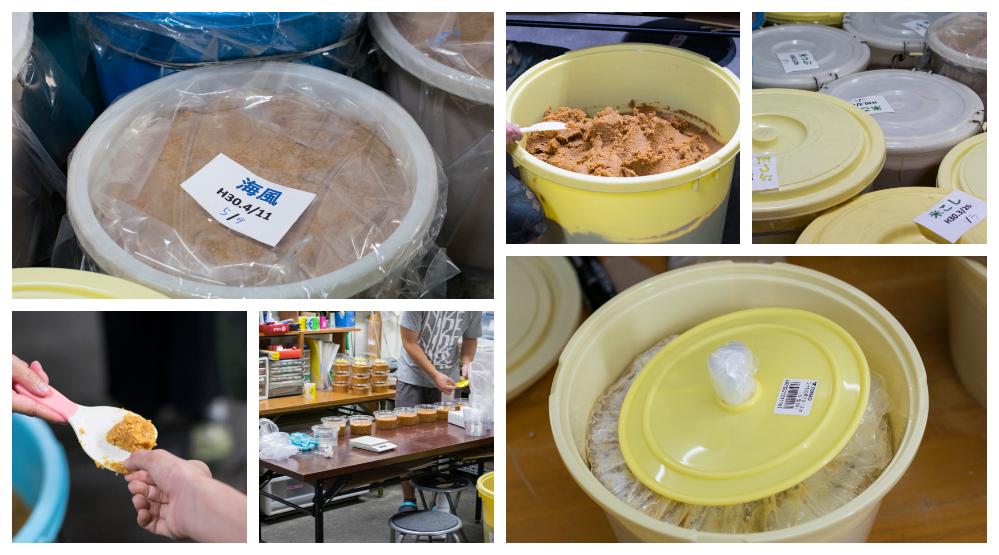
A six-photo collage from a miso workshop in Japan, built around big buckets of fermenting soybean paste. The largest frame shows an open white bucket packed with dense brown miso, its surface sealed under plastic wrap and marked with a handwritten Japanese label carrying a date. Next to it, rows of white and yellow lidded tubs hold other batches, one labeled in Japanese as rice koji. The remaining close-ups stay tight on the paste: a yellow bucket filled with smooth, caramel-colored miso with a small spoon resting in it, and a large yellow tub with its lid pushed aside to reveal plastic-wrapped miso inside. Two frames bring people in. One shows a hand offering a scoop of miso on a white spatula with a pink handle, held out over a blue bucket for a taste. In the other, a man in a gray t-shirt stands at a long table portioning miso into neat rows of small plastic containers, with shelves and a whiteboard behind him.
A six-photo collage from a miso workshop in Japan, built around big buckets of fermenting soybean paste. The largest frame shows an open white bucket packed with dense brown miso, its surface sealed under plastic wrap and marked with a handwritten Japanese label carrying a date. Next to it, rows of white and yellow lidded tubs hold other batches, one labeled in Japanese as rice koji. The remaining close-ups stay tight on the paste: a yellow bucket filled with smooth, caramel-colored miso with a small spoon resting in it, and a large yellow tub with its lid pushed aside to reveal plastic-wrapped miso inside.
Two frames bring people in. One shows a hand offering a scoop of miso on a white spatula with a pink handle, held out over a blue bucket for a taste. In the other, a man in a gray t-shirt stands at a long table portioning miso into neat rows of small plastic containers, with shelves and a whiteboard behind him.
Văn bản nhìn thấy trong hình
海風
H30.4.11
Natto
Natto (納豆) được làm bằng cách lên men đậu nành nấu chín với vi khuẩn natto. Những sợi kéo dính, mùi hương nồng và vị đậm đà có thể gây bất ngờ lúc đầu, nhưng nó là người bạn quen thuộc của bữa sáng với nhiều người, thường ăn cùng cơm nóng với mù tạt, nước tương và hành lá. Nếu bạn tò mò, bài viết về natto của tôi sẽ cho bạn lần thử đầu tiên thực tế mà không giả vờ rằng ai cũng sẽ yêu thích ngay lập tức.

The image shows a Japanese home-cooked meal arranged on a table covered with a white tablecloth featuring a light orange/beige plaid (checkered) pattern. The photo is taken from above at a slight angle, and several dishes partially enter the frame, suggesting a shared family-style meal. Main subject (center): A round ceramic bowl, cream-colored with irregular green brushstroke bands around the rim and inner wall, filled with what appears to be natto (fermented soybeans). The beans are glossy, amber-brown, and sticky-looking, mixed with plenty of chopped green onion and a light brown seasoning sauce. A spoon or small spatula with a bright pink handle and a flat metal end rests in the bowl, angled toward the upper right. Some sauce smears are visible on the inner sides of the bowl. Surrounding dishes: Upper right: A white bowl containing a simmered dish (likely nimono), with chunky pieces of potato, orange carrot slices, and what appears to be meat, all in a glossy brown broth. Upper left: A small plate with a traditional blue-and-white floral arabesque-style pattern, on which a pair of chopsticks rests. The chopstick tops are decorated with blue and white designs. Left of center: A small white plate with concentric brown rings near its rim, mostly empty, with a few small food crumbs on it. Bottom right corner: A partially visible plate, white with a yellow floral motif near the edge, holding pale sliced pieces that could be potato, sausage, or a similar ingredient (not clearly identifiable). Lighting and atmosphere: The scene is lit with warm indoor lighting, giving the food a homey, casual appearance. No people, text, or brand names are visible. The overall impression is of a typical Japanese weekday dinner, with the seasoned natto bowl as the focal point of the photograph.
The image shows a Japanese home-cooked meal arranged on a table covered with a white tablecloth featuring a light orange/beige plaid (checkered) pattern. The photo is taken from above at a slight angle, and several dishes partially enter the frame, suggesting a shared family-style meal.
Main subject (center): A round ceramic bowl, cream-colored with irregular green brushstroke bands around the rim and inner wall, filled with what appears to be natto (fermented soybeans). The beans are glossy, amber-brown, and sticky-looking, mixed with plenty of chopped green onion and a light brown seasoning sauce. A spoon or small spatula with a bright pink handle and a flat metal end rests in the bowl, angled toward the upper right. Some sauce smears are visible on the inner sides of the bowl.
Surrounding dishes:
- Upper right: A white bowl containing a simmered dish (likely nimono), with chunky pieces of potato, orange carrot slices, and what appears to be meat, all in a glossy brown broth.
- Upper left: A small plate with a traditional blue-and-white floral arabesque-style pattern, on which a pair of chopsticks rests. The chopstick tops are decorated with blue and white designs.
- Left of center: A small white plate with concentric brown rings near its rim, mostly empty, with a few small food crumbs on it.
- Bottom right corner: A partially visible plate, white with a yellow floral motif near the edge, holding pale sliced pieces that could be potato, sausage, or a similar ingredient (not clearly identifiable).
Lighting and atmosphere: The scene is lit with warm indoor lighting, giving the food a homey, casual appearance. No people, text, or brand names are visible. The overall impression is of a typical Japanese weekday dinner, with the seasoned natto bowl as the focal point of the photograph.
Văn bản nhìn thấy trong hình
No visible text found in the image.

The image shows retail packages of what appears to be a Japanese natto (fermented soybean) making kit, displayed for sale in a shallow round basket made of woven bamboo. The photo is taken from above at a slight angle, showing about eight to ten identical clear plastic bags arranged loosely in the tray. The packages Each bag contains two long bundles of dried rice straw bound with thin purple bands, and beside them a column of small, round, light-tan soybeans is visible through the plastic. The straw-and-beans arrangement suggests the straw serves as the traditional fermenting medium, consistent with a homemade natto kit rather than ready-to-eat natto. Labeling (visible Japanese text) A large pink circular sticker with a dotted pattern sits on the front of each package, with prominent white characters reading "納笑豆", a wordplay combining 納豆 (natto) with 笑 (smile/laugh). Around the circle, smaller text reads 手作りキット (handmade kit), 信州産大豆から (from Shinshu-grown soybeans), and 発酵おうち時間 (fermenting at home / at-home fermentation time). A small cream-colored vertical tag on the bags reads 信州産 ナカカセンナリ, apparently identifying the soybean variety (Nakakasennari) and its Shinshu (Nagano) origin. Each bag also carries a small white sticker shaped like a map outline; text on it appears to include 長野県 (Nagano Prefecture), suggesting the map depicts Nagano. One package shows partially visible vertical bullet-point text (including fragments such as 天然の..., 糸引き..., 味..., 市販...), likely describing product features, and a line near the bottom reads 美しい納豆の作り方はこちら ("for how to make beautiful natto, see here"), pointing to instructions. Setting and composition The basket sits on a surface covered with green artificial turf-like material, and a light wooden frame or box edge is visible in the background at the top. Bright indoor lighting creates strong white reflections on the crinkled plastic wrap. The pink circular labels are the most visually striking element, standing out against the natural beige tones of the straw, soybeans, and bamboo basket. Overall, the image conveys a specialty or regional food product: a do-it-yourself natto fermentation kit made with Shinshu (Nagano-grown) soybeans and rice straw, presented as an attractive artisanal item. This aligns with the stated context of a blog about Japanese fermentation culture, though that context is not itself printed in the image.
The image shows retail packages of what appears to be a Japanese natto (fermented soybean) making kit, displayed for sale in a shallow round basket made of woven bamboo. The photo is taken from above at a slight angle, showing about eight to ten identical clear plastic bags arranged loosely in the tray.
The packages
Each bag contains two long bundles of dried rice straw bound with thin purple bands, and beside them a column of small, round, light-tan soybeans is visible through the plastic. The straw-and-beans arrangement suggests the straw serves as the traditional fermenting medium, consistent with a homemade natto kit rather than ready-to-eat natto.
Labeling (visible Japanese text)
- A large pink circular sticker with a dotted pattern sits on the front of each package, with prominent white characters reading "納笑豆", a wordplay combining 納豆 (natto) with 笑 (smile/laugh).
- Around the circle, smaller text reads 手作りキット (handmade kit), 信州産大豆から (from Shinshu-grown soybeans), and 発酵おうち時間 (fermenting at home / at-home fermentation time).
- A small cream-colored vertical tag on the bags reads 信州産 ナカカセンナリ, apparently identifying the soybean variety (Nakakasennari) and its Shinshu (Nagano) origin.
- Each bag also carries a small white sticker shaped like a map outline; text on it appears to include 長野県 (Nagano Prefecture), suggesting the map depicts Nagano.
- One package shows partially visible vertical bullet-point text (including fragments such as 天然の..., 糸引き..., 味..., 市販...), likely describing product features, and a line near the bottom reads 美しい納豆の作り方はこちら ("for how to make beautiful natto, see here"), pointing to instructions.
Setting and composition
The basket sits on a surface covered with green artificial turf-like material, and a light wooden frame or box edge is visible in the background at the top. Bright indoor lighting creates strong white reflections on the crinkled plastic wrap. The pink circular labels are the most visually striking element, standing out against the natural beige tones of the straw, soybeans, and bamboo basket.
Overall, the image conveys a specialty or regional food product: a do-it-yourself natto fermentation kit made with Shinshu (Nagano-grown) soybeans and rice straw, presented as an attractive artisanal item. This aligns with the stated context of a blog about Japanese fermentation culture, though that context is not itself printed in the image.
Văn bản nhìn thấy trong hình
**中央のパッケージ(本体ラベル):**
納笑つと豆
「手作りキット」
信州産
稲わら
発酵おうち時間
(わらに付けられた札:)
信州産
ナカセンナリ
**パッケージ裏面のグレー部分(一部見えているテキスト):**
天然の
●糸引
●味 [unreadable]
ロの [uncertain: 口の]
市販
ご [unreadable]
○ [unreadable]
○ [unreadable]
○ [unreadable]
○ [unreadable]
**パッケージ下部のテキスト:**
笑つと納豆の作り方はこちら
**地図ステッカー(長野県の形):**
長野県
信州 [uncertain]
**左側のパッケージ(一部見えている部分):**
納 [unreadable]
発酵お [uncertain: 発酵おうち時間]
[unreadable]ち [uncertain]
時 [uncertain]
(わらに付けられた札:)
信州産
ナカセンナリ
**右上のパッケージ(一部見えているラベル):**
納笑
つと [uncertain]
[unreadable]
Tsukemono và Takuan
Tsukemono bao quát thế giới rộng lớn của dưa muối Nhật Bản. Chúng thêm tương phản cho cơm, cá nướng hoặc một suất ăn: muối, độ giòn, vị chua, màu sắc và cảm giác làm mới vị giác giữa các miếng ăn. Takuan (沢庵) là củ cải muối màu vàng tươi mà bạn thường thấy bên cạnh sushi hoặc cơm. Nó thuộc về gia đình tsukemono lớn hơn, nhưng phổ biến đến mức xứng đáng có riêng một hướng dẫn takuan.
Umeboshi
Umeboshi (梅干し) là quả ume muối, chua gắt và mặn đậm, thường được nhét vào onigiri hoặc ăn cùng cơm. Màu đỏ của nó thường đến từ shiso. Nó là một trong những thực phẩm nhanh chóng cho thấy lên men và bảo quản kiểu Nhật có thể mạnh mẽ đến nhường nào trong một khẩu phần nhỏ bé. Về bảo quản, hương vị và cách ăn thực tế, hãy xem bài viết về umeboshi của tôi.
Sake, shoyu, mirin và các gia vị hàng ngày khác
Lên men cũng hiện diện khi nó không rõ ràng trên đĩa. Sake (日本酒) dùng gạo, nước, nấm men và koji, trong khi shoyu (醤油) và mirin (みりん) mang muối, độ ngọt, hương thơm và umami vào nấu ăn. Sake là đồ uống có cồn, không phải thực phẩm bổ dưỡng, vì vậy tôi coi nó là thứ để thưởng thức có trách nhiệm. Nếu bạn muốn câu chuyện đầy đủ hơn, hãy bắt đầu với hướng dẫn sake và hướng dẫn mirin của tôi.
Shiokara
Shiokara (塩辛) là một ví dụ đầy thách thức một cách có chủ đích của cùng truyền thống bảo quản: hải sản, thường bao gồm nội tạng được muối và lên men, với mùi hương mạnh mẽ và vị đậm đà cô đặc. Nó thường được ăn với lượng rất nhỏ cùng cơm hoặc làm món nhắm rượu. Bạn không cần phải yêu thích nó để hiểu tại sao nó thuộc về câu chuyện rộng lớn hơn của nền lên men Nhật Bản. [10]
Imojōchū
Imojōchū (芋焼酎) là một loại rượu chưng cất làm từ khoai lang, thường có koji trong quy trình sản xuất. Nó không phải là sake, và tính cách mạnh mẽ, đậm chất đất của nó khiến sự phân biệt đó đáng nhớ khi bạn thấy cả hai trên menu đồ uống. Giống như sake, hãy thưởng thức nó vì hương vị và văn hóa, chứ không phải như một sản phẩm sức khỏe.
Thử lên men Nhật Bản trong đời sống hàng ngày
Hãy bắt đầu từ những điều nhỏ và chọn một bối cảnh hợp lý. Gọi một suất ăn với súp miso và tsukemono, thử một khẩu phần natto nhỏ với cơm vào bữa sáng, hoặc mua vài gói miso khác nhau và so sánh chúng trong cùng một nồi súp đơn giản với dashi. Bạn sẽ học được nhiều hơn từ buổi nếm thử so sánh trực tiếp đó hơn là học thuộc lòng thuật ngữ.
Một siêu thị Nhật Bản tốt là một trong những nơi dễ bắt đầu nhất. So sánh miso ở khu vực làm mát, lấy một gói natto nhỏ, và xem các nhãn tsukemono. Nếu bạn đặc biệt quan tâm đến miso không qua nhiệt, hãy tìm chữ nama (生), sau đó đọc hướng dẫn bảo quản thay vì chỉ dựa vào một từ duy nhất. Sản phẩm làm lạnh, hạn sử dụng ngắn và ghi chú về quá trình ủ chín tiếp diễn là những manh mối hữu ích.
Nếu bạn thích nếm thử kèm bối cảnh, một chuyến thăm nhà sản xuất sẽ làm sự khác biệt rõ ràng hơn nhiều. Trong và quanh Tokyo, Tokyo Miso Tour của tôi có thể bao gồm cửa hàng chuyên doanh, các phong cách miso tương phản, món ăn từ miso, hoặc một hội thảo, tùy tình hình. Saitama Shoyu Tour theo đuổi ý tưởng tương tự từ một góc độ khác: kōji, muối, đậu nành, lúa mì và thời gian trở thành gia vị bạn dùng mỗi ngày như thế nào. Nếu bạn đang kiểm soát lượng natri, bị dị ứng, cần lời khuyên ăn uống khi mang thai, hoặc đang dùng thuốc, hãy kiểm tra nhãn và làm theo hướng dẫn của chuyên gia y tế có chuyên môn.
Điểm khởi đầu tốt nhất là điểm mà bạn sẽ thực sự tận hưởng thường xuyên. Lên men ở Nhật Bản không chỉ là tìm kiếm natto mạnh mẽ nhất hay miso hiếm nhất. Đó là việc nhận ra một thìa tương, một miếng dưa muối nhỏ, hay một chút shoyu thay đổi bữa ăn bình thường như thế nào. Thực phẩm lên men Nhật Bản yêu thích của bạn là gì? Hãy cho tôi biết trong phần bình luận.
Nguồn:
- Bộ Nông nghiệp, Lâm nghiệp và Thủy sản: Thế giới lên men Nhật Bản (tiếng Nhật): https://www.maff.go.jp/j/pr/aff/2211/spe1_01.html...
- Phỏng vấn MAFF về lên men, sức khỏe và khác biệt cá nhân (tiếng Nhật): https://www.maff.go.jp/j/pr/aff/2211/spe1_01.html...
- Hướng dẫn nguyên liệu miso và shoyu của MAFF (tiếng Nhật): https://www.maff.go.jp/j/keikaku/syokubunka/tradit...
- Giới thiệu đồ uống truyền thống Nhật Bản của MAFF: https://www.maff.go.jp/e/policies/market/dento_syo...
- El País viết về kōji trong ẩm thực quốc tế đương đại (tiếng Tây Ban Nha): https://elpais.com/gastronomia/2025-07-22/el-koji-...
- Hướng dẫn dưa muối cám gạo lên men của MAFF (tiếng Nhật): https://www.maff.go.jp/j/heya/kodomo_sodan/0102/04...
- Hướng dẫn thực phẩm truyền thống về tsukemono của MAFF (tiếng Nhật): https://www.maff.go.jp/j/keikaku/syokubunka/tradit...
- Thông báo máy xát gạo bằng xu của chi nhánh JA Asaka-no (tiếng Nhật): https://www.ja-asakano.or.jp/archives/2794...
- Thông tin hội thảo Sano Miso (tiếng Nhật): https://sanomiso.com/workshop/...
- Giới thiệu thực phẩm lên men Nhật Bản của MAFF (PDF, tiếng Anh): https://www.maff.go.jp/j/keikaku/syokubunka/tradit...
Bình luận
Xin chào, có thể tìm thấy KOJI ở Pháp trong các cửa hàng tạp hóa châu Á không, cảm ơn
Chào Marie, Tôi không biết các cửa hàng tạp hóa châu Á ở Pháp, vì vậy tôi không thể trả lời câu hỏi của bạn. Thân ái, Ryusei