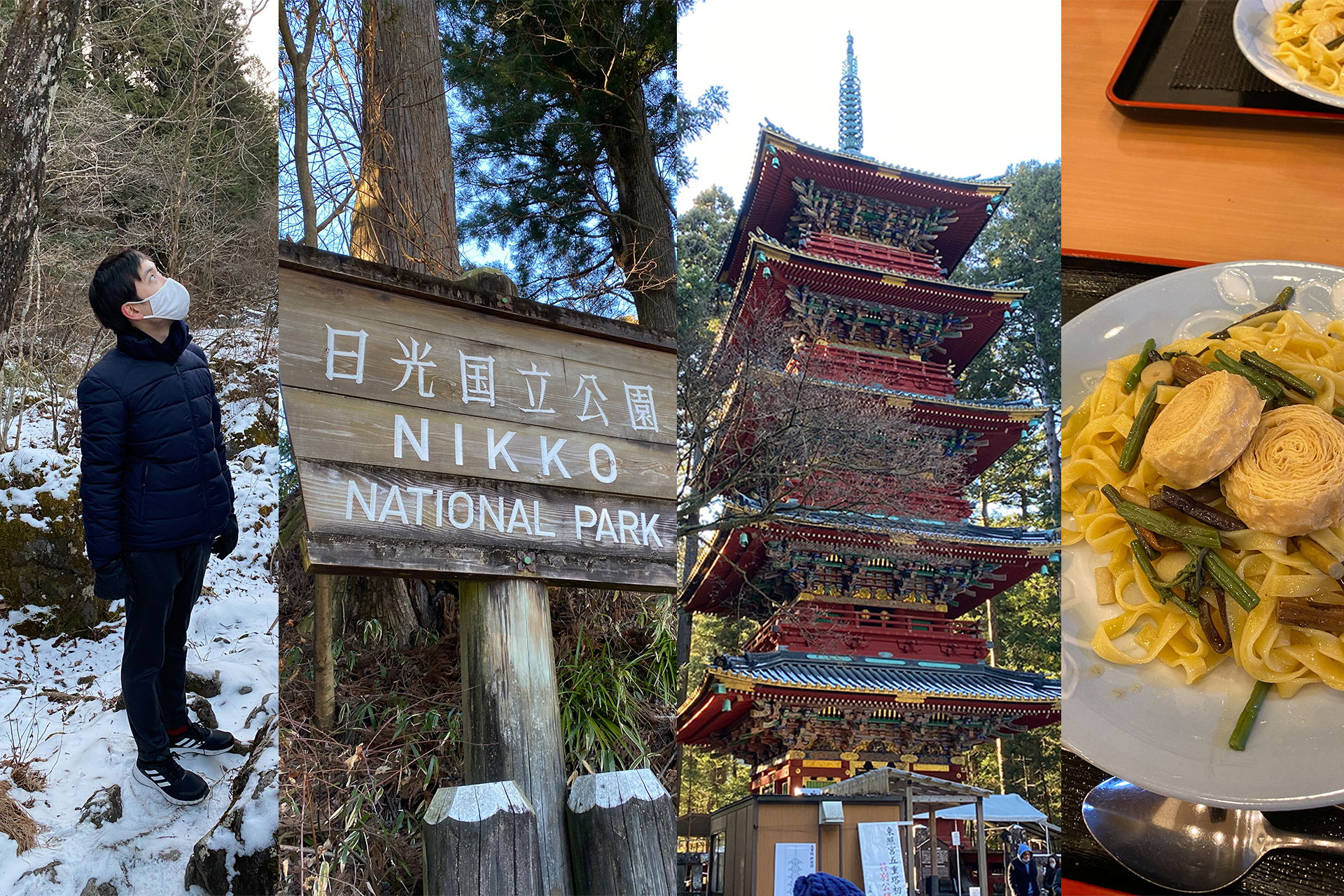
Mục lục:
TL;DR
Đừng chỉ dừng lại ở đền Toshogu nổi tiếng, Nikko còn có hồ Chuzenji, Yumoto Onsen và nhiều thiên nhiên tuyệt vời. Từ Tokyo chỉ mất khoảng 2 tiếng đi tàu, nhưng nhớ mua vé xe buýt đặc biệt để đi lại tự do và tiết kiệm cho 2 ngày.Nikko / Nikkō hay theo tiếng Nhật (jap. 日光市) là một thành phố nổi tiếng của Nhật Bản. Thành phố này nằm ở tỉnh Tochigi-Ken và có thể đến bằng tàu hỏa từ Tokyo trong khoảng 2 giờ.
Với đa số du khách, đền Nikkō Tōshō-gū (được công nhận là Di sản Thế giới UNESCO) là điểm dừng chân đầu tiên, nổi tiếng với Ba Con Khỉ Thông Minh không nhìn (điều ác), không nghe và không nói điều ác. Nhưng Nikko còn có rất nhiều điều thú vị hơn nữa. Đặc biệt nơi đây có nhiều công trình lịch sử, cùng thiên nhiên tươi đẹp và không khí trong lành—những thứ mà đôi khi bạn không thể trải nghiệm ở Tokyo.
Tôi đã đến Nikko vào cả năm 2022 lẫn 2023 và trong bài viết này tôi sẽ chia sẻ với bạn tất cả những gì tôi đã trải nghiệm trong cả hai chuyến đi.

This is a cute, hand-drawn infographic titled "Nikko Travel Guide: Nature & Heritage Escape." The centerpiece is an ornate, gold-accented illustration of Toshogu Shrine framed by a pink cherry tree on one side and a fiery red maple on the other. Three cartoon monkeys in the classic "see no evil, hear no evil, speak no evil" poses sit on a branch in the upper left, and cherry blossoms drift across the pastel sky. Along the bottom, five round vignettes preview the top sights: Shinkyo Bridge (a red bridge over a river), Kegon Waterfalls with a rainbow at its base, Lake Chuzenji backed by a mountain, Yumoto Onsen with smiling bathers in a steaming hot spring, and Edo Wonderland with two figures in samurai-era dress. The right column is split into three themed sections. Under Transport, a small red train and a yellow bus note that the ride from Tokyo takes about two hours and that a pass covers travel around Nikko and Lake Chuzenji. The Food section shows bowls of yuba (tofu skin) and soba with edamame and tea. Travel tips suggest packing a snowskate, a puffer jacket, and a coin purse, each drawn as a simple icon.
This is a cute, hand-drawn infographic titled "Nikko Travel Guide: Nature & Heritage Escape." The centerpiece is an ornate, gold-accented illustration of Toshogu Shrine framed by a pink cherry tree on one side and a fiery red maple on the other. Three cartoon monkeys in the classic "see no evil, hear no evil, speak no evil" poses sit on a branch in the upper left, and cherry blossoms drift across the pastel sky.
Along the bottom, five round vignettes preview the top sights: Shinkyo Bridge (a red bridge over a river), Kegon Waterfalls with a rainbow at its base, Lake Chuzenji backed by a mountain, Yumoto Onsen with smiling bathers in a steaming hot spring, and Edo Wonderland with two figures in samurai-era dress. The right column is split into three themed sections. Under Transport, a small red train and a yellow bus note that the ride from Tokyo takes about two hours and that a pass covers travel around Nikko and Lake Chuzenji. The Food section shows bowls of yuba (tofu skin) and soba with edamame and tea. Travel tips suggest packing a snowskate, a puffer jacket, and a coin purse, each drawn as a simple icon.
Văn bản nhìn thấy trong hình
NIKKO TRAVEL GUIDE:
Nature & Heritage Escape
Transport
Cute train
(approx. 2 hours
from Tokyo)
Bus
(Pass covers travel around
Nikko & to Lake Chuzenji)
Food
Yuba
(Tofu Skin)
Soba
Travel tips
Snowskate
Puffer Jacket
Coin purse
Toshogu Shrine
Cute
Shinkyo Bridge
Kegon
Kegan Waterfalls
Lake
Lake Chuzenji
Yumoto
Yumoto Onsen
Edo
Edo Wonderland
Từ Tokyo đến Nikko
Bằng ô tô
Nếu bạn muốn lái xe đến Nikko bằng ô tô, hãy lưu ý rằng hành trình mất khoảng 2 giờ (có thể lâu hơn tùy tình trạng giao thông). Trên tuyến đường có các trạm thu phí, vì vậy hãy kiểm tra trước để dự trù chi phí.
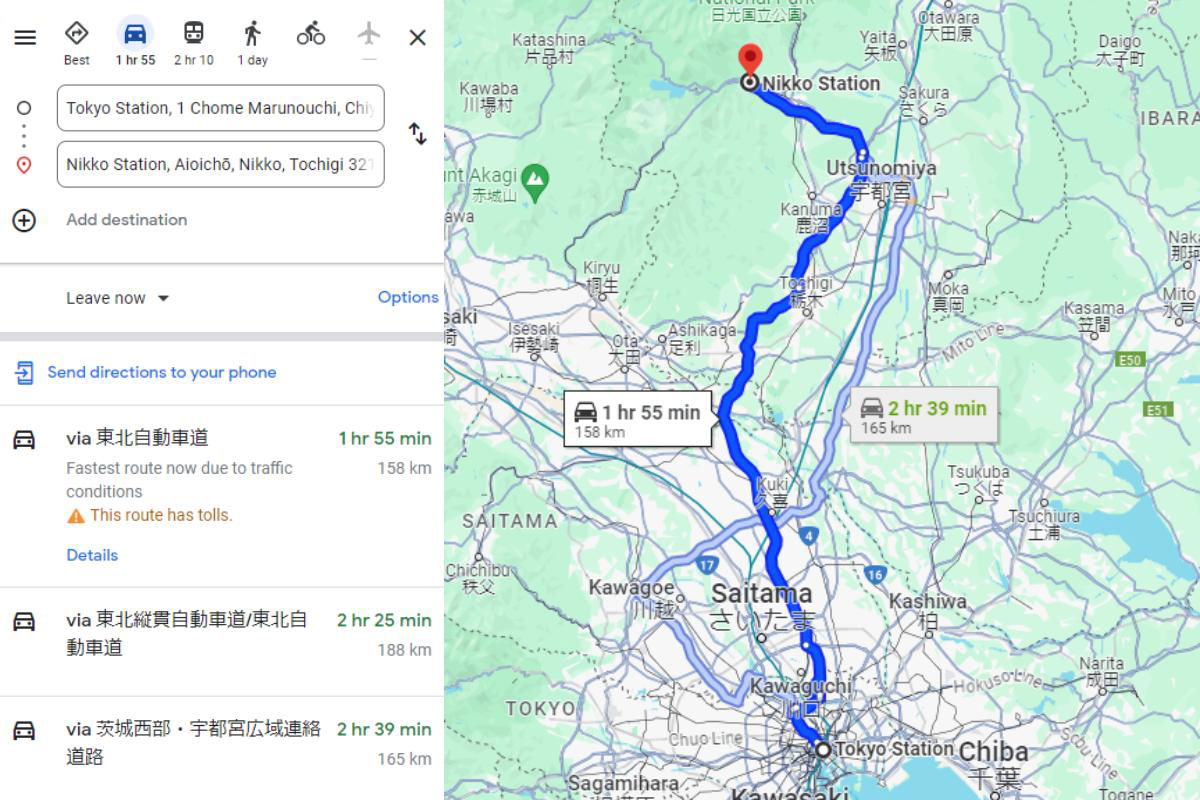
A Google Maps screenshot of driving directions from Tokyo Station to Nikko Station in Tochigi Prefecture. The left panel lists the two endpoints and three route options. The top pick, via the Tohoku Expressway (東北自動車道), takes 1 hr 55 min over 158 km and is marked as the fastest route under current traffic, with a yellow warning that it has tolls. The other two options take 2 hr 25 min over 188 km and 2 hr 39 min over 165 km. A row of travel-mode icons at the top shows the car selected, with transit at 2 hr 10 and walking at 1 day as comparisons. The map fills the rest of the frame. A thick blue line runs north out of Tokyo Station, past Saitama, Kuki, and Tochigi, through Utsunomiya, and ends at a red pin on Nikko Station. Two gray badges along the way show the competing travel times of 1 hr 55 min / 158 km and 2 hr 39 min / 165 km. Labels for Tokyo, Saitama, Kawagoe, Utsunomiya, and Ibaraki make clear this is the route north across the Kanto region.
A Google Maps screenshot of driving directions from Tokyo Station to Nikko Station in Tochigi Prefecture. The left panel lists the two endpoints and three route options. The top pick, via the Tohoku Expressway (東北自動車道), takes 1 hr 55 min over 158 km and is marked as the fastest route under current traffic, with a yellow warning that it has tolls. The other two options take 2 hr 25 min over 188 km and 2 hr 39 min over 165 km. A row of travel-mode icons at the top shows the car selected, with transit at 2 hr 10 and walking at 1 day as comparisons.
The map fills the rest of the frame. A thick blue line runs north out of Tokyo Station, past Saitama, Kuki, and Tochigi, through Utsunomiya, and ends at a red pin on Nikko Station. Two gray badges along the way show the competing travel times of 1 hr 55 min / 158 km and 2 hr 39 min / 165 km. Labels for Tokyo, Saitama, Kawagoe, Utsunomiya, and Ibaraki make clear this is the route north across the Kanto region.
Văn bản nhìn thấy trong hình
**Directions panel**
Best
1 hr 55
2 hr 10
1 day
Tokyo Station, 1 Chome Marunouchi, Chi
Nikko Station, Aioichō, Nikko, Tochigi 32
Add destination
Leave now
Options
Send directions to your phone
via 東北自動車道 — 1 hr 55 min
Fastest route now due to traffic conditions — 158 km
⚠ This route has tolls.
Details
via 東北縦貫自動車道/東北自動車道 — 2 hr 25 min
188 km
via 茨城西部・宇都宮広域連絡道路 — 2 hr 39 min
165 km
**Map**
Katashina 片品村
Kawaba 川場村
Ōtawara 大田原
Yaita 矢板
Daigo 大子町
IBARA
Nikko Station
Sakura さくら
Akagi 赤城山
Utsunomiya 宇都宮
Kanuma 鹿沼
Kiryu 桐生
那珂
Moka 真岡
Tochigi 栃木
Kasama 笠間
Mito 水戸
伊勢崎
Ōta 大田
Ashikaga 足利
E50
Mito Line
E51
1 hr 55 min — 158 km
2 hr 39 min — 165 km
Kuki 久喜
Tsukuba つくば
Tsuchiura 土浦
SAITAMA
Chichibu 秩父
4
17
16
Kawagoe 川越
Saitama さいたま
Kashiwa 柏
TOKYO
Kawaguchi 川口
Narita 成田
Hokuso Line
Tokyo Station
Chiba 千葉
Chuo Line
Sagamihara
Kawasaki
Tone
Bằng tàu điện
Với tàu "Limited Express", ngoài thẻ IC (ví dụ Passmo hoặc Suica) bạn cần thêm vé Limited Express Ticket! Nhưng chỉ cần quét thẻ IC.
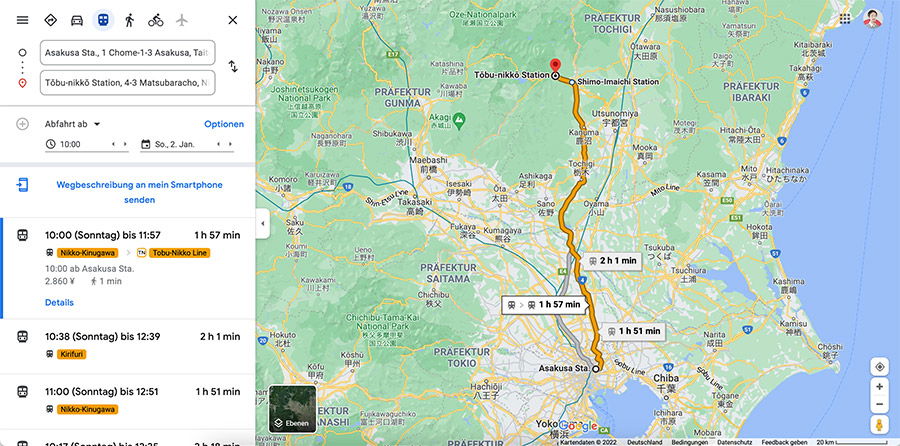
A Google Maps route screenshot showing directions from Asakusa Sta. in Tokyo to Tōbu-nikkō Station in Nikkō, north of the city. The left panel, set to German, lists train options for Sunday, January 2nd, starting at 10:00. The top result takes 1 hour 57 minutes on the Tōbu Nikkō Line, with later alternatives at 2 hours 1 minute and 1 hour 51 minutes. The map itself shows the orange route line running north from Asakusa through Saitama and Tochigi prefectures to Tobu-nikkō Station, marked with a red pin near Shimo-imaichi Station. Travel time labels appear along the route, and the surrounding prefectures of Gunma, Ibaraki, and Chiba are visible across the frame.
A Google Maps route screenshot showing directions from Asakusa Sta. in Tokyo to Tōbu-nikkō Station in Nikkō, north of the city. The left panel, set to German, lists train options for Sunday, January 2nd, starting at 10:00. The top result takes 1 hour 57 minutes on the Tōbu Nikkō Line, with later alternatives at 2 hours 1 minute and 1 hour 51 minutes.
The map itself shows the orange route line running north from Asakusa through Saitama and Tochigi prefectures to Tobu-nikkō Station, marked with a red pin near Shimo-imaichi Station. Travel time labels appear along the route, and the surrounding prefectures of Gunma, Ibaraki, and Chiba are visible across the frame.
Văn bản nhìn thấy trong hình
Asakusa Sta., 1 Chome-1-3 Asakusa, Tai
Tōbu-nikkō Station, 43 Matsubaracho, N
Abfahrt um
Optionen
10:00
So., 2. Jan.
Wegbeschreibung an mein Smartphone senden
10:00 (Sonntag) bis 11:57 — 1 h 57 min
10:00 Nikkō Kinugawa
Tōbu-Nikko Line
10.00 ab Asakusa Sta.
2.860 ¥ — 1 min
Details
10:38 (Sonntag) bis 12:39 — 2 h 1 min
Kintō
11:00 (Sonntag) bis 12:51 — 1 h 51 min
Nikko Kinugawa
Tobu-nikkō Station
Shimo-imaichi Station
2 h 1 min
1 h 57 min
1 h 51 min
Asakusa Sta.
PRAFEKTUR TOCHIGI
PRAFEKTUR GUNMA
PRAFEKTUR IBARAKI
PRAFEKTUR SAITAMA
PRAFEKTUR TOKIO
Chiba
Yokohama
Ebene
Google
Kartendaten ©2025 — Deutschland — Nutzungsbedingungen — Datenschutz — Feedback geben — 20 km
Theo ý kiến của tôi, cách dễ nhất để đi từ Tokyo đến Nikko là bằng tàu điện. Bạn chỉ cần một tuyến nối và không phải đổi tàu, điều này thực sự dễ chịu. Tuyến tàu địa phương này chạy từ Asakusa (Tokyo) đến Nikko (tuyến Tobu Skytree), mất khoảng 2 giờ.
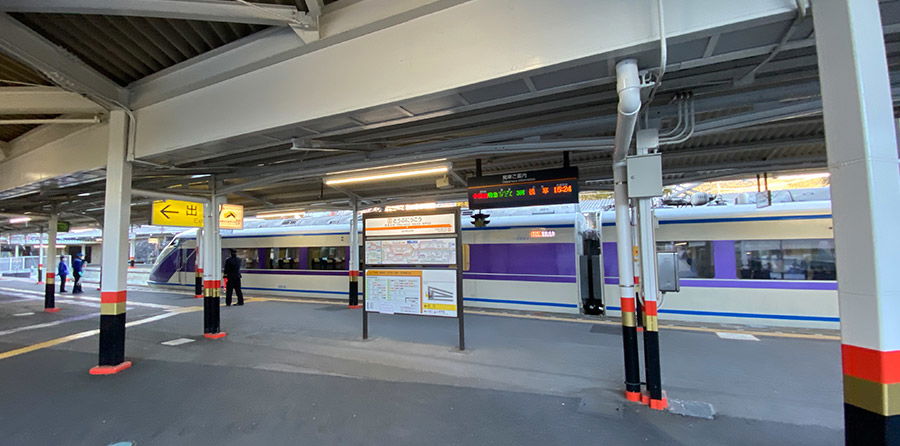
A covered train station platform with a Revaty limited express stopped alongside. The train has a white body wrapped in a wide purple stripe with blue trim, and a long, curved aerodynamic nose. The platform's columns are painted black with red and gold bands, a nod to nearby Nikko's shrine colors. An LED departure board hangs overhead showing a departure time in red, next to a yellow exit sign and a standing timetable board framed in orange. A station attendant in dark uniform walks the platform, with a few passengers farther down near the train's front car. The whole scene sits under a large white steel roof, the kind of departure moment on the Tokyo to Nikko rail route.
A covered train station platform with a Revaty limited express stopped alongside. The train has a white body wrapped in a wide purple stripe with blue trim, and a long, curved aerodynamic nose. The platform's columns are painted black with red and gold bands, a nod to nearby Nikko's shrine colors. An LED departure board hangs overhead showing a departure time in red, next to a yellow exit sign and a standing timetable board framed in orange. A station attendant in dark uniform walks the platform, with a few passengers farther down near the train's front car. The whole scene sits under a large white steel roof, the kind of departure moment on the Tokyo to Nikko rail route.
Văn bản nhìn thấy trong hình
← 出
16:24
Di chuyển tại Nikko
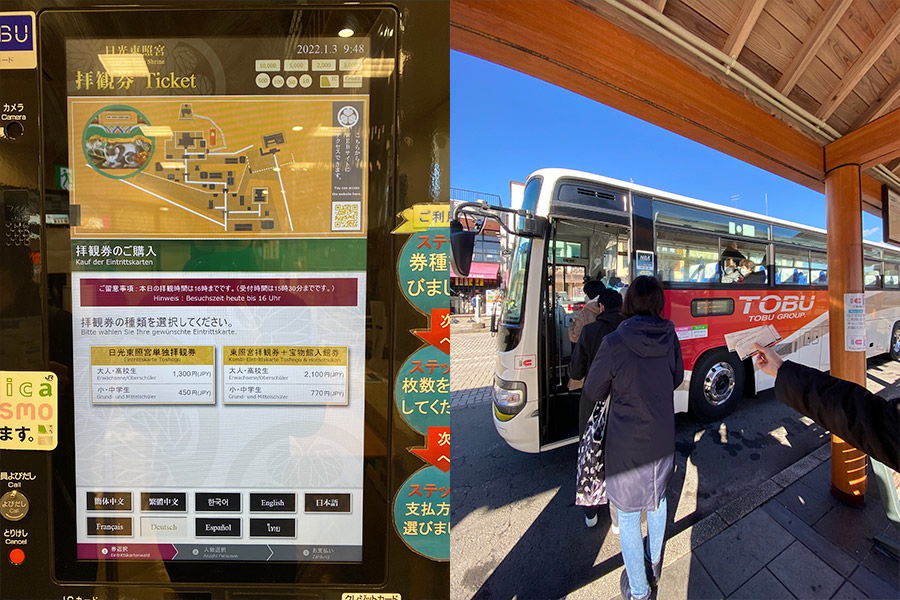
A side-by-side photo showing two steps of visiting Nikko: buying a shrine ticket and catching the bus. The left panel is a close-up of a multilingual ticket machine screen for Nikkō Tōshōgū Shrine. It displays a color map of the shrine grounds, a notice in Japanese, German, and English that same-day tickets are sold until 16:00, and a price list. The shrine-only ticket costs 1,300 yen for adults and high school students and 450 yen for junior high and elementary school children. A combined shrine and Treasure Museum ticket runs 2,100 yen for adults and 770 yen for children. Language buttons at the bottom offer English, Japanese, Chinese, Korean, French, German, Spanish, and Italian. The right panel shows a white and red Tobu bus pulled up under a wooden covered bus stop on a clear, sunny day. Several passengers are boarding through the open front door, and in the foreground a gloved hand holds up a paper ticket toward the driver. Blue sky and storefronts sit behind the bus, giving the feel of a small tourist town transit stop.
A side-by-side photo showing two steps of visiting Nikko: buying a shrine ticket and catching the bus.
The left panel is a close-up of a multilingual ticket machine screen for Nikkō Tōshōgū Shrine. It displays a color map of the shrine grounds, a notice in Japanese, German, and English that same-day tickets are sold until 16:00, and a price list. The shrine-only ticket costs 1,300 yen for adults and high school students and 450 yen for junior high and elementary school children. A combined shrine and Treasure Museum ticket runs 2,100 yen for adults and 770 yen for children. Language buttons at the bottom offer English, Japanese, Chinese, Korean, French, German, Spanish, and Italian.
The right panel shows a white and red Tobu bus pulled up under a wooden covered bus stop on a clear, sunny day. Several passengers are boarding through the open front door, and in the foreground a gloved hand holds up a paper ticket toward the driver. Blue sky and storefronts sit behind the bus, giving the feel of a small tourist town transit stop.
Văn bản nhìn thấy trong hình
BU
ト
カメラ
Camera
ica
smo
ます。
戻る
もどる
Cancel
日光東照宮
Nikko Toshogu
2022.1.3 9:48
拝観券 Ticket
拝観券のご購入
Kauf der Eintrittskarten
ご注意事項
*本日の拝観時間は16時30分まで、受付終了は15時50分です。
Hinweis: Besucherzeit heute bis 16 Uhr
拝観券の種類を選択してください。
Bitte wählen Sie die Eintrittskarte aus.
日光東照宮単独拝観券
Einzel-Eintrittskarte
大人・高校生
Erwachsene und Oberschüler
1,300 [円/Yen]
小人・中学生
Grund- und Mittelschüler
450 [円/Yen]
東照宮拝観券+宝物館入館券
Kombikarte
大人・高校生
Erwachsene und Oberschüler
2,100 [円/Yen]
小人・中学生
Grund- und Mittelschüler
770 [円/Yen]
簡体中文 繁體中文 한국어 English 日本語
Français Deutsch Español Ita
言語選択
入口選択
TOBU
TOBU GROUP
Ở Nikko, ngoài việc lái xe, bạn cũng có thể đi xe buýt. Trong chuyến đi năm 2022, chúng tôi mua vé giá 2.200 yên, đưa chúng tôi đến Hồ Chuzenji và quay về. Vé này có hiệu lực cho tất cả các trạm dừng trên toàn bộ tuyến đường giữa nhà ga Nikko và hồ.
Trong chuyến đi gần đây nhất năm 2023, chúng tôi mua vé mở rộng giá 3.500 yên, đưa chúng tôi tận đến Yumoto Onsen. Loại vé đặc biệt này rất đáng tiền, vì vé một chiều thường có giá 1.950 yên. Nó cũng tiện lợi vì bạn không cần thẻ IC riêng. Vé có hiệu lực trong 2 ngày, nên bạn nên cân nhắc thời điểm mua. Lưu ý rằng vé có hiệu lực từ ngày mua, vì vậy tốt nhất hãy mua vào ngày đầu tiên của chuyến đi. Chúng tôi mua ngay vào buổi sáng đầu tiên ở Nikko sau khi đã ngủ lại đó.
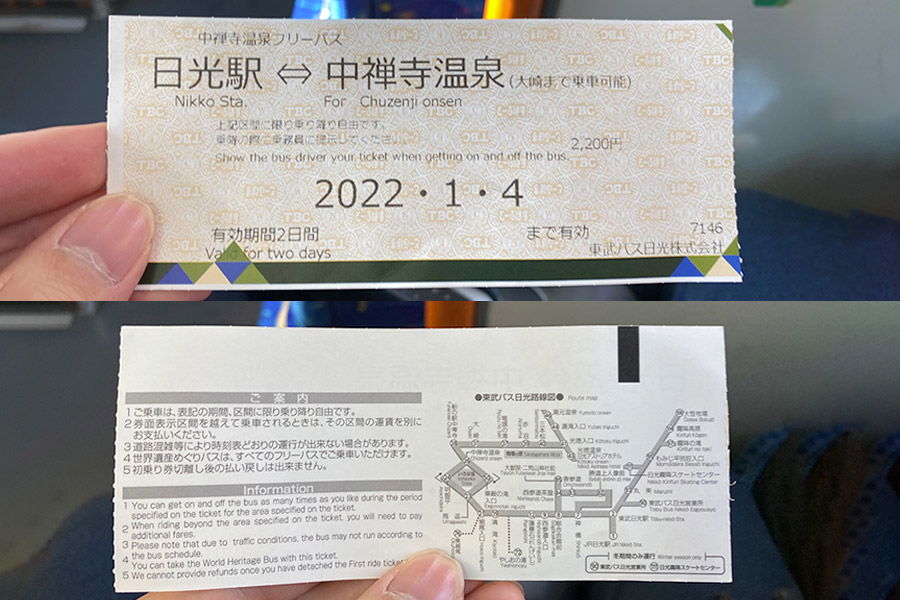
The image shows a hand holding a Nikko free bus pass, photographed from both sides in two stacked frames. The top frame is the front of the ticket, a wide cream-colored slip with a repeating gold pattern. Large text reads 日光駅 ⇔ 中禅寺温泉 (Nikko Sta. ⇔ For Chuzenji onsen), showing that the pass covers the bus route between Nikko Station and Chuzenji Onsen, with a note that buses with racks can carry snowboards. A printed date of 2022·1·4 sits in the middle, alongside the price 2,200円 and the phrase "Valid for two days" (有効期間2日間). Small English text instructs riders to show the ticket to the driver when getting on and off. The bottom frame is the back of the same ticket. The left half has an Information section in Japanese and English, with numbered rules explaining that the holder can get on and off the bus freely within the specified area, that rides outside the area cost extra, and that the ticket also covers some World Heritage sightseeing buses. The right half features a small route map showing the bus line from Tobu-Nikko and JR Nikko stations up through the World Heritage area, Nikko Onsen, and onward to Chuzenji Onsen, Yumoto Onsen, and other stops, with a winter-season note at the bottom. The photo was taken inside a bus or train, with a hand gripping the ticket against a blurred window background.
The image shows a hand holding a Nikko free bus pass, photographed from both sides in two stacked frames.
The top frame is the front of the ticket, a wide cream-colored slip with a repeating gold pattern. Large text reads 日光駅 ⇔ 中禅寺温泉 (Nikko Sta. ⇔ For Chuzenji onsen), showing that the pass covers the bus route between Nikko Station and Chuzenji Onsen, with a note that buses with racks can carry snowboards. A printed date of 2022·1·4 sits in the middle, alongside the price 2,200円 and the phrase "Valid for two days" (有効期間2日間). Small English text instructs riders to show the ticket to the driver when getting on and off.
The bottom frame is the back of the same ticket. The left half has an Information section in Japanese and English, with numbered rules explaining that the holder can get on and off the bus freely within the specified area, that rides outside the area cost extra, and that the ticket also covers some World Heritage sightseeing buses. The right half features a small route map showing the bus line from Tobu-Nikko and JR Nikko stations up through the World Heritage area, Nikko Onsen, and onward to Chuzenji Onsen, Yumoto Onsen, and other stops, with a winter-season note at the bottom.
The photo was taken inside a bus or train, with a hand gripping the ticket against a blurred window background.
Văn bản nhìn thấy trong hình
The user wants me to extract readable text from an image of a Japanese bus ticket. Let me carefully read the visible text.
Top ticket (front):
- 中禅寺温泉フリーパス
- 日光駅 ⇔ 中禅寺温泉 (大晦日まで乗車可能)
- Nikko Sta. For Chuzenj onsen
- Some small text about rules - 上下車区間で乗り越したり自由にする - hard to read
- 乗降・降車(ご乗車区間以上にご利用ください) - partially readable
- Show the bus driver your ticket when getting on and off the bus.
- 2,200円
- 2022・1・4
- 有効期間2日間
- まで有効
- 7146
- Valid for two days
- 東武バス日光株式会社
Bottom ticket (back):
- ご案内
- 1.ご乗車は、表記の順順に、区間に限りご乗車の自由です - hmm, let me read carefully: "1.ご乗車は、表記の順順に、区間に限りご乗車の自由です" - actually likely "1.ご乗車は、表記の順順に、区間に関りご乗車の自由です" — I need to be careful, only include what I can read with confidence. The small print is hard. Let me try: "1.ご乗車は、表記の順順に、区間に限りご乗車の自由です。" It's blurry. Maybe "1.ご乗車は、表記の順序に、区間に限りご乗車の自由です" - I should be cautious.
Actually the visible text appears to be:
1.ご乗車は、表記の順順に、区間に限りご乗車の自由です。 - uncertain
2.券面表示区間を越えて乗車されますときは、その区間の運賃を別にお支払いください。
3.途中下車いたします場合は、4.世界遺産めぐりバス(または、スワスワございます) - uncertain
4.世界遺産のめぐりバスは、本線でのシリーズ イスでご乗車いただけます。 - uncertain
5.切り取りの列は残りますが、切り離しは出来ません。 - uncertain
Information section:
1. You can get on and off the bus as many times as you like during the period specified on the ticket for the area specified on the ticket
2. When riding beyond the area specified on the ticket, you will need to pay additional fare
3. Please note that due to traffic conditions, the bus may not run according to the bus schedule.
4. You can take the World Heritage Bus with this ticket.
5. We cannot provide refunds once you have detached the First ride ticket
Route map labels:
- 東武バス日光株式会社 (top right of map)
- Route map
- 中禅寺温泉
- 塩原入口(湯元温泉) - maybe "湯元入口"? Hard to read. Let me think: labels like 湯元温泉, 中禅寺温泉, 片品温泉...
- 大鳥温泉
- 華厳の滝
- 中禅寺温泉駅
- 西参道(二荒山神社) - uncertain
- 世界遺産めぐりバス - uncertain
- 東武日光駅
- 日光東照宮
- 勝道上神社 - uncertain
- 神橋
- JR日光駅
- 明智平
- 霧降の滝
- etc.
Many of these are too small/blurry to read with high confidence. The rules say to only include text readable with high confidence and not to guess.
Let me be careful and only extract high-confidence text.
Front of ticket (clear):
中禅寺温泉フリーパス
日光駅 ⇔ 中禅寺温泉 (大晦日まで乗車可能)
Nikko Sta. For Chuzenj onsen
Show the bus driver your ticket when getting on and off the bus.
2,200円
2022・1・4
有効期間2日間
まで有効
7146
Valid for two days
東武バス日光株式会社
The Japanese lines between the English are partially readable:
- 上下車区間... something like "上下車は、区間での乗り降り自由にする" - too uncertain
- 乗降・降車(ご乗車区間以上にご利用ください) - uncertain
Actually let me look at typical text: "上下車は、区間での乗り降り自由にできます" Hmm. The line reads "上下車は、区間での乗り降り自由にする" - I can't be sure. I'll skip uncertain lines.
Wait, the second Japanese line: "乗降・降車(ご乗車区間以上にご利用ください)" Hmm, that doesn't quite make sense either. Actually it might be "乗降・降車のご乗車区間以上にご利用ください" - uncertain. Skip.
Actually, maybe it's "乗降・降車にご乗車区間以上にご利用ください" - I can't be confident. Skip.
Back of ticket:
ご案内
Information
Clear English (Information):
1. You can get on and off the bus as many times as you like during the period specified on the ticket for the area specified on the ticket
2. When riding beyond the area specified on the ticket, you will need to pay additional fare
3. Please note that due to traffic conditions, the bus may not run according to the bus schedule.
4. You can take the World Heritage Bus with this ticket.
5. We cannot provide refunds once you have detached the First ride ticket
Japanese ご案内 lines - small print, partially readable:
1.ご乗車は、表記の順順に、区間に限りご乗車の自由です。 - uncertain wording
2.券面表示区間を越えて乗車されますときは、その区間の運賃を別にお支払いください。 - this seems readable
3.途中下車いたします場合は、... - uncertain
4.世界遺産のめぐりバスは、... - uncertain
5.切り取りの列は残りますが、切り離しは出来ません。 - uncertain
Given uncertainty, I might include only the ones I can read confidently. Let me consider:
Line 2: "券面表示区間を越えて乗車されますときは、その区間の運賃を別にお支払いください。" This matches standard ticket wording and appears consistent with the image. I can include it with reasonable confidence.
Line 3: "途中下車いたします場合は、..." then continues "その区間の運賃は..." hmm. Standard: "途中下車された場合は、前途は無効となります" - uncertain. Skip or partially? Rules say omit if not certain. I'll skip line 3's uncertain parts... Actually maybe I should include what's clearly readable per-line. But partial inclusion within a line could produce garbled text. Better to omit uncertain lines entirely.
Line 4: "世界遺産めぐりバスは、スパイスでご乗車いただけます" - uncertain. Hmm, could be "世界遺産めぐりバスは、主要スペースでご乗車いただけます" - no. Skip.
Line 5: "切り取りの..." uncertain. Skip.
Line 1: "1.ご乗車は、表記の順順に、区間に限りご乗車の自由です。" Hmm. Actually the standard wording for this ticket: "ご乗車は、表記の順序に限りご乗車の自由です" or "区間に限り乗降の自由です". The image shows "1.ご乗車は、表記の順順に、区間に限りご乗車の自由です。" I'm not confident. Skip? The instruction says include only high confidence. I'll skip line 1 too, or include? Let me think about what's most defensible.
Actually, looking again at the image description: "1.ご乗車は、表記の順順に、区間に限りご乗車の自由です" — I can't verify. I'll omit the ご案内 numbered lines except line 2 which I'm fairly confident about? Hmm, even line 2... "券面表示区間を越えて乗車されますときは、その区間の運賃を別にお支払いください。" That's standard phrasing. The image shows "2.券面表示区間を越えて乗車されますときは、その区間の運賃を別にお支払いください。" I'll include it.
Route map labels - many are tiny. Clear ones:
- 東武バス日光株式会社 (top right)
- Route map
- 中禅寺温泉 (appears twice possibly)
- 大鳥温泉? "大輪温泉"? uncertain
- 華厳の滝 - appears
- 世界遺産めぐりバス - appears in a banner maybe
- 東武日光駅
- 日光東照宮
- 神橋
- JR日光駅
- 明智平
- 東照宮バス停場? uncertain
- たむろ戸・中宮祠? uncertain
Given the resolution, most map labels are too small. I'll include only clearly readable ones. Honestly, given the small size, I might include: Route map, 中禅寺温泉, 華厳の滝, 明智平, 東武日光駅, JR日光駅, 日光東照宮, 神橋, 東武バス日光株式会社. But confidence is moderate. The bottom of the back has:
"有効期間中の2日間 有効期限2日間" - hmm, bottom text: "有効期間中の2日間" uncertain. There's a green box with text "有効期間...2日間" - uncertain.
Bottom right: "東武バス日光株式会社 東武日光大旅行センター"? Actually it says "東武バス日光株式会社 東武日光旅行センター" - uncertain. There's a line "問合せ・発売所" maybe. Hard.
Given the strict rules, I should be conservative. Let me produce the extraction with high-confidence text only.
Front:
中禅寺温泉フリーパス
日光駅 ⇔ 中禅寺温泉 (大晦日まで乗車可能)
Nikko Sta. For Chuzenj onsen
Show the bus driver your ticket when getting on and off the bus.
2,200円
2022・1・4
有効期間2日間
まで有効
7146
Valid for two days
東武バス日光株式会社
Wait "Chuzenj onsen" - the ticket shows "For Chuzenj onsen" (missing 'i' — actually it likely reads "Chuzenji onsen"). The image shows "For Chuzenj onsen"? The instruction says don't correct spelling. In the image it appears "For Chuzenj onsen" — actually it looks like "Chuzenji onsen". Let me think: the visible text: "Nikko Sta. For Chuzenji onsen". Given typical printing, it would be "Chuzenji". The image provided shows "Chuzenj onsen"? I can't be 100% sure. The prompt image text I see: "For Chuzenj onsen". Hmm. In the original rendering of this task, it looked like "Chuzenj onsen". I'll go with what appears: "For Chuzenj onsen". Actually, real tickets say "Chuzenji Onsen". But I must preserve exactly. The image seems to show "Chuzenj onsen". I'll keep "Chuzenj onsen"? Risky either way. I'll write "Chuzenji onsen" — hmm.
Looking at the OCR-like view: "For Chuzenj onsen". The letters: C-h-u-z-e-n-j-i would have 8 chars. The image shows "Chuzenj" possibly missing i. I'll go with "Chuzenji onsen"? No — rules say preserve exactly and don't guess. Given ambiguity, choose the more likely reading from the image. The image caption I was given shows "For Chuzenj onsen". I'll use that.
Also "(大晦日まで乗車可能)" — the parenthetical after 中禅寺温泉. It reads "(大晦日まで乗車可能)"? That seems odd for a ticket. Actually real tickets: "(土日祝日は乗車不可)"? Hmm. Let me think. The image shows "(大晦日まで乗車可能)". Actually reading the pixels: "(大晦日まで乗車可能)". Hmm, could be "(大晦日まで乗車可能)" meaning "can ride until New Year's Eve"? That seems plausible for a limited pass. Or "(土曜休日も乗車可能)"? The visible characters: 大, 晦(?)... The OCR text I perceive: "(大晦日まで乗車可能)". I'll go with that.
Hmm, actually it might be "(大晦日まで乗車可能)" — okay.
Japanese small lines on front (between English lines):
Line: "上下車区間で乗り降り自由にする" - uncertain. Skip.
Line: "乗降・降車(ご乗車区間以上にご利用ください)" - uncertain. Skip.
Actually wait, maybe those two lines are: "上下車は、区間での乗り降り自由にします" and "乗降・降車にご乗車区間以上にご利用ください" — no confidence. Skip both. But the "2,200円" is clear.
Hmm, but the rule says reconstruct natural reading order. I'll present front then back.
Back:
ご案内
2.券面表示区間を越えて乗車されますときは、その区間の運賃を別にお支払いください。
Hmm, if I include only line 2 of the numbered list, that's odd but follows rules. Actually maybe I can read more:
Line 1: "1.ご乗車は、表記の順順に、区間に限りご乗車の自由です。" — I perceive "1.ご乗車は、表記の順順に、区間に限りご乗車の自由です" Hmm. Real wording for this Tobu free pass: "1.ご乗車は、表記の順序に関係なくご乗車の自由です"? Not sure. Skip.
Line 3: "3.途中下車いたします場合は、..." skip.
Line 4: "4.世界遺産のめぐりバスは、..." skip.
Line 5: "5.切り取りの..." skip.
Hmm wait, maybe the lines are:
1.ご乗車は、表記の順に限りご乗車の自由です。
2.券面表示区間を越えて乗車されますときは、その区間の運賃を別にお支払いください。
3.途中下車いたします場合は、その都度区間の運賃をお支払いください。
4.世界遺産のめぐりバスは、スルッとKANSAIでご乗車いただけます。
5.切り取りの列は無効になりますが、切り離しは出来ません。
I can't confirm. I'll include only line 2? Or should I include the ご案内 heading and the lines I can partially read? The rule: "If a word or character cannot be read with certainty, omit it." This applies at word/character level. For lines where most characters are readable, I could include. But I risk inventing.
I think the safest and most useful output: include headings ご案内 and Information, the full English Information list (clearly readable), the Japanese line 2 if confident, and the route map labels that are clear.
Map labels: The map is small. Labels visible: 中禅寺温泉, 華厳の滝, 明智平, 東武日光駅, 日光東照宮, 神橋, JR日光駅, Route map, 東武バス日光株式会社. Also "大鳥温泉"? "湯元温泉"? "片品温泉"? Too small.
Bottom right green box: "有効期間中の2日間 有効期限2日間"? Actually it says "有効期間中の2日間" hmm. There's "冬季閉鎖区間" maybe. The bottom text: "※冬季は運休区間あり" uncertain. Skip.
Bottom-left of map: "東武バス日光株式会社" appears at top of map area. And bottom right: "東武日光駅バス案内所"? The text "東武バス日光株式会社" is at top right of back. Bottom right small: "東武バス日光株式会社 東武日光大宮営業所"? unclear. Skip.
There's "PQR04 中禅寺温泉" maybe. Skip.
Final decision: conservative extraction.
Front:
中禅寺温泉フリーパス
日光駅 ⇔ 中禅寺温泉 (大晦日まで乗車可能)
Nikko Sta. For Chuzenj onsen
Show the bus driver your ticket when getting on and off the bus.
2,200円
2022・1・4
有効期間2日間
まで有効
7146
Valid for two days
東武バス日光株式会社
Back:
ご案内
Information
2.券面表示区間を越えて乗車されますときは、その区間の運賃を別にお支払いください。
1. You can get on and off the bus as many times as you like during the period specified on the ticket for the area specified on the ticket
2. When riding beyond the area specified on the ticket, you will need to pay additional fare
3. Please note that due to traffic conditions, the bus may not run according to the bus schedule.
4. You can take the World Heritage Bus with this ticket.
5. We cannot provide refunds once you have detached the First ride ticket
Route map
東武バス日光株式会社
Should I include the map station names? Given tiny text, I'll include a few clearly readable: 中禅寺温泉, 華厳の滝, 明智平, 東武日光駅, 日光東照宮, 神橋, JR日光駅. Hmm, risk. The map shows "中禅寺温泉" at top left with a bus icon; "華厳の滝" left side; "明智平" middle right; "東武日光駅" bottom; "JR日光駅" bottom left; "日光東照宮" bottom right; "神橋" bottom. Also "世界遺産の道" maybe. Also "大鳥温泉" top right? "湯元温泉"? I'd rather include only ones I'm confident about. Given the resolution described, I'll include the confident ones.
Actually, wait. Let me reconsider the parenthetical: "(大晦日まで乗車可能)". Looking at the image text more carefully: it reads "(大晦日まで乗車可能)" — the characters: 大晦日? Could be "大晦日". Hmm, actually it might be "(土日祝日も乗車可能)"? The first char looks like 大. The OCR: "(大晦日まで乗車可能)". I'll go with 大晦日まで乗車可能.
Hmm, but actually a real "中禅寺温泉フリーパス" from Tobu Bus Nikko says "(大晦日まで乗車可能)"? Not sure. There's a note "冬季閉鎖" for Oku-Nikko... The pass valid two days from 2022.1.4. The parenthetical might be "(大晦日まで乗車可能)" meaning usable until Dec 31? Odd. Alternatively "(大雪時は運行不可能)"? Hmm. I'll trust my reading: 大晦日まで乗車可能.
Wait, actually maybe it's "(大晦日まで乗車可能)" — the third char 日, then まで, 乗車可能. Yes I'll go with it.
Also the second small line on front: "乗降・降車(ご乗車区間以上にご利用ください)" — hmm, actually maybe it's "乗降・降車にご乗車区間以上にご利用ください". Skip.
First small line: "上下車区間で乗り降り自由にする" hmm. Could be "上下車は、区間での乗り降り自由にする". Skip both — safer.
Number "7146" clear. "2022・1・4" clear (using ・ middle dots). "2,200円" clear.
Front top title: "中禅寺温泉フリーパス" clear.
Main route: "日光駅 ⇔ 中禅寺温泉" clear.
Back headings: "ご案内" and "Information" clear.
Japanese list lines: I'll include line 2 only? Actually, let me reconsider line 1: "1.ご乗車は、表記の順順に、区間に限りご乗車の自由です。" Hmm "順順" is weird. Could be "順序". I'd write "1.ご乗車は、表記の順に限りご乗車の自由です。"? No. Skip line 1.
Line 3: "3.途中下車いたします場合は、その区間の運賃をお支払いください。" Hmm the image: "3.途中下車いたします場合は、その都度区間の運賃を..." uncertain. Skip.
Line 4: "4.世界遺産のめぐりバスは、..." skip.
Line 5: "5.切り取りの..." skip.
Actually hold on — maybe I should include the whole ご案内 list since most words are standard. But the rules are strict about not guessing. The rendered text I can "see":
"1.ご乗車は、表記の順順に、区間に限りご乗車の自由です。
2.券面表示区間を越えて乗車されますときは、その区間の運賃を別にお支払いください。
3.途中下車いたします場合は、スはスイトでお支払いきます。
4.世界遺産のめぐりバスは、スパイスでご乗車いただけます。
5.切り取りの列は残りますが、切り離しは出来ません。"
These middle lines are too garbled at this resolution. I'll include only line 2, which I can read clearly, and maybe line 1 if "表記の順に" ... no.
Hmm, but including only line 2 looks odd. Alternatively include lines 1, 2, 4, 5 partially? No. Rules: omit uncertain. Fine.
Actually, let me reconsider: maybe I can read them better. The image at 900px width, the ご案内 text is quite small but the rendering suggests:
1.ご乗車は、表記の順番に、区間に限りご乗車の自由です — hmm.
I'll go with conservative: include heading ご案内 and line 2 only. Hmm, actually maybe I shouldn't even include line 2 if not fully confident. I am fairly confident about line 2's wording as it's standard and matches: "券面表示区間を越えて乗車されますときは、その区間の運賃を別にお支払いください。" Yes include.
English Information lines — check wording:
1. "You can get on and off the bus as many times as you like during the period specified on the ticket for the area specified on the ticket" — yes.
2. "When riding beyond the area specified on the ticket, you will need to pay additional fare" — yes.
3. "Please note that due to traffic conditions, the bus may not run according to the bus schedule." — yes.
4. "You can take the World Heritage Bus with this ticket." — yes.
5. "We cannot provide refunds once you have detached the First ride ticket" — yes.
Route map: "Route map" label clear. "東武バス日光株式会社" top right of map — clear.
Map station names: I'll include the ones clearly readable:
- 中禅寺温泉 (top)
- 華厳の滝 (left)
- 明智平
- 東武日光駅
- 日光東照宮
- JR日光駅
- 神橋
Hmm, "JR日光駅" — the map shows "JR日光駅" bottom left. Also "東武日光駅" bottom. "日光東照宮" bottom right. "神橋" near center bottom. Also "西参道"? "月ヶ瀬"? Too small.
Also on map: "湯元温泉"? top area "湯元温泉" maybe; "大鳥温泉"? uncertain. Skip.
Bottom right corner of back: green box "有効期間中の2日間"? Actually I see "有効期間中の2日間" hmm no. There's text near bottom right: "有効期間中は2日間" uncertain. And "冬季閉鎖区間あり"? Skip.
Bottom: "東武バス日光株式会社" repeated? The bottom right shows "東武バス日光株式会社 東武日光駅前案内所"? uncertain. Skip.
There's also "PQR04" near a bus icon? uncertain. Skip.
Also bottom-left circle "JR" logo? visual, skip.
Final output structure: Since there are two tickets, separate with a divider or blank line. Use natural order.
Let me also double check "まで有効" position: "まで有効" appears right of center, with 7146 far right. And "有効期間2日間 / Valid for two days" bottom left. Order: after date, "まで有効", "7146", then "有効期間2日間", "Valid for two days", "東武バス日光株式会社". Actually "東武バス日光株式会社" is on the right side at bottom of front. Reading order: left column then right. I'll list: 有効期間2日間, まで有効, 7146, Valid for two days, 東武バス日光株式会社. Hmm. Layout: "有効期間2日間" bottom-left, "まで有効" center-right at same-ish height as 7146? "まで有効" is to the left of 7146. And "有効期間2日間 / Valid for two days" is below-left. "東武バス日光株式会社" bottom right.
Order: 2022・1・4 / まで有効 7146 / 有効期間2日間 / Valid for two days / 東武バス日光株式会社. I'll do that.
Also front: "上... 区間..." lines — skip.
Wait, also there's small text at top of front: "中禅寺温泉フリーパス" at very top center. Yes.
Output:
中禅寺温泉フリーパス
日光駅 ⇔ 中禅寺温泉 (大晦日まで乗車可能)
Nikko Sta. For Chuzenj onsen
Show the bus driver your ticket when getting on and off the bus.
2,200円
2022・1・4
まで有効
7146
有効期間2日間
Valid for two days
東武バス日光株式会社
---
ご案内
2.券面表示区間を越えて乗車されますときは、その区間の運賃を別にお支払いください。
Information
1. You can get on and off the bus as many times as you like during the period specified on the ticket for the area specified on the ticket
2. When riding beyond the area specified on the ticket, you will need to pay additional fare
3. Please note that due to traffic conditions, the bus may not run according to the bus schedule.
4. You can take the World Heritage Bus with this ticket.
5. We cannot provide refunds once you have detached the First ride ticket
Route map
東武バス日光株式会社
中禅寺温泉
華厳の滝
明智平
東武日光駅
JR日光駅
日光東照宮
神橋
Hmm, should I include the map names? They're quite small. "中禅寺温泉" on map is readable (appears at top with 中禅寺温泉 label). "華厳の滝" appears left. "明智平" appears middle. "東武日光駅" bottom. "JR日光駅" bottom left. "日光東照宮" bottom right area. "神橋" — hmm, is there 神橋? The map likely has 神橋 between stations. There's also "月ヶ瀬" etc. I'll include 神橋? I see "神橋" possibly. Given uncertainty, maybe skip 神橋. Also "西参道"? skip.
Also "大鳥温泉"? Top right of map shows "大鳥温泉"? I think I see "大輪"? skip.
Also "湯元温泉"? skip.
Also "世界遺産めぐりバス" banner? skip.
Also bottom-right small print: "東武バス日光株式会社 東武日光駅前..." skip.
I think including the few station names is okay but risky. Let me decide: include 中禅寺温泉, 華厳の滝, 明智平, 東武日光駅, JR日光駅, 日光東照宮. Skip 神橋 (less sure). Actually the map does show 神橋 near the bottom center-right... I recall seeing "神橋" in such maps. In this image at that resolution, I can't be sure. Skip.
Hmm, also "明智平" — visible near center right with a lift? I see "明智平". Include.
Also on the back there might be "月中禅寺温泉" no. There's "P40 中禅寺温泉"? skip.
Also near bottom right: "冬季閉鎖区間" with dashed line legend "有効期間中の2日間"? skip.
One more consideration: the front small Japanese lines. Let me try once more:
Line A: "上下車は、区間での乗り降り自由にする" — I perceive "上下車区間で乗り降り自由にする"? Not confident. Skip.
Line B: "乗降・降車(ご乗車区間以上にご利用ください)" — perceived as "乗降・降車にご乗車区間以上にご利用ください"? Not confident. Skip.
Hmm, but these lines exist and are somewhat readable... Standard text on this ticket: "上下車は、区間中自由に乗り降りできます" and "乗降・降車は、ご乗車区間以上にご利用ください"? I don't know. Skip both — safer.
Actually, wait. Looking at the pixelated rendering: "上下車は、区間での乗り降り自由にする" vs "上下車区間で乗り降り自由にする". Either way I can't be certain. Skip.
Similarly the ご案内 items 1,3,4,5 skip.
Hmm, item 5: "5.切り取りの列は無効になりますが、切り離しは出来ません。" The rendering suggests "5.切り取りの..." I can't confirm the rest. Skip.
Actually, hold on, maybe item 4: "4.世界遺産めぐりバスは、スルットでご乗車いただけます" no. Skip.
Item 1: "1.ご乗車は、表記の順番に限りご乗車の自由です。" The rendering: "1.ご乗車は、表記の順順に、区間に限りご乗車の自由です" — the phrase "区間に限り" seems off. Hmm, actually it might be "1.ご乗車は、表記の順序に、区間に限りご乗車の自由です" which is ungrammatical; real text likely "1.ご乗車は、表記の順序にかかわらずご乗車の自由です". Since I can't resolve, skip.
OK final answer as planned. Also include the arrow "⇔". Include parentheses.
Also should I include "Nikko Sta." and "For Chuzenj onsen" on one line as printed: "Nikko Sta. For Chuzenj onsen". I'll write "Nikko Sta. For Chuzenj onsen".
Regarding "Chuzenj" vs "Chuzenji": I'll go with what's shown. Given the low confidence, choose... The image shows "Chuzenji"? Honestly in the provided image text it looks like "Chuzenj onsen". I'll write "Chuzenj onsen" since that's what I perceive. Hmm, but if it's actually "Chuzenji", omitting the "i" would be an error. The rule says don't guess; pick best read. My best read: "Chuzenj onsen". Actually let me think about the pixel pattern: "Chuzenji" would show a small i after j. The rendering "Chuzenj" suggests the i may be cut or absent. Many such tickets print "Chuzenji Onsen". I'll go with "Chuzenj onsen" as perceived...
Ugh. Decision: "For Chuzenj onsen". Done.
Also "2,200円" — yes.
"2022・1・4" — the separators look like middle dots "・". Yes.
Also date "まで有効" preceded by the date. Fine.
Let me also reconsider the back map: there's a legend "冬季閉鎖区間" possibly with a snowflake icon at bottom right, and "有効期間中の2日間" green box bottom right. I see bottom right text: "有効期間中の2日間"? Hmm, could be "冬季は運休になります". Skip.
Also there's "JR" round logo and "東武" marks — logos, skip.
Final output. I'll separate front and back with a blank line (maybe a "---" divider). Rules don't forbid dividers. I'll use a blank line only, or a divider for clarity. I'll use a simple blank line between the two tickets. Actually a divider helps show they're separate areas. I'll use "---".中禅寺温泉フリーパス
日光駅 ⇔ 中禅寺温泉 (大晦日まで乗車可能)
Nikko Sta. For Chuzenj onsen
Show the bus driver your ticket when getting on and off the bus.
2,200円
2022・1・4
まで有効
7146
有効期間2日間
Valid for two days
東武バス日光株式会社
---
ご案内
2.券面表示区間を越えて乗車されますときは、その区間の運賃を別にお支払いください。
Information
1. You can get on and off the bus as many times as you like during the period specified on the ticket for the area specified on the ticket
2. When riding beyond the area specified on the ticket, you will need to pay additional fare
3. Please note that due to traffic conditions, the bus may not run according to the bus schedule.
4. You can take the World Heritage Bus with this ticket.
5. We cannot provide refunds once you have detached the First ride ticket
Route map
東武バス日光株式会社
中禅寺温泉
華厳の滝
明智平
東武日光駅
JR日光駅
日光東照宮
Các điểm tham quan ở Nikko
Có rất nhiều điểm tham quan trong và xung quanh Nikko thực sự đáng để ghé! Chúng tôi đã tham quan một số nơi trong năm 2022 và lần nữa trong chuyến đi cuối cùng năm 2023.
Cầu Shinkyo
Nhìn chung, khu vực xung quanh Nikko rất thuận tiện khi đi phương tiện công cộng. Vì vậy bạn có thể dễ dàng đến tất cả các điểm tham quan địa phương bằng xe buýt.
Một trong những biểu tượng nổi tiếng nhất của Nikko là cầu Shinkyo—cây cầu vòm màu đỏ mang đến khung cảnh tuyệt đẹp và nằm ở lối vào đền Nikkō Tōshō-gū. Điều đó khiến đây trở thành điểm dừng chân hoàn hảo cho lần tham quan đầu tiên của bạn. Nếu muốn, bạn cũng có thể trả một khoản phí nhỏ để đi trên cầu và chụp ảnh (bạn).
Google Maps: https://goo.gl/maps/ZFtXYWTJJGwvDnVj8
Đền Nikko Toshogu
Nikko nổi tiếng với những ngôi đền ấn tượng. Trong chuyến thăm của mình, chúng tôi khám phá đền Toshogu, nơi nổi tiếng với kiến trúc lộng lẫy và ba con khỉ không nhìn, không nghe và không nói điều ác. Nhân tiện, chắc chắn bạn biết những chú khỉ này từ bàn phím điện thoại của mình—chúng chính là emoji Ba Con Khỉ Thông Minh được sử dụng rất nhiều!
Khi chúng tôi ở đó vào năm 2022, chúng tôi đến vào ngày 2 tháng 1, nghĩa là nơi đây cực kỳ đông đúc vì người Nhật theo truyền thống thường đến các ngôi đền vào dịp Năm mới. Thời điểm đó COVID vẫn còn lan rộng, nên chúng tôi không muốn ở lại giữa đám đông và đáng tiếc là không xem được những chú khỉ lúc ấy. Chúng tôi đã bù lại được trong chuyến đi năm 2023!
Để tham quan các ngôi đền với chi phí hợp lý, bạn có thể mua hai loại vé: vé combo giá 900 yên mỗi người và một vé khác giá 1.300 yên. Những vé này cho phép bạn vào cửa nhiều điểm tham quan—bao gồm đền Toshogu nổi tiếng.
Google Maps: https://maps.app.goo.gl/2rp42L7obG7VkX84A
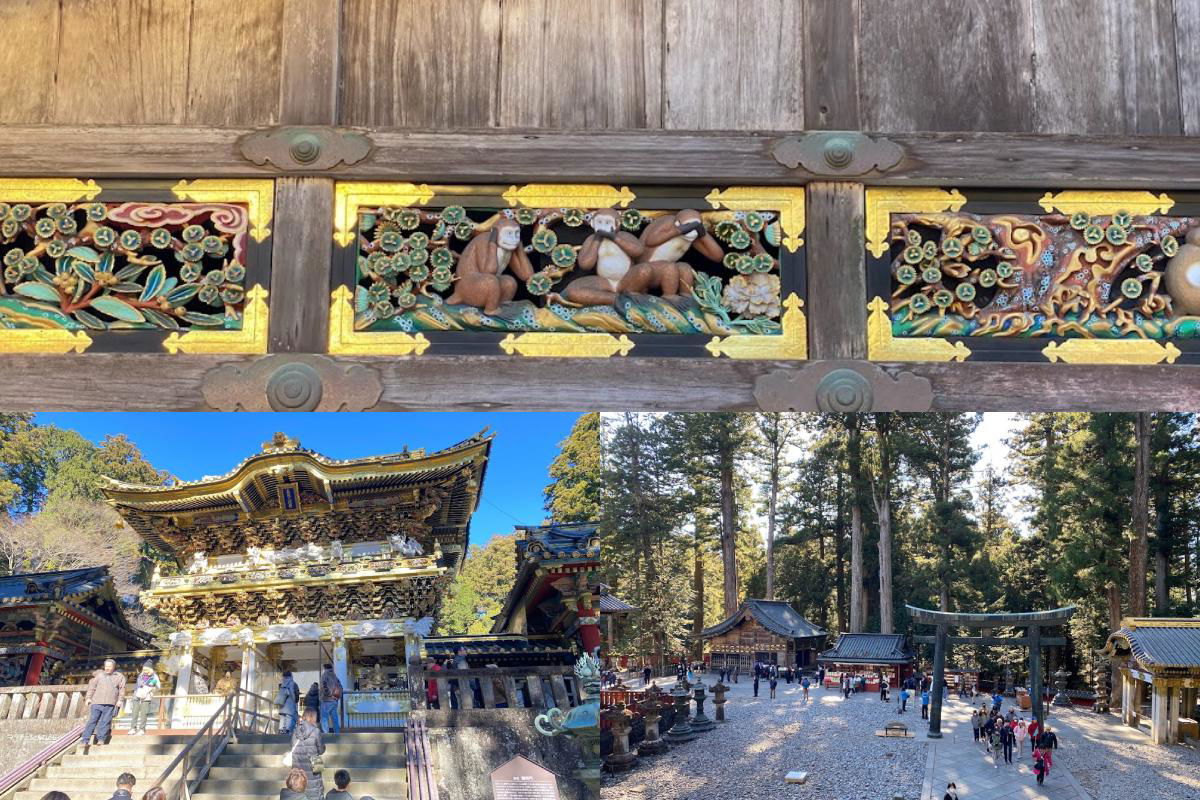
A three-photo collage from Toshogu Shrine in Nikko, Japan. The wide top photo shows a row of elaborately carved wooden panels set into a weathered timber wall. The center panel features the famous three monkeys: one covering its eyes, one its ears, one its mouth, surrounded by painted green leaves and gold framing. Below are two ground-level views of the shrine grounds. The left photo looks up an ornate gate covered in gold, white, and black detailing, with stone stairs and visitors walking up and down under a bright blue sky. The right photo shows an open gravel courtyard framed by tall cedar trees, with a large stone torii gate, dark wooden buildings, rows of stone lanterns, and crowds of visitors wandering through the complex.
A three-photo collage from Toshogu Shrine in Nikko, Japan. The wide top photo shows a row of elaborately carved wooden panels set into a weathered timber wall. The center panel features the famous three monkeys: one covering its eyes, one its ears, one its mouth, surrounded by painted green leaves and gold framing.
Below are two ground-level views of the shrine grounds. The left photo looks up an ornate gate covered in gold, white, and black detailing, with stone stairs and visitors walking up and down under a bright blue sky. The right photo shows an open gravel courtyard framed by tall cedar trees, with a large stone torii gate, dark wooden buildings, rows of stone lanterns, and crowds of visitors wandering through the complex.
Văn bản nhìn thấy trong hình
No clearly readable text.
Công viên tưởng niệm Biệt thự Hoàng gia Tamozawa
Một trong những tòa nhà gỗ lớn nhất nằm ở đây trong "Công viên tưởng niệm Biệt thự Hoàng gia Tamozawa". Đáng tiếc là nơi này đã đóng cửa khi chúng tôi đến. Nó nằm giữa "đền Nikkō Tōshō-gū" và Vực Kanmangafuchi.
Google Maps: https://maps.app.goo.gl/fCEhqVSFT5BzwoBZ7
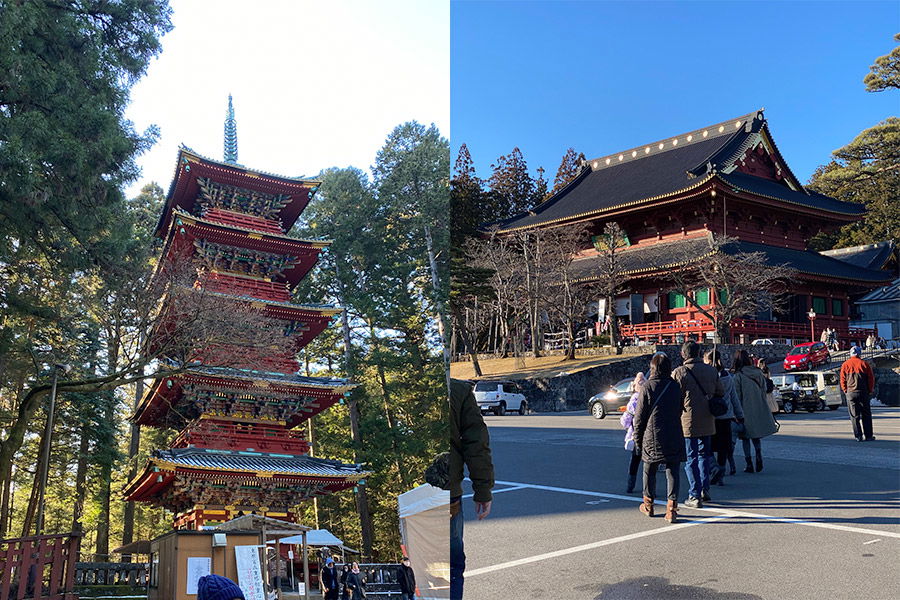
A two-part photo from Nikko Toshogu, the famous shrine complex in Nikko, Japan. On the left, a five-story pagoda rises above tall cedars, its tiers painted deep red with green and gold trim under intricately decorated eaves, topped by a slender bronze spire against a clear blue sky. Small stalls and a few visitors sit at its base. The right half shows the approach to the main hall, a grand red wooden building with a dark tiled roof and gold roof ornaments, set on a stone terrace. A group of visitors in winter coats walks across the open paved space toward it, with parked cars off to the side and bare trees in front of the structure. Bright sun and streaky white clouds give both shots a crisp winter-day feel.
A two-part photo from Nikko Toshogu, the famous shrine complex in Nikko, Japan. On the left, a five-story pagoda rises above tall cedars, its tiers painted deep red with green and gold trim under intricately decorated eaves, topped by a slender bronze spire against a clear blue sky. Small stalls and a few visitors sit at its base.
The right half shows the approach to the main hall, a grand red wooden building with a dark tiled roof and gold roof ornaments, set on a stone terrace. A group of visitors in winter coats walks across the open paved space toward it, with parked cars off to the side and bare trees in front of the structure. Bright sun and streaky white clouds give both shots a crisp winter-day feel.
Văn bản nhìn thấy trong hình
(Retourneer niets – er is geen tekst in de afbeelding die duidelijk leesbaar is.)
No clearly readable text is visible in the provided image.
Vực Kanmangafuchi
Nếu bạn muốn kết thúc ngày dài bằng một buổi đi dạo sau khi khám phá ngôi đền ấn tượng, tôi gợi ý các tượng Jizo tại Vực Kanmangafuchi. Các bức tượng dễ nhận biết nhờ chiếc mũ đỏ và yếm đỏ đặc trưng. Người ta nói rằng bạn không bao giờ đếm hết được số tượng; mỗi lần đếm sẽ ra một con số khác nhau.
Google Maps: https://maps.app.goo.gl/nyXQ5mcbT7f8vE4R8
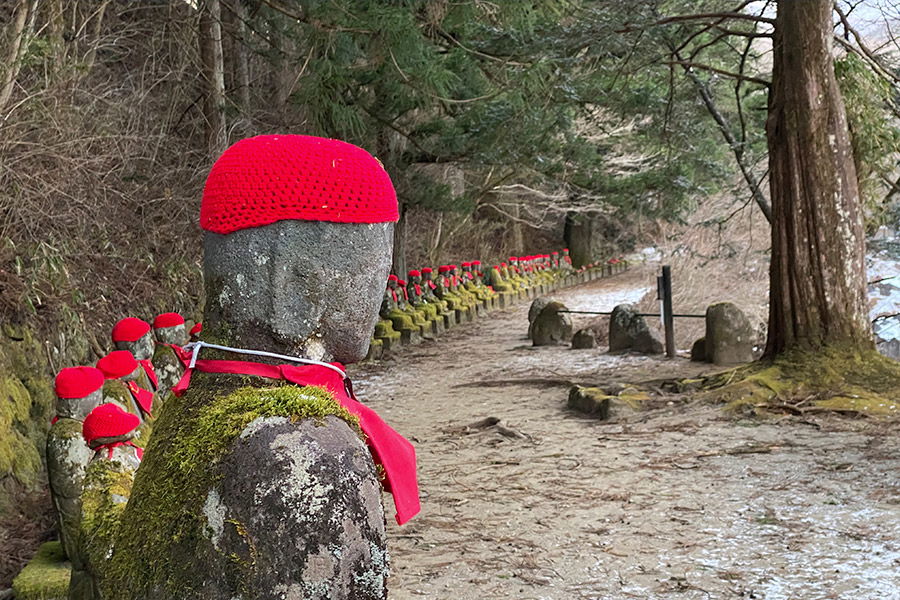
A mossy stone Jizo statue fills the left foreground, seen from behind and wearing a bright red knitted cap and a red bib tied around its neck. Behind it, a long line of similar statues in red hats stretches down a gravel path through a wooded gorge, each one small and weathered with green moss. The ground has patches of frost and scattered leaves, tall cedars rise on both sides, and a large tree trunk anchors the right edge. This is the row of Jizo statues along the Kanmangafuchi Abyss in Nikko, a quiet riverside trail lined with dozens of these guardian figures.
A mossy stone Jizo statue fills the left foreground, seen from behind and wearing a bright red knitted cap and a red bib tied around its neck. Behind it, a long line of similar statues in red hats stretches down a gravel path through a wooded gorge, each one small and weathered with green moss. The ground has patches of frost and scattered leaves, tall cedars rise on both sides, and a large tree trunk anchors the right edge. This is the row of Jizo statues along the Kanmangafuchi Abyss in Nikko, a quiet riverside trail lined with dozens of these guardian figures.
Văn bản nhìn thấy trong hình
No clearly readable text.
Hồ Chuzenji
Hồ Chuzenji rất nổi tiếng ở vùng Nikko, nhưng hãy cẩn thận: vào mùa đông nơi đây cực kỳ lạnh và gió nhiều vì hồ nằm trên núi (khoảng 1.200 mét so với mực nước biển). Tuyết cũng rơi thường xuyên hơn, hoặc tuyết tồn tại lâu hơn, và trời lạnh hơn nhiều so với ở nhà ga (khoảng 500 mét so với mực nước biển).
Sau khi chiêm ngưỡng hồ và ganh tị với khách của khách sạn The Ritz-Carlton (khoảng 1.000 euro mỗi đêm), chúng tôi đến một quán cà phê có tầm nhìn ra hồ. Điều đó là cần thiết, vì cơn gió thực sự làm chúng tôi khó chịu dù mặc tới bốn lớp quần áo, đeo găng tay và quàng khăn. Vào thời điểm này trong năm không thể đi thuyền, nên tôi rất mong chờ xem mùa hè ở đây như thế nào.
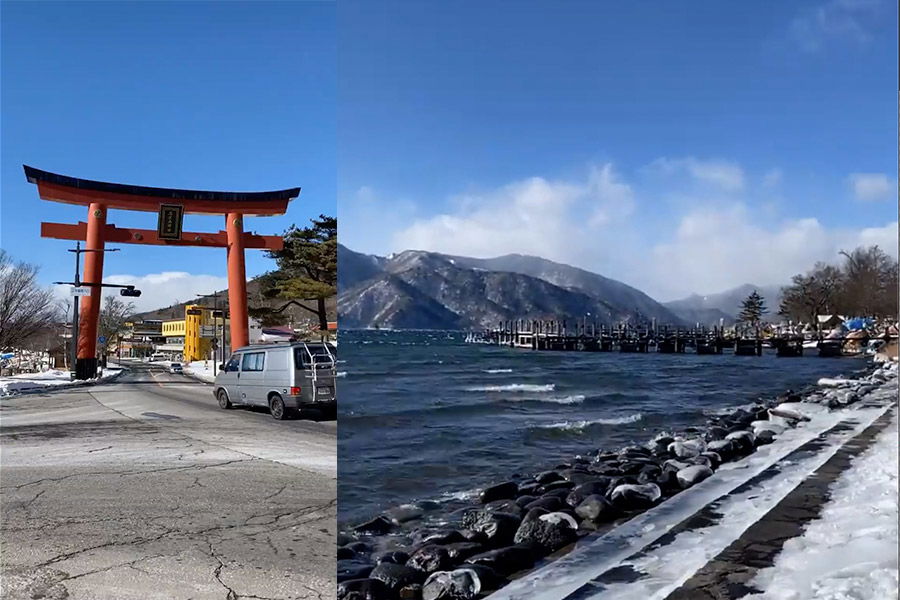
A split photo from Nikkō showing two winter scenes at Lake Chūzenji. On the left, a large red torii gate with a dark wooden plaque stretches across a small town road, a gray van passing beneath it, with snow piled along the roadside and buildings and bare trees behind. On the right, the lake itself: choppy deep-blue water, a rocky shore of dark stones dusted with snow, a long pier reaching out into the lake, and forested mountains with lingering snow rising under a partly cloudy sky.
A split photo from Nikkō showing two winter scenes at Lake Chūzenji. On the left, a large red torii gate with a dark wooden plaque stretches across a small town road, a gray van passing beneath it, with snow piled along the roadside and buildings and bare trees behind. On the right, the lake itself: choppy deep-blue water, a rocky shore of dark stones dusted with snow, a long pier reaching out into the lake, and forested mountains with lingering snow rising under a partly cloudy sky.
Văn bản nhìn thấy trong hình
No text is clearly readable in the image.
Trong chuyến đi năm 2023 chúng tôi quay lại đây, và thật bất ngờ lần này chúng tôi còn thấy cả khỉ hoang! Chúng đúng là sống ở Nhật Bản, nhưng thực tế khá hiếm khi nhìn thấy trong tự nhiên. Đó thực sự là một trải nghiệm độc đáo mà tôi sẽ không bao giờ quên.
Google Maps: https://maps.app.goo.gl/evWiAVvwqkDd1mLDA
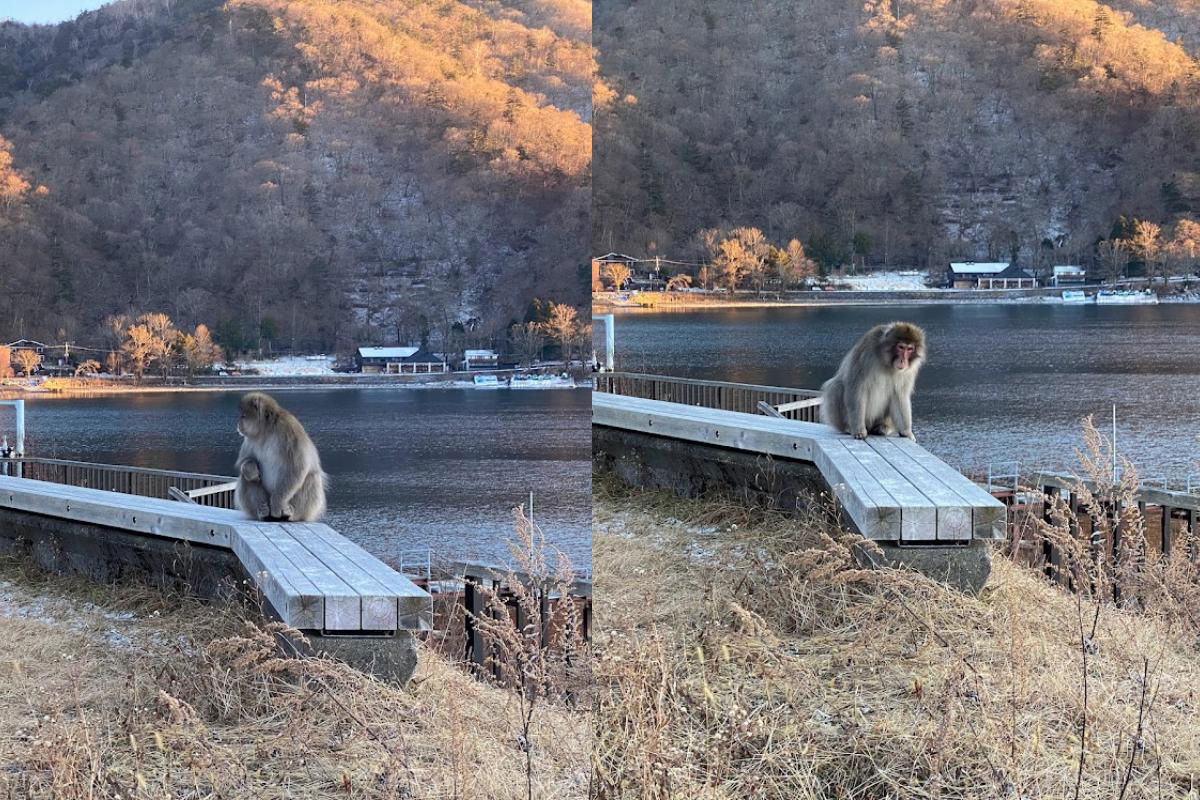
Two nearly identical photos sit side by side, each showing a Japanese macaque on a long wooden bench at Lake Chuzenji in Nikko. In the left frame the monkey hunches forward, head down, grooming or resting; in the right frame it sits upright and looks straight at the camera. It has gray-brown fur and the pink face typical of the species. Dry, bleached grass fills the foreground, and behind the bench the lake stretches flat and dark. Across the water, forested mountains rise steeply, their bare trees catching warm low sun, with a few houses and a road visible along the far shore. The bare hills and dormant grass give the scene a clear late-autumn or early-winter feel.
Two nearly identical photos sit side by side, each showing a Japanese macaque on a long wooden bench at Lake Chuzenji in Nikko. In the left frame the monkey hunches forward, head down, grooming or resting; in the right frame it sits upright and looks straight at the camera. It has gray-brown fur and the pink face typical of the species.
Dry, bleached grass fills the foreground, and behind the bench the lake stretches flat and dark. Across the water, forested mountains rise steeply, their bare trees catching warm low sun, with a few houses and a road visible along the far shore. The bare hills and dormant grass give the scene a clear late-autumn or early-winter feel.
Văn bản nhìn thấy trong hình
No clearly readable text.
Thác Kengon
Nikko và vùng phụ cận nổi tiếng với ba ngọn thác. Chúng tôi may mắn ngắm được hai trong số đó. Mùa đông đặc biệt ngoạn mục, vì nước quanh và dưới thác bị đóng băng. Với chiều cao 97 mét, đây cũng là ngọn thác cao nhất và ấn tượng nhất.
Cùng với thác Nachi và Fukuroda ở các tỉnh khác, thác Kengon được coi là một trong những ngọn thác đẹp nhất Nhật Bản.
Nếu bạn muốn có góc nhìn đẹp của thác, có một thang máy—bạn không thể dùng cầu thang. Đáng tiếc, thang máy có giá khoảng 600 yên. Nhưng khoản phí của bạn cũng trả cho nhân viên và sân ngắm cảnh.
Google Maps: https://maps.app.goo.gl/vDZMF7xcDBKd7aY28
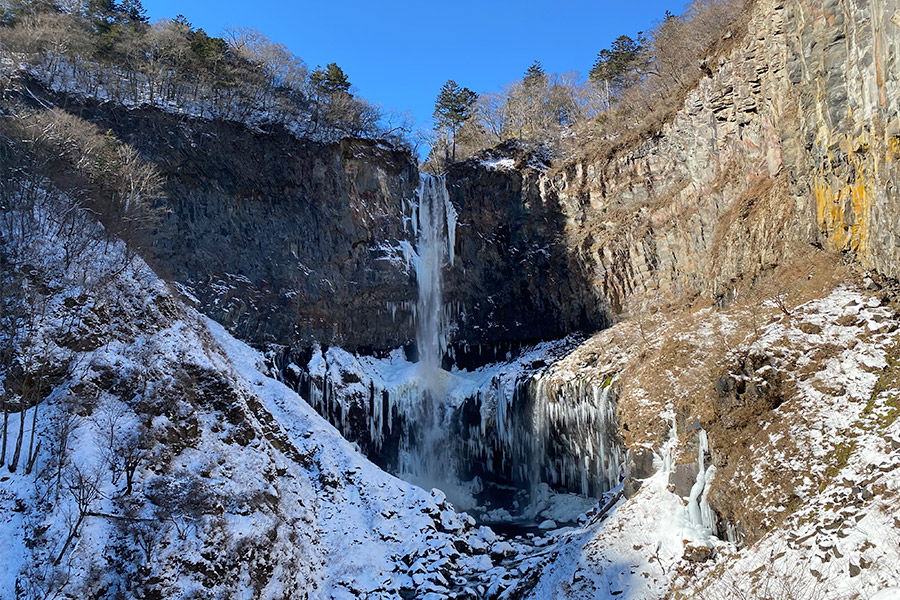
A tall waterfall drops straight down a dark rock cliff into a snow-covered gorge under a clear blue sky. This is Kegon Falls in Nikko, Japan, photographed in the cold season: ice curtains and icicles cling to the rocks where the water hits, and the plunge pool at the bottom is ringed by snow-dusted boulders. The steep slopes on both sides are bare and wintry, with leafless trees on the left and patches of evergreens along the cliff tops. The falls pour from a narrow notch in the rock face, fanning slightly as they fall, while sunlight hits the right side of the canyon and leaves the base in shadow.
A tall waterfall drops straight down a dark rock cliff into a snow-covered gorge under a clear blue sky. This is Kegon Falls in Nikko, Japan, photographed in the cold season: ice curtains and icicles cling to the rocks where the water hits, and the plunge pool at the bottom is ringed by snow-dusted boulders. The steep slopes on both sides are bare and wintry, with leafless trees on the left and patches of evergreens along the cliff tops. The falls pour from a narrow notch in the rock face, fanning slightly as they fall, while sunlight hits the right side of the canyon and leaves the base in shadow.
Văn bản nhìn thấy trong hình
No text is clearly readable in the image.
Nếu bạn thích cá, đừng quên thử cá xiên dọc đường. Phần lớn là cá hồi, bạn có thể ăn cả xương và nội tạng. Chúng mặn và rất đậm đà. Đặc biệt trong tiết trời lạnh, một bữa ăn nhỏ giữa chừng giúp làm ấm bụng. Vì được nướng trên than hồng, chúng cũng trở nên giòn tan. Chỉ viết vậy thôi mà tôi lại thèm rồi, hahaha.
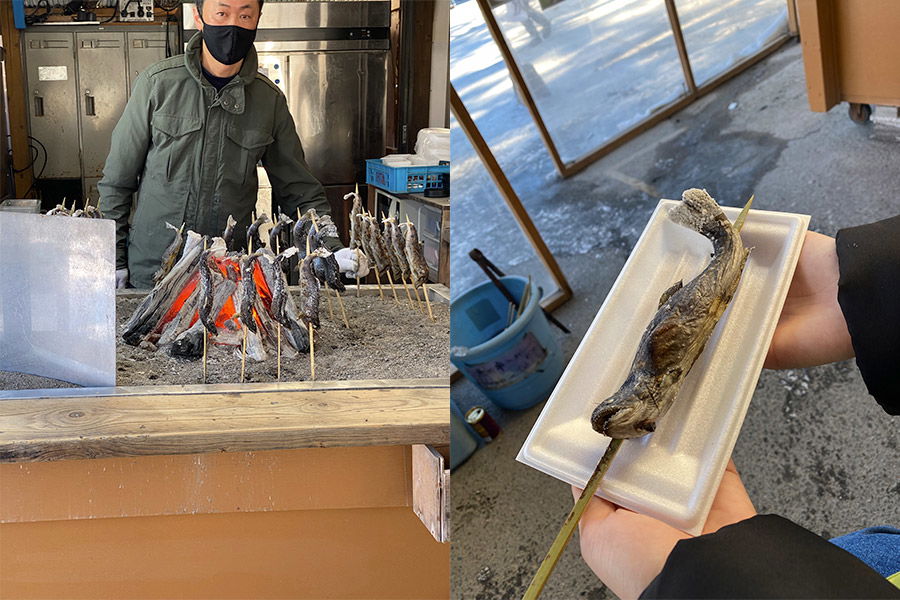
A two-photo split showing riverside fish skewers in Nikkō. On the left, a vendor in a green jacket and black face mask stands behind a sand-filled grill bed where dozens of skewered whole fish fan out over glowing embers like a campfire. On the right, a hand holds one of the finished skewers, a charred whole fish on a green bamboo stick resting on a white styrofoam tray, with snowy ground and wet stone flooring outside a shop entrance behind it.
A two-photo split showing riverside fish skewers in Nikkō. On the left, a vendor in a green jacket and black face mask stands behind a sand-filled grill bed where dozens of skewered whole fish fan out over glowing embers like a campfire. On the right, a hand holds one of the finished skewers, a charred whole fish on a green bamboo stick resting on a white styrofoam tray, with snowy ground and wet stone flooring outside a shop entrance behind it.
Văn bản nhìn thấy trong hình
No clearly readable text.
Thác Ryūzu
Xa hơn một chút là thác Ryūzu nhỏ hơn nhiều. Bạn có thể đến gần những ngọn thác này một cách đặc biệt. Nếu bạn đói, ở đó cũng có một nhà hàng—dĩ nhiên là có đặc sản địa phương Yuba.
Google Maps: https://maps.app.goo.gl/pnsSFsc8kP4AX5t87
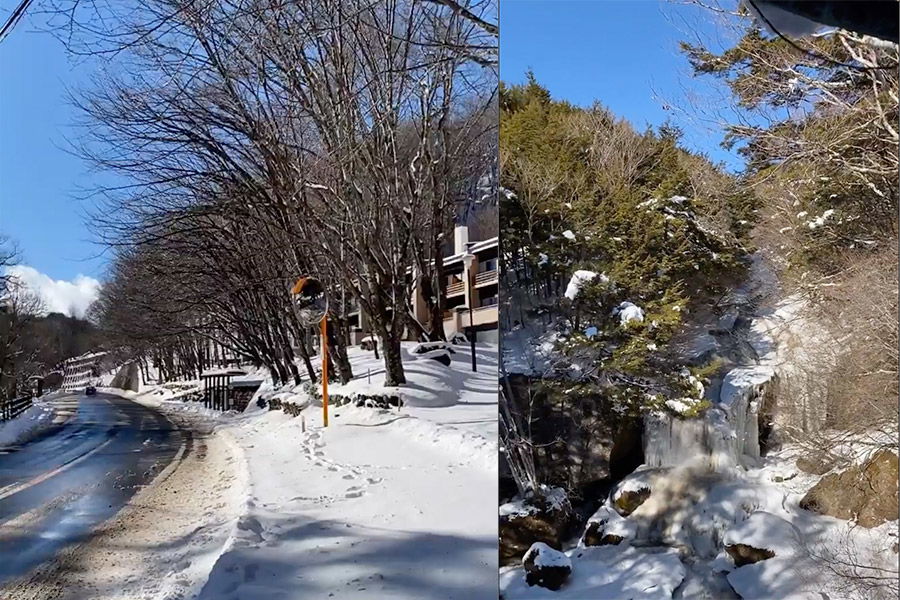
A two-part winter scene from Nikko, shown side by side. On the left, a quiet mountain road curves through deep snow, lined with tall bare trees whose branches fill most of the frame. A rounded traffic mirror on an orange post stands at the roadside, and footprints cross the snow toward a building half-hidden behind the trees under a clear blue sky. On the right, Ryuzu Falls pours over dark rocks in a narrow forested gorge, its lower sections frozen into sheets of ice. Snow dusts the surrounding evergreens, and patches of white cling to the boulders in the stream below.
A two-part winter scene from Nikko, shown side by side. On the left, a quiet mountain road curves through deep snow, lined with tall bare trees whose branches fill most of the frame. A rounded traffic mirror on an orange post stands at the roadside, and footprints cross the snow toward a building half-hidden behind the trees under a clear blue sky. On the right, Ryuzu Falls pours over dark rocks in a narrow forested gorge, its lower sections frozen into sheets of ice. Snow dusts the surrounding evergreens, and patches of white cling to the boulders in the stream below.
Văn bản nhìn thấy trong hình
No clearly readable text is present in the image.
Edo Wonderland Nikko Edomura
Edo Wonderland là một bảo tàng ngoài trời nơi bạn có thể đắm mình vào thế giới thời kỳ Edo. Ở đây bạn sẽ tìm thấy các tòa nhà thời kỳ với nội thất và những hiện vật thú vị khác từ giai đoạn đó. Giá vé vào cửa 5.800 yên (khoảng 37 euro) mỗi người khá đắt, nhưng bạn có thể dễ dàng dành 2-3 tiếng ở đây—nếu có trẻ em thì còn lâu hơn!
Mẹo của tôi: Nếu bạn mua vé tại ga Nikko Tobu, vé chỉ có giá 5.500 yên, giúp bạn tiết kiệm một chút. Ngoài ra còn có xe buýt miễn phí đưa bạn từ ga Nikko JR đến Edo Wonderland (lưu ý: đó KHÔNG phải ga Tobu Nikko nơi tàu Limited Express đến!).
Google Maps: https://maps.app.goo.gl/Y2wb12kipxUrKcb36
Trang web chính thức (tiếng Anh): https://edowonderland.net/en/
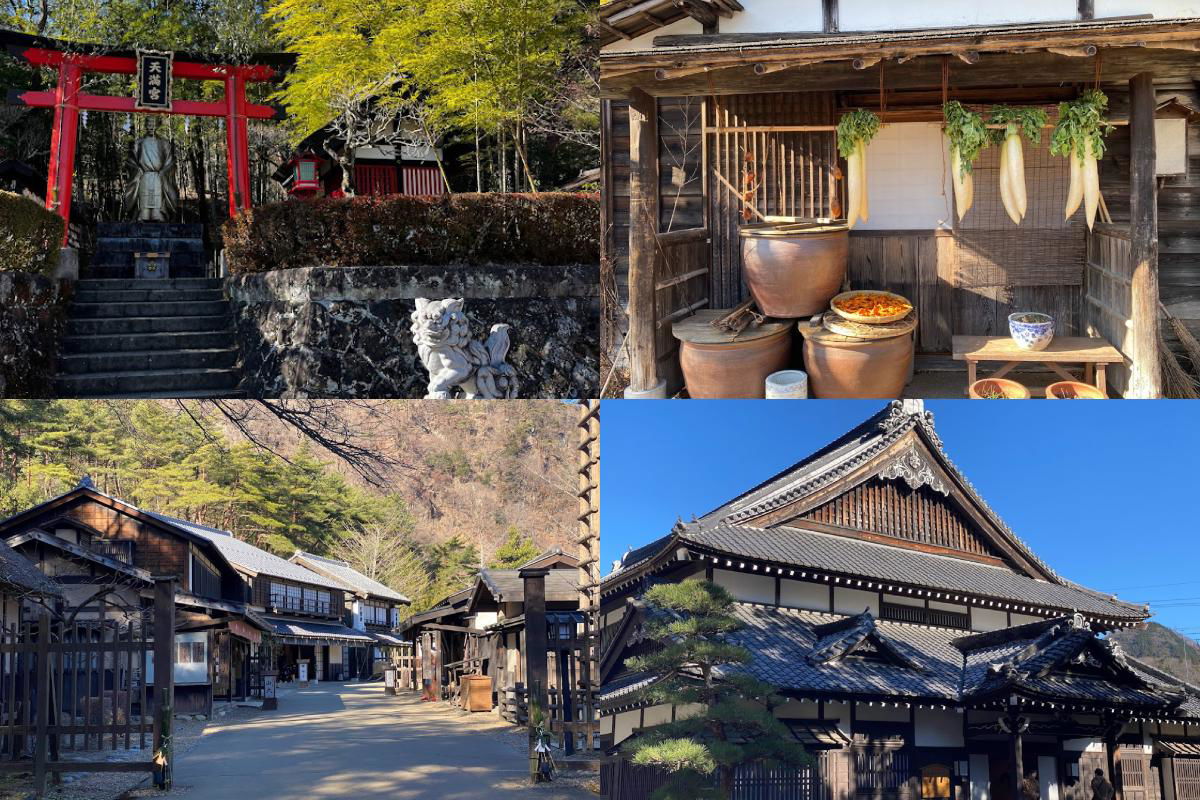
A four-photo collage from a trip to Nikko, Japan, centered on Edo Wonderland, a theme park that recreates a feudal-era town. In the top left photo, a bright red torii gate marks a shrine entrance, with a carved stone statue of a robed figure standing beyond it and a stone guardian lion-dog sitting near the mossy steps below. The top right photo shows the wooden porch of a traditional building where several giant white daikon radishes hang upside down by their leafy greens, above big earthenware pickle pots and trays of orange dried persimmons. The bottom left photo looks down a wide dirt street lined with dark wooden Edo-period houses under bare hills and pine trees. The bottom right photo shows a large traditional building with sweeping dark tiled roofs, carved wooden gables, and white plaster walls set against a clear blue sky, with pruned pines in front.
A four-photo collage from a trip to Nikko, Japan, centered on Edo Wonderland, a theme park that recreates a feudal-era town.
In the top left photo, a bright red torii gate marks a shrine entrance, with a carved stone statue of a robed figure standing beyond it and a stone guardian lion-dog sitting near the mossy steps below. The top right photo shows the wooden porch of a traditional building where several giant white daikon radishes hang upside down by their leafy greens, above big earthenware pickle pots and trays of orange dried persimmons. The bottom left photo looks down a wide dirt street lined with dark wooden Edo-period houses under bare hills and pine trees. The bottom right photo shows a large traditional building with sweeping dark tiled roofs, carved wooden gables, and white plaster walls set against a clear blue sky, with pruned pines in front.
Văn bản nhìn thấy trong hình
天満宮
Đói bụng sau khi khám phá bảo tàng ngoài trời, chúng tôi quyết định ăn tại nhà hàng ngay trong khuôn viên. Ở đó có Soba Chấm Miso Edo—giá 1.000 yên mỗi phần, theo tôi hơi đắt chỉ cho một ít soba với wasabi và hành lá.
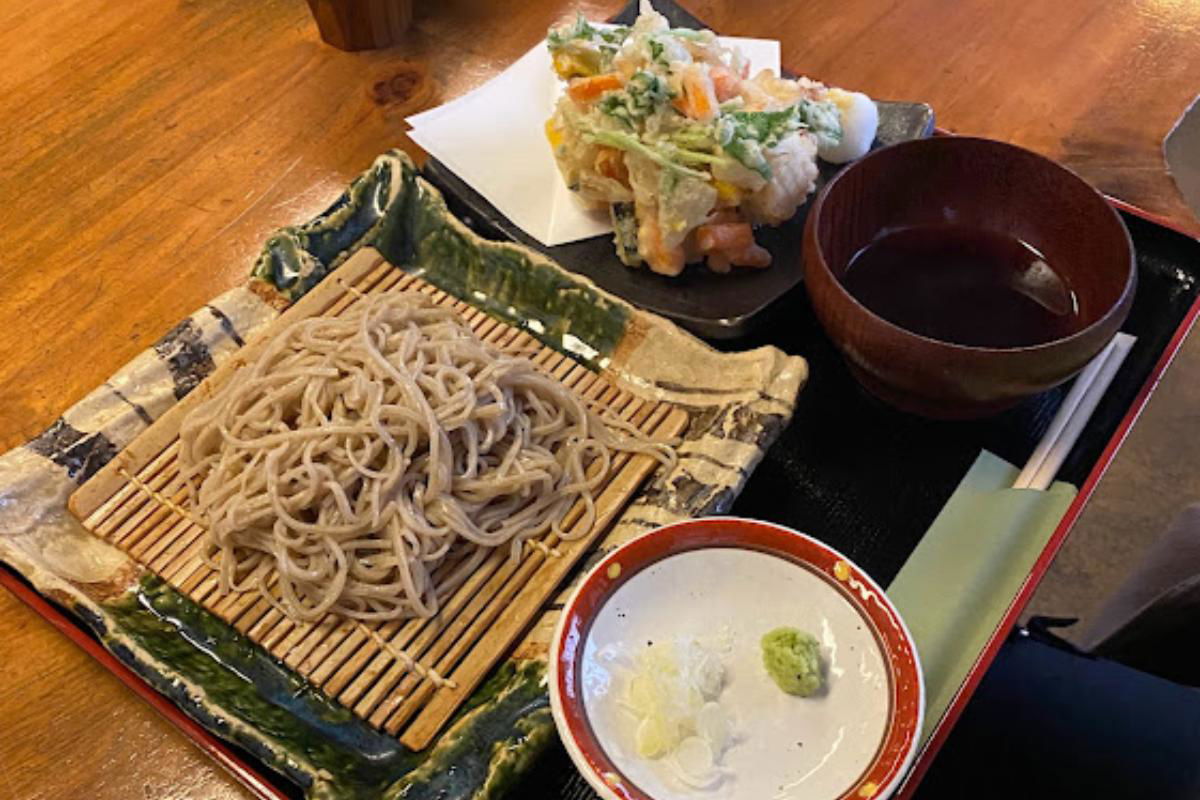
A cold soba set lunch on a dark lacquered tray at a wooden restaurant table in Nikko. A loose tangle of grey-brown buckwheat noodles rests on a square bamboo draining rack, set on a boldly glazed plate in green and cream. Beside it sits a deep brown bowl of dipping sauce, and a small white dish with a red rim holds a mound of wasabi and grated condiments for stirring in. At the top of the tray, a golden vegetable tempura, crisp and flecked with carrot and greens, is served on a black square plate. Chopsticks wait on a green paper sleeve at the edge, ready for a traditional Japanese meal.
A cold soba set lunch on a dark lacquered tray at a wooden restaurant table in Nikko. A loose tangle of grey-brown buckwheat noodles rests on a square bamboo draining rack, set on a boldly glazed plate in green and cream. Beside it sits a deep brown bowl of dipping sauce, and a small white dish with a red rim holds a mound of wasabi and grated condiments for stirring in. At the top of the tray, a golden vegetable tempura, crisp and flecked with carrot and greens, is served on a black square plate. Chopsticks wait on a green paper sleeve at the edge, ready for a traditional Japanese meal.
Văn bản nhìn thấy trong hình
No clearly readable text.
Suối Yumoto Onsen
Một điểm tham quan khác chúng tôi đã ghé là các suối Yumoto Onsen. Suối nước nóng tự nhiên sôi sục ở đây giữa khung cảnh tuyệt đẹp giữa rừng cây và núi non. Tuyết phủ khiến nơi này càng thêm đặc biệt. Tuy nhiên, mùi lưu huỳnh (ngửi giống trứng thối) rất nồng! Vào cửa miễn phí ở đây.
Vì suối Yumoto Onsen nằm ở vùng rất nông thôn, bạn có thể may mắn bắt gặp động vật hoang dã như khỉ hay hươu. Trong chuyến thăm của chúng tôi, chúng tôi đã phát hiện một con hươu trong bụi cây!
Google Maps: https://maps.app.goo.gl/t8F1qUZCv8NkYff89
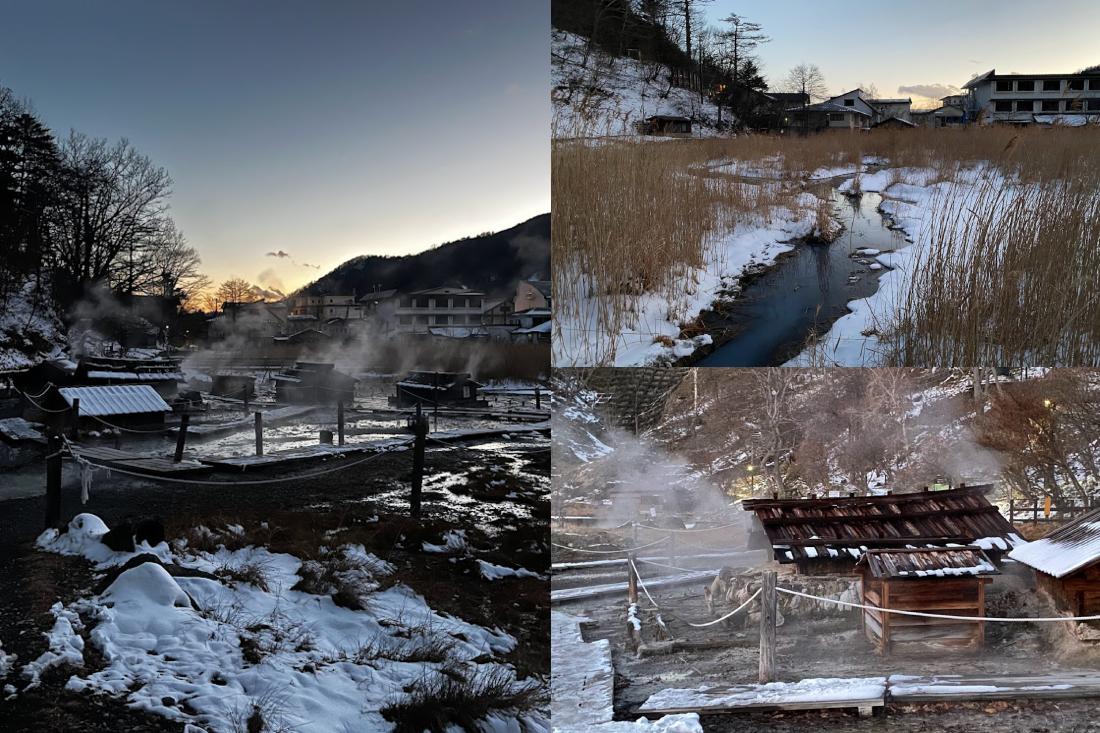
A three-photo collage of Yumoto Onsen in Nikko on a snowy winter evening, with steam rising everywhere from the hot spring sources. The left photo shows the main steaming field at dusk: dark wooden huts and fenced-off spring pools vent thick plumes of vapor, snow piles along the foreground, and low buildings sit at the base of a mountain under an orange fading sky. The top right photo looks down a clear stream winding through snow, flanked by tall dried reeds, with village houses on the slope behind. The bottom right photo gives a closer view of a rustic hot spring hut with a weathered corrugated roof, snow on top, steam pouring from the ground around it, and a simple rope fence marking the path.
A three-photo collage of Yumoto Onsen in Nikko on a snowy winter evening, with steam rising everywhere from the hot spring sources.
The left photo shows the main steaming field at dusk: dark wooden huts and fenced-off spring pools vent thick plumes of vapor, snow piles along the foreground, and low buildings sit at the base of a mountain under an orange fading sky. The top right photo looks down a clear stream winding through snow, flanked by tall dried reeds, with village houses on the slope behind. The bottom right photo gives a closer view of a rustic hot spring hut with a weathered corrugated roof, snow on top, steam pouring from the ground around it, and a simple rope fence marking the path.
Văn bản nhìn thấy trong hình
No clearly readable text is present in the image.
Bồn ngâm chân あんよの湯 (anyo no yu)
Gần suối Yumoto Onsen còn có một bồn ngâm chân (あんよの湯 anyo no yu) mà bạn có thể ghé thăm. Vào bồn ngâm chân thường miễn phí, nhưng nơi này đã đóng cửa khi chúng tôi đến lúc 16:00, nên đáng tiếc chúng tôi không được thử.
Google Maps: https://maps.app.goo.gl/Yv9ELj45z2Ey4qvm8
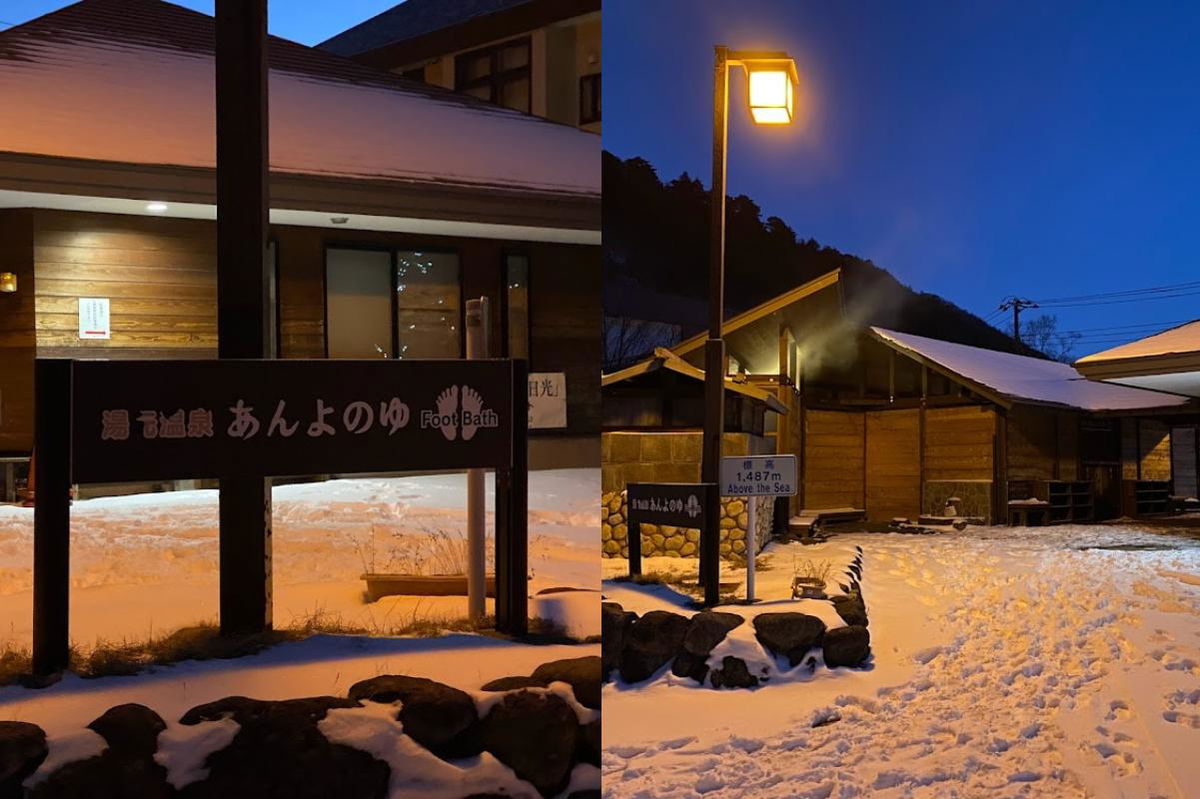
Two photos side by side show a foot bath onsen in Nikko on a snowy winter evening, under a deep blue dusk sky. In the left photo, a dark wooden sign stands in the foreground reading あんよのゆ with "Foot Bath" in English and small footprint icons, set in front of a low wooden building dusted with snow and lit by a warm porch light. The right photo pulls back to a wider view of the same facility: a long timber shelter with a snow-covered roof, steam drifting up from the hot spring water, and a glowing lantern-style lamp post rising above a snow-packed path marked with footprints. A small sign next to the path gives the elevation as 1,487 meters above sea level, matching the high mountain onsen setting.
Two photos side by side show a foot bath onsen in Nikko on a snowy winter evening, under a deep blue dusk sky.
In the left photo, a dark wooden sign stands in the foreground reading あんよのゆ with "Foot Bath" in English and small footprint icons, set in front of a low wooden building dusted with snow and lit by a warm porch light. The right photo pulls back to a wider view of the same facility: a long timber shelter with a snow-covered roof, steam drifting up from the hot spring water, and a glowing lantern-style lamp post rising above a snow-packed path marked with footprints. A small sign next to the path gives the elevation as 1,487 meters above sea level, matching the high mountain onsen setting.
Văn bản nhìn thấy trong hình
湯て温泉 あんよのゆ FootBath
日光」
標高 1,487m
Above the Sea.
湯て温泉 あんよのゆ
Khách sạn ở Nikko
Nikko Park Lodge Tobu Station (Chuyến đi 2022)
Cho chuyến đi năm 2022, chúng tôi chọn một khách sạn bình dân, vì chúng tôi muốn dành phần lớn số tiền tiết kiệm được cho đồ ăn. Khách sạn có tên "Nikko Park Lodge Tobu Station" .* Nếu bạn muốn chi 200 - 300 euro cho khách sạn, bạn sẽ có nhiều lựa chọn tốt hơn và phong phú hơn. Tất nhiên, điều này còn phụ thuộc vào mùa.
- Google Maps: https://maps.app.goo.gl/SK2xoYkAhspGuHgb6
- Booking.com: "Nikko Park Lodge Tobu Station"
Ưu điểm:
- Cách nhà ga chính 2 phút
- Nhân viên (khi chúng tôi đến, họ nói tiếng Anh rất tốt)
- Rất rẻ (~8.000¥ / 60€)
- Có thể đặt qua Booking.com hoặc Airbnb (Booking.com rẻ hơn vào thời điểm chúng tôi đặt)
- Không thấy nấm mốc
- Lò vi sóng & tủ lạnh trong khu vực phòng tắm chung (Siêu thị cách 2 phút – cửa hàng tiện lợi Family Mart cách 5 phút)
Nhược điểm:
- Tường rất mỏng (một đứa trẻ la hét ít nhất nửa tiếng đồng hồ lúc 7:30 sáng)
- Đôi khi mùi không dễ chịu, nhưng phòng thì ổn
- Toilet và phòng tắm chung (hai phòng khác dùng chung với chúng tôi)
- Thảm trong phòng rất nhiều vết bẩn, nội thất đôi khi cũng bẩn
- Ga giường có một lỗ nhỏ (2 cm), nhưng ngoài ra sạch sẽ đối với khách sạn hai sao
- Không có tiện ích thêm (chỉ là khách sạn hai sao)
Shinkyo Inn Hotel (Chuyến đi 2023)
Cho chuyến đi năm 2023, chúng tôi chọn Shinkyo Inn Hotel ". Khách sạn này có vị trí lý tưởng, chỉ một phút từ cây cầu Shinkyo nổi tiếng. Khu vực xung quanh có nhiều nhà hàng và các điểm tham quan chính như đền thờ chỉ cách 2-3 phút đi bộ.
Điểm nhấn đặc biệt của khách sạn là bạn có thể ngắm nhìn dòng sông gần đó thơ mộng từ cả phòng tắm lẫn phần còn lại của phòng. Chủ khách sạn là người nước ngoài (tôi nghĩ ông ấy là người Anh) nên nói tiếng Anh hoàn hảo. Điều đó nghĩa là không có rào cản ngôn ngữ, khiến nơi này rất đáng giới thiệu cho khách quốc tế.
Chúng tôi được phép gửi hành lý tại khách sạn đến 14:00. Hôm đó chủ khách sạn vắng nhà, nên chúng tôi không thể giữ vali lâu hơn. Khách sạn giống như một nhà nghỉ chỉ có hai phòng, nhưng cả hai đều rất rộng rãi.
- Google Maps: https://maps.app.goo.gl/4X39RfLKhJZswZoY6
- Booking.com: https://www.booking.com/hotel/jp/shinkyo-inn.de.html
Ưu điểm:
- Vị trí hoàn hảo, chỉ vài phút đi bộ từ các điểm tham quan hàng đầu
- Chủ khách sạn nói tiếng Anh hoàn hảo (ông ấy là người Anh)
- Nhiều nhà hàng gần nơi lưu trú
- Chỉ có hai phòng, nên cả hai đều rất rộng rãi
- Tầm nhìn ra sông, rất thơ mộng
Nhược điểm:
- Vào ngày rời đi, chúng tôi chỉ có thể gửi hành lý đến 14:00
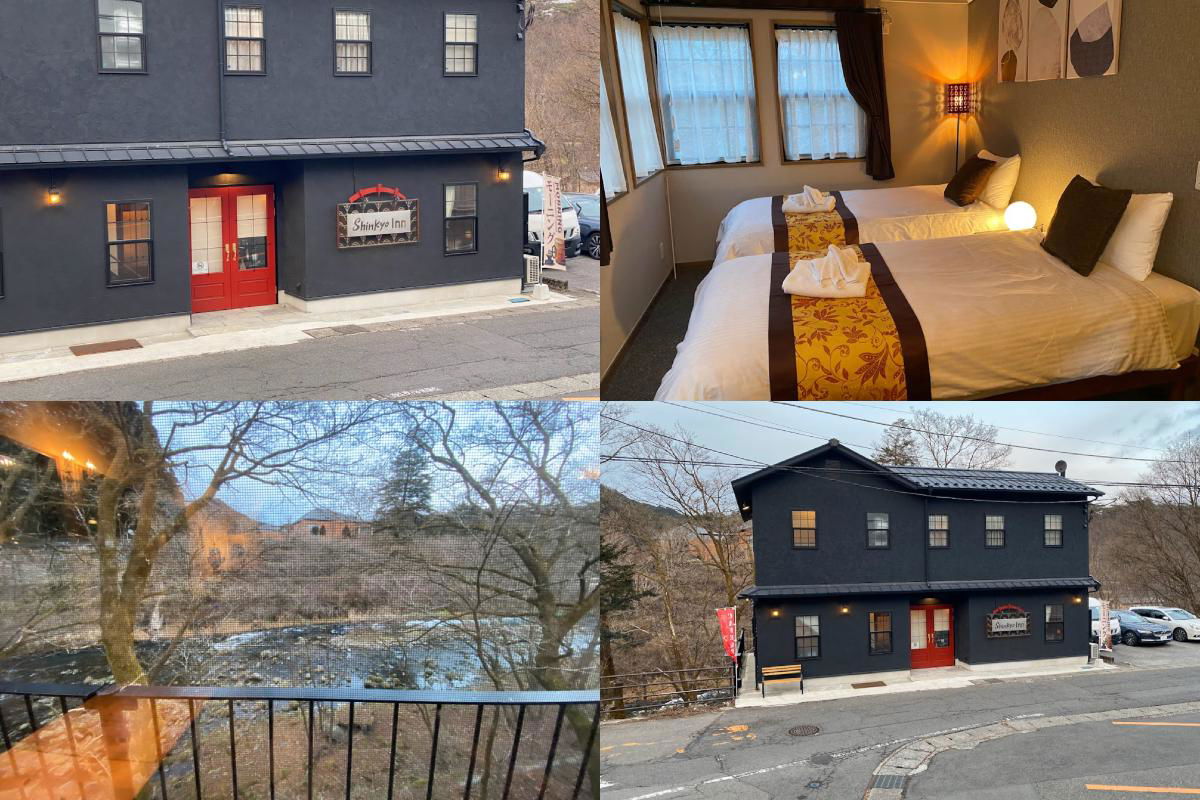
A four-photo collage shows Shinkyo Inn, a small guesthouse in Nikko, Japan. Two of the shots capture its exterior: a two-story building painted dark charcoal with a striking red double-door entrance and a white signboard decorated with a little red bridge illustration. One exterior photo is taken from the street in daylight, the other from across the road at dusk, with warm lamps glowing by the door and a few cars parked alongside. The other two photos show the guesthouse experience. A twin bedroom has two neatly made beds with white linens, gold-and-brown runners, folded towel decorations, and a softly glowing spherical lamp by the pillows. The fourth shot is the view from a window at twilight, looking out over a river lined with bare winter trees, framed by the dark railing of a balcony just outside the glass.
A four-photo collage shows Shinkyo Inn, a small guesthouse in Nikko, Japan. Two of the shots capture its exterior: a two-story building painted dark charcoal with a striking red double-door entrance and a white signboard decorated with a little red bridge illustration. One exterior photo is taken from the street in daylight, the other from across the road at dusk, with warm lamps glowing by the door and a few cars parked alongside.
The other two photos show the guesthouse experience. A twin bedroom has two neatly made beds with white linens, gold-and-brown runners, folded towel decorations, and a softly glowing spherical lamp by the pillows. The fourth shot is the view from a window at twilight, looking out over a river lined with bare winter trees, framed by the dark railing of a balcony just outside the glass.
Văn bản nhìn thấy trong hình
Shinkyo Inn
Chi phí du lịch
Phương án tiết kiệm 2022: 2 ngày một người (khách sạn có thể chia sẻ cho hai người)
- Vé tàu khứ hồi (~7.000¥ / ~55€)
- Khách sạn một đêm (~8.000¥ / ~60€)
- Vé xe buýt 2 ngày (~2.200¥ / ~17€)
- Ăn uống & đồ ăn nhẹ / đồ ăn đường phố (~5.000¥ / ~40€)
- Phí vào cửa (~2.000¥ / ~15€)
- Tổng cộng = (~25.000¥ / ~190 - 200€)
Phương án đắt hơn một chút 2023 (không sang trọng): 2 ngày một người (khách sạn và ô tô có thể chia sẻ cho hai người)
- Tàu (~7.000¥ / ~55€)
- Khách sạn hai đêm (~63.000¥ / ~400€)
- Ô tô hai ngày (~20.000¥ gồm xăng / ~150€)
- Ăn uống & đồ ăn nhẹ / đồ ăn đường phố (~10.000¥ / ~75€)
- Phí vào cửa (~12.000¥ / ~80€)
- Tổng cộng = (~112.000¥ / ~720€)
Ẩm thực ở Nikko – Các món Yuba là đặc sản địa phương
Yuba & Soba

Yuba ゆば là món ăn đặc sản địa phương ở Nikko và vùng phụ cận. Ở Tokyo tôi chưa từng thấy hay ăn món này. Nhưng vì hầu như nhà hàng nào cũng phục vụ nó trong súp, làm topping mì Ý hoặc chiên giòn, nên tất nhiên tôi đã thử.
Yuba ゆば là gì?
Yuba được làm từ sữa đậu nành. Sữa được đun nóng đến 80-90°C. Lớp màng hình thành trên bề mặt sau đó được gỡ ra cẩn thận bằng đũa.
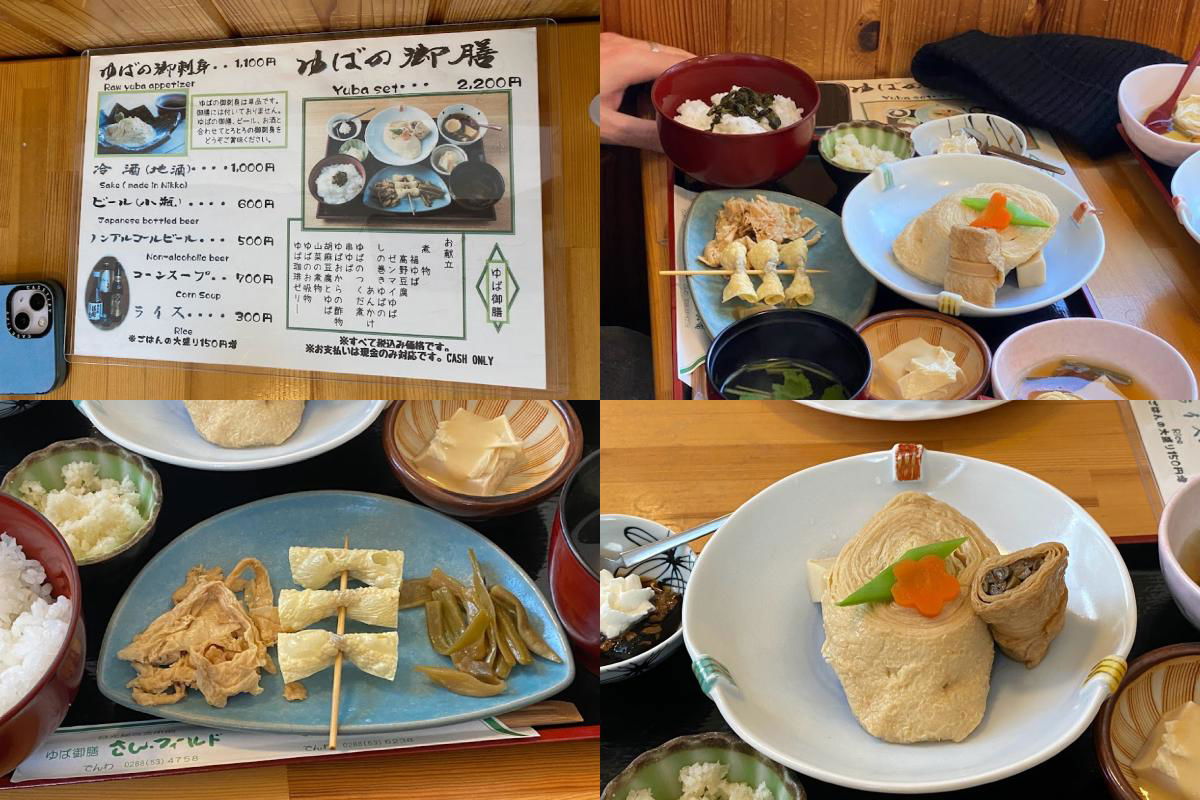
A four-photo collage of a yuba (tofu skin) set meal, a specialty of Nikko, Japan. The top left panel shows the restaurant's menu board, handwritten in Japanese with English labels, listing a raw yuba appetizer for 1,100 yen, a yuba set for 2,200 yen, sake made in Nikko, beer, corn soup, and rice, with a note that the shop is cash only. The other three panels show the meal itself. One captures the full spread on a wooden table: red lacquered bowls of rice topped with something dark and leafy, miso soup, small side dishes, and a plate holding fresh yuba draped over a block of tofu and garnished with a carrot cut into a flower. A close-up shows pale, wrinkled sheets of fried yuba beside skewers of knotted yuba and pickled vegetables on a blue oval plate. The last panel zooms in on a rolled piece of yuba stuffed with a dark filling, served on a white plate with rice and pickles alongside.
A four-photo collage of a yuba (tofu skin) set meal, a specialty of Nikko, Japan. The top left panel shows the restaurant's menu board, handwritten in Japanese with English labels, listing a raw yuba appetizer for 1,100 yen, a yuba set for 2,200 yen, sake made in Nikko, beer, corn soup, and rice, with a note that the shop is cash only.
The other three panels show the meal itself. One captures the full spread on a wooden table: red lacquered bowls of rice topped with something dark and leafy, miso soup, small side dishes, and a plate holding fresh yuba draped over a block of tofu and garnished with a carrot cut into a flower. A close-up shows pale, wrinkled sheets of fried yuba beside skewers of knotted yuba and pickled vegetables on a blue oval plate. The last panel zooms in on a rolled piece of yuba stuffed with a dark filling, served on a white plate with rice and pickles alongside.
Văn bản nhìn thấy trong hình
ゆばの御刺身・・・1,100円
Raw yuba appetizer
ゆばの御膳
Yuba set・・・2,200円
冷酒(地酒)・・・1,000円
Sake (made in Nikko)
ビール(小瓶)・・・600円
Japanese bottled beer
ノンアルコールビール・・・500円
Non-alcoholic beer
コーンスープ・・・700円
Corn Soup
ライス・・・300円
Rice
※ごはん大盛りは50円増
※お支払いは現金のみ対応です。CASH ONLY
ゆば御膳
0288(53)4758
Yuba ゆば có vị như thế nào?
Khó mà diễn tả. Ban đầu tôi nghĩ nó sẽ có kết cấu giống Tamagoyaki vì trông hơi giống vậy, nhưng nó dai chắc và xốp hơn nhiều. Nó cũng hút rất nhiều chất lỏng. Vì gần như không có vị, nó thường được phục vụ trong súp (mì) hoặc chiên giòn. Bạn cũng có thể ăn nó như sashimi.
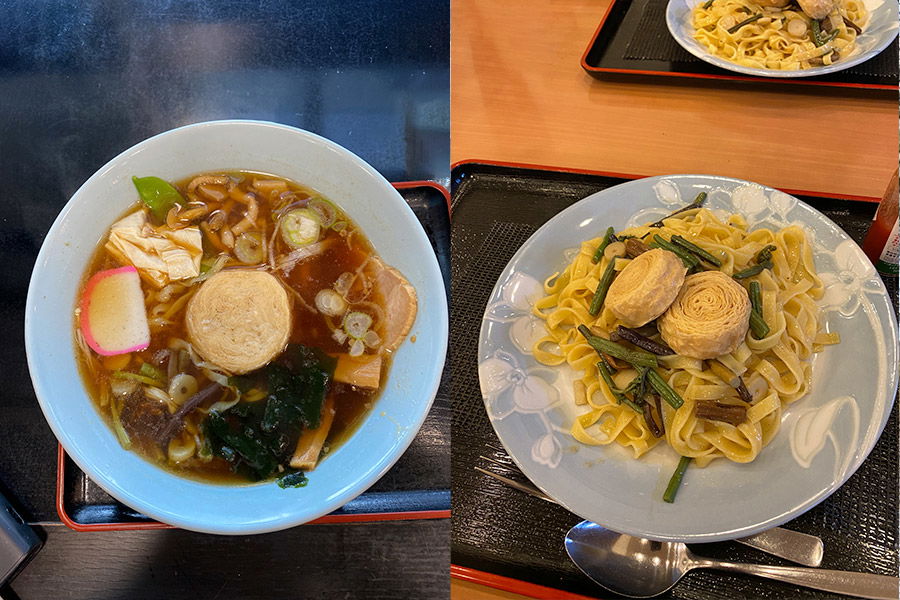
Two yuba dishes from Nikko sit side by side. On the left, a bowl of noodle soup in dark broth, topped with a round of rolled yuba (tofu skin), a pink-and-white naruto fish cake slice, greens, scallions, and mushrooms. On the right, a plate of thick flat noodles tossed with vegetables and mushrooms and crowned with two coiled pieces of fried yuba, served on a black tray with a spoon beside it.
Two yuba dishes from Nikko sit side by side. On the left, a bowl of noodle soup in dark broth, topped with a round of rolled yuba (tofu skin), a pink-and-white naruto fish cake slice, greens, scallions, and mushrooms. On the right, a plate of thick flat noodles tossed with vegetables and mushrooms and crowned with two coiled pieces of fried yuba, served on a black tray with a spoon beside it.
Văn bản nhìn thấy trong hình
No text is clearly readable in the image.
Kết luận:
Tôi đặc biệt gợi ý đến Nikko vào mùa đông. Ở Tokyo không có tuyết trong năm 2021–2022. Nhưng nếu bạn đến Nikko bạn sẽ thấy rất nhiều tuyết. Chỉ cần nhớ mặc thật ấm, vì mùa đông có thể rất lạnh (-3°C không phải hiếm, và khi gió mạnh thì còn khó chịu hơn).
Khách sạn tương đối đắt vì đây là điểm đến du lịch rất phổ biến. Đồ ăn ngon và bạn có thể tận hưởng nhiều thiên nhiên. Nếu bạn muốn thoát khỏi thành phố và đang ở Tokyo, tôi rất khuyên bạn nên dành 1 hoặc 2 ngày ở Nikko. Đi lại đó nhìn chung cũng không quá đắt. Một điều tôi nhận thấy: Khi tôi quay lại vào tháng 12 năm 2023, hầu hết mọi thứ đóng cửa sớm, thậm chí có nhà hàng đôi khi chỉ mở đến 14:30–15:00.


Bình luận