
Talaan ng nilalaman:
TL;DR
Huwag mong isipin na ang fermentation ay isang uso o isang produkto lang; ito ang pang-araw-araw na pundasyon ng lasa sa lutuing Hapon, mula miso hanggang tsukemono. Nasa puso nito ang koji, at kahit pa may health benefits, tandaan lang na maalat ang ilan, kaya kainin bilang bahagi ng balanseng pagkain, hindi bilang gamot.Ang fermentasyon ay isa sa tahimik na pundasyon ng pagkaing Hapones. Nakakasalamuha mo ito sa agahan sa natto, sa mangkok ng sopas na miso, sa tabi ng kanin bilang mga pickle, at sa mga pampalasa na nagbibigay sa pang-araw-araw na pagkain ng mas malalim na lasa kaysa iminumungkahi ng listahan ng mga sangkap. Hindi ito iisang lasa o iisang produkto. Isang pamilya ito ng mga teknikong nagbabago ng soya, kanin, barley, gulay, at prutas tungo sa pagkaing may mas maraming aroma, umami, asim, o kakayahang tumagal.
Mula sa aking pananaw, naging mas hindi kapansin-pansin ang fermentasyon sa pang-araw-araw na usapan mga sampung taon na ang nakalipas. Hindi ito kailanman nawala sa mga kusina ng Hapon, pero mas napapansin ko na ito ngayon sa pamamagitan ng health-conscious na pagluluto, mga specialty shop, tasting, at workshop. Kapaki-pakinabang ang bagong atensyong ito dahil tinutulungan tayo nitong tumingin lampas sa naka-fashionable na label at maunawaan kung bakit nanatiling bahagi ng pang-araw-araw na buhay ang mga pagkaing ito sa loob ng napakahabang panahon.
Bakit mahalaga ang fermentasyon sa pagkaing Hapones
Nagsisimula ang fermentasyon kapag ang maingat na pinamamahalaang microorganism ay kumikilos sa pagkain. Sa paglulutong Hapones, ang mahahalagang grupo ay kinabibilangan ng amag na koji, yeast, lactic acid bacteria, bakterya ng natto, at acetic acid bacteria. Maaaring magpreserba ang kanilang gawain ng pagkain at lumikha ng amino acid at iba pang compound na nagpapakumplikado ng mga lasa. Ang Kōji (麹), kanin, barley, o soya na pinatubo kasama ang Aspergillus oryzae , ay partikular na sentral sa miso, shoyu, mirin, at sake. [1]

The image shows a close-up view of a refrigerated display case in a Japanese food shop, filled with neatly stacked packages of koji (fermented grain used for making miso, amazake, and other fermented foods). No people are visible; the frame is entirely occupied by the merchandise. Main content and arrangement The display consists of rectangular, vacuum-sealed blocks of grain, each wrapped in clear plastic and labeled with a white sticker. They are arranged in roughly vertical columns, with the color of the grain changing from left to right: Left columns: pale, whitish packages labeled “米こうじ” (rice koji). Several packages in this section are stacked about four to five high. Center columns: slightly darker, tan-colored packages labeled “麦こうじ” (barley koji). Right columns: darker brown packages labeled “玄米こうじ” (brown rice koji). Each label contains Japanese text including the product name, what appears to be production date information (for example, "20.9.8" can be read on some labels), producer and origin details, a barcode, and small red stamps or markings. The labels on the front-facing packages in the lower left indicate a 500 g weight. Signage and pricing Two printed signs are visible at the top of the display: A black sign on the upper left with red and white text advertising rice, barley, and brown rice koji (“米・麦 玄米”) at "500g ¥1,000 (税込)", meaning 500 g for 1,000 yen tax included. A white sign at the upper right with similar pricing ("¥1,000(税込)") and the text “香川こづち” plus “いつでも米・麦 玄米”. The word “香川” (Kagawa) suggests the product or shop may be associated with Kagawa Prefecture, though this is an inference from the text rather than a confirmed location. Other visible elements Near the top center-left there is a round analog dial, likely a temperature gauge for the refrigerated case, with small colored markings around its edge. The right edge of the frame shows additional products partially cut off: a dark packaged item with Japanese characters (possibly miso or another fermented product, with text resembling “田舎...” which often refers to "country-style" miso), and a label that appears to include “醤油こうじ” (soy sauce koji), suggesting the shop sells other koji-based items. A sheet of clear plastic film or wrap covers part of the display, creating bright diagonal reflections and glare across the middle and lower portions of the image, which slightly obscures some packages. Lighting and composition The scene is brightly lit with cool, typical supermarket-style lighting. The camera angle is straight on or slightly from above, and the products fill the entire frame. The overall impression is of a specialty or health-food store section dedicated to koji for home fermentation use.
The image shows a close-up view of a refrigerated display case in a Japanese food shop, filled with neatly stacked packages of koji (fermented grain used for making miso, amazake, and other fermented foods). No people are visible; the frame is entirely occupied by the merchandise.
Main content and arrangement
The display consists of rectangular, vacuum-sealed blocks of grain, each wrapped in clear plastic and labeled with a white sticker. They are arranged in roughly vertical columns, with the color of the grain changing from left to right:
- Left columns: pale, whitish packages labeled “米こうじ” (rice koji). Several packages in this section are stacked about four to five high.
- Center columns: slightly darker, tan-colored packages labeled “麦こうじ” (barley koji).
- Right columns: darker brown packages labeled “玄米こうじ” (brown rice koji).
Each label contains Japanese text including the product name, what appears to be production date information (for example, "20.9.8" can be read on some labels), producer and origin details, a barcode, and small red stamps or markings. The labels on the front-facing packages in the lower left indicate a 500 g weight.
Signage and pricing
Two printed signs are visible at the top of the display:
- A black sign on the upper left with red and white text advertising rice, barley, and brown rice koji (“米・麦 玄米”) at "500g ¥1,000 (税込)", meaning 500 g for 1,000 yen tax included.
- A white sign at the upper right with similar pricing ("¥1,000(税込)") and the text “香川こづち” plus “いつでも米・麦 玄米”. The word “香川” (Kagawa) suggests the product or shop may be associated with Kagawa Prefecture, though this is an inference from the text rather than a confirmed location.
Other visible elements
- Near the top center-left there is a round analog dial, likely a temperature gauge for the refrigerated case, with small colored markings around its edge.
- The right edge of the frame shows additional products partially cut off: a dark packaged item with Japanese characters (possibly miso or another fermented product, with text resembling “田舎...” which often refers to "country-style" miso), and a label that appears to include “醤油こうじ” (soy sauce koji), suggesting the shop sells other koji-based items.
- A sheet of clear plastic film or wrap covers part of the display, creating bright diagonal reflections and glare across the middle and lower portions of the image, which slightly obscures some packages.
Lighting and composition
The scene is brightly lit with cool, typical supermarket-style lighting. The camera angle is straight on or slightly from above, and the products fill the entire frame. The overall impression is of a specialty or health-food store section dedicated to koji for home fermentation use.
Nakikitang teksto sa larawan
**価格札(中央上)**
自家製米こうじ
米 麹
500g ¥1,000(税込)
**価格札(右上)**
自家製米こうじ 契約ならんで `[uncertain: 契約ならんで]`
米・麦 玄米
100g ¥1,000(税込) `[uncertain: 100g ¥1,000]`
**計器(左上・文字盤の数字)**
50 40 30 20
**各パッケージのラベル(繰り返し)**
左の列(上から下へ):
- 米こうじ
- 米こうじ
- 米こうじ
- 米こうじ
- 米こうじ
- 米こうじ
- 米こうじ
- 米こうじ
第2列(上から下へ):
- 米こうじ
- 米こうじ
- 米こうじ
- 米こうじ
- 米こうじ
- 米こうじ
- 米こうじ
第3列(上から下へ):
- 米こうじ
- 米こうじ
- 麦こうじ
- 麦こうじ
- 米こうじ
- 麦こうじ
- 麦こうじ
第4列(上から下へ):
- 麦こうじ
- 麦こうじ
- 麦こうじ
- 麦こうじ
第5列(上から下へ):
- 玄米こうじ
- 玄米こうじ
- 玄米こうじ
- 玄米こうじ
- 玄米こうじ
右上(上から下へ):
- 麦こうじ
- 玄米こうじ
- 麦こうじ
**ラベルの小さな印字(読み取れる部分のみ)**
品名:米麹(米) 内容量:500g
原材料名:米(国産) `[uncertain: 原材料名:米(国産)]`
栄養成分表示(100g当たり) `[uncertain]`
2 9 8.04.12 12時まで `[uncertain: 2 9 8.04.12]`
賞味期限 `[uncertain]`
TEL `[uncertain: 0942-**-****]`
**右端の商品ラベル**
万能調味料
醤油こうじ
塩 `[uncertain]`
ゆきんこ娘 `[uncertain: ゆきんこ娘]`
田舎みそ `[uncertain: 田舎みそ]`
**右端の縦書き文字**
逸 `[unreadable]`
か `[uncertain: か]`
Tumulong ang mainit at mahalumigmig na klima ng Japan sa pag-unlad ng maraming rehiyonal na tradisyon ng fermentasyon, pero hindi lang klima ang buong kuwento. Pinino ng mga tao ang mga resipe, antas ng asin, lalagyan, at oras ng pagpapahinog sa loob ng maraming henerasyon. Kaya nga ang matamis na puting miso, madilim na bean miso, matalim na rice-bran pickle, at banayad na sake ay maaari lahat na kabilang sa fermentasyong Hapones habang ganap na magkaiba ang lasa.
Ang mga fermented na pagkain ay maaaring maging mahalagang bahagi ng pangkalahatang balanseng diyeta, pero hindi sila magic na gamot. Ayon sa pananaliksik na tinalakay ng MAFF, maaaring suportahan ng tradisyonal na mga fermented na pagkaing Hapones ang metabolismo at kapaligiran ng bituka, pero magkakaiba ang tugon ng mga tao at mahalaga rin ang natitirang bahagi ng diyeta. Mahalaga rin ang asin: ang miso, tsukemono, at umeboshi ay maaaring mataas sa sodium, kaya itinuturing ko sila bilang masasarap na bahagi ng sari-saring pagkain, hindi bagay na kakainin nang walang limitasyon. [2]
Koji: ang tahimik na starter sa likod ng miso, amazake, at marami pa
Ang Kōji ay hindi iisang tapos na produkto o iisang lasa. Isang butil o legume ito na pinatubo kasama ang amag na kōji, at binibigyan nito ang mga producer ng enzymes na nagpapaging napakaversatile ng fermentasyong Hapones. Sa isang shop, maaari mong makita ang kome kōji (米麹), gawa sa polished na kanin; genmai kōji (玄米麹), na simpleng brown-rice kōji na gawa sa buong brown rice; at mugi kōji (麦麹), gawa sa barley. Sa produksyon ng miso, ang kōji ng kanin, barley, at soya ang mga klasikong base, at bawat isa ay nagbabago sa huling aroma, tamis, at lalim. [3]
Isa sa pinaka-friendly na paraan upang tikman ang kōji ay ang kome kōji amazake (米麹甘酒), isang matamis na inuming gawa sa kanin at rice kōji. Iba ito sa amazake na gawa sa sake lees, sake kasu (酒粕), kaya sulit basahin ang label kaysa ipagpalagay na pareho ang bawat bote. [4]
Ang partikular na kapana-panabong para sa akin ay kung gaano kalayo ang mararating ng sangkap na ito. Sinusuri na rin ngayon ang kōji sa labas ng Japan, kabilang sa mga fine-dining kitchen, para sa marinade, sauce, curing, at bagong condiment na sagana sa umami. Ang makabagong creatividad na iyan ay nagsisimula pa rin sa parehong matiyagang pagpaparami na makikita mo sa maliit na miso shop sa Japan. [5]
Fermented, inatsara, at hindi laging parehong bagay
Sulit gawin ang pagkakaibang ito dahil marami ang maitatago ng salitang Ingles na “pickle”. Ang Tsukemono (漬物) ay nangangahulugang mga inatsara, karaniwang gulay, pero hindi bawat tsukemono ay aktibong na-ferment. Ang pipino na mabilis na inatsara sa suka ay tsukemono pa rin. Sa kabaligtaran, ang nukazuke (ぬか漬け) ay nagpapahinga sa isang buhay na rice-bran bed kung saan bahagi ng proseso ang lactic-acid fermentation. [6]
Isang napaka-Hapones na detalye ay kung gaano kadali minsang mahanap ang base para sa nukadoko (ぬか床), ang rice-bran bed. Kapag ang brown rice, genmai (玄米), ay polished sa puting kanin sa isang coin-operated na rice-polishing machine, koin seimaiki (コイン精米機), ito ay gumagawa ng kome nuka (米ぬか), rice bran. Hindi ito momigara (もみ殻), ang panlabas na rice husk. Sa ilang machine o kalapit na rice shop, ang lalagyan ng bran ay may label na libreng iuwi, na maaaring perpekto para sa pagsisimula ng nukadoko. Palaging tingnan ang karatula o magtanong muna, dahil magkakaiba ang mga patakaran sa pagkuha depende sa lokasyon. Kinikilala ng MAFF ang rice bran bilang by-product na sagana sa sustansya ng pag-polish sa brown rice at ang base ng nukazuke. [7] Halimbawa, ang isang sangay ng JA ay malinaw na nag-aalok ng libreng rice bran sa tabi ng coin rice-polishing machine nito. [8]
Pareho ring praktikal na diskarte ang nalalapat sa iba pang lugar. Gumagamit ng asin ang shiozuke, suka ang suzuke, sake lees ang kasuzuke, soy sauce ang shoyuzuke, at mustasa ang karashizuke. Ang ilang metodo ay naghihikayat ng fermentasyon sa paglipas ng panahon, samantalang ang iba ay pangunahing tungkol sa pagpapalasa at preserbasyon. Ang pag-alam sa pagkakaiba ay nagpapadali nang husto sa pagbasa ng isang Hapones na breakfast tray o istante ng supermarket.
| Metodo | Terminolohiyang Hapones | Karaniwang base | Ano ang nangyayari |
|---|---|---|---|
| Fermentasyon ng Kōji | 麹, kōji | Kanin, barley, o soya | Pinamamahalaang pagpaparami at pagpapahinog ang lumilikha ng base para sa miso, sake, shoyu, at marami pa. |
| Pag-aatsara sa rice bran | ぬか漬け, nukazuke | Gulay at isang rice-bran bed | Ang isang buhay na nukadoko ay maaaring bumuo ng lactic-acid fermentation. |
| Pag-aatsara sa asin | 塩漬け, shiozuke | Gulay at asin | Hinahatak ng asin ang tubig at nagprepreserba; maaaring mangyari ang fermentasyon, pero hindi garantisado. |
| Pag-aatsara sa suka | 酢漬け, suzuke | Gulay at suka | Karaniwang mabilisang pag-aatsara at pagpapalasa, hindi aktibong fermentasyon. |
| Pag-aatsara sa sake lees | 粕漬け, kasuzuke | Gulay o isda na may sake lees | Gumagamit ng fermented na sangkap, kahit ang hakbang ng pag-aatsara mismo ay hindi tiyak na aktibong fermentasyon. |
| Pag-aatsara sa soy sauce | 醤油漬け, shoyuzuke | Gulay o seafood na may shoyu | Madalas na metodong pagpapalasa at preserbasyon na humihiram ng fermented na lalim ng shoyu. |
Ang mga fermented na pagkaing Hapones na madalas mong makatagpo
Maaari kang gumawa ng napakahabang listahan, pero ang mga ito ang pagkain at pampalasa na unang napapansin ng karamihan sa mga bisita. Isipin ito bilang mapa, hindi kapalit ng kanilang indibidwal na mga kuwento.
Miso
Ang Miso (味噌) ay fermented na pasta ng soya, karaniwang gawa sa soya, asin, at kanin, barley, o soybean koji. Ito ang tahimik na gulugod ng mga sopas, marinade, glaze, at maramihang lutuing-bahay. Ang eksaktong mga sangkap at pagpapahinog ang nagbabago sa kulay, alat, tamis, at lalim nito. Ipinaliliwanag ng aking detalyadong gabay sa miso ang mga variety at kung paano gamitin ang mga ito.
Karamihan sa pang-araw-araw na miso ay ginawa para sa stable na imbakan, madalas na may heat treatment na pumipigil sa karagdagang aktibidad at nagpapanatili ng mas consistent na lasa. Ang hindi pinainit, madalas na may label na nama miso (生味噌), ay nananatiling maliit na specialty niche. Maaari itong patuloy na bumuo sa aroma at nangangailangan ng mas maingat na refrigerated na imbakan. Kawili-wili itong tikman, pero hindi ito awtomatikong “mas mabuti” o lunas sa kalusugan. Pipiliin ko ito dahil sa buhay at patuloy na umuunlad nitong lasa at sa karanasan ng paghambingin ito sa ibang miso.
Kung nasa Tokyo ka at gusto mong tikman kaysa basahin lamang, maisasama ko ang paghahambing na iyan sa aking Tokyo Miso Tour. Depende sa availability, maaari tayong bumisita sa specialty shop, maghambing ng mga estilo, kumain ng mga putaheng batay sa miso, o magsama ng hands-on workshop. May ginaganap talagang reservation-based na miso workshop ang mga specialty shop sa Tokyo, kaya tunay na bahagi ito ng food culture ng lungsod, hindi gawa-gawang aktibidad para sa turista. [9]
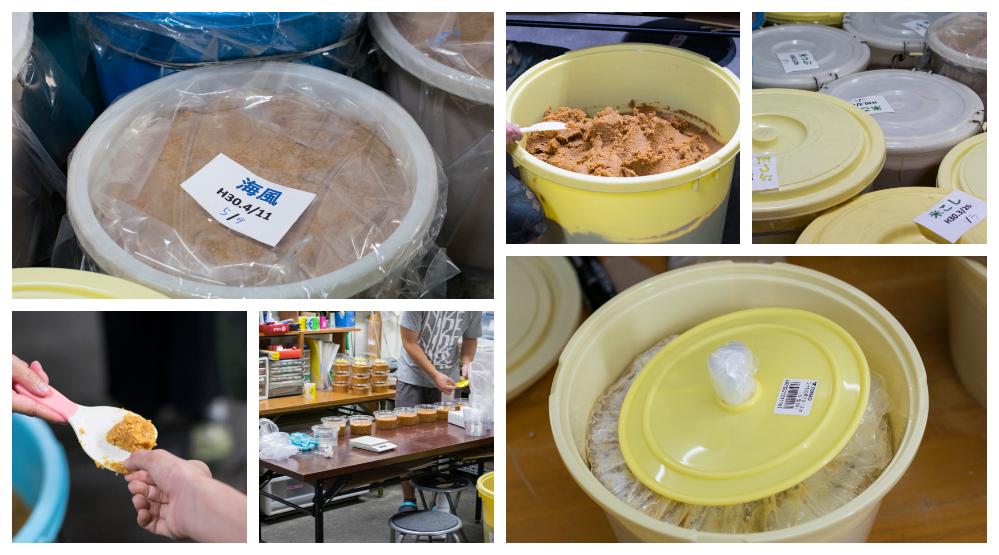
A six-photo collage from a miso workshop in Japan, built around big buckets of fermenting soybean paste. The largest frame shows an open white bucket packed with dense brown miso, its surface sealed under plastic wrap and marked with a handwritten Japanese label carrying a date. Next to it, rows of white and yellow lidded tubs hold other batches, one labeled in Japanese as rice koji. The remaining close-ups stay tight on the paste: a yellow bucket filled with smooth, caramel-colored miso with a small spoon resting in it, and a large yellow tub with its lid pushed aside to reveal plastic-wrapped miso inside. Two frames bring people in. One shows a hand offering a scoop of miso on a white spatula with a pink handle, held out over a blue bucket for a taste. In the other, a man in a gray t-shirt stands at a long table portioning miso into neat rows of small plastic containers, with shelves and a whiteboard behind him.
A six-photo collage from a miso workshop in Japan, built around big buckets of fermenting soybean paste. The largest frame shows an open white bucket packed with dense brown miso, its surface sealed under plastic wrap and marked with a handwritten Japanese label carrying a date. Next to it, rows of white and yellow lidded tubs hold other batches, one labeled in Japanese as rice koji. The remaining close-ups stay tight on the paste: a yellow bucket filled with smooth, caramel-colored miso with a small spoon resting in it, and a large yellow tub with its lid pushed aside to reveal plastic-wrapped miso inside.
Two frames bring people in. One shows a hand offering a scoop of miso on a white spatula with a pink handle, held out over a blue bucket for a taste. In the other, a man in a gray t-shirt stands at a long table portioning miso into neat rows of small plastic containers, with shelves and a whiteboard behind him.
Nakikitang teksto sa larawan
海風
H30.4.11
Natto
Ang Natto (納豆) ay ginawa sa pamamagitan ng pag-ferment sa nilutong soya kasama ang bakterya ng natto. Ang malagkit na sinulid, matalas na aroma, at savory na lasa ay maaaring magulat sa una, pero pamilyar itong kasama sa agahan para sa maraming tao, madalas ihain sa mainit na kanin kasama ang mustasa, soy sauce, at spring onion. Kung curious ka, bibigyan ka ng aking artikulo tungkol sa natto ng praktikal na unang subok nang hindi nagpapanggap na mamahalin ito ng lahat agad-agad.

The image shows a Japanese home-cooked meal arranged on a table covered with a white tablecloth featuring a light orange/beige plaid (checkered) pattern. The photo is taken from above at a slight angle, and several dishes partially enter the frame, suggesting a shared family-style meal. Main subject (center): A round ceramic bowl, cream-colored with irregular green brushstroke bands around the rim and inner wall, filled with what appears to be natto (fermented soybeans). The beans are glossy, amber-brown, and sticky-looking, mixed with plenty of chopped green onion and a light brown seasoning sauce. A spoon or small spatula with a bright pink handle and a flat metal end rests in the bowl, angled toward the upper right. Some sauce smears are visible on the inner sides of the bowl. Surrounding dishes: Upper right: A white bowl containing a simmered dish (likely nimono), with chunky pieces of potato, orange carrot slices, and what appears to be meat, all in a glossy brown broth. Upper left: A small plate with a traditional blue-and-white floral arabesque-style pattern, on which a pair of chopsticks rests. The chopstick tops are decorated with blue and white designs. Left of center: A small white plate with concentric brown rings near its rim, mostly empty, with a few small food crumbs on it. Bottom right corner: A partially visible plate, white with a yellow floral motif near the edge, holding pale sliced pieces that could be potato, sausage, or a similar ingredient (not clearly identifiable). Lighting and atmosphere: The scene is lit with warm indoor lighting, giving the food a homey, casual appearance. No people, text, or brand names are visible. The overall impression is of a typical Japanese weekday dinner, with the seasoned natto bowl as the focal point of the photograph.
The image shows a Japanese home-cooked meal arranged on a table covered with a white tablecloth featuring a light orange/beige plaid (checkered) pattern. The photo is taken from above at a slight angle, and several dishes partially enter the frame, suggesting a shared family-style meal.
Main subject (center): A round ceramic bowl, cream-colored with irregular green brushstroke bands around the rim and inner wall, filled with what appears to be natto (fermented soybeans). The beans are glossy, amber-brown, and sticky-looking, mixed with plenty of chopped green onion and a light brown seasoning sauce. A spoon or small spatula with a bright pink handle and a flat metal end rests in the bowl, angled toward the upper right. Some sauce smears are visible on the inner sides of the bowl.
Surrounding dishes:
- Upper right: A white bowl containing a simmered dish (likely nimono), with chunky pieces of potato, orange carrot slices, and what appears to be meat, all in a glossy brown broth.
- Upper left: A small plate with a traditional blue-and-white floral arabesque-style pattern, on which a pair of chopsticks rests. The chopstick tops are decorated with blue and white designs.
- Left of center: A small white plate with concentric brown rings near its rim, mostly empty, with a few small food crumbs on it.
- Bottom right corner: A partially visible plate, white with a yellow floral motif near the edge, holding pale sliced pieces that could be potato, sausage, or a similar ingredient (not clearly identifiable).
Lighting and atmosphere: The scene is lit with warm indoor lighting, giving the food a homey, casual appearance. No people, text, or brand names are visible. The overall impression is of a typical Japanese weekday dinner, with the seasoned natto bowl as the focal point of the photograph.
Nakikitang teksto sa larawan
No visible text found in the image.

The image shows retail packages of what appears to be a Japanese natto (fermented soybean) making kit, displayed for sale in a shallow round basket made of woven bamboo. The photo is taken from above at a slight angle, showing about eight to ten identical clear plastic bags arranged loosely in the tray. The packages Each bag contains two long bundles of dried rice straw bound with thin purple bands, and beside them a column of small, round, light-tan soybeans is visible through the plastic. The straw-and-beans arrangement suggests the straw serves as the traditional fermenting medium, consistent with a homemade natto kit rather than ready-to-eat natto. Labeling (visible Japanese text) A large pink circular sticker with a dotted pattern sits on the front of each package, with prominent white characters reading "納笑豆", a wordplay combining 納豆 (natto) with 笑 (smile/laugh). Around the circle, smaller text reads 手作りキット (handmade kit), 信州産大豆から (from Shinshu-grown soybeans), and 発酵おうち時間 (fermenting at home / at-home fermentation time). A small cream-colored vertical tag on the bags reads 信州産 ナカカセンナリ, apparently identifying the soybean variety (Nakakasennari) and its Shinshu (Nagano) origin. Each bag also carries a small white sticker shaped like a map outline; text on it appears to include 長野県 (Nagano Prefecture), suggesting the map depicts Nagano. One package shows partially visible vertical bullet-point text (including fragments such as 天然の..., 糸引き..., 味..., 市販...), likely describing product features, and a line near the bottom reads 美しい納豆の作り方はこちら ("for how to make beautiful natto, see here"), pointing to instructions. Setting and composition The basket sits on a surface covered with green artificial turf-like material, and a light wooden frame or box edge is visible in the background at the top. Bright indoor lighting creates strong white reflections on the crinkled plastic wrap. The pink circular labels are the most visually striking element, standing out against the natural beige tones of the straw, soybeans, and bamboo basket. Overall, the image conveys a specialty or regional food product: a do-it-yourself natto fermentation kit made with Shinshu (Nagano-grown) soybeans and rice straw, presented as an attractive artisanal item. This aligns with the stated context of a blog about Japanese fermentation culture, though that context is not itself printed in the image.
The image shows retail packages of what appears to be a Japanese natto (fermented soybean) making kit, displayed for sale in a shallow round basket made of woven bamboo. The photo is taken from above at a slight angle, showing about eight to ten identical clear plastic bags arranged loosely in the tray.
The packages
Each bag contains two long bundles of dried rice straw bound with thin purple bands, and beside them a column of small, round, light-tan soybeans is visible through the plastic. The straw-and-beans arrangement suggests the straw serves as the traditional fermenting medium, consistent with a homemade natto kit rather than ready-to-eat natto.
Labeling (visible Japanese text)
- A large pink circular sticker with a dotted pattern sits on the front of each package, with prominent white characters reading "納笑豆", a wordplay combining 納豆 (natto) with 笑 (smile/laugh).
- Around the circle, smaller text reads 手作りキット (handmade kit), 信州産大豆から (from Shinshu-grown soybeans), and 発酵おうち時間 (fermenting at home / at-home fermentation time).
- A small cream-colored vertical tag on the bags reads 信州産 ナカカセンナリ, apparently identifying the soybean variety (Nakakasennari) and its Shinshu (Nagano) origin.
- Each bag also carries a small white sticker shaped like a map outline; text on it appears to include 長野県 (Nagano Prefecture), suggesting the map depicts Nagano.
- One package shows partially visible vertical bullet-point text (including fragments such as 天然の..., 糸引き..., 味..., 市販...), likely describing product features, and a line near the bottom reads 美しい納豆の作り方はこちら ("for how to make beautiful natto, see here"), pointing to instructions.
Setting and composition
The basket sits on a surface covered with green artificial turf-like material, and a light wooden frame or box edge is visible in the background at the top. Bright indoor lighting creates strong white reflections on the crinkled plastic wrap. The pink circular labels are the most visually striking element, standing out against the natural beige tones of the straw, soybeans, and bamboo basket.
Overall, the image conveys a specialty or regional food product: a do-it-yourself natto fermentation kit made with Shinshu (Nagano-grown) soybeans and rice straw, presented as an attractive artisanal item. This aligns with the stated context of a blog about Japanese fermentation culture, though that context is not itself printed in the image.
Nakikitang teksto sa larawan
**中央のパッケージ(本体ラベル):**
納笑つと豆
「手作りキット」
信州産
稲わら
発酵おうち時間
(わらに付けられた札:)
信州産
ナカセンナリ
**パッケージ裏面のグレー部分(一部見えているテキスト):**
天然の
●糸引
●味 [unreadable]
ロの [uncertain: 口の]
市販
ご [unreadable]
○ [unreadable]
○ [unreadable]
○ [unreadable]
○ [unreadable]
**パッケージ下部のテキスト:**
笑つと納豆の作り方はこちら
**地図ステッカー(長野県の形):**
長野県
信州 [uncertain]
**左側のパッケージ(一部見えている部分):**
納 [unreadable]
発酵お [uncertain: 発酵おうち時間]
[unreadable]ち [uncertain]
時 [uncertain]
(わらに付けられた札:)
信州産
ナカセンナリ
**右上のパッケージ(一部見えているラベル):**
納笑
つと [uncertain]
[unreadable]
Tsukemono at Takuan
Saklaw ng Tsukemono ang malawak na mundo ng mga pickled na Hapones. Nagdaragdag sila ng contrast sa kanin, inihaw na isda, o set meal: asin, crunch, asim, kulay, at reset sa pagitan ng mga kagat. Ang Takuan (沢庵) ang maliwanag na dilaw na inatsarang daikon na madalas mong makita sa tabi ng sushi o kanin. Kabilang ito sa mas malaking pamilya ng tsukemono, pero sapat itong karaniwan upang karapat-dapat sa sarili nitong gabay sa takuan.
Umeboshi
Ang Umeboshi (梅干し) ay ume na inatsara sa asin, sobrang asim at alat, at madalas isingit sa onigiri o ihain kasama ang kanin. Ang pulang kulay nito ay madalas nagmumula sa shiso. Isa ito sa mga pagkaing mabilis na nagpapakita kung gaano kapangyarihan ang fermentasyon at preserbasyon ng Hapon kahit sa napakaliit na bahagi. Para sa imbakan, lasa, at kung paano ito talagang kinakain, tingnan ang aking artikulo tungkol sa umeboshi.
Sake, shoyu, mirin, at iba pang pang-araw-araw na pampalasa
Naroon din ang fermentasyon kahit hindi halata sa plato. Gumagamit ang sake (日本酒) ng kanin, tubig, yeast, at koji, samantalang ang shoyu (醤油) at mirin (みりん) ay nagdadala ng asin, tamis, aroma, at umami sa pagluluto. Alkohol ang sake, hindi health food, kaya itinuturing ko ito bilang bagay na tinatamasa nang responsable. Kung gusto mo ang mas buong kuwento, magsimula sa aking gabay sa sake at gabay sa mirin.
Shiokara
Ang Shiokara (塩辛) ay sadyang hamon na halimbawa ng parehong tradisyon ng preserbasyon: seafood, madalas kabilang ang inatsara at fermented na lamang-loob, na may malakas na aroma at naka-concentrate na savory na lasa. Karaniwan itong kinakain sa napakaliit na dami kasama ang kanin o bilang pantulong sa alkohol. Hindi mo kailangang mahalin ito upang maunawaan kung bakit kabilang ito sa mas malawak na kuwento ng fermentasyong Hapones. [10]
Imojōchū
Ang Imojōchū (芋焼酎) ay distilled na spirit na gawa sa kamote, karaniwang may koji sa proseso ng produksyon. Hindi ito sake, at ang mas malakas, earthy nitong karakter ang nagpapahalagahang tandaan ang pagkakaibang iyon kapag nakita mo ang pareho sa drinks menu. Tulad ng sake, tamasahin ito para sa lasa at kultura, hindi bilang health product.
Subukan ang fermentasyong Hapones sa pang-araw-araw na buhay
Magsimula nang maliit at pumili ng kontekstong may katuturan. Mag-order ng set meal na may sopas na miso at tsukemono, sumubok ng maliit na serving ng natto na may kanin sa agahan, o bumili ng dalawang magkaibang miso pack at ihambing ang mga ito sa parehong simpleng sopas na may dashi. Mas marami kang matututunan sa side-by-side na pagtitikma na iyan kaysa sa pagmemorize ng terminolohiya.
Ang isang magandang supermarket na Hapones ay isa sa pinakamadaling lugar para magsimula. Ihambing ang miso sa chilled section, kumuha ng maliit na natto pack, at tingnan ang mga label ng tsukemono. Kung partikular kang interesado sa non-heated na miso, hanapin ang nama (生), pagkatapos basahin ang mga tagubilin sa imbakan kaysa umasa sa isang salita. Ang mga produktong naka-refrigerate, maiikling best-before date, at tala tungkol sa patuloy na pagpapahinog ay kapaki-pakinabang na mga clue.
Kung mas gusto mo ang pagtitikma na may konteksto, ang pagbisita sa producer ang nagpapalinaw nang husto sa mga pagkakaiba. Sa Tokyo at mga kalapit nito, ang aking Tokyo Miso Tour ay maaaring magsama ng specialty shop, magkakaibang estilo ng miso, mga putaheng miso, o workshop, depende sa availability. Sinusunod ng Saitama Shoyu Tour ang parehong ideya mula sa ibang anggulo: kung paano nagiging pampalasa na ginagamit mo araw-araw ang kōji, asin, soya, trigo, at panahon. Kung namamahala ka ng sodium intake, allergies, dietary advice na may kaugnayan sa pagbubuntis, o gamot, tingnan ang label at sundan ang payo mula sa kwalipikadong propesyonal sa kalusugan.
Ang pinakamahusay na entry point ay ang talaga namang iyong matatamasa nang regular. Ang fermentasyon sa Japan ay hindi lamang tungkol sa paghahanap ng pinakamadiin na natto o pinakabihirang miso. Ito ay tungkol sa pagpansin kung paano binabago ng isang kutsarang pasta, maliit na pickle, o patak ng shoyu ang isang ordinaryong pagkain. Ano ang paborito mong fermented na pagkaing Hapones? Sabihin mo sa akin sa mga komento.
Mga source:
- Ministry of Agriculture, Forestry and Fisheries: Ang mundo ng fermentasyong Hapones (jap.): https://www.maff.go.jp/j/pr/aff/2211/spe1_01.html...
- Panayam ng MAFF tungkol sa fermentasyon, kalusugan, at indibidwal na pagkakaiba (jap.): https://www.maff.go.jp/j/pr/aff/2211/spe1_01.html...
- Gabay ng MAFF sa mga sangkap ng miso at shoyu (jap.): https://www.maff.go.jp/j/keikaku/syokubunka/tradit...
- Panimula ng MAFF sa tradisyonal na mga inuming Hapones: https://www.maff.go.jp/e/policies/market/dento_syo...
- El País tungkol sa kōji sa makabagong internasyonal na pagluluto (spa.): https://elpais.com/gastronomia/2025-07-22/el-koji-...
- Gabay ng MAFF sa fermented na rice-bran pickle (jap.): https://www.maff.go.jp/j/heya/kodomo_sodan/0102/04...
- Traditional-food na gabay ng MAFF sa tsukemono (jap.): https://www.maff.go.jp/j/keikaku/syokubunka/tradit...
- Abiso ng JA Asaka-no tungkol sa coin rice-polishing machine (jap.): https://www.ja-asakano.or.jp/archives/2794...
- Impormasyon ng Sano Miso workshop (jap.): https://sanomiso.com/workshop/...
- Panimula ng MAFF sa mga fermented na pagkaing Hapones (PDF, engl.): https://www.maff.go.jp/j/keikaku/syokubunka/tradit...
Mga komento
Kumusta, maaari bang makahanap ng KOJI sa France sa mga Asian grocery stores, salamat
Kumusta Marie, Hindi ko kilala ang mga Asian grocery sa France, kaya hindi ko masagot ang iyong tanong. Taos-puso, Ryusei