Talaan ng nilalaman:
Ang mga matamis na Hapones ay sumisikat na rin sa Europa. Magkaiba sila sa mga matamis na Aleman sa maraming paraan. Nahihigitan ng mga ito ang mga matamis na Aleman hindi lamang sa magagandang packaging kundi pati na rin sa kanilang kasaganaan, dahil mayroong hanggang 15 bersyon ng ilang matatamis.
Wagashi - 和菓子
Ang Wagashi (和菓子) ay mga tradisyonal na matamis na Hapones na madalas ihain kasama ang tsaa. Ginagawa ang mga ito sa Japan nang daang taon at may mahabang kasaysayan at kahalagahang pangkultura. Kilala ang mga Wagashi sa iba't ibang hugis, kulay, at tekstura nito at madalas gawa sa natural na sangkap tulad ng bigas, bean paste, at asukal. Ang paggawa ng Wagashi ay nangangailangan ng maraming gawaing-kamay at tradisyonal na mga tekniko upang makamit ang karakteristikong hitsura at lasa nito. Madalas ihain ang mga Wagashi sa mga espesyal na okasyon tulad ng mga pista at seremonya at mahalagang bahagi ito ng kulturang Hapones. Sa kasalukuyan, mayroon ding mga modernong baryasyon ng Wagashi na may impluwensyang Kanluranin na nagbibigay-bagong kahulugan sa mga tradisyonal na matamis na Hapones sa isang kontemporaryong konteksto.
Senbei 煎餅 - Japanese Crackers
Ang Senbei ay malutong, patag na crackers na gawa sa harina ng bigas, napakasikat sa Japan. Available ang mga ito sa iba't ibang lasa, tulad ng toyo, teriyaki, matamis o klasikong maalat. Ngunit ang nagpapaiba sa Senbei mula sa iba pang crackers ay ang iba't ibang disenyo at padron na maaaring i-emboss sa ibabaw. Ang mga ito ay mula sa simpleng heometrikong hugis hanggang sa mga kumplikadong imahe ng mga hayop o tanawin. Ang Senbei ay hindi lamang masasarap na meryenda kundi pati na rin bahagi ng sining at kulturang Hapones.
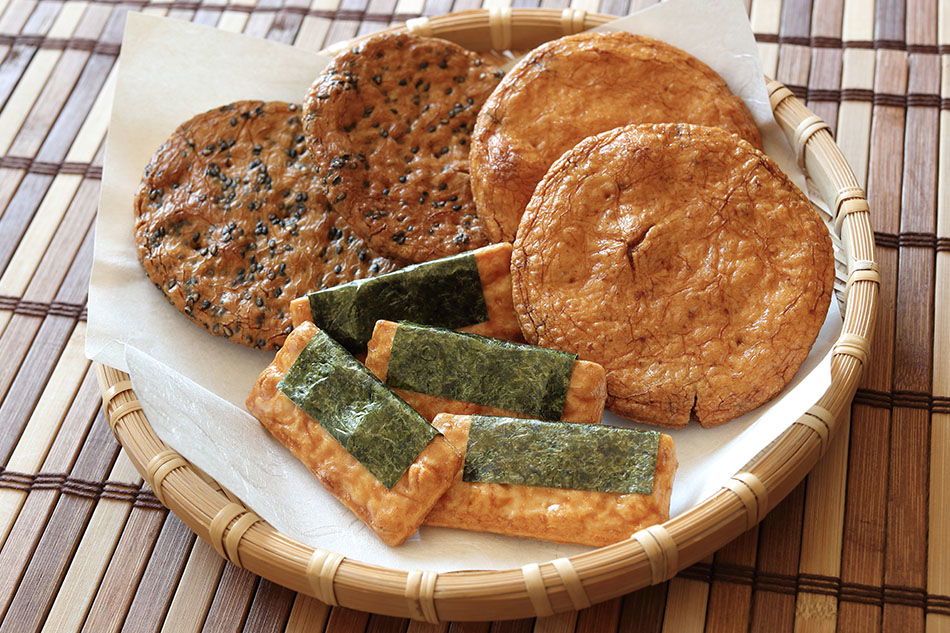
A shallow round basket of woven bamboo holds an assortment of senbei, Japanese rice crackers, lined with white paper and set on a slatted bamboo mat. At the back sit several large round crackers: two dark ones freckled with black sesame seeds and two plain, golden-brown ones with a blistered, crackled surface from baking. In front of them lie four rectangular crackers, each banded with a strip of glossy dark green nori seaweed. The warm tones of the crackers and the bamboo surroundings give the scene a traditional Japanese feel.
A shallow round basket of woven bamboo holds an assortment of senbei, Japanese rice crackers, lined with white paper and set on a slatted bamboo mat. At the back sit several large round crackers: two dark ones freckled with black sesame seeds and two plain, golden-brown ones with a blistered, crackled surface from baking. In front of them lie four rectangular crackers, each banded with a strip of glossy dark green nori seaweed. The warm tones of the crackers and the bamboo surroundings give the scene a traditional Japanese feel.
Nakikitang teksto sa larawan
No clearly readable text is present in the image.
Daifuku - 大福
Kung naghahanap ka ng natatanging dessert, tiyak na dapat mong subukan ang Daifuku. Binubuo ito ng malambot na balat ng rice cake at matamis na palaman at ito ay isang sikat na Hapones na dessert. Ang balat ay gawa sa mochi dough, na gawa sa harina ng bigas at asukal. Ang palaman ay maaaring binubuo ng iba't ibang sangkap, tulad ng red bean paste, tsokolate, o prutas (lalo nang sikat ang strawberry). Malawakang kumakalat ang Daifuku sa Japan at madalas ibenta bilang regalo (Omiyage) sa mga specialty store o online shop.
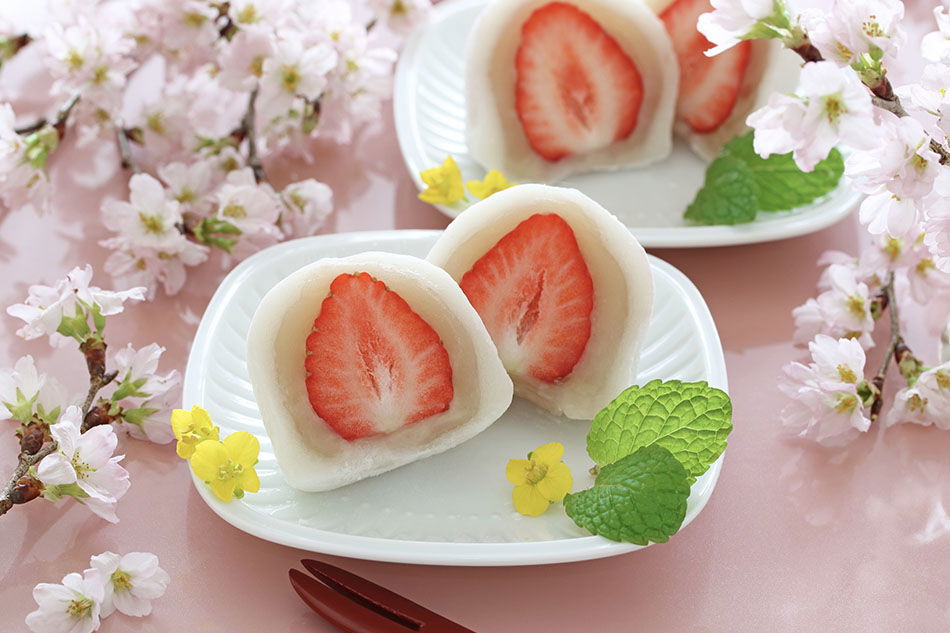
Halved ichigo daifuku sit on two small white square plates, each cut open to reveal a whole bright red strawberry wrapped in pale mochi with a thin layer of white bean paste. The sweets are arranged on a soft pink surface and framed by scattered cherry blossom branches, with a few small yellow flowers and fresh mint leaves tucked beside the plates for color. A red lacquered pick rests at the bottom edge of the frame. The whole scene has a springtime feel, matching the sakura blooms that crowd the corners of the photo.
Halved ichigo daifuku sit on two small white square plates, each cut open to reveal a whole bright red strawberry wrapped in pale mochi with a thin layer of white bean paste. The sweets are arranged on a soft pink surface and framed by scattered cherry blossom branches, with a few small yellow flowers and fresh mint leaves tucked beside the plates for color. A red lacquered pick rests at the bottom edge of the frame. The whole scene has a springtime feel, matching the sakura blooms that crowd the corners of the photo.
Nakikitang teksto sa larawan
No clearly readable text is present in the image.
Dorayaki - どら焼き
Ang Dorayaki - どら焼き - ay isang tradisyonal na Hapones na dessert na binubuo ng dalawang malambot na pancake na pinagsama ng palaman ng matamis na red bean paste. Napakasikat ng Dorayaki sa buong Japan at madalas ihain bilang meryenda o dessert. Perpekto itong pares sa tsaa o kape.

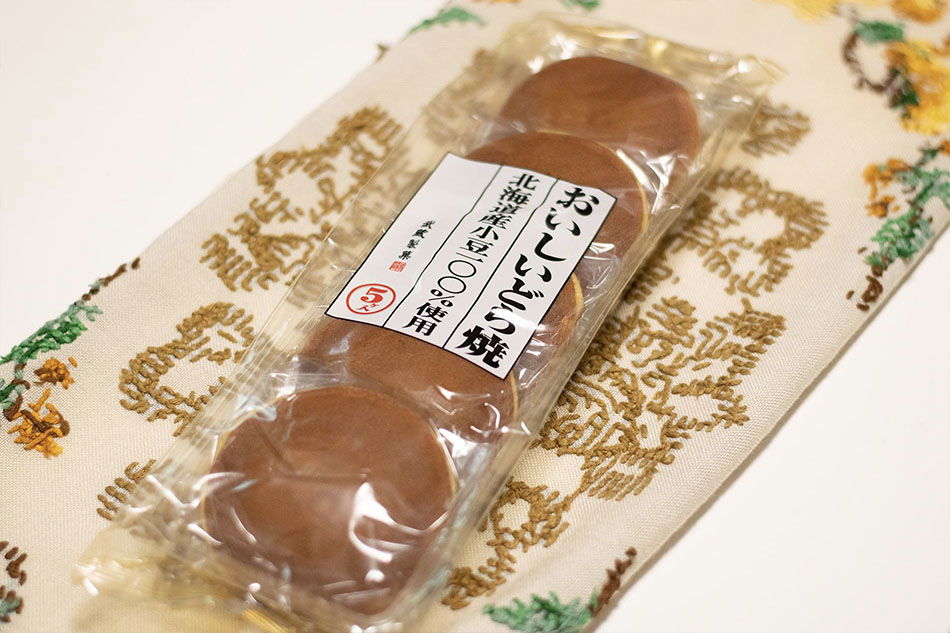
A clear plastic pack holds five round, flat brown sweets lying side by side, each the size of a small pancake. These are dorayaki, the classic Japanese treat of two fluffy pancake layers sandwiching sweet red bean filling, here sold as a single prepackaged set. A white paper label runs along the middle of the package with vertical Japanese text, including a note that the azuki beans are 100 percent Hokkaido grown, and a small red badge marks the pack as containing five pieces. The pack sits diagonally on a cream cloth decorated with dense floral embroidery in olive gold and green, which rests on a plain white table.
A clear plastic pack holds five round, flat brown sweets lying side by side, each the size of a small pancake. These are dorayaki, the classic Japanese treat of two fluffy pancake layers sandwiching sweet red bean filling, here sold as a single prepackaged set. A white paper label runs along the middle of the package with vertical Japanese text, including a note that the azuki beans are 100 percent Hokkaido grown, and a small red badge marks the pack as containing five pieces.
The pack sits diagonally on a cream cloth decorated with dense floral embroidery in olive gold and green, which rests on a plain white table.
Nakikitang teksto sa larawan
おしいいじっ焼
北海道産小豆100%使用
武蔵製菓
5個
Dango - 団子 / だんご
Ang Dango ay isang tradisyonal na matamis na Hapones na gawa sa harina ng bigas. May iba't ibang uri ng Dango na nagkakaiba sa kulay, hugis, at lasa. Kadalasan ito inihahain sa tatlo o apat na bilog sa isang skewer. Ang pinakakilalang uri ay ang Mitarashi-Dango, na nilagyan ng glaze na gawa sa toyo, mirin, at asukal. Ang iba pang sikat na uri ay ang Anko-Dango na may matamis na bean paste at ang Goma-Dango na may sesame.
Kung gusto mong bumili ng Dango, mahahanap mo ito sa maraming tindahan ng Hapones na confectionery at palengke sa Japan. Ngunit maaari mo ring tamasahin ang Dango sa labas ng Japan, dahil iniaalok ito sa maraming Asian grocery store at restaurant. Ang Dango ay hindi lamang masarap kundi pati na rin mahalagang bahagi ng kulturang Hapones at tradisyon. Subukan mo ito!

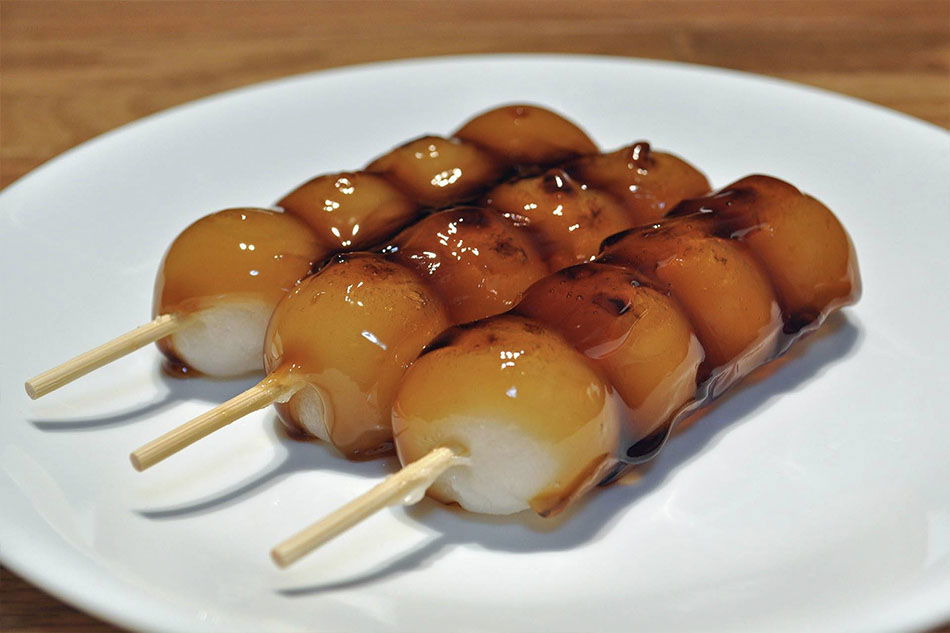
Three skewers of mitarashi dango sit on a plain white plate, arranged side by side on a wooden table. Each bamboo stick holds four plump rice dumplings, pale and chewy where they peek out near the stick, then coated in a thick, glossy caramel-brown soy glaze that drips down and pools slightly on the plate. Light catches the shiny sauce on the rounded tops of the dumplings, giving the whole arrangement a sticky, freshly glazed look. It is a classic Japanese sweet, and the close, low angle makes the glistening dango fill nearly the entire frame.
Three skewers of mitarashi dango sit on a plain white plate, arranged side by side on a wooden table. Each bamboo stick holds four plump rice dumplings, pale and chewy where they peek out near the stick, then coated in a thick, glossy caramel-brown soy glaze that drips down and pools slightly on the plate. Light catches the shiny sauce on the rounded tops of the dumplings, giving the whole arrangement a sticky, freshly glazed look. It is a classic Japanese sweet, and the close, low angle makes the glistening dango fill nearly the entire frame.
Nakikitang teksto sa larawan
No clearly readable text found.
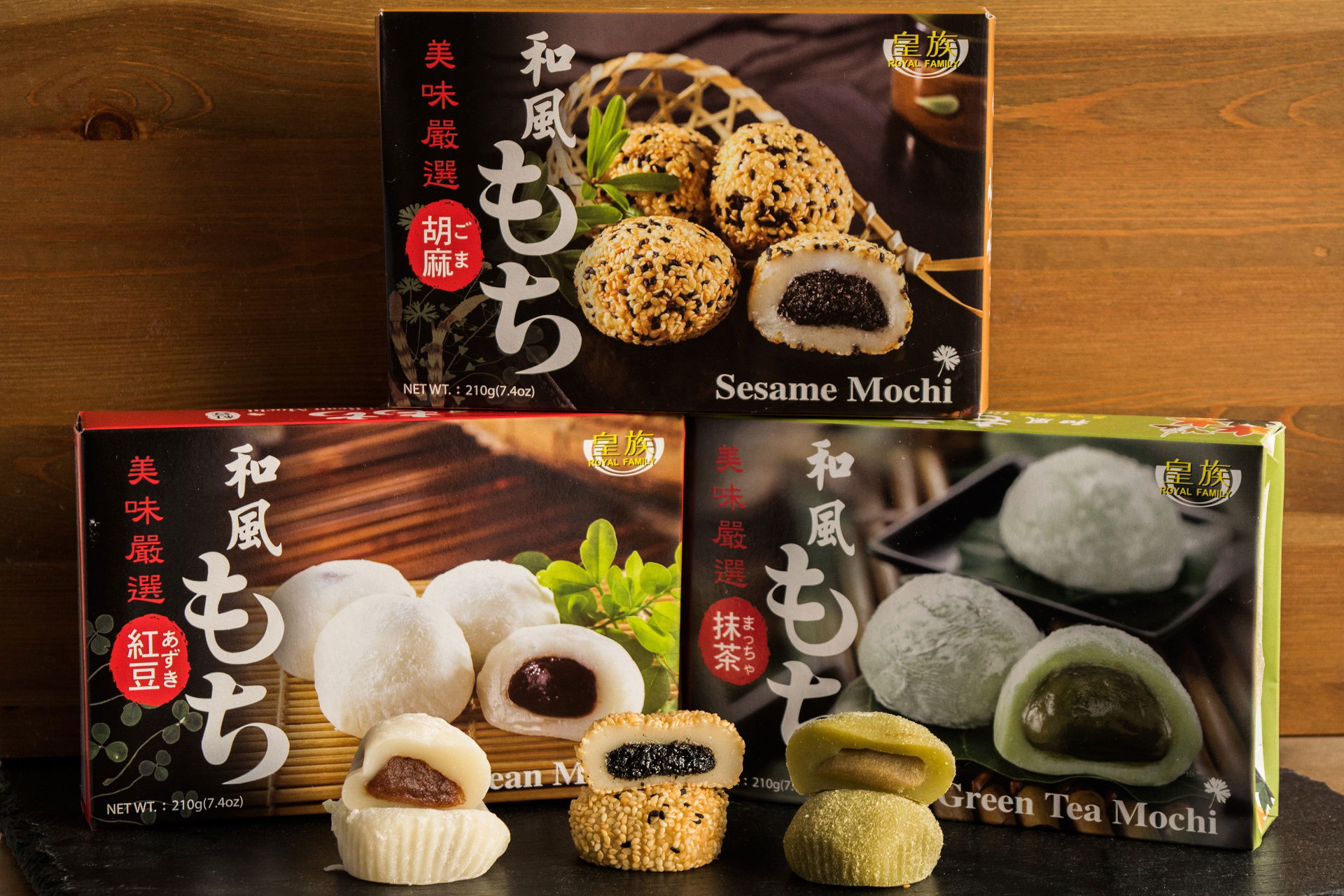
Mochi - 餅
Ito ay isang cake na gawa sa malagkit na bigas, na may palaman ng bean paste sa gitna. Walang selebrasyon ng Bagong Taon sa Japan na maaaring isipin nang walang mochi. Mayroon ding iba't ibang baryasyon na may magkakaibang lasa.

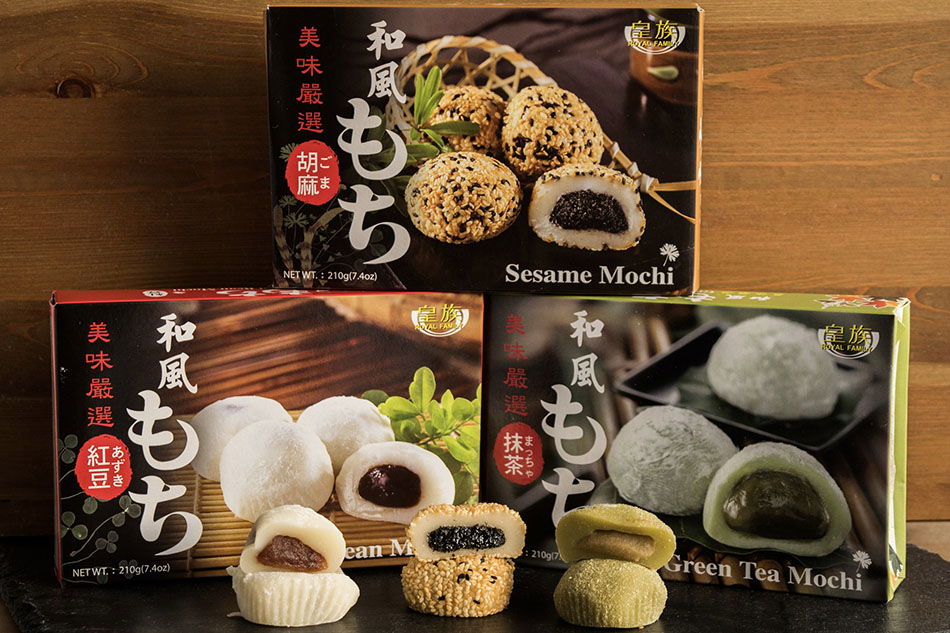
Three boxes of Japanese mochi sweets are stacked on a dark slate surface in front of a warm wooden backdrop, each box printed with photos of the treats inside. The top black box is labeled Sesame Mochi, showing round mochi coated in sesame seeds with one cut open to reveal a dark filling. The bottom left box holds white Red Bean Mochi, and the bottom right green box holds Green Tea Mochi, both shown with a piece cut open to display the filling. Real mochi pieces sit in front of the boxes: a white one with red bean paste, a sesame-crusted one sliced to show its dark center, and a pale green matcha variety. The packaging carries Japanese characters along with the English flavor names and the brand mark Royal Family.
Three boxes of Japanese mochi sweets are stacked on a dark slate surface in front of a warm wooden backdrop, each box printed with photos of the treats inside. The top black box is labeled Sesame Mochi, showing round mochi coated in sesame seeds with one cut open to reveal a dark filling. The bottom left box holds white Red Bean Mochi, and the bottom right green box holds Green Tea Mochi, both shown with a piece cut open to display the filling. Real mochi pieces sit in front of the boxes: a white one with red bean paste, a sesame-crusted one sliced to show its dark center, and a pale green matcha variety. The packaging carries Japanese characters along with the English flavor names and the brand mark Royal Family.
Nakikitang teksto sa larawan
皇族
ROYAL FAMILY
美味嚴選
和風もち
ごま 胡麻
NET WT.: 210g(7.4oz)
Sesame Mochi
皇族
ROYAL FAMILY
美味嚴選
和風もち
あずき 紅豆
NET WT.: 210g(7.4oz)
ean M
皇族
ROYAL FAMILY
美味嚴選
和風もち
まっちゃ 抹茶
210g
Green Tea Mochi
Manju - 饅頭
Ang Manju ay isang sikat na meryenda sa Japan at madalas ihain sa mga espesyal na okasyon tulad ng Bagong Taon o kasal. Mayroon ding iba't ibang rehiyonal na baryasyon ng pastry, tulad ng Kansai-Style o Kanto-Style. Sa malambot nitong tekstura at matamis na palaman, ang Manju ay isang treat na dapat subukan kapag sinusuri ang lutuing Hapones.
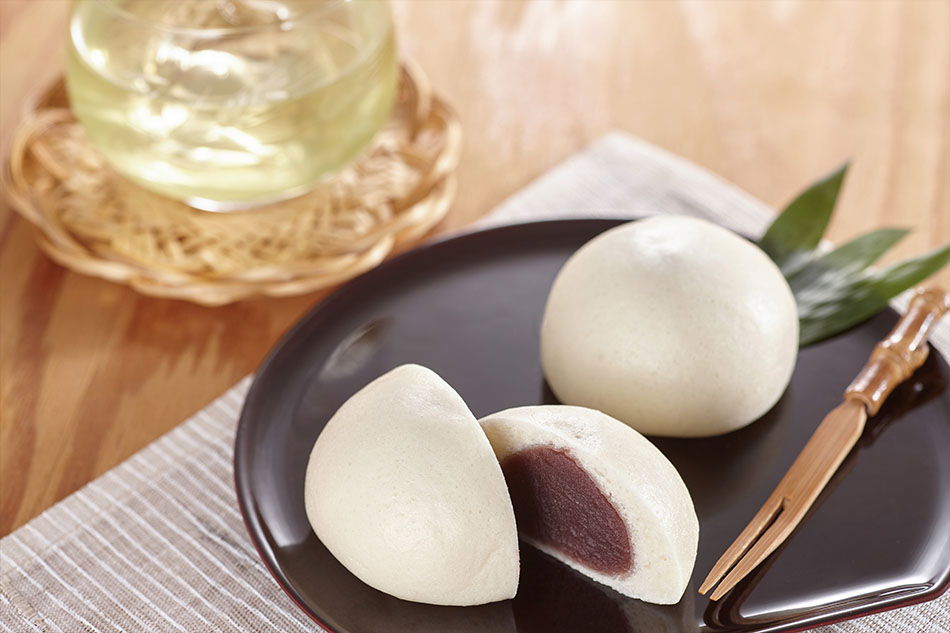
Three pale, dome-shaped manju sit on a dark, glossy plate set on a woven gray placemat over a wooden table. One is whole with a smooth, steamed white surface. A second has been cut in half, revealing a dense, dark red bean paste filling at its center. A slim two-pronged bamboo pick rests on the plate beside them, and a green leaf tucked at the back adds a touch of color. In the background, a glass of pale yellow tea sits on a round rattan coaster, giving the scene the feel of a simple Japanese tea-time serving.
Three pale, dome-shaped manju sit on a dark, glossy plate set on a woven gray placemat over a wooden table. One is whole with a smooth, steamed white surface. A second has been cut in half, revealing a dense, dark red bean paste filling at its center. A slim two-pronged bamboo pick rests on the plate beside them, and a green leaf tucked at the back adds a touch of color. In the background, a glass of pale yellow tea sits on a round rattan coaster, giving the scene the feel of a simple Japanese tea-time serving.
Nakikitang teksto sa larawan
No clearly readable text is present in the image.
Ohagi - おはぎ / 御萩
Ang Ohagi (おはぎ / 御萩) ay isang masarap, tradisyonal na matamis na Hapones na gawa sa malagkit na bigas at matamis na red bean paste. Tamasahin ang kombinasyon ng matamis at maalat na lasa na nagmumula sa pagsasama ng mochi rice at azuki bean paste. Madalas ihanda ang Ohagi sa mga espesyal na okasyon, tulad ng Higan (isang selebrasyong Budista sa Japan), at mahalagang bahagi ito ng kulturang pagkain ng Japan. Bukod sa klasikong bersyon, mayroon ding Ohagi na may sesame o kinako coating, na nagbibigay ng karagdagang layer ng lasa.
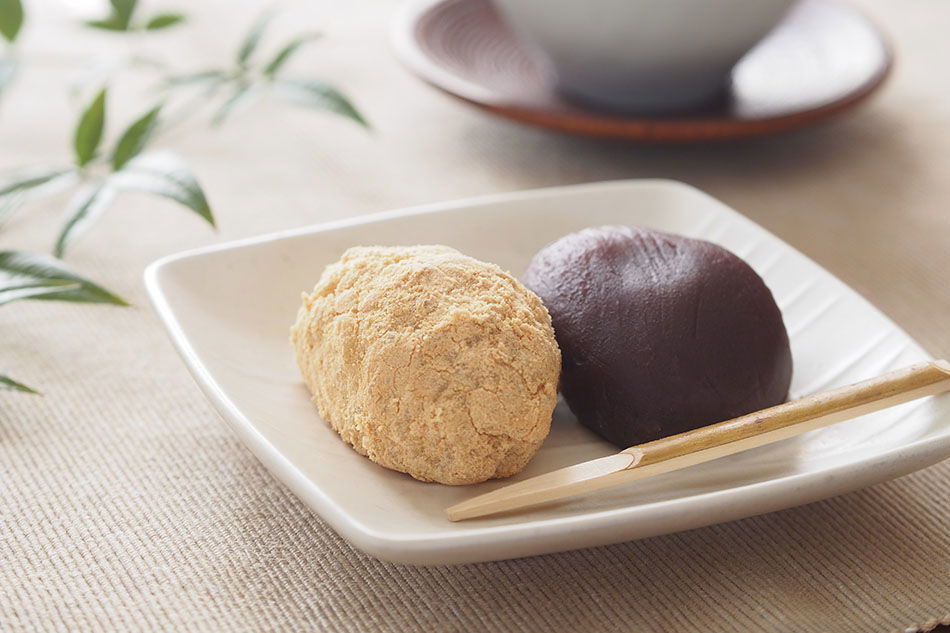
Two ohagi sit side by side on a small white square plate. The one on the left is round and coated in pale yellow kinako, roasted soybean flour, which gives it a dusty, crumbly surface. The one on the right is wrapped in smooth, glossy dark red bean paste. A flat wooden pick lies across the front edge of the plate. Behind the plate, slightly out of focus, a grey cup of tea rests on a rounded brown saucer, and a few green leaves reach into the frame from the upper left. Everything sits on a woven beige mat, giving the scene a calm, traditional Japanese tea-time feel.
Two ohagi sit side by side on a small white square plate. The one on the left is round and coated in pale yellow kinako, roasted soybean flour, which gives it a dusty, crumbly surface. The one on the right is wrapped in smooth, glossy dark red bean paste. A flat wooden pick lies across the front edge of the plate.
Behind the plate, slightly out of focus, a grey cup of tea rests on a rounded brown saucer, and a few green leaves reach into the frame from the upper left. Everything sits on a woven beige mat, giving the scene a calm, traditional Japanese tea-time feel.
Nakikitang teksto sa larawan
There is no clearly readable text in the image.
Youkan - 羊羹 /ようかん
Kung naghahanap ka ng tradisyonal na matamis na Hapones, ang Youkan, na kilala rin bilang 羊羹 /ようかん, ay isang magandang pagpipilian. Ang matamis na delicacy na ito ay gawa sa nilutong bean paste, agar-agar (isang uri ng gelatin na gawa sa seaweed) at asukal. Ito ay perpektong pagpipilian para sa mga taong naghahanap ng gluten-free at vegan na matatamis.
Pagdating sa lasa at tekstura, kakaiba ang Youkan. May iba't ibang lasa tulad ng green tea, kalabasa, azuki bean at marami pang iba. Ang tekstura ay matigas at makinis nang sabay, na nagbibigay ng natatanging pakiramdam sa bibig. Madalas hiwain ang Youkan sa manipis na hiwa at ihain bilang dessert o tamasahin bilang meryenda sa paglalakbay. Kung mahal mo ang Hapones na pagkain at matatamis, tiyak na dapat mong subukan ang Youkan!
Mizu Youkan - 水羊羹
Ang Mizu Youkan (水羊羹) ay isang natatanging baryasyon ng klasikong tradisyonal na matamis na Hapones na Youkan. Kumpara sa karaniwang Youkan, ang Mizu Youkan ay may mas magaan at mas maalinsangan na konsistensi, na nagbigay sa kanya ng pangalan nito. Sa paggamit ng mas maraming tubig at mas kaunting bean paste sa produksyon, ang Mizu Youkan ay mas hindi matamis at nagbibigay ito ng nakapapasiglang nota. Ang natatanging baryasyong ito ng Youkan ay napakasikat sa Japan at madalas ihain bilang refreshment sa mainit na mga araw ng tag-araw.
Taiyaki - 鯛焼き
Ang Taiyaki ay isang Hapones na pastry na may natatanging hugis na kahawig ng isda. Ang salitang "Tai" ay talagang nangangahulugang sea bream o snapper sa Hapones at ang "yaki" ay nangangahulugang prito o inihaw. Binubuo ang Taiyaki ng isang uri ng batter ng pancake o waffle na inihurnong sa isang hulma na hugis-isda. Ang loob ng Taiyaki ay karaniwang may matamis na palaman tulad ng Anko (matamis na red bean paste) o tsokolate. Napakasikat ng Taiyaki sa buong Japan at mabibili ito sa mga pista at sa mga specialty store.
Matcha - 抹茶
Ang Matcha ay sa esensya ay green tea at ginagamit sa anyong pulbos para sa mga matatamis. Hindi maisip ang baryasyon nito, dahil ang Matcha powder ay ginagamit sa libu-libong matatamis na putahe. Binibigyan nila ang mga treat ng pamilyar na lasa ng Matcha green tea. Maaaring ice cream, chips, cookies, tsokolate, pudding, soft ice cream, Pocky - lahat ay mahahanap na may Matcha sa kapansin-pansing berdeng kulay.
Yougashi - 洋菓子
Mga modernong matamis na Hapones, karamihan ay mga tatak at produktong nasa listahan.
KitKat - キットカット
Napakasikat ng KitKat sa Japan, kaya may higit sa 10 baryasyon na mabibili dito: strawberry, cheesecake, matcha, ubas, baked cheese at iba pa.

Pocky - ポッキー
Sa Germany, kilala ito bilang Mikado. Ito ay mga biscuit stick na may balot na tsokolate. Ang mga Pocky ay mayroon sa lahat ng uri ng lasa, ibig sabihin, sa lasa ng halos lahat ng prutas, tsokolate, almond o mani.

Mga komento
Naku, maaari pang mapagbuti ang artikulo. Sa 15 nakalistang matatamis, hindi man lang kalahati ang may mga litrato o paglalarawan. Ang nakikita ko lang ay mga salita para sa isang bagay na dapat ay kinakain... medyo nakakadismaya ang artikulo sa kabuuan.
Hi Saddy, oo, tama ka nang lubos, sa kasamaang palad, nawala lahat ng mga larawan noong "i-optimize" namin ang post :`( Sinisikap naming maibalik ang mga ito. Nagmamahal, Matthias