
สารบัญ:
TL;DR
การหมักคือหัวใจของรสชาติอาหารญี่ปุ่นประจำวัน โดยมีโคจิเป็นตัวเริ่มต้นสำคัญ แต่ไม่ใช่ยาวิเศษ ควรกินเป็นส่วนหนึ่งของมื้ออาหารที่หลากหลาย และระวังโซเดียมในมิโซะ ของดอง และอูเมโบชิด้วยการหมักเป็นหนึ่งในรากฐานอันเงียบสงบของอาหารญี่ปุ่น คุณจะพบเจอมันในมื้อเช้าผ่าน natto ในชาม ซุป miso เคียงข้างข้าวในรูปแบบผักดอง และในเครื่องปรุงรสที่ทำให้อาหารประจำวันมีรสชาติลึกซึ้งกว่าที่รายการส่วนผสมบ่งชี้ มันไม่ใช่รสชาติเดียวหรือผลิตภัณฑ์ชนิดเดียว แต่เป็นตระกูลของเทคนิคที่เปลี่ยนถั่วเหลือง ข้าว ข้าวบาร์เลย์ ผัก และผลไม้ ให้กลายเป็นอาหารที่มีกลิ่นหอม umami ความเปรี้ยว หรือความสามารถในการเก็บรักษามากขึ้น
จากมุมมองของฉัน การหมักกลายเป็นสิ่งที่ถูกพูดถึงน้อยลงในบทสนทนาประจำวันเมื่อราวสิบปีก่อน มันไม่เคยหายไปจากครัวญี่ปุ่น แต่ตอนนี้ฉันสังเกตเห็นมันมากขึ้นผ่านการทำอาหารเพื่อสุขภาพ ร้านเฉพาะทาง การชิม และเวิร์กช็อป ความสนใจที่กลับมาอีกครั้งนี้เป็นประโยชน์ เพราะช่วยให้เรามองข้ามฉลากที่กำลังเป็นกระแส และเข้าใจว่าทำไมอาหารเหล่านี้จึงยังคงเป็นส่วนหนึ่งของชีวิตประจำวันมายาวนาน
ทำไมการหมักจึงสำคัญกับอาหารญี่ปุ่น
การหมักเริ่มต้นขึ้นเมื่อจุลินทรีย์ที่ได้รับการดูแลจัดการอย่างพิถีพิถันออกมาทำปฏิกิริยากับอาหาร ในการทำอาหารญี่ปุ่น กลุ่มที่สำคัญ ได้แก่ เชื้อรา koji ยีสต์ แบคทีเรียกรดแลกติก แบคทีเรีย natto และแบคทีเรียกรดแอซีติก การทำงานของพวกมันช่วยถนอมอาหารและสร้างกรดอะมิโนและสารประกอบอื่น ๆ ที่ทำให้รสชาติซับซ้อนมากขึ้น Kōji (麹) คือข้าว ข้าวบาร์เลย์ หรือถั่วเหลืองที่ปลูกเชื้อด้วย Aspergillus oryzae และมีบทบาทสำคัญเป็นพิเศษต่อ miso, shoyu, mirin และ sake [1]

The image shows a close-up view of a refrigerated display case in a Japanese food shop, filled with neatly stacked packages of koji (fermented grain used for making miso, amazake, and other fermented foods). No people are visible; the frame is entirely occupied by the merchandise. Main content and arrangement The display consists of rectangular, vacuum-sealed blocks of grain, each wrapped in clear plastic and labeled with a white sticker. They are arranged in roughly vertical columns, with the color of the grain changing from left to right: Left columns: pale, whitish packages labeled “米こうじ” (rice koji). Several packages in this section are stacked about four to five high. Center columns: slightly darker, tan-colored packages labeled “麦こうじ” (barley koji). Right columns: darker brown packages labeled “玄米こうじ” (brown rice koji). Each label contains Japanese text including the product name, what appears to be production date information (for example, "20.9.8" can be read on some labels), producer and origin details, a barcode, and small red stamps or markings. The labels on the front-facing packages in the lower left indicate a 500 g weight. Signage and pricing Two printed signs are visible at the top of the display: A black sign on the upper left with red and white text advertising rice, barley, and brown rice koji (“米・麦 玄米”) at "500g ¥1,000 (税込)", meaning 500 g for 1,000 yen tax included. A white sign at the upper right with similar pricing ("¥1,000(税込)") and the text “香川こづち” plus “いつでも米・麦 玄米”. The word “香川” (Kagawa) suggests the product or shop may be associated with Kagawa Prefecture, though this is an inference from the text rather than a confirmed location. Other visible elements Near the top center-left there is a round analog dial, likely a temperature gauge for the refrigerated case, with small colored markings around its edge. The right edge of the frame shows additional products partially cut off: a dark packaged item with Japanese characters (possibly miso or another fermented product, with text resembling “田舎...” which often refers to "country-style" miso), and a label that appears to include “醤油こうじ” (soy sauce koji), suggesting the shop sells other koji-based items. A sheet of clear plastic film or wrap covers part of the display, creating bright diagonal reflections and glare across the middle and lower portions of the image, which slightly obscures some packages. Lighting and composition The scene is brightly lit with cool, typical supermarket-style lighting. The camera angle is straight on or slightly from above, and the products fill the entire frame. The overall impression is of a specialty or health-food store section dedicated to koji for home fermentation use.
The image shows a close-up view of a refrigerated display case in a Japanese food shop, filled with neatly stacked packages of koji (fermented grain used for making miso, amazake, and other fermented foods). No people are visible; the frame is entirely occupied by the merchandise.
Main content and arrangement
The display consists of rectangular, vacuum-sealed blocks of grain, each wrapped in clear plastic and labeled with a white sticker. They are arranged in roughly vertical columns, with the color of the grain changing from left to right:
- Left columns: pale, whitish packages labeled “米こうじ” (rice koji). Several packages in this section are stacked about four to five high.
- Center columns: slightly darker, tan-colored packages labeled “麦こうじ” (barley koji).
- Right columns: darker brown packages labeled “玄米こうじ” (brown rice koji).
Each label contains Japanese text including the product name, what appears to be production date information (for example, "20.9.8" can be read on some labels), producer and origin details, a barcode, and small red stamps or markings. The labels on the front-facing packages in the lower left indicate a 500 g weight.
Signage and pricing
Two printed signs are visible at the top of the display:
- A black sign on the upper left with red and white text advertising rice, barley, and brown rice koji (“米・麦 玄米”) at "500g ¥1,000 (税込)", meaning 500 g for 1,000 yen tax included.
- A white sign at the upper right with similar pricing ("¥1,000(税込)") and the text “香川こづち” plus “いつでも米・麦 玄米”. The word “香川” (Kagawa) suggests the product or shop may be associated with Kagawa Prefecture, though this is an inference from the text rather than a confirmed location.
Other visible elements
- Near the top center-left there is a round analog dial, likely a temperature gauge for the refrigerated case, with small colored markings around its edge.
- The right edge of the frame shows additional products partially cut off: a dark packaged item with Japanese characters (possibly miso or another fermented product, with text resembling “田舎...” which often refers to "country-style" miso), and a label that appears to include “醤油こうじ” (soy sauce koji), suggesting the shop sells other koji-based items.
- A sheet of clear plastic film or wrap covers part of the display, creating bright diagonal reflections and glare across the middle and lower portions of the image, which slightly obscures some packages.
Lighting and composition
The scene is brightly lit with cool, typical supermarket-style lighting. The camera angle is straight on or slightly from above, and the products fill the entire frame. The overall impression is of a specialty or health-food store section dedicated to koji for home fermentation use.
ข้อความที่ปรากฏในภาพ
**価格札(中央上)**
自家製米こうじ
米 麹
500g ¥1,000(税込)
**価格札(右上)**
自家製米こうじ 契約ならんで `[uncertain: 契約ならんで]`
米・麦 玄米
100g ¥1,000(税込) `[uncertain: 100g ¥1,000]`
**計器(左上・文字盤の数字)**
50 40 30 20
**各パッケージのラベル(繰り返し)**
左の列(上から下へ):
- 米こうじ
- 米こうじ
- 米こうじ
- 米こうじ
- 米こうじ
- 米こうじ
- 米こうじ
- 米こうじ
第2列(上から下へ):
- 米こうじ
- 米こうじ
- 米こうじ
- 米こうじ
- 米こうじ
- 米こうじ
- 米こうじ
第3列(上から下へ):
- 米こうじ
- 米こうじ
- 麦こうじ
- 麦こうじ
- 米こうじ
- 麦こうじ
- 麦こうじ
第4列(上から下へ):
- 麦こうじ
- 麦こうじ
- 麦こうじ
- 麦こうじ
第5列(上から下へ):
- 玄米こうじ
- 玄米こうじ
- 玄米こうじ
- 玄米こうじ
- 玄米こうじ
右上(上から下へ):
- 麦こうじ
- 玄米こうじ
- 麦こうじ
**ラベルの小さな印字(読み取れる部分のみ)**
品名:米麹(米) 内容量:500g
原材料名:米(国産) `[uncertain: 原材料名:米(国産)]`
栄養成分表示(100g当たり) `[uncertain]`
2 9 8.04.12 12時まで `[uncertain: 2 9 8.04.12]`
賞味期限 `[uncertain]`
TEL `[uncertain: 0942-**-****]`
**右端の商品ラベル**
万能調味料
醤油こうじ
塩 `[uncertain]`
ゆきんこ娘 `[uncertain: ゆきんこ娘]`
田舎みそ `[uncertain: 田舎みそ]`
**右端の縦書き文字**
逸 `[unreadable]`
か `[uncertain: か]`
ภูมิอากาศอบอุ่นชื้นของญี่ปุ่นช่วยให้ประเพณีการหมักประจำภูมิภาคจำนวนมากเจริญเติบโต แต่ภูมิอากาศเพียงอย่างเดียวไม่ใช่เรื่องราวทั้งหมด ผู้คนได้ปรับแต่งสูตร ระดับความเค็ม ภาชนะ และระยะเวลาบ่มให้ลงตัวมาตลอดหลายชั่วอายุคน นั่นจึงเป็นเหตุผลที่ miso ขาวรสหวาน miso ถั่วเหลืองสีเข้ม ผักดองรำข้าวรสจัดจ้าน และ sake อันละมุนละไม ต่างก็เป็นส่วนหนึ่งของการหมักแบบญี่ปุ่นได้ ทั้งที่รสชาติแตกต่างกันโดยสิ้นเชิง
อาหารหมักสามารถเป็นส่วนหนึ่งที่มีคุณค่าของอาหารที่สมดุลโดยรวมได้ แต่ไม่ใช่ยาวิเศษ งานวิจัยที่ MAFF กล่าวถึงชี้ว่าอาหารหมักญี่ปุ่นแบบดั้งเดิมอาจช่วยสนับสนุนการเผาผลาญและสภาพแวดล้อมในลำไส้ แต่ผลตอบสนองของแต่ละคนแตกต่างกัน และอาหารส่วนที่เหลือก็สำคัญเช่นกัน เรื่องเกลือก็สำคัญ: miso, tsukemono และ umeboshi อาจมีโซเดียมสูง ดังนั้นฉันจึงถือว่าพวกมันเป็นส่วนประกอบที่เติมรสชาติให้มื้ออาหารที่หลากหลาย ไม่ใช่สิ่งที่กินได้ไม่อั้น [2]
Koji: ตัวเริ่มต้นการหมักอันเงียบ ๆ เบื้องหลัง miso, amazake และอีกมากมาย
Kōji ไม่ใช่ผลิตภัณฑ์สำเร็จรูปชนิดเดียวหรือรสชาติเดียว แต่เป็นธัญพืชหรือพืชตระกูลถั่วที่ปลูกเชื้อรา kōji ซึ่งมอบเอนไซม์ให้แก่ผู้ผลิต และทำให้การหมักแบบญี่ปุ่นมีความหลากหลาย ในร้านค้า คุณอาจเห็น kome kōji (米麹) ที่ทำจากข้าวขัดขาว genmai kōji (玄米麹) ซึ่งก็คือ kōji ข้าวกล้องที่ทำจากข้าวกล้องทั้งเมล็ด และ mugi kōji (麦麹) ที่ทำจากข้าวบาร์เลย์ ในการผลิต miso kōji จากข้าว ข้าวบาร์เลย์ และถั่วเหลืองคือฐานแบบคลาสสิก และแต่ละชนิดจะเปลี่ยนกลิ่น ความหวาน และความลึกของรสชาติในผลลัพธ์สุดท้าย [3]
หนึ่งในวิธีที่เข้าถึงง่ายที่สุดในการชิม kōji คือ kome kōji amazake (米麹甘酒) เครื่องดื่มหวานที่ทำจากข้าวและ kōji ข้าว ซึ่งแตกต่างจาก amazake ที่ทำจากกาก sake หรือ sake kasu (酒粕) จึงคุ้มค่าที่จะอ่านฉลากแทนที่จะสันนิษฐานว่าทุกขวดเหมือนกัน [4]
สิ่งที่ฉันรู้สึกตื่นเต้นเป็นพิเศษคือส่วนผสมนี้สามารถเดินทางไปได้ไกลเพียงใด ปัจจุบัน kōji ได้รับการสำรวจนอกญี่ปุ่นด้วย รวมถึงในครัว fine dining สำหรับใช้ทำน้ำหมัก ซอส การบ่มเนื้อ และเครื่องปรุงรสใหม่ ๆ ที่อูมามิเข้มข้น ความคิดสร้างสรรค์สมัยใหม่นี้ยังคงเริ่มต้นจากการปลูกเชื้ออย่างอดทนแบบเดียวกับที่คุณเห็นในร้าน miso เล็ก ๆ ของญี่ปุ่น [5]
หมัก ดอง และไม่ได้หมายถึงสิ่งเดียวกันเสมอไป
การแยกแยะนี้คุ้มค่าที่จะทำ เพราะคำว่า "pickle" ในภาษาอังกฤษซ่อนอะไรไว้ได้มากมาย Tsukemono (漬物) หมายถึงของดอง มักเป็นผัก แต่ไม่ใช่ทุก tsukemono จะถูกหมักอย่างแข็งขัน แตงกวาที่ดองเร็ว ๆ ด้วยน้ำส้มสายชูก็ยังเป็น tsukemono ในทางตรงกันข้าม nukazuke (ぬか漬け) ถูกฝังอยู่ในกองรำข้าวที่ยังมีชีวิต ซึ่งการหมักกรดแลกติกเป็นส่วนหนึ่งของกระบวนการ [6]
รายละเอียดที่เป็นญี่ปุ่นมากอย่างหนึ่งคือการที่คุณหาฐานสำหรับ nukadoko (ぬか床) หรือกองรำข้าวได้ง่ายเพียงใด เมื่อข้าวกล้องหรือ genmai (玄米) ถูกขัดสีเป็นข้าวขาวที่เครื่องสีข้าวหยอดเหรียญ koin seimaiki (コイン精米機) ก็จะได้ kome nuka (米ぬか) หรือรำข้าวออกมา สิ่งนี้ไม่ใช่ momigara (もみ殻) ซึ่งเป็นแกลบข้าวชั้นนอก ที่เครื่องบางเครื่องหรือร้านข้าวใกล้ ๆ จะมีภาชนะใส่รำติดป้ายว่ารับไปใช้ได้ฟรี ซึ่งอาจเหมาะอย่างยิ่งสำหรับการเริ่มต้น nukadoko ควรตรวจสอบป้ายหรือถามก่อนเสมอ เพราะกฎการนำไปใช้แตกต่างกันไปในแต่ละสถานที่ MAFF ระบุว่ารำข้าวเป็นผลพลอยได้ที่อุดมไปด้วยสารอาหารจากการขัดสีข้าวกล้อง และเป็นฐานของ nukazuke [7] ตัวอย่างเช่น สาขาหนึ่งของ JA มีบริการรำข้าวฟรีอย่างชัดเจนข้างเครื่องสีข้าวหยอดเหรียญ [8]
แนวทางปฏิบัติแบบเดียวกันนี้ใช้ได้กับที่อื่นด้วย Shiozuke ใช้เกลือ suzuke ใช้น้ำส้มสายชู kasuzuke ใช้กาก sake shoyuzuke ใช้ซีอิ๊วขาว และ karashizuke ใช้มัสตาร์ด บางวิธีส่งเสริมให้เกิดการหมักตามเวลา ในขณะที่บางวิธีมุ่งเน้นเรื่องการปรุงรสและการถนอมอาหารเป็นหลัก การรู้ความแตกต่างนี้ทำให้การอ่านถาดอาหารเช้าแบบญี่ปุ่นหรือชั้นวางสินค้าในซูเปอร์มาร์เก็ตง่ายขึ้นมาก
| วิธี | คำศัพท์ภาษาญี่ปุ่น | วัตถุดิบหลักที่ใช้ทั่วไป | เกิดอะไรขึ้น |
|---|---|---|---|
| การหมักด้วย kōji | 麹, kōji | ข้าว ข้าวบาร์เลย์ หรือถั่วเหลือง | การปลูกเชื้อและการบ่มอย่างมีการควบคุมสร้างฐานให้แก่ miso, sake, shoyu และอื่น ๆ อีกมากมาย |
| การดองด้วยรำข้าว | ぬか漬け, nukazuke | ผักและกองรำข้าว | nukadoko ที่ยังมีชีวิตสามารถเกิดการหมักกรดแลกติกได้ |
| การดองด้วยเกลือ | 塩漬け, shiozuke | ผักและเกลือ | เกลือดึงน้ำออกและช่วยถนอมอาหาร การหมักอาจเกิดขึ้น แต่ไม่ได้รับประกัน |
| การดองด้วยน้ำส้มสายชู | 酢漬け, suzuke | ผักและน้ำส้มสายชู | มักเป็นการดองเร็วและปรุงรส ไม่ใช่การหมักอย่างแข็งขัน |
| การดองด้วยกาก sake | 粕漬け, kasuzuke | ผักหรือปลากับกาก sake | ใช้ส่วนผสมที่ผ่านการหมัก แม้ขั้นตอนการดองเองจะไม่จำเป็นต้องเป็นการหมักอย่างแข็งขัน |
| การดองด้วยซีอิ๊วขาว | 醤油漬け, shoyuzuke | ผักหรืออาหารทะเลกับ shoyu | มักเป็นวิธีปรุงรสและถนอมอาหารที่ยืมความลึกจากการหมักของ shoyu |
อาหารหมักญี่ปุ่นที่คุณจะพบเจอบ่อยที่สุด
คุณสามารถจัดทำรายการยาวมากได้ แต่นี่คืออาหารและเครื่องปรุงรสที่นักท่องเที่ยวส่วนใหญ่สังเกตเห็นเป็นอย่างแรก ลองมองส่วนนี้เป็นแผนที่ ไม่ใช่สิ่งที่มาแทนที่เรื่องราวของแต่ละอย่าง
Miso
Miso (味噌) เป็นพาสต์ถั่วเหลืองหมัก มักทำจากถั่วเหลือง เกลือ และ kōji จากข้าว ข้าวบาร์เลย์ หรือถั่วเหลือง เป็นแกนหลักอันเงียบสงบของซุป น้ำหมัก ซอสเคลือบ และมื้ออาหารที่ทำที่บ้านมากมาย ส่วนผสมและการบ่มที่แตกต่างกันเปลี่ยนสี ความเค็ม ความหวาน และความลึกของรสชาติ คู่มือ miso โดยละเอียดของฉันอธิบายชนิดต่าง ๆ และวิธีใช้
miso สำหรับใช้ประจำวันส่วนใหญ่ผลิตมาเพื่อการเก็บรักษาที่เสถียร มักผ่านการให้ความร้อนที่หยุดกิจกรรมต่อไปและทำให้รสชาติคงที่มากขึ้น แบบที่ไม่ผ่านความร้อน ซึ่งมักติดฉลากว่า nama miso (生味噌) ยังคงเป็นกลุ่มเฉพาะทางขนาดเล็ก มันอาจพัฒนากลิ่นต่อไปได้และต้องการการเก็บรักษาแบบแช่เย็นที่ระมัดระวังมากขึ้น การชิมเป็นเรื่องน่าสนใจ แต่มันไม่ได้ "ดีกว่า" โดยอัตโนมัติหรือเป็นยารักษาโรค ฉันจะเลือกมันเพราะรสชาติที่มีชีวิตและเปลี่ยนแปลงได้ และประสบการณ์ของการเปรียบเทียบกับ miso ชนิดอื่น
หากคุณอยู่ที่โตเกียวและอยากชิมมากกว่าแค่อ่าน ฉันสามารถจัดการเปรียบเทียบนี้ไว้ใน Tokyo Miso Tour ของฉันได้ ขึ้นอยู่กับความพร้อม เราสามารถไปเยี่ยมร้านเฉพาะทาง เปรียบเทียบสไตล์ต่าง ๆ ทานอาหารที่ทำจาก miso หรือรวมเวิร์กช็อปลงมือทำ ร้านเฉพาะทางในโตเกียวมีจัดเวิร์กช็อป miso แบบจองล่วงหน้ากันอยู่จริง ส่วนนี้จึงเป็นส่วนหนึ่งที่แท้จริงของวัฒนธรรมอาหารของเมือง ไม่ใช่กิจกรรมที่แต่งขึ้นเพื่อนักท่องเที่ยว [9]
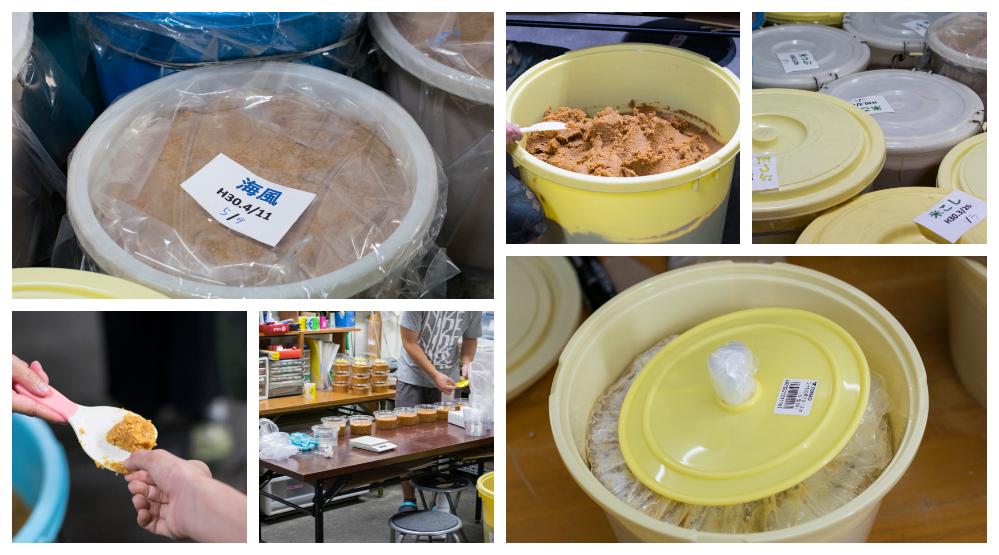
A six-photo collage from a miso workshop in Japan, built around big buckets of fermenting soybean paste. The largest frame shows an open white bucket packed with dense brown miso, its surface sealed under plastic wrap and marked with a handwritten Japanese label carrying a date. Next to it, rows of white and yellow lidded tubs hold other batches, one labeled in Japanese as rice koji. The remaining close-ups stay tight on the paste: a yellow bucket filled with smooth, caramel-colored miso with a small spoon resting in it, and a large yellow tub with its lid pushed aside to reveal plastic-wrapped miso inside. Two frames bring people in. One shows a hand offering a scoop of miso on a white spatula with a pink handle, held out over a blue bucket for a taste. In the other, a man in a gray t-shirt stands at a long table portioning miso into neat rows of small plastic containers, with shelves and a whiteboard behind him.
A six-photo collage from a miso workshop in Japan, built around big buckets of fermenting soybean paste. The largest frame shows an open white bucket packed with dense brown miso, its surface sealed under plastic wrap and marked with a handwritten Japanese label carrying a date. Next to it, rows of white and yellow lidded tubs hold other batches, one labeled in Japanese as rice koji. The remaining close-ups stay tight on the paste: a yellow bucket filled with smooth, caramel-colored miso with a small spoon resting in it, and a large yellow tub with its lid pushed aside to reveal plastic-wrapped miso inside.
Two frames bring people in. One shows a hand offering a scoop of miso on a white spatula with a pink handle, held out over a blue bucket for a taste. In the other, a man in a gray t-shirt stands at a long table portioning miso into neat rows of small plastic containers, with shelves and a whiteboard behind him.
ข้อความที่ปรากฏในภาพ
海風
H30.4.11
Natto
Natto (納豆) ทำโดยการหมักถั่วเหลืองสุกด้วยแบคทีเรีย natto เส้นใยเหนียว ๆ กลิ่นฉุน และรสอูมามิที่น่าทานอาจทำให้ประหลาดใจในครั้งแรก แต่มันเป็นคู่หูมื้อเช้าที่คุ้นเคยของหลายคน มักเสิร์ฟบนข้าวร้อนพร้อมมัสตาร์ด ซีอิ๊วขาว และต้นหอม หากคุณอยากรู้ บทความเกี่ยวกับ natto ของฉันจะช่วยให้คุณลองครั้งแรกอย่างเป็นจริงโดยไม่แสร้งว่าทุกคนจะชอบมันทันที

The image shows a Japanese home-cooked meal arranged on a table covered with a white tablecloth featuring a light orange/beige plaid (checkered) pattern. The photo is taken from above at a slight angle, and several dishes partially enter the frame, suggesting a shared family-style meal. Main subject (center): A round ceramic bowl, cream-colored with irregular green brushstroke bands around the rim and inner wall, filled with what appears to be natto (fermented soybeans). The beans are glossy, amber-brown, and sticky-looking, mixed with plenty of chopped green onion and a light brown seasoning sauce. A spoon or small spatula with a bright pink handle and a flat metal end rests in the bowl, angled toward the upper right. Some sauce smears are visible on the inner sides of the bowl. Surrounding dishes: Upper right: A white bowl containing a simmered dish (likely nimono), with chunky pieces of potato, orange carrot slices, and what appears to be meat, all in a glossy brown broth. Upper left: A small plate with a traditional blue-and-white floral arabesque-style pattern, on which a pair of chopsticks rests. The chopstick tops are decorated with blue and white designs. Left of center: A small white plate with concentric brown rings near its rim, mostly empty, with a few small food crumbs on it. Bottom right corner: A partially visible plate, white with a yellow floral motif near the edge, holding pale sliced pieces that could be potato, sausage, or a similar ingredient (not clearly identifiable). Lighting and atmosphere: The scene is lit with warm indoor lighting, giving the food a homey, casual appearance. No people, text, or brand names are visible. The overall impression is of a typical Japanese weekday dinner, with the seasoned natto bowl as the focal point of the photograph.
The image shows a Japanese home-cooked meal arranged on a table covered with a white tablecloth featuring a light orange/beige plaid (checkered) pattern. The photo is taken from above at a slight angle, and several dishes partially enter the frame, suggesting a shared family-style meal.
Main subject (center): A round ceramic bowl, cream-colored with irregular green brushstroke bands around the rim and inner wall, filled with what appears to be natto (fermented soybeans). The beans are glossy, amber-brown, and sticky-looking, mixed with plenty of chopped green onion and a light brown seasoning sauce. A spoon or small spatula with a bright pink handle and a flat metal end rests in the bowl, angled toward the upper right. Some sauce smears are visible on the inner sides of the bowl.
Surrounding dishes:
- Upper right: A white bowl containing a simmered dish (likely nimono), with chunky pieces of potato, orange carrot slices, and what appears to be meat, all in a glossy brown broth.
- Upper left: A small plate with a traditional blue-and-white floral arabesque-style pattern, on which a pair of chopsticks rests. The chopstick tops are decorated with blue and white designs.
- Left of center: A small white plate with concentric brown rings near its rim, mostly empty, with a few small food crumbs on it.
- Bottom right corner: A partially visible plate, white with a yellow floral motif near the edge, holding pale sliced pieces that could be potato, sausage, or a similar ingredient (not clearly identifiable).
Lighting and atmosphere: The scene is lit with warm indoor lighting, giving the food a homey, casual appearance. No people, text, or brand names are visible. The overall impression is of a typical Japanese weekday dinner, with the seasoned natto bowl as the focal point of the photograph.
ข้อความที่ปรากฏในภาพ
No visible text found in the image.

The image shows retail packages of what appears to be a Japanese natto (fermented soybean) making kit, displayed for sale in a shallow round basket made of woven bamboo. The photo is taken from above at a slight angle, showing about eight to ten identical clear plastic bags arranged loosely in the tray. The packages Each bag contains two long bundles of dried rice straw bound with thin purple bands, and beside them a column of small, round, light-tan soybeans is visible through the plastic. The straw-and-beans arrangement suggests the straw serves as the traditional fermenting medium, consistent with a homemade natto kit rather than ready-to-eat natto. Labeling (visible Japanese text) A large pink circular sticker with a dotted pattern sits on the front of each package, with prominent white characters reading "納笑豆", a wordplay combining 納豆 (natto) with 笑 (smile/laugh). Around the circle, smaller text reads 手作りキット (handmade kit), 信州産大豆から (from Shinshu-grown soybeans), and 発酵おうち時間 (fermenting at home / at-home fermentation time). A small cream-colored vertical tag on the bags reads 信州産 ナカカセンナリ, apparently identifying the soybean variety (Nakakasennari) and its Shinshu (Nagano) origin. Each bag also carries a small white sticker shaped like a map outline; text on it appears to include 長野県 (Nagano Prefecture), suggesting the map depicts Nagano. One package shows partially visible vertical bullet-point text (including fragments such as 天然の..., 糸引き..., 味..., 市販...), likely describing product features, and a line near the bottom reads 美しい納豆の作り方はこちら ("for how to make beautiful natto, see here"), pointing to instructions. Setting and composition The basket sits on a surface covered with green artificial turf-like material, and a light wooden frame or box edge is visible in the background at the top. Bright indoor lighting creates strong white reflections on the crinkled plastic wrap. The pink circular labels are the most visually striking element, standing out against the natural beige tones of the straw, soybeans, and bamboo basket. Overall, the image conveys a specialty or regional food product: a do-it-yourself natto fermentation kit made with Shinshu (Nagano-grown) soybeans and rice straw, presented as an attractive artisanal item. This aligns with the stated context of a blog about Japanese fermentation culture, though that context is not itself printed in the image.
The image shows retail packages of what appears to be a Japanese natto (fermented soybean) making kit, displayed for sale in a shallow round basket made of woven bamboo. The photo is taken from above at a slight angle, showing about eight to ten identical clear plastic bags arranged loosely in the tray.
The packages
Each bag contains two long bundles of dried rice straw bound with thin purple bands, and beside them a column of small, round, light-tan soybeans is visible through the plastic. The straw-and-beans arrangement suggests the straw serves as the traditional fermenting medium, consistent with a homemade natto kit rather than ready-to-eat natto.
Labeling (visible Japanese text)
- A large pink circular sticker with a dotted pattern sits on the front of each package, with prominent white characters reading "納笑豆", a wordplay combining 納豆 (natto) with 笑 (smile/laugh).
- Around the circle, smaller text reads 手作りキット (handmade kit), 信州産大豆から (from Shinshu-grown soybeans), and 発酵おうち時間 (fermenting at home / at-home fermentation time).
- A small cream-colored vertical tag on the bags reads 信州産 ナカカセンナリ, apparently identifying the soybean variety (Nakakasennari) and its Shinshu (Nagano) origin.
- Each bag also carries a small white sticker shaped like a map outline; text on it appears to include 長野県 (Nagano Prefecture), suggesting the map depicts Nagano.
- One package shows partially visible vertical bullet-point text (including fragments such as 天然の..., 糸引き..., 味..., 市販...), likely describing product features, and a line near the bottom reads 美しい納豆の作り方はこちら ("for how to make beautiful natto, see here"), pointing to instructions.
Setting and composition
The basket sits on a surface covered with green artificial turf-like material, and a light wooden frame or box edge is visible in the background at the top. Bright indoor lighting creates strong white reflections on the crinkled plastic wrap. The pink circular labels are the most visually striking element, standing out against the natural beige tones of the straw, soybeans, and bamboo basket.
Overall, the image conveys a specialty or regional food product: a do-it-yourself natto fermentation kit made with Shinshu (Nagano-grown) soybeans and rice straw, presented as an attractive artisanal item. This aligns with the stated context of a blog about Japanese fermentation culture, though that context is not itself printed in the image.
ข้อความที่ปรากฏในภาพ
**中央のパッケージ(本体ラベル):**
納笑つと豆
「手作りキット」
信州産
稲わら
発酵おうち時間
(わらに付けられた札:)
信州産
ナカセンナリ
**パッケージ裏面のグレー部分(一部見えているテキスト):**
天然の
●糸引
●味 [unreadable]
ロの [uncertain: 口の]
市販
ご [unreadable]
○ [unreadable]
○ [unreadable]
○ [unreadable]
○ [unreadable]
**パッケージ下部のテキスト:**
笑つと納豆の作り方はこちら
**地図ステッカー(長野県の形):**
長野県
信州 [uncertain]
**左側のパッケージ(一部見えている部分):**
納 [unreadable]
発酵お [uncertain: 発酵おうち時間]
[unreadable]ち [uncertain]
時 [uncertain]
(わらに付けられた札:)
信州産
ナカセンナリ
**右上のパッケージ(一部見えているラベル):**
納笑
つと [uncertain]
[unreadable]
Tsukemono และ Takuan
Tsukemono ครอบคลุมโลกอันกว้างใหญ่ของผักดองญี่ปุ่น พวกมันเพิ่มความต่างให้ข้าว ปลาย่าง หรือชุดอาหาร: เค็ม กรอบ เปรี้ยว สีสัน และการรีเซ็ตรสชาติระหว่างคำ Takuan (沢庵) คือหัวไชเท้าดองสีเหลืองสดใสที่คุณมักเห็นวางเคียง sushi หรือข้าว มันจัดอยู่ในตระกูล tsukemono ที่ใหญ่กว่า แต่พบได้บ่อยพอที่ควรมี คู่มือ takuan เป็นของตัวเอง
Umeboshi
Umeboshi (梅干し) คือผล ume ดองเกลือ ที่เปรี้ยวจัดและเค็มจัด และมักถูกยัดใส่ onigiri หรือเสิร์ฟคู่กับข้าว สีแดงของมันมักมาจาก shiso มันเป็นหนึ่งในอาหารที่แสดงให้เห็นได้อย่างรวดเร็วว่าการหมักและการถนอมอาหารแบบญี่ปุ่นทรงพลังได้แม้ในปริมาณเล็กน้อย สำหรับการเก็บรักษา รสชาติ และวิธีทานจริง ดู บทความเกี่ยวกับ umeboshi ของฉัน
Sake, shoyu, mirin และเครื่องปรุงรสประจำวันอื่น ๆ
การหมักยังปรากฏอยู่แม้ในเมื่อมันไม่เด่นชัดบนจาน Sake (日本酒) ใช้ข้าว น้ำ ยีสต์ และ koji ขณะที่ shoyu (醤油) และ mirin (みりん) นำความเค็ม ความหวาน กลิ่นหอม และ umami มาสู่การทำอาหาร Sake เป็นแอลกอฮอล์ ไม่ใช่อาหารสุขภาพ ดังนั้นฉันจึงถือว่ามันเป็นสิ่งที่ควรเพลิดเพลินอย่างมีความรับผิดชอบ หากคุณต้องการเรื่องราวแบบเต็ม เริ่มต้นที่ คู่มือ sake และ คู่มือ mirin ของฉัน
Shiokara
Shiokara (塩辛) เป็นตัวอย่างที่ท้าทายโดยเจตนาของประเพณีการถนอมอาหารแบบเดียวกันนี้: อาหารทะเล มักรวมถึงเครื่องในที่เค็มดองและหมัก มีกลิ่นที่แรงและรสอูมามิเข้มข้น มักทานในปริมาณน้อยมากคู่กับข้าวหรือเป็นของกินเคียงแอลกอฮอล์ คุณไม่จำเป็นต้องชอบมันก็สามารถเข้าใจได้ว่าทำไมมันจึงเป็นส่วนหนึ่งของเรื่องราวการหมักญี่ปุ่นที่กว้างกว่านั้น [10]
Imojōchū
Imojōchū (芋焼酎) เป็นสุรากลั่นที่ทำจากมันเทศ มักใช้ koji ในกระบวนการผลิต มันไม่ใช่ sake และตัวตนที่เข้มข้นและมีโทนแบบดินของมันทำให้ความแตกต่างนี้คุ้มค่าที่จะจดจำเมื่อคุณเห็นทั้งสองอยู่ในเมนูเครื่องดื่ม เช่นเดียวกับ sake ให้เพลิดเพลินกับมันเพราะรสชาติและวัฒนธรรม ไม่ใช่ในฐานะผลิตภัณฑ์เพื่อสุขภาพ
ลองการหมักแบบญี่ปุ่นในชีวิตประจำวัน
เริ่มต้นเล็ก ๆ และเลือกบริบทที่เหมาะสม สั่งชุดอาหารที่มี ซุป miso และ tsukemono ลอง natto ปริมาณน้อยกับข้าวในมื้อเช้า หรือซื้อ miso แพ็กต่างกันสองสามแพ็กแล้วเปรียบเทียบในซุปง่าย ๆ ชนิดเดียวกันที่ใช้ dashi คุณจะเรียนรู้ได้มากกว่าจากการชิมเทียบกันแบบนี้ มากกว่าการท่องจำศัพท์
ซูเปอร์มาร์เก็ตญี่ปุ่น ที่ดีเป็นหนึ่งในสถานที่ที่เริ่มต้นได้ง่ายที่สุด เปรียบเทียบ miso ในโซนแช่เย็น หยิบ natto แพ็กเล็ก ๆ และดูฉลาก tsukemono หากคุณสนใจ miso ที่ไม่ผ่านความร้อนเป็นพิเศษ ให้มองหา nama (生) จากนั้นอ่านคำแนะนำการเก็บรักษาแทนที่จะเชื่อคำเดียว ผลิตภัณฑ์แช่เย็น วันหมดอายุที่สั้น และหมายเหตุเรื่องการบ่มต่อเนื่องเป็นเบาะแสที่มีประโยชน์
หากคุณชอบชิมพร้อมบริบท การเยี่ยมชมผู้ผลิตจะทำให้ความแตกต่างชัดเจนขึ้นมาก ในโตเกียวและบริเวณโดยรอบ Tokyo Miso Tour ของฉันสามารถรวมร้านเฉพาะทาง สไตล์ miso ที่แตกต่างกัน อาหารจาน miso หรือเวิร์กช็อป ขึ้นอยู่กับความพร้อม Saitama Shoyu Tour เดินตามแนวคิดเดียวกันจากมุมอื่น: วิธีที่ kōji เกลือ ถั่วเหลือง ข้าวสาลี และเวลา กลายเป็นเครื่องปรุงรสที่คุณใช้ทุกวัน หากคุณกำลังควบคุมปริมาณโซเดียม มีภูมิแพ้ ต้องการคำแนะนำอาหารที่เกี่ยวข้องกับการตั้งครรภ์ หรือกำลังใช้ยา โปรดตรวจสอบฉลากและปฏิบัติตามคำแนะนำจากผู้เชี่ยวชาญด้านสุขภาพที่มีคุณสมบัติเหมาะสม
จุดเริ่มต้นที่ดีที่สุดคือจุดที่คุณจะได้เพลิดเพลินกับมันเป็นประจำจริง ๆ การหมักในญี่ปุ่นไม่ได้มีแค่การตามหา natto ที่จัดจ้านที่สุดหรือ miso ที่หายากที่สุด แต่เป็นการสังเกตว่าพาสต์เพียงหนึ่งช้อน ผักดองชิ้นเล็ก ๆ หรือ shoyu เพียงเล็กน้อย สามารถเปลี่ยนมื้ออาหารธรรมดาได้อย่างไร อาหารหมักญี่ปุ่นที่คุณชอบที่สุดคืออะไร? บอกฉันได้ในคอมเมนต์
แหล่งที่มา:
- กระทรวงเกษตร ป่าไม้ และประมง: โลกแห่งการหมักของญี่ปุ่น (ญี่ปุ่น): https://www.maff.go.jp/j/pr/aff/2211/spe1_01.html...
- บทสัมภาษณ์ของ MAFF เรื่องการหมัก สุขภาพ และความแตกต่างของแต่ละบุคคล (ญี่ปุ่น): https://www.maff.go.jp/j/pr/aff/2211/spe1_01.html...
- คู่มือส่วนผสม miso และ shoyu ของ MAFF (ญี่ปุ่น): https://www.maff.go.jp/j/keikaku/syokubunka/tradit...
- MAFF แนะนำเครื่องดื่มดั้งเดิมของญี่ปุ่น: https://www.maff.go.jp/e/policies/market/dento_syo...
- El País เกี่ยวกับ kōji ในการทำอาหารนานาชาติร่วมสมัย (สเปน): https://elpais.com/gastronomia/2025-07-22/el-koji-...
- คู่มือผักดองรำข้าวหมักของ MAFF (ญี่ปุ่น): https://www.maff.go.jp/j/heya/kodomo_sodan/0102/04...
- คู่มืออาหารดั้งเดิมของ MAFF เรื่อง tsukemono (ญี่ปุ่น): https://www.maff.go.jp/j/keikaku/syokubunka/tradit...
- ประกาศเครื่องสีข้าวหยอดเหรียญของ JA Asaka-no (ญี่ปุ่น): https://www.ja-asakano.or.jp/archives/2794...
- ข้อมูลเวิร์กช็อปของ Sano Miso (ญี่ปุ่น): https://sanomiso.com/workshop/...
- MAFF แนะนำอาหารหมักญี่ปุ่น (PDF, อังกฤษ): https://www.maff.go.jp/j/keikaku/syokubunka/tradit...
ความคิดเห็น
สวัสดี สามารถหา KOJI ได้ที่ประเทศฝรั่งเศสในร้านขายของชำเอเชียหรือไม่ ขอบคุณ
สวัสดี Marie, ผมไม่รู้จักร้านขายของชำแบบเอเชียในฝรั่งเศส ดังนั้นจึงตอบคำถามของคุณไม่ได้ ด้วยความเคารพ, Ryusei