
สารบัญ:
TL;DR
ถ้าไปเที่ยวชิงะช่วงซัมเมอร์ แนะนำเช่ารถขับเล่นรอบทะเลสาบบิวะ ช่วงเย็นวิวสวยมาก ส่วนปราสาทฮิโกเนะเป็นปราสาทโบราณที่ขึ้นทะเบียนเป็นสมบัติชาติ แต่ที่จอดรถแพงชั่วโมงละ 1,000 เยน เดินจากสถานีรถไฟแค่ 15 นาทีเพื่อหนีความร้อนในโตเกียวสักเล็กน้อย ฉันจึงออกเดินทางทริปสุดสัปดาห์สั้น ๆ – หรือที่เรียกกันว่า ไดรฟ์ ตามที่การเดินทางสั้น ๆ แบบนี้เรียกกันในญี่ปุ่น – และได้ไปเยือนจังหวัดชิงะและฟุกุอิ
จังหวัดชิงะ
จังหวัดชิงะตั้งอยู่ใจกลางเกาะฮอนชู เกาะหลักของญี่ปุ่น และอยู่ห่างจากโตเกียวไปทางทิศตะวันตกราว 5 ชั่วโมงครึ่งโดยรถยนต์ คุณอาจเคยได้ยินชื่อ Omi Beef หรือ Wagyu Beef – ชิงะคือบ้านของของอร่อยชนิดนี้ ภูมิภาคนี้ยังขึ้นชื่อเรื่องอุทยานแห่งชาติจำนวนมากและรีสอร์ทสกีในฤดูหนาว เนื่องจากฉันมาเยือนชิงะในฤดูร้อน ฉันจึงอยากพาไปชมทะเลสาบบิวะที่มีชื่อเสียงและปราสาทฮิโคเนะที่ไม่แพ้กัน พร้อมพาคุณไปร่วมเดินทางไปด้วยกัน
ที่ทะเลสาบบิวะ
จุดแรกของทริปนี้คือทะเลสาบบิวะ ทะเลสาบที่ใหญ่ที่สุดในญี่ปุ่น และยังถูกกล่าวว่าเป็นทะเลสาบที่เก่าแก่เป็นอันดับที่ 4 ของโลก ภาพที่มีชื่อเสียงที่สุดคงเป็นประตูโทริอิขนาดใหญ่กลางผืนน้ำ ซึ่งปรากฏอยู่บนโพสต์การ์ดญี่ปุ่นมากมาย ฉันไม่ได้ไปเยือนจุดนั้นโดยเฉพาะ แต่ไปสำรวจอีกฝั่งของทะเลสาบเพื่อชมสถานที่ที่นักท่องเที่ยวไม่ค่อยแวะมากกว่า
เช่ารถแล้วคุ้มค่า!
เพื่อสัมผัสความงามของทะเลสาบบิวะอย่างแท้จริง ฉันขอแนะนำ การเช่ารถ เส้นทางที่ฉันขับเลียบทะเลสาบไม่ค่อยมีสถานที่ท่องเที่ยวมากนัก แต่การได้เพลิดเพลินกับทัศนียภาพระหว่างขับรถก็ชดเชยได้มากกว่านั้น ฉันขอแนะนำเป็นพิเศษช่วงเย็นราว ๆ พระอาทิตย์ตกสำหรับใครที่ชื่นชอบการถ่ายภาพทิวทัศน์
มีทางเลือกให้ขึ้นเรือสำราญข้ามทะเลสาบบิวะ ซึ่งจะแวะที่เกาะเล็ก ๆ ชื่อ Chikubu-shima ด้วย อย่างไรก็ตาม ช่วงการระบาดของโรค เรือเหล่านี้ให้บริการเฉพาะบางวันเท่านั้น และน่าเสียดายที่ฉันไม่โชคดีพอ จึงพลาดโอกาสสำรวจทะเลสาบเพิ่มเติม
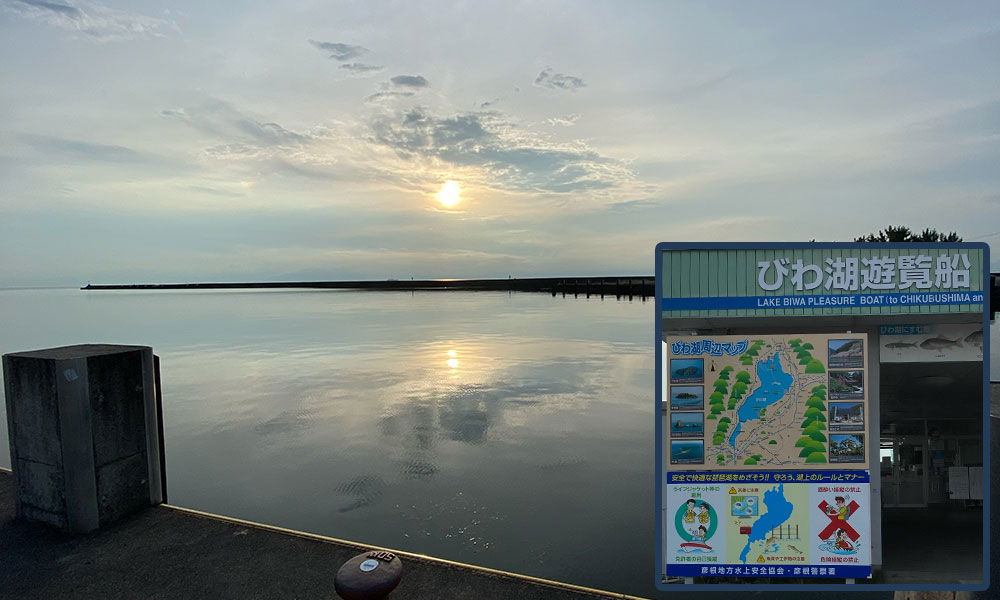
A calm view of Lake Biwa at sunset. The sun sits low behind thin, scattered clouds, throwing a soft orange reflection across the still, grey-blue water. A long concrete breakwater stretches across the middle of the frame, and a dark mooring post stands in the left foreground. Set into the right side of the photo is a signboard for the Lake Biwa Pleasure Boat to Chikubushima, written in large Japanese characters with the English name below. The board shows a cartoon map of the lake, small photos of sights along its shores, and a row of colorful safety notices in Japanese along the bottom.
A calm view of Lake Biwa at sunset. The sun sits low behind thin, scattered clouds, throwing a soft orange reflection across the still, grey-blue water. A long concrete breakwater stretches across the middle of the frame, and a dark mooring post stands in the left foreground.
Set into the right side of the photo is a signboard for the Lake Biwa Pleasure Boat to Chikubushima, written in large Japanese characters with the English name below. The board shows a cartoon map of the lake, small photos of sights along its shores, and a row of colorful safety notices in Japanese along the bottom.
ข้อความที่ปรากฏในภาพ
# びわ湖遊覧船
LAKE BIWA PLEASURE BOAT (to CHIKUBUSHIMA an
びわ湖周辺マップ
安全で快適な航海をめざそう! びわ湖海上のルールとマナー
琵琶湖水上安全協会・滋賀県警察
ความประทับใจของฉัน
โดยรวมแล้ว ทะเลสาบบิวะคุ้มค่าที่จะมาเยือน แต่คุณควรรู้ล่วงหน้าว่าอะไรที่คุณสนใจเป็นการส่วนตัว: หากคุณต้องการสัมผัสธรรมชาติของญี่ปุ่นอย่างเต็มที่ การเดินทางด้วยรถยนต์รอบทะเลสาบเป็นตัวเลือกที่สมบูรณ์แบบ เพราะมีจุดถ่ายภาพทิวทัศน์สวยงามมากมาย และคุณจะผ่านวัดไม่กี่แห่งตลอดเส้นทาง นอกจากนี้ยังเป็นพื้นที่ที่เหมาะแก่การเดินป่าอย่างแน่นอน
สำหรับคนเมืองและผู้ที่อยากรับประทานอาหารพร้อมชมวิวทะเลสาบ คงดีที่สุดที่จะวางแผนทริปให้เน้นไปทางเมืองท้องถิ่นมากกว่า
ปราสาทฮิโคเนะ
วันรุ่งขึ้นฉันไปเยือนปราสาทฮิโคเนะ ซึ่งตามชื่อของมัน ตั้งอยู่ในเมืองฮิโคเนะ ริมทะเลสาบบิวะพอดี การเดินทางไปด้วยรถยนต์สะดวกมาก แต่คุณควรเตรียมพร้อมสำหรับค่าจอดรถที่ค่อนข้างแพง: 1,000 เยนต่อชั่วโมง
อย่างไรก็ตาม ปราสาทแห่งนี้ก็เดินทางไปด้วยรถไฟได้ง่ายเช่นกัน: อยู่ห่างจากสถานีฮิโคเนะเพียงเดินราว 15 นาที
ค่าเข้าชม
หากคุณต้องการชมปราสาทอย่างใกล้ชิด มีสองทางเลือก: บัตรเข้าชมพร้อมทัวร์ชมภายใน สวนโดยรอบ และพิพิธภัณฑ์ปราสาทฮิโคเนะ ราคา 1500 เยน (ประมาณ 8 ยูโร) บัตรเข้าชมโดยไม่รวมพิพิธภัณฑ์ ราคา 1000 เยน (ประมาณ 6 ยูโร) และยังมีทางเลือกบัตรเข้าชมเฉพาะสวนโดยรอบ ราคา 400 เยน (ประมาณ 2 ยูโร)
ครั้งนี้ฉันเลือกเพียงทัวร์ชมปราสาทและสวน และข้ามพิพิธภัณฑ์ไป
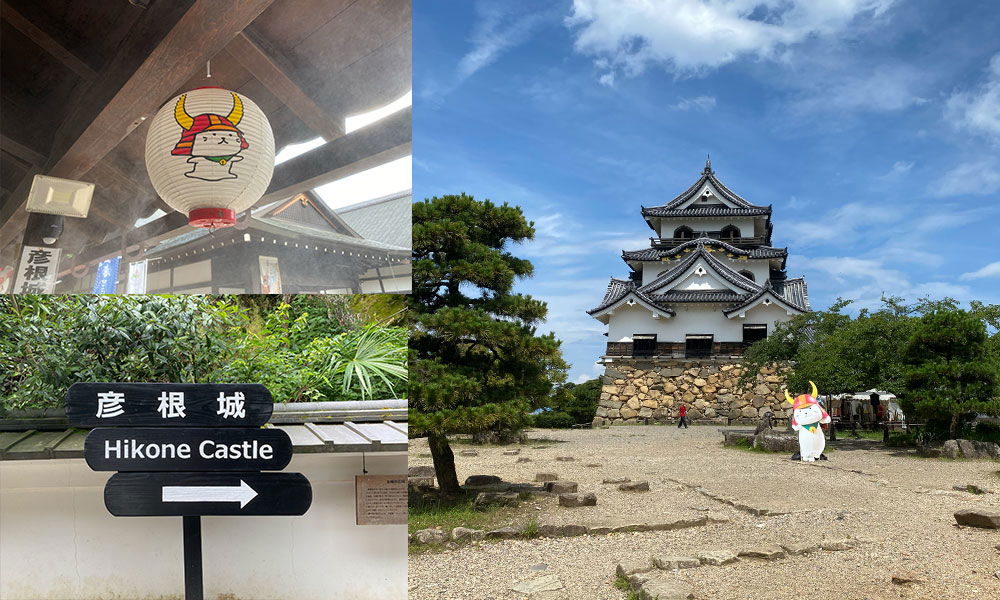
A three-photo collage from Hikone Castle in Shiga, Japan. The right side, the largest panel, shows the castle keep itself: a white multi-tiered tower with dark tiled, steeply curved roofs rising from a massive base of rough stacked stones. Gravel and scattered flat rocks fill the foreground, shaped pines frame the tower on both sides, and a lone visitor in red walks near the walls. A figure of the castle's mascot, a white cat wearing a yellow samurai helmet, stands to the right of the keep under a bright blue sky with wispy clouds. The left column has two smaller shots. On top, a round white paper lantern hangs from a wooden temple or gate eave, printed with the same cartoon cat mascot in its helmet. Below it, a black wooden signpost carries the Japanese characters for Hikone Castle above the English name and a white arrow pointing right, set against greenery and a white plaster wall.
A three-photo collage from Hikone Castle in Shiga, Japan. The right side, the largest panel, shows the castle keep itself: a white multi-tiered tower with dark tiled, steeply curved roofs rising from a massive base of rough stacked stones. Gravel and scattered flat rocks fill the foreground, shaped pines frame the tower on both sides, and a lone visitor in red walks near the walls. A figure of the castle's mascot, a white cat wearing a yellow samurai helmet, stands to the right of the keep under a bright blue sky with wispy clouds.
The left column has two smaller shots. On top, a round white paper lantern hangs from a wooden temple or gate eave, printed with the same cartoon cat mascot in its helmet. Below it, a black wooden signpost carries the Japanese characters for Hikone Castle above the English name and a white arrow pointing right, set against greenery and a white plaster wall.
ข้อความที่ปรากฏในภาพ
彦根城
Hikone Castle
ภูมิหลังทางประวัติศาสตร์
ปราสาทฮิโคเนะเริ่มก่อสร้างในปี 1603 ช่วงยุคเอโดะ ตามคำสั่งของอี นาโอกัตสึ บุตรชายของไดเมียวคนแรกแห่งฮิโคเนะ และแล้วเสร็จในปี 1622 ปราสาทแห่งนี้เป็นหนึ่งใน 12 ปราสาทญี่ปุ่นที่ยังคงรักษาหอปราสาทหลักดั้งเดิมไว้จนถึงปัจจุบัน และยังได้รับการขึ้นทะเบียนเป็นสมบัติของชาติญี่ปุ่นในปี 1952
ปราสาทแห่งนี้ได้รับความนิยมเป็นพิเศษในฤดูใบไม้ผลิ เนื่องจากมีต้นพลัมล้อมรอบ และช่วงออกดอกต้องสวยงามเป็นภาพวาดอย่างแน่นอน แต่แม้ในฤดูร้อน ปราสาทก็ยังสร้างความประทับใจได้ดี และแม้จะมีขนาดเล็กแต่ก็ยังดูสง่างามน่าเกรงขาม
ภายในปราสาท
ด้วยบัตรเข้าชม คุณยังสามารถชมห้องต่าง ๆ ภายในปราสาทได้อีกด้วย หากคุณเคยไปเยือนปราสาทในเยอรมนี คุณคงทราบดีว่าเฟอร์นิเจอร์ภายในและคอลเลกชันอาวุธมักเป็นส่วนหนึ่งของนิทรรศการ แต่อย่าคาดหวังแบบนั้นที่นี่: ภายในปราสาททั้งหมดว่างเปล่า ในความคิดของฉัน การชมภายในก็ยังคุ้มค่า เพราะสถาปัตยกรรมแตกต่างจากปราสาทยุโรปที่เรารู้จักอย่างสิ้นเชิง กำแพงและพื้นทำจากไม้ทั้งหมด และแทบไม่มีห้องแยกส่วนเลย
ไฮไลต์ของฉันคือวิวจากชานชาลาของปราสาท คุณจะไม่ได้เห็นแค่เมืองฮิโคเนะอยู่ตรงหน้าเท่านั้น แต่ยังเห็นทะเลสาบบิวะได้เกือบทั้งผืน ตามคู่มือนักท่องเที่ยวที่ฉันตรวจสอบไว้ล่วงหน้า ชานชาลาแห่งนี้เป็นหนึ่งในแปดจุดชมวิวที่ดีที่สุดของทะเลสาบ – และฉันก็เห็นด้วยอย่างยิ่ง
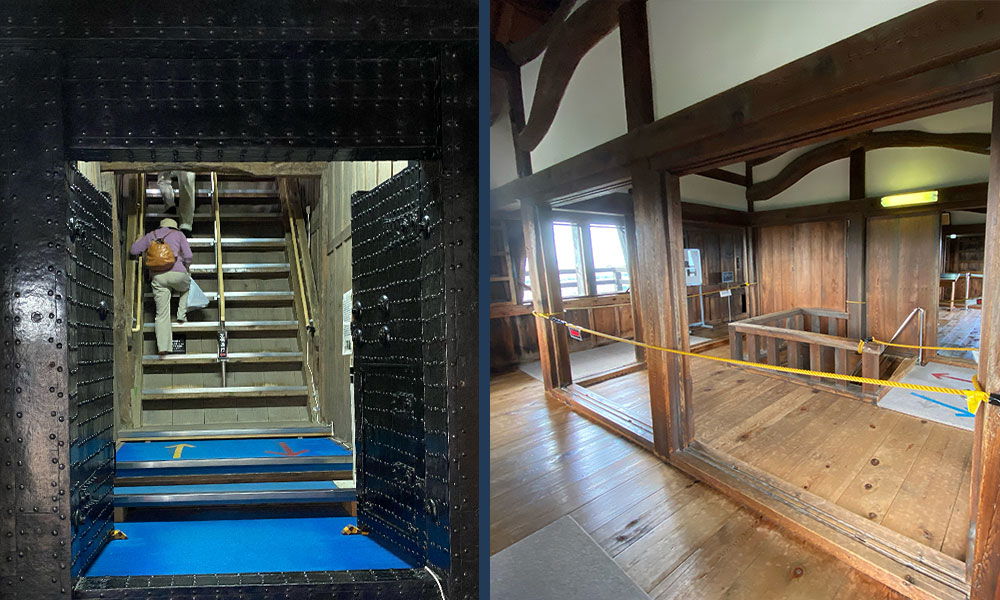
A two-photo collage showing the interior of Hikone Castle's keep. On the left, a visitor climbs a steep wooden staircase inside a dark, iron-studded entrance frame, gripping ropes that serve as handrails. Blue mats with yellow and red direction arrows mark the one-way route at the base of the stairs. On the right, the upper floor of the keep: polished dark wooden floorboards, exposed beams and posts, and small windows letting in daylight. Yellow rope cordons off a square wooden railing structure in the center of the room, guiding visitors along a path through the bare, traditional interior.
A two-photo collage showing the interior of Hikone Castle's keep. On the left, a visitor climbs a steep wooden staircase inside a dark, iron-studded entrance frame, gripping ropes that serve as handrails. Blue mats with yellow and red direction arrows mark the one-way route at the base of the stairs.
On the right, the upper floor of the keep: polished dark wooden floorboards, exposed beams and posts, and small windows letting in daylight. Yellow rope cordons off a square wooden railing structure in the center of the room, guiding visitors along a path through the bare, traditional interior.
ข้อความที่ปรากฏในภาพ
No clearly readable text.
บทสรุปของฉัน
โดยสรุป ปราสาทฮิโคเนะเล็กแต่สวยงามมาก คุณไม่จำเป็นต้องวางแผนทั้งวันสำหรับการมาเยือน แต่ถ้าคุณอยู่ในแถบนี้ ฉันขอแนะนำอย่างยิ่งให้เพิ่มปราสาทแห่งนี้ไว้ในแผนการเดินทางของคุณ
ไม่มีร้านอาหารอยู่ติดกับปราสาทโดยตรง จึงเป็นความคิดที่ดีที่จะเดินเข้าเมืองหลังจากเที่ยวเสร็จ แล้วหาร้านอาหารท้องถิ่นสักแห่ง
แต่ระวังด้วย: นอกเมืองใหญ่ ๆ ร้านอาหารและร้านค้าจำนวนมากปิดกันแล้วราว ๆ 7 โมงเย็น!
ความคิดเห็น