
สารบัญ:
TL;DR
Renkon คือรากบัวที่กินได้ ซึ่งเป็นวัตถุดิบสำคัญในอาหารญี่ปุ่นมาตั้งแต่ยุคนารา และยังนิยมใส่ในเมนูฉลองจนถึงทุกวันนี้ นอกจากจะอร่อยแล้วยังมีกากใย วิตามินซี และโพแทสเซียมสูง แถมแคลอรี่ต่ำด้วย ถ้าจะซื้อให้เลือกหัวที่ผิวสว่าง ไม่มีจุดช้ำ และเอื้อมแล้วรู้สึกแน่น ๆ ไม่นุ่มเหลว“Renkon” หมายถึง รากบัวที่รับประทานได้ บัวเป็นพืชน้ำที่เติบโตในหลายภูมิภาคของเอเชีย รวมถึงญี่ปุ่น เหนือผิวน้ำ ลักษณะเด่นคือใบขนาดใหญ่และดอกสีขาวหรือสีชมพู ใต้ผิวน้ำ ต้นแต่ละต้นเชื่อมต่อกันด้วยระบบรากที่กว้างขวาง ระบบรากนี้รับประทานได้และมีรสชาติอร่อยมากในบางสายพันธุ์ของบัว
ระหว่างการเดินทางไป สามเหลี่ยมปากแม่น้ำโขงในเวียดนาม ฉันมีโอกาสได้ชิมเมล็ดบัว ซึ่งถูกเสนอเป็นขนมขบเคี้ยวและเป็นประสบการณ์ทางการทำอาหารที่น่าสนใจ ไม่นานก่อนการเดินทางออก ฉันยังได้ค้นพบและซื้อชาเมล็ดบัวในซูเปอร์มาร์เก็ตที่ ดานัง อย่างไรก็ตาม ในญี่ปุ่น การรับประทานเมล็ดบัวหรือบริโภคในรูปแบบใดๆ ไม่เป็นที่นิยม ที่จริงแล้ว จนถึงตอนนี้ฉันยังไม่เคยเห็นทั้งเมล็ดบัวหรือชาเมล็ดบัวในญี่ปุ่นเลย

A dense field of lotus plants fills the entire foreground, a sea of broad, round green leaves crowding together above the water. Dozens of pink lotus buds and blossoms rise between the leaves at every stage of opening, from tight pointed buds to fully opened flowers, with a few round seed pods mixed in. The field sits directly against a quiet Japanese residential neighborhood. Behind a low fence line are two-story houses, some with traditional dark tiled roofs and others with plain modern facades, and tree-covered hills rise in the distance under a pale sky. It reads as a lotus paddy in the middle of a town, the kind of place where renkon is grown steps from people's front doors.
A dense field of lotus plants fills the entire foreground, a sea of broad, round green leaves crowding together above the water. Dozens of pink lotus buds and blossoms rise between the leaves at every stage of opening, from tight pointed buds to fully opened flowers, with a few round seed pods mixed in.
The field sits directly against a quiet Japanese residential neighborhood. Behind a low fence line are two-story houses, some with traditional dark tiled roofs and others with plain modern facades, and tree-covered hills rise in the distance under a pale sky. It reads as a lotus paddy in the middle of a town, the kind of place where renkon is grown steps from people's front doors.
ข้อความที่ปรากฏในภาพ
No clearly readable text.
ที่มาและประวัติศาสตร์ของ Renkon
Renkon มีถิ่นกำเนิดจากพื้นที่ชุ่มน้ำของเอเชียใต้และเอเชียตะวันออกเฉียงใต้ และได้รับการเพาะปลูกที่นั่นมาเป็นเวลาหลายพันปี พบได้โดยเฉพาะในตลาดและในอาหารดั้งเดิมของจีน อินเดีย และญี่ปุ่น ในญี่ปุ่น Renkon ได้รับการยกย่องให้เป็นองค์ประกอบสำคัญของอาหารราชสำนักตั้งแต่ยุคนาระ (ศตวรรษที่ 8) และยังคงเป็นที่นิยมสำหรับอาหารในงานเทศกาลจนถึงปัจจุบัน เนื่องจากดอกบัวมีความหมายเชิงสัญลักษณ์พิเศษ (ความบริสุทธิ์ การเกิดใหม่ ความโชคดี) ในหลายวัฒนธรรมเอเชีย รากจึงมีสถานะทางวัฒนธรรมที่สูงเช่นกัน
ประโยชน์ต่อสุขภาพและคุณค่าทางโภชนาการของ Renkon
Renkon ไม่เพียงแต่อร่อยแต่ยังอุดมไปด้วยสารอาหารและมีประโยชน์ต่อสุขภาพหลากหลายด้าน:
- ใยอาหาร: ช่วยส่งเสริมการย่อยอาหารให้แข็งแรงและให้ความรู้สึกอิ่มที่ยาวนาน
- วิตามิน: โดยเฉพาะวิตามินซีและวิตามินบี ซึ่งสำคัญต่อระบบภูมิคุ้มกันและการเผาผลาญพลังงาน
- แร่ธาตุ: โพแทสเซียม เหล็ก และทองแดง ช่วยในการสร้างเม็ดเลือดและรักษาสมดุลของน้ำในร่างกาย
- แคลอรีต่ำ: Renkon เหมาะอย่างยิ่งสำหรับอาหารเบาที่คำนึงถึงรูปร่าง
การซื้อและการเก็บรักษา Renkon: เคล็ดลับการเลือกและการเก็บรักษาที่ถูกต้อง
การสังเกตความสด:
- ผิวควรมีสีอ่อนและควรไม่มีจุดหรือรอยฟกช้ำขนาดใหญ่
- เมื่อสัมผัส รากสดจะรู้สึกแน่น ไม่เละหรือนุ่มเหมือนฟองน้ำ
เคล็ดลับการซื้อ: ในซูเปอร์มาร์เก็ตเอเชีย คุณมักจะพบ renkon สด ยังไม่ล้าง หรือปอกเปลือกและบรรจุสุญญากาศแล้ว ร่องรอยดินเล็กน้อยเป็นเรื่องปกติสำหรับรากสด
การเก็บรักษา:
- รากทั้งลูกที่ยังไม่ปอกเปลือกเก็บในตู้เย็นได้ประมาณหนึ่งสัปดาห์
- ชิ้นที่ปอกแล้วหรือหั่นแล้วควรเก็บในน้ำเย็นเพื่อป้องกันการออกซิเดชันและการเปลี่ยนสี
- การแช่แข็งเป็นไปได้ แต่อาจเปลี่ยนเนื้อสัมผัสและรสชาติเล็กน้อย
Renkon ในอาหารญี่ปุ่น: ไอเดียสูตรอาหารยอดนิยม
อาหารญี่ปุ่นมีวิธีใช้ renkon มากมาย นี่คือตัวอย่างอาหารทั่วไป:
- Tempura (天ぷら): หั่นเป็นชิ้นบางแล้วทอดในแป้งที่กรอบ
- Kinpira Renkon (きんぴられんこん): ผัดรากบัวกับแครอท ซีอิ๊ว มิริน และน้ำตาล
- Renkon Nimono (れんこんの煮物): เคี่ยว Renkon ในน้ำซุปดาชิ ซีอิ๊ว สาเก และมิริน
- Sunomono (酢の物): สลัดน้ำส้มสายชูกับ renkon แตงกวา หรือสาหร่ายวากาเมะในน้ำสลัดน้ำส้มสายชูข้าว
- Miso Soup (味噌汁): ชิ้นรากบัวเพิ่มรสหวานเล็กน้อยและเนื้อสัมผัสกรอบให้กับซุป
- Chirashi Sushi (ちらし寿司): ชิ้น renkon ลวกเป็นเครื่องเคียงที่สวยงามและอร่อยบนข้าวซูชิ
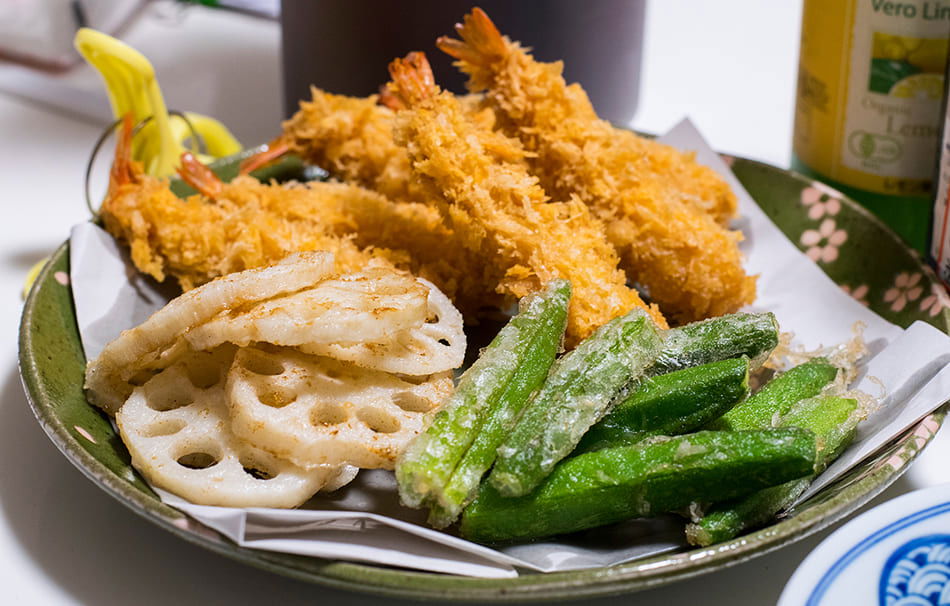
A plate of assorted tempura fills the frame. Three golden fried shrimp stand upright with their orange tails poking out of the crispy batter, while thin slices of lotus root with their distinctive holey pattern sit stacked on the left and bright green okra pods lie breaded on the right. Everything rests on white paper in a dark green ceramic bowl decorated with small pink flowers. The batter looks light and craggy, fresh out of the fryer.
A plate of assorted tempura fills the frame. Three golden fried shrimp stand upright with their orange tails poking out of the crispy batter, while thin slices of lotus root with their distinctive holey pattern sit stacked on the left and bright green okra pods lie breaded on the right. Everything rests on white paper in a dark green ceramic bowl decorated with small pink flowers. The batter looks light and craggy, fresh out of the fryer.
ข้อความที่ปรากฏในภาพ
Vero Li

Renkon FAQ: คำถามที่พบบ่อยเกี่ยวกับรากบัว
คำถามที่ 1: รับประทาน renkon ดิบได้หรือไม่?
คำตอบ: ได้ ทำได้ อย่างไรก็ตาม มักจะลวกสั้นๆ หรือดองเพื่อให้รสชาติอ่อนลงและเนื้อสัมผัสน่ารับประทานมากขึ้น หากรากสดและสะอาด ไม่มีข้อห้ามในการรับประทานดิบเป็นชิ้นบางๆ
คำถามที่ 2: การแช่แข็งเปลี่ยนรสชาติหรือไม่?
คำตอบ: ใช่ การแช่แข็งส่งผลต่อเนื้อสัมผัสเป็นหลัก รากบัวจะนุ่มลงเมื่อละลายและสูญเสียกลิ่นไปบางส่วน สิ่งนี้ยอมรับได้สำหรับอาหารร้อนเช่นซุปหรือสตูว์ สำหรับสลัดและ tempura แนะนำให้ใช้ renkon สด
คำถามที่ 3: มีความแตกต่างในการเตรียมตามภูมิภาคหรือไม่?
คำตอบ: มี ตัวอย่างเช่นในจีน renkon มักถูกดองรสหวานเปรี้ยวหรือใช้ในซุปรสเค็ม ในญี่ปุ่น tempura, kinpira และ nimono เป็นอาหารคลาสสิก ส่วนในเกาหลี รากมักใช้ในอาหารผัดหรืออาหารเคี่ยว
คำถามที่ 4: เก็บ renkon ได้นานเท่าไร?
คำตอบ: รากทั้งลูกที่ยังไม่ปอกเปลือกเก็บได้ประมาณหนึ่งสัปดาห์ในตู้เย็น ชิ้นที่ปอกแล้วหรือหั่นแล้วควรเก็บในน้ำเย็นและรับประทานภายในไม่กี่วัน
ความคิดเห็น
ขอบคุณ ขอบคุณ พืชศักดิ์สิทธิ์นี้ยังกินได้อีกด้วยและอุดมไปด้วยรสชาติ