
목차:
| 주요 제철: | 가을 |
|---|---|
| 카테고리: | 채소 |
| 다른 명칭: | 다이콘 무, 일본 무 또는 중국 무, 겨울무 |
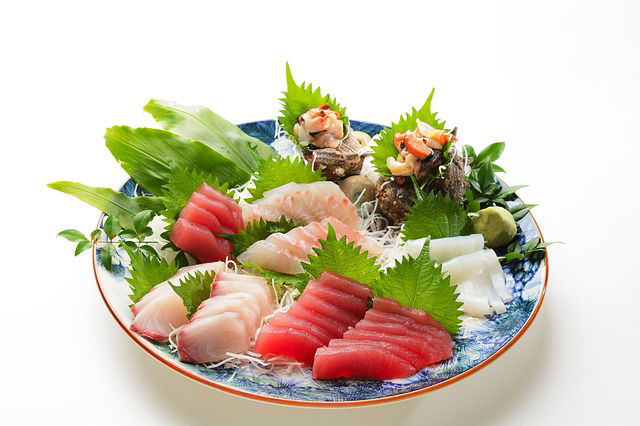
A round plate of assorted sashimi sits on a white surface. The plate is decorated in blue and white patterns with an orange rim, and its base is covered with fine shredded daikon radish. On top are slices of raw fish arranged in small fanned groups: deep red tuna, pale pink and white fish, and translucent squares of squid. Two pieces near the back are topped with a small seafood mixture, and a mound of green wasabi rests at the right edge. Jagged-edged green shiso leaves are tucked between the fish, with a few broader leaves and sprigs filling out the arrangement.
A round plate of assorted sashimi sits on a white surface. The plate is decorated in blue and white patterns with an orange rim, and its base is covered with fine shredded daikon radish. On top are slices of raw fish arranged in small fanned groups: deep red tuna, pale pink and white fish, and translucent squares of squid. Two pieces near the back are topped with a small seafood mixture, and a mound of green wasabi rests at the right edge. Jagged-edged green shiso leaves are tucked between the fish, with a few broader leaves and sprigs filling out the arrangement.
이미지에 보이는 텍스트
No text is clearly readable in the image.
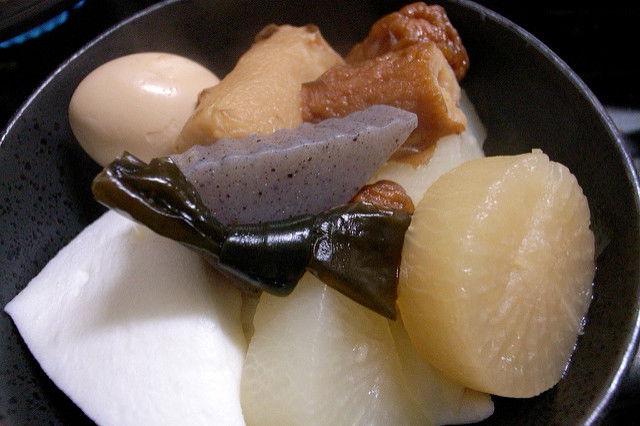
A close-up of a dark bowl filled with oden, the Japanese simmered dish, packed so the pieces nearly fill the frame. A thick round slice of daikon radish sits on the right, cooked to a translucent pale yellow, with a wedge of white daikon at the lower left. Beside them rest a whole boiled egg tinted light brown from the broth, a gray speckled triangle of konjac, a folded piece of dark kombu seaweed tied like a knot, and several browned fish cakes crowded at the top. Everything glistens with simmering broth, giving the dish a soft, stewed look.
A close-up of a dark bowl filled with oden, the Japanese simmered dish, packed so the pieces nearly fill the frame. A thick round slice of daikon radish sits on the right, cooked to a translucent pale yellow, with a wedge of white daikon at the lower left. Beside them rest a whole boiled egg tinted light brown from the broth, a gray speckled triangle of konjac, a folded piece of dark kombu seaweed tied like a knot, and several browned fish cakes crowded at the top. Everything glistens with simmering broth, giving the dish a soft, stewed look.
이미지에 보이는 텍스트
No text is clearly readable in this image.
다이콘(일본어: だいこん 또는 大根은 문자 그대로 "큰 뿌리"라는 뜻)은 동아시아에서 널리 먹는 무입니다. 일본 요리에서는 주요 식재료로 빠질 수 없는 채소입니다. 그래서 이 무에는 다이콘 무, 일본 무, 중국 무, 겨울무 등 다양한 이름이 있습니다. 다이콘은 조리 방법이 아주 다양해서 각각의 방식에 따라 다이콘 특유의 맛이 잘 살아납니다. 예를 들어, 다이콘을 채 썰어 말리면 "키리보시 다이콘(切干大根, 잘라서 말린 다이콘)"이 됩니다. 이 과정에서 수분이 많이 빠지기 때문에 맛이 한층 진해집니다. 다이콘은 샐러드나 사시미의 곁들임으로도 아주 좋습니다. 이때는 아주 가늘게 채 써는 것이 중요합니다. 채가 너무 두꺼우면 샐러드가 매우 매울 수 있기 때문입니다. 다이콘의 매운맛은 계절에 따라 달라지기도 하는데, 제 경험상 겨울철 다이콘이 더 순하고 맛이 좋습니다. 다이콘 잎도 먹을 수 있습니다. 또한, 윗부분(약 3cm 정도)을 남겨 물에 담가두면 새로 잎이 자라나기도 합니다. 요즘에는 독일의 슈퍼마켓에서도 다이콘을 구입할 수 있습니다. 이때는 단단하고 탄력이 있는 것을 고르는 것이 중요하며, 만약 무가 눅눅하다면 맛이 좋지 않습니다.
댓글