목차:
TL;DR
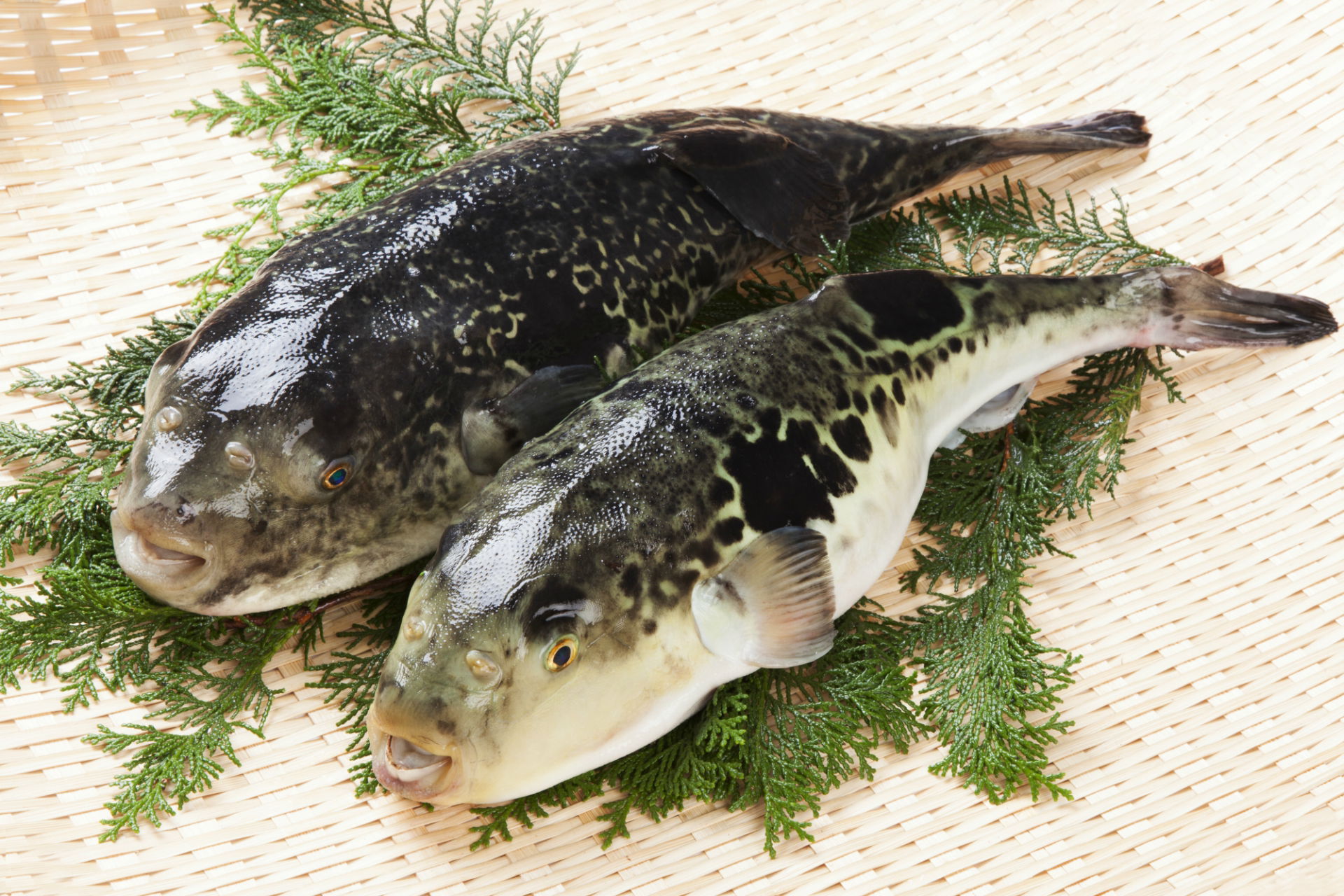
복어는 맛이 아주 좋지만 내장과 피부에 치명적인 신경독이 있고 해독제가 없는 생선이라 함부로 먹으면 위험해. 그래서 일본에서는 면허를 딴 셰프만 복어를 손질하고 조리할 수 있으니, 꼭 허가받은 식당에서만 먹자. 제철은 10월부터 2월까지인데 특히 1~2월이 가장 맛있다고 하니, 회나 샤브샤브로 즐겨보면 좋아.후구(일본어: 河豚)는 그 몸의 여러 부위가 매우 독성이 있는 복어입니다. 아마도 그렇기 때문에 일본에서 그렇게 인기가 많은 것일까요? 후구는 또한 아주 맛있다고 알려져 있습니다! 저도 한 번 스시에서 후구를 먹어봤는데, 그 맛이 그렇게 두드러지게 느껴지지는 않았어요. 하지만 국물 요리에서는 특히 맛있다고 합니다.
후구의 제철은 10월부터 2월까지입니다. 특히 1월과 2월 사이에 먹는 후구가 가장 맛있다고 합니다. 그 고기는 매우 밀도가 높고, 다른 흰살생선보다 단백질이 많고 지방은 적습니다. 예전에는 주로 자연산 후구를 먹었지만, 현재는 많은 후구 양식장이 생겼습니다. 특별히 사육된 양식 후구의 인기가 점점 높아지고 있는데, 이것은 한편으로는 더 저렴하고, 다른 한편으로는 야생 후구보다 덜 위험하기 때문입니다. 복어의 독소는 먹이에 따라 더 강해지거나 약해지기 때문입니다.
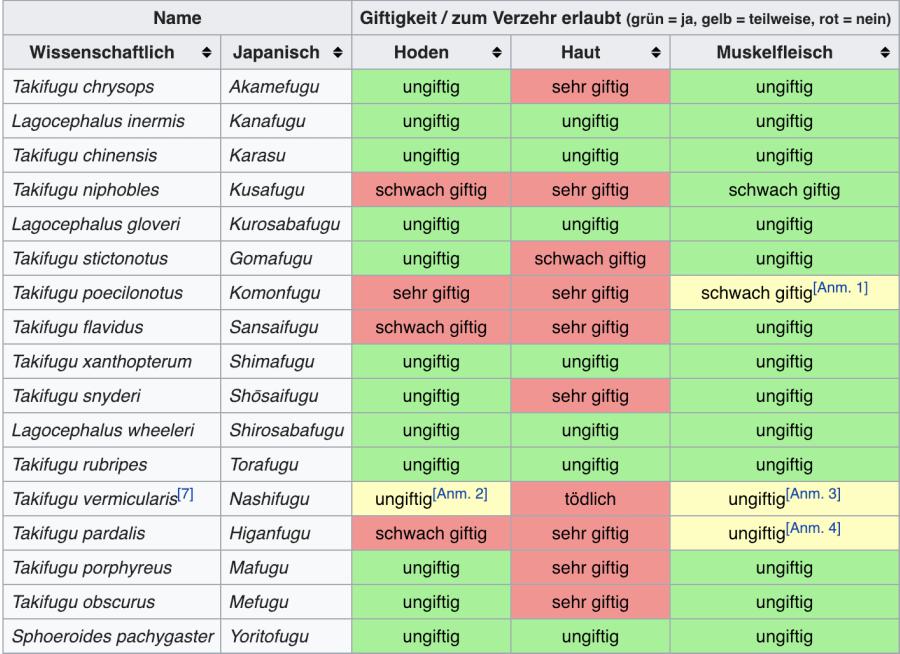
The image is a German-language table comparing the toxicity of different fugu (pufferfish) species by body part. It has 18 rows, one per species, each showing the scientific name (for example *Takifugu rubripes*) next to its Japanese name (Torafugu). The header explains the color code: green means a part is safe to eat, yellow means only partly allowed, red means not allowed. The three toxicity columns cover Hoden (testes), Haut (skin), and Muskelfleisch (muscle meat). Most muscle meat cells are green, which reflects why the fish is eaten at all, but the skin column is dotted with red "sehr giftig" (highly toxic) entries, especially across the Takifugu species. A few rows stand out: Nashifugu (*Takifugu vermicularis*) has skin marked "tödlich" (lethal), Komonfugu has highly toxic testes, and Kanafugu (*Lagocephalus inermis*) and Torafugu are green across all three parts, making them the safest choices. Yellow cells with footnote references mark a handful of exceptions where edibility depends on preparation or specific conditions.
The image is a German-language table comparing the toxicity of different fugu (pufferfish) species by body part. It has 18 rows, one per species, each showing the scientific name (for example *Takifugu rubripes*) next to its Japanese name (Torafugu). The header explains the color code: green means a part is safe to eat, yellow means only partly allowed, red means not allowed. The three toxicity columns cover Hoden (testes), Haut (skin), and Muskelfleisch (muscle meat).
Most muscle meat cells are green, which reflects why the fish is eaten at all, but the skin column is dotted with red "sehr giftig" (highly toxic) entries, especially across the Takifugu species. A few rows stand out: Nashifugu (*Takifugu vermicularis*) has skin marked "tödlich" (lethal), Komonfugu has highly toxic testes, and Kanafugu (*Lagocephalus inermis*) and Torafugu are green across all three parts, making them the safest choices. Yellow cells with footnote references mark a handful of exceptions where edibility depends on preparation or specific conditions.
이미지에 보이는 텍스트
| Name | | Giftigkeit / zum Verzehr erlaubt (grün = ja, gelb = teilweise, rot = nein) | | |
|---|---|---|---|---|
| **Wissenschaftlich** | **Japanisch** | **Hoden** | **Haut** | **Muskelfleisch** |
| Takifugu chrysops | Akamefugu | ungiftig | sehr giftig | ungiftig |
| Lagocephalus inermis | Kanafugu | ungiftig | ungiftig | ungiftig |
| Takifugu chinensis | Karasu | ungiftig | ungiftig | ungiftig |
| Takifugu niphobles | Kusafugu | schwach giftig | sehr giftig | schwach giftig |
| Lagocephalus gloveri | Kurosabafugu | ungiftig | ungiftig | ungiftig |
| Takifugu stictonotus | Gomafugu | ungiftig | schwach giftig | ungiftig |
| Takifugu poecilonotus | Komonfugu | sehr giftig | sehr giftig | schwach giftig[Anm. 1] |
| Takifugu flavidus | Sansaifugu | schwach giftig | sehr giftig | ungiftig |
| Takifugu xanthopterum | Shimafugu | ungiftig | ungiftig | ungiftig |
| Takifugu snyderi | Shōsaifugu | ungiftig | sehr giftig | ungiftig |
| Lagocephalus wheeleri | Shirosabafugu | ungiftig | ungiftig | ungiftig |
| Takifugu rubripes | Torafugu | ungiftig | ungiftig | ungiftig |
| Takifugu vermicularis[7] | Nashifugu | ungiftig[Anm. 2] | tödlich | ungiftig[Anm. 3] |
| Takifugu pardalis | Higanfugu | schwach giftig | sehr giftig | ungiftig[Anm. 4] |
| Takifugu porphyreus | Mafugu | ungiftig | sehr giftig | ungiftig |
| Takifugu obscurus | Mefugu | ungiftig | sehr giftig | ungiftig |
| Sphoeroides pachygaster | Yoritofugu | ungiftig | ungiftig | ungiftig |
출처: https://de.wikipedia.org/wiki/Fugu
후구에서 무엇이 위험할까요?
복어의 피부와 내장이 독성이 있습니다. 가장 많은 독은 난소와 간에 들어 있습니다. 일본에서는 보통 물고기의 간을 많이 먹지만, 후구의 피부와 내장에는 신경독이 들어 있어서 먹으면 즉시 신경과 근육이 마비되고, 결국 심장도 멈추게 됩니다. 이 독에는 해독제가 없습니다! 참고로, 수컷 후구의 고환은 독이 없어 별미로 여겨집니다!
과거에는 잘못 손질된 후구 때문에 많은 사람이 목숨을 잃었기 때문에, 현재는 정부가 후구의 유통과 조리를 철저히 감독하고 있습니다. 후구를 요리하고 제공하려는 식당이나 요리사는 특별한 자격증이 필요하며, 이는 정식 교육과정을 통해서만 취득할 수 있습니다. 이 과정은 시험으로 마무리됩니다. 이 공식 자격증이 있어야만 생후구를 구매하거나 조리할 수 있습니다. 또한 후구 내장을 어떻게 처분해야 하는지에 대한 엄격한 규정도 있습니다. 이러한 법률 덕분에 일본에서 후구 중독으로 인한 사망률은 거의 제로에 가깝게 줄어들었습니다.
후구 요리
후구는 예를 들어 사시미로도 먹을 수 있습니다. 이때 생선살을 아주 얇게 썰어 거의 비칠 정도가 됩니다. 젓가락으로 후구 사시미 5~10조각을 집어 간장에 찍어 먹습니다. 후구를 튀겨 먹을 수도 있는데, 이것을 가라아게라고 부릅니다. (블로그에도 치킨 가라아게 레시피가 있습니다.) 후구를 나베(국물 요리)로도 먹을 수 있는데, 이때 고기가 특히 부드럽다고 합니다!
댓글
어디에서 구매할 수 있나요?
안녕하세요 멜라니, 후구는 독일에서 구하기 매우 어렵고 저도 경험이 없으며, 지금까지 독일에서는 구매한 적이 없습니다. 일본에서는 많은 사람들이 자격증을 가지고 있기 때문에 일반 슈퍼마켓에서도 후구를 구입할 수 있습니다. 안부 인사 드려요, 류세이