
Indice dei contenuti:
TL;DR
Soba è un sito dedicato alle autentiche noodles giapponesi a base di grano saraceno, che esplora le diverse varianti come Ju-wari Soba, composta al 100% di grano saraceno, e Hachiwari Soba, con un mix di 80% grano saraceno e 20% frumento. Il sito descrive vari metodi di consumo, tra cui Kake-Soba, servito caldo in brodo, e Zulu-Soba, gustato freddo con una salsa. Viene anche menzionato il Soba al tè verde e la tradizione di mangiare Soba per il Capodanno giapponese, chiamata Toshikoshi-Soba, che porta fortuna finanziaria. Inoltre, l'autore condivide la propria esperienza di partecipazione a un corso di preparazione del Soba, che ha incluso degustazioni e pratiche di cucina, offrendo uno sguardo affascinante sulla cultura culinaria giapponese.Soba - I noodles giapponesi di grano saraceno
I noodles Soba sono fatti con farina di grano saraceno, a volte anche con l'aggiunta di normale grano. Ju-wari Soba è fatto al 100% di grano saraceno ed è quindi la variante Soba più costosa, ma anche la più aromatica. La versione un po' più comune, Hachiwari-Soba, è composta dall'80% di grano saraceno e dal 20% di grano normale ed è un po' più delicata nel gusto, ma naturalmente anche più conveniente. Esistono anche varianti con una percentuale di grano saraceno ancora più bassa e quindi ancora più economiche. Queste vengono utilizzate principalmente nei fast food, dove si trova Soba a 2-5 euro.
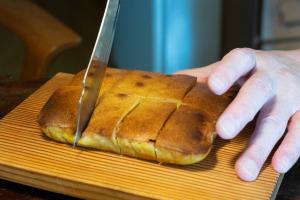
A rectangular buckwheat cake with a golden brown, slightly domed top sits on a wooden cutting board as a large kitchen knife slices down through it. Cuts already made divide the dense cake into even portions, and a hand at the right of the frame steadies it against the board. The dark, blurred background keeps all the attention on the slicing.
A rectangular buckwheat cake with a golden brown, slightly domed top sits on a wooden cutting board as a large kitchen knife slices down through it. Cuts already made divide the dense cake into even portions, and a hand at the right of the frame steadies it against the board. The dark, blurred background keeps all the attention on the slicing.
Testo visibile nell'immagine
No clearly readable text is present in the image.
Come si mangia Soba?
La più comune è la Kake-Soba. Qui i noodles vengono serviti caldi in un brodo chiamato "Dashi". Questo brodo è fatto con fiocchi di tonno, un'alga, Kombu, Mirin (vino di riso giapponese) e Shoyu (salsa di soia giapponese) e spesso guarnito con cipolle verdi tritate. La Kake-Soba è un piatto apprezzato in inverno. Di solito viene servita con wasabi (spesso come radice fresca che puoi grattugiare da solo) e zenzero.
Un'altra variante comune è la Zulu-Soba. I noodles Soba vengono serviti su una griglia di bambù. Separatamente, viene servita una ciotola con brodo freddo. La Soba viene presa con le bacchette, immersa nel brodo e poi mangiata direttamente. Naturalmente, come sempre in Giappone, si sorseggia. Spesso viene servita anche Tempura con la Soba.
A proposito: ogni boccone preso con le bacchette deve essere mangiato intero in bocca. I noodles che sporgono sono considerati estremamente scortesi.
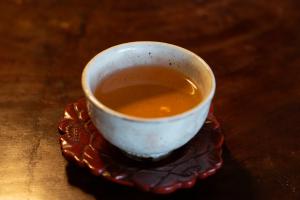
A small white ceramic cup filled with clear amber tea sits on a carved, deep reddish-brown lacquered coaster. The warm light catches the surface of the liquid, suggesting a cup of soba or buckwheat tea, served in the traditional Japanese style. The dark wood table around it falls into shadow, keeping all attention on the cup and its glowing contents.
A small white ceramic cup filled with clear amber tea sits on a carved, deep reddish-brown lacquered coaster. The warm light catches the surface of the liquid, suggesting a cup of soba or buckwheat tea, served in the traditional Japanese style. The dark wood table around it falls into shadow, keeping all attention on the cup and its glowing contents.
Testo visibile nell'immagine
No clearly readable text is present in the image.
Varianti colorate
Esiste anche Cha-Soba, ovvero "Soba al tè verde". Dal punto di vista del gusto, la nota di tè verde è molto discreta, ma questo Soba è verde. Inoltre, esiste l'Ume-Soba, in cui viene utilizzata una prugna Ume fermentata e rossa, che conferisce alla Soba una leggera colorazione rosata. Il grano saraceno stesso è infatti grigio con macchie nere. Una tradizione giapponese popolare è quella di mangiare Soba prima dell'inizio del nuovo anno. Questo è chiamato Toshikoshi-Soba e dovrebbe portare fortuna finanziaria nel nuovo anno. Anche nella mia famiglia abbiamo mangiato Soba a Capodanno!
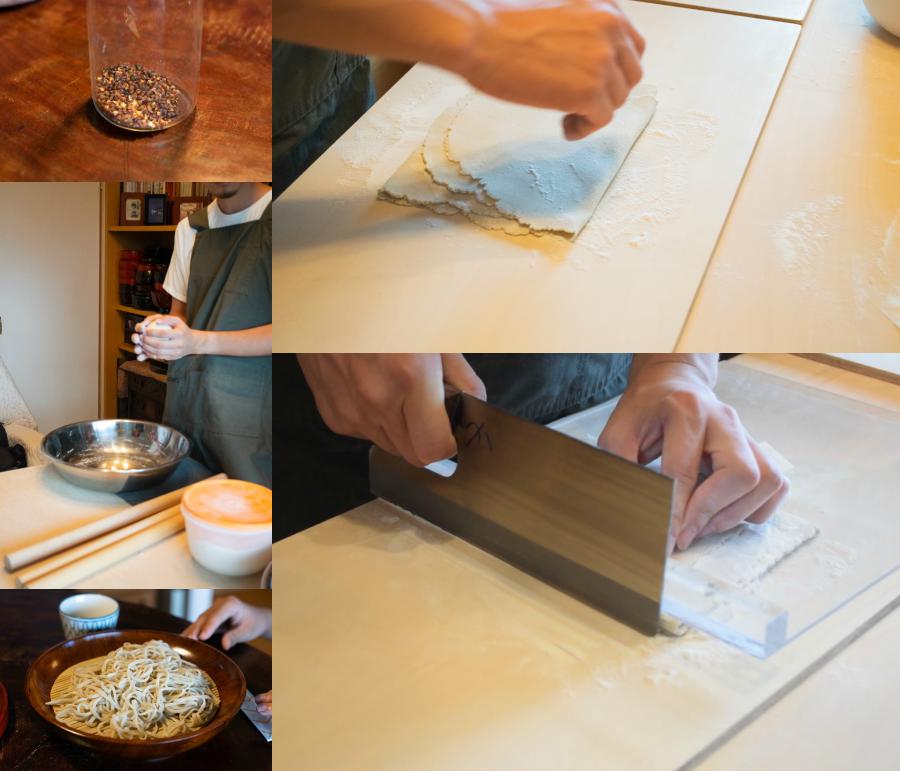
A four-photo collage documents the process of making soba, Japanese buckwheat noodles, by hand at home. The left column runs top to bottom through the stages. A small glass jar holds raw buckwheat groats on a wooden table. Below it, a man in a green apron over a white t-shirt kneads dough with his hands, a stainless steel mixing bowl, a wooden rolling pin, and a container of dusting flour arranged on the counter in front of him. At the bottom, the finished dish: a generous mound of pale grey noodles served on a bamboo draining basket set inside a dark wooden bowl, with a small ceramic cup alongside. The tall right column shows two close-ups of the noodle work: hands handling a folded, flour-dusted sheet of dough on a wooden board, then slicing the dough into thin strands with a long rectangular soba knife, using a wooden guide to keep the cuts even.
A four-photo collage documents the process of making soba, Japanese buckwheat noodles, by hand at home.
The left column runs top to bottom through the stages. A small glass jar holds raw buckwheat groats on a wooden table. Below it, a man in a green apron over a white t-shirt kneads dough with his hands, a stainless steel mixing bowl, a wooden rolling pin, and a container of dusting flour arranged on the counter in front of him. At the bottom, the finished dish: a generous mound of pale grey noodles served on a bamboo draining basket set inside a dark wooden bowl, with a small ceramic cup alongside. The tall right column shows two close-ups of the noodle work: hands handling a folded, flour-dusted sheet of dough on a wooden board, then slicing the dough into thin strands with a long rectangular soba knife, using a wooden guide to keep the cuts even.
Testo visibile nell'immagine
No clearly readable text found in the image.
Ecco come si fa - Ho frequentato un corso di Soba
Questo è un altro corso giapponese che mia madre ha trovato per me. Ho anche frequentato un corso di Miso! Esistono diversi portali online giapponesi attraverso i quali i privati possono offrire una varietà di servizi. Ad esempio, ci sono corsi di cucina che vengono spesso frequentati da casalinghe e bambini. Questo corso di Soba è stato guidato casualmente da un giapponese che ha studiato in Germania e quindi parla anche tedesco!
All'inizio del corso, ci hanno servito Soba e abbiamo visto come veniva preparato. Abbiamo bevuto del tè Soba, fatto con grano saraceno tostato. C'era anche una torta di grano saraceno deliziosa che la moglie del nostro insegnante ha preparato per noi.
Poi ci siamo cimentati nella preparazione della Soba: impastare la pasta, stenderla e tagliarla a forma di noodle. La Soba dovrebbe essere tagliata molto sottile e uniforme: non è facile! Le parti più spesse della mia Soba avevano sicuramente un sapore diverso rispetto alla Soba tagliata professionalmente, ma il corso è stata comunque un'esperienza estremamente interessante e istruttiva per me!
Commenti