
Indice dei contenuti:
TL;DR
Okome è un sito dedicato al riso, un ingrediente fondamentale della cucina asiatica, con un focus particolare sulle diverse varietà utilizzate in Giappone e in altri paesi. Si distingue tra riso a grano lungo, comunemente usato nella cucina cinese e indiana, e riso a grano tondo, tradizionalmente impiegato in Giappone, noto anche come riso per sushi e riso al latte. Il sito esplora anche varietà specifiche come il Mochigome, utilizzato per fare dolci come il mochi, e il Kodaimai, adatto a eventi speciali. Con circa 120.000 tipi di riso, Okome offre una panoramica completa delle caratteristiche e degli usi di ciascuna varietà, illustrando la loro importanza nella gastronomia giapponese.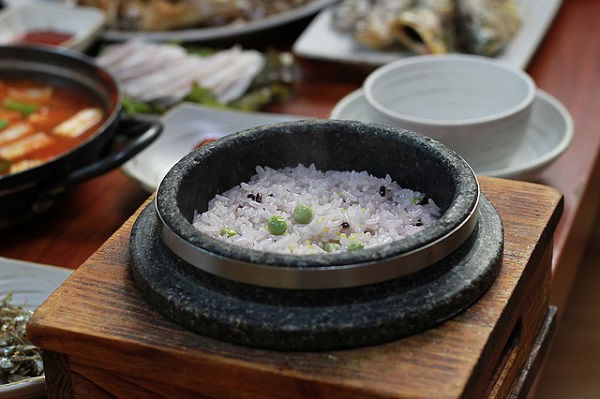
A rough gray stone bowl filled with steamed white rice sits front and center on a square wooden trivet. The rice is mixed with bright green peas and small dark beans, and a thin metal ring lines the rim of the stone. Around it the table is set for a shared meal: to the left a black stone pot holds a red, bubbling stew with tofu, and behind the bowl there is a plain white rice bowl on a saucer, a plate of sliced pink fish, and platters of cooked whole fish at the back of the table. Small side dishes peek in at the edges. The spread has the feel of a Korean or Japanese home-style dinner, with the hot rice pot as the centerpiece.
A rough gray stone bowl filled with steamed white rice sits front and center on a square wooden trivet. The rice is mixed with bright green peas and small dark beans, and a thin metal ring lines the rim of the stone. Around it the table is set for a shared meal: to the left a black stone pot holds a red, bubbling stew with tofu, and behind the bowl there is a plain white rice bowl on a saucer, a plate of sliced pink fish, and platters of cooked whole fish at the back of the table. Small side dishes peek in at the edges. The spread has the feel of a Korean or Japanese home-style dinner, with the hot rice pot as the centerpiece.
Testo visibile nell'immagine
*No clearly readable text is present in the image.*
(O)kome in giapponese riso è un ingrediente principale della cucina asiatica. In Giappone si usa solitamente il riso a chicco tondo, mentre in Cina e in India si usa il riso a chicco lungo. Come accennato sopra, ci sono diversi tipi di riso. In totale circa 120.000 tipi. Tuttavia, si possono distinguere 2 tipi base. Da un lato il riso a chicco lungo non si attacca e viene utilizzato nella cucina cinese e indiana. D'altra parte c'è il riso a chicco tondo. Questo si attacca ed è quindi noto in Germania anche come riso al latte. In Giappone o anche in Corea e Tailandia questo riso viene utilizzato.
Riso a chicco lungo/spigato
Riso a chicco lungo/spigato, questo è molto diffuso nella cucina cinese. Come suggerisce il nome, questo riso è allungato e appuntito. La caratteristica speciale del riso a chicco lungo/spigato è che raramente si attacca. Pertanto, questo non è adatto ad esempio per il sushi, ma per un risotto o un curry sì.
Riso a chicco tondo
La seconda tipologia è tonda e di solito si attacca. Nella cucina giapponese si usa quasi esclusivamente questo tipo di riso. Grazie alla sua proprietà adesiva, è anche molto facile da afferrare. Inoltre, il sushi è possibile con questo riso, poiché l'amido fa sì che i chicchi di riso si attacchino insieme. Anche nel riso al latte si usa il riso a chicco tondo.
Diversi tipi di riso in Giappone.
Vino di riso (Sake)
Questo tipo di riso viene utilizzato per il Sake (vino di riso).
Mochigome
Mochigome è un riso opaco e viene solitamente pestato e consumato come Mochi o Manjou. Spesso il Mochi viene tostato e condito con Nori (alga) e Shoyou (salsa di soia). Inoltre, il Mochi dolce può essere preparato anche come dessert. Un dolce noto a base di riso Mochi sarebbe ad esempio Dango.
Kodaimai
Kodaimai viene solitamente mescolato con il riso normale, il riso rosso è molto costoso. Inoltre, questo riso viene consumato solo per eventi speciali.
Commenti
Molto informativo. Grazie!
Hey Micha, grazie mille per il tuo feedback! Un caro saluto, Ryusei
Il commento non è ancora stato verificato.