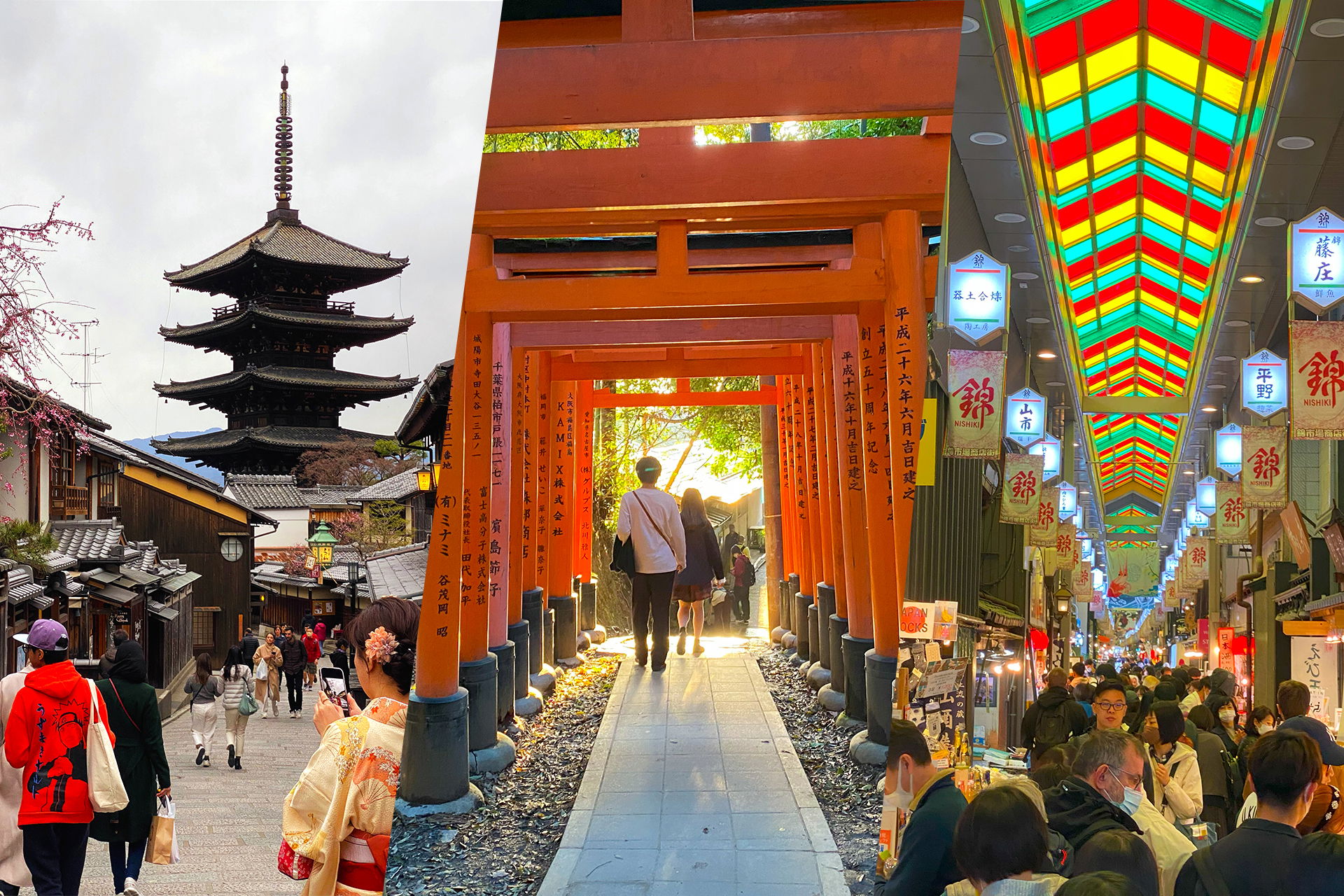
Daftar isi:
TL;DR
Kalau ke Kyoto, naik Shinkansen saja, cuma kurang dari tiga jam dan kursinya nyaman dengan Wi-Fi serta colokan di setiap tempat duduk. Mampir dulu di Danau Hamana, Hamamatsu untuk menikmati suasana tenang sekaligus kuliner lokalnya. Sampai di Kyoto, jangan lewatkan hutan bambu Arashiyama dan Nishiki Market.Perjalanan Darat Kami dari Tokyo ke Kyoto
Hari ini kami berangkat berkendara dari Tokyo ke Kyoto. Meskipun perjalanan memakan waktu total sembilan jam, tetap terasa menyenangkan, karena ibu saya dan saya bergantian mengemudi.
Jalan tol di Jepang sangat berkembang dengan baik dan rambu-rambunya jelas. Ada juga banyak tempat istirahat di sepanjang rute di mana kami bisa menyegarkan diri.
Selama perjalanan kami dapat menikmati pemandangan yang indah. Di sepanjang jalan tol selalu ada lembah-lembah hijau, danau, dan gunung yang kami lewati. Hal ini membuat perjalanan sangat santai dan bervariasi.
Namun, saya harus mengatakan, agak disayangkan bahwa berkendara dengan mobil masih lebih murah daripada naik kereta api, terutama dengan adanya perubahan iklim. Dibandingkan dengan mobil, kereta api hampir dua kali atau bahkan tiga kali lipat lebih mahal, yang berarti banyak orang masih lebih memilih berkendara, meskipun ada alternatif yang lebih ramah lingkungan.
Di sisi lain, saya juga harus mengatakan bahwa saya menghargai kenyamanan sebuah mobil. Kami bisa beristirahat kapan saja, berhenti kapan pun kami butuh jeda, dan selalu membawa barang-barang kami sendiri. Hal itu tidak selalu terjadi saat bepergian dengan kereta api.
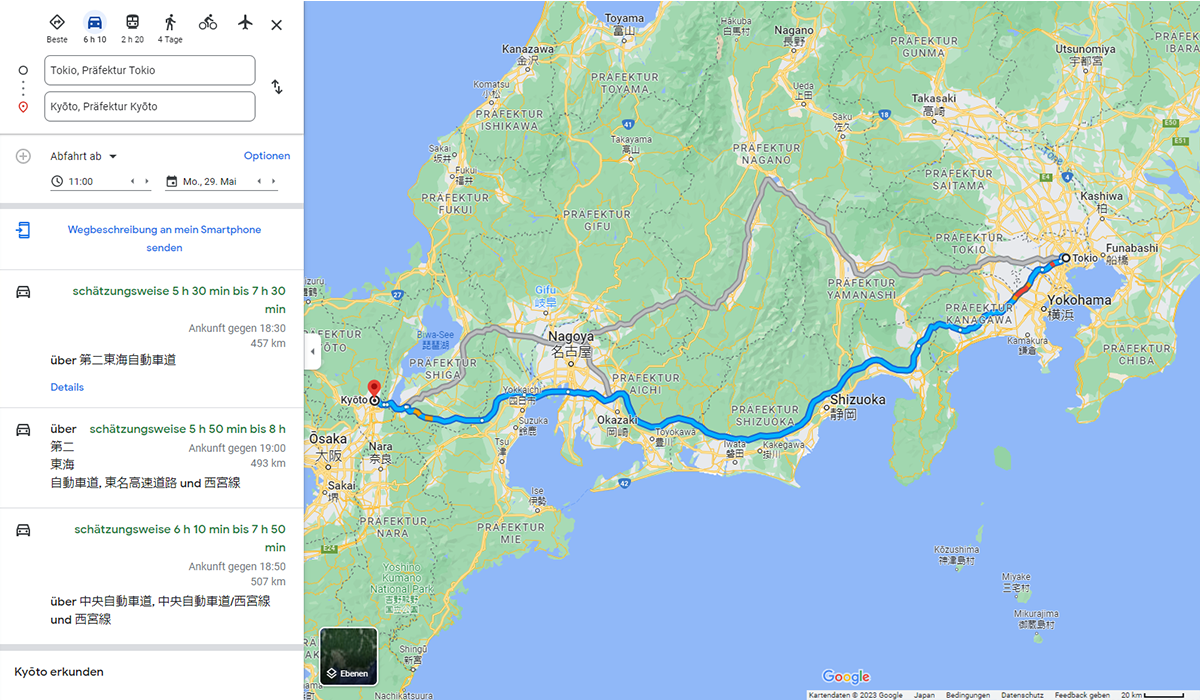
A Google Maps route planning screenshot in German shows the drive from Tokio to Kyōto. The left panel lists three route options with travel times: about 5 h 30 min to 7 h 30 min (457 km), 5 h 50 min to 8 h (493 km), and 6 h 10 min to 7 h 50 min (507 km), all departing Monday, May 29 at 11:00. The driving mode is selected, and each option names the expressways used, such as 第二東海自動車道 and 東名高速道路. The map on the right covers central Japan, with the recommended route drawn as a thick blue line running from Tokio past Yokohama, along the Pacific coast through Shizuoka, then west via Nagoya to a red destination pin at Kyōto, with Osaka and Nara nearby. A gray alternative route swings inland north of the mountains through the Nagano region. City labels like Toyama, Kanazawa, Takasaki and Utsunomiya mark the surrounding prefectures.
A Google Maps route planning screenshot in German shows the drive from Tokio to Kyōto. The left panel lists three route options with travel times: about 5 h 30 min to 7 h 30 min (457 km), 5 h 50 min to 8 h (493 km), and 6 h 10 min to 7 h 50 min (507 km), all departing Monday, May 29 at 11:00. The driving mode is selected, and each option names the expressways used, such as 第二東海自動車道 and 東名高速道路.
The map on the right covers central Japan, with the recommended route drawn as a thick blue line running from Tokio past Yokohama, along the Pacific coast through Shizuoka, then west via Nagoya to a red destination pin at Kyōto, with Osaka and Nara nearby. A gray alternative route swings inland north of the mountains through the Nagano region. City labels like Toyama, Kanazawa, Takasaki and Utsunomiya mark the surrounding prefectures.
Teks yang terlihat pada gambar
Beste
6 h 10
2 h 20
4 Tage
Tokio, Präfektur Tokio
Kyōto, Präfektur Kyōto
Abfahrt ab
Optionen
11:00
Mo., 29. Mai
Wegbeschreibung an mein Smartphone senden
schätzungsweise 5 h 30 min bis 7 h 30 min
Ankunft gegen 18:30
457 km
über 第二東海自動車道
Details
über 東海
schätzungsweise 5 h 50 min bis 8 h
Ankunft gegen 19:00
493 km
自動車道, 東名高速道路 und 西宮線
schätzungsweise 6 h 10 min bis 7 h 50 min
Ankunft gegen 18:50
507 km
über 中央自動車道, 中央自動車道/西宮線 und 西宮線
Kyōto erkunden
Toyama
Kanazawa
Nagano
Takasaki
Utsunomiya
Kashiwa
Tokio
Funabashi
Yokohama
Nagoya
Kyōto
Shizuoka
Ōsaka
Nara
Sakai
Biwa-See
PRAFEKTUR TOYAMA
PRAFEKTUR ISHIKAWA
PRAFEKTUR FUKUI
PRAFEKTUR GIFU
PRAFEKTUR NAGANO
PRAFEKTUR SAITAMA
PRAFEKTUR YAMANASHI
PRAFEKTUR TOKIO
PRAFEKTUR SHIGA
PRAFEKTUR AICHI
PRAFEKTUR CHIBA
PRAFEKTUR NARA
PRAFEKTUR MIE
Kōzushima
Miyake
Mikurajima
Hachijō-jima
Google
Kartendaten © 2023 Google Japan Bedingungen Datenschutz Feedback geben 20 km
Ebisen
Persinggahan di Hamamatsu: Bersantai di Danau Hamana
Jika Anda sedang dalam perjalanan dari Tokyo ke Kyoto, ada baiknya untuk singgah di Hamamatsu. Kami terutama mengeksplorasi Danau Hamana yang indah di sana—tempat kedamaian dan relaksasi.
Yang terutama menarik tentang danau ini adalah fakta bahwa danau ini memiliki bagian air tawar dan bagian air asin. Karena alasan ini, belut juga dibudidayakan di sini, yang membuatnya sangat populer di kalangan pecinta ikan.
Setelah berjalan-jalan di sepanjang tepi danau, kami pergi ke restoran Shibuki yang berada di dekatnya. Restoran itu bahkan menyediakan menu berbahasa Inggris, yang membuat pemesanan lebih mudah. Ibu dan kakak saya mencoba belut bakar yang terkenal di sana, sementara saya memilih hidangan dengan Shirasu (sarden bayi).
Jadi jika Anda mencari tempat untuk bersantai dan melepas penat, saya sangat merekomendasikan persinggahan di Hamamatsu dan di Danau Hamana. Di sini Anda tidak hanya dapat menikmati alam, tetapi juga menemukan kuliner dan budaya lokal.
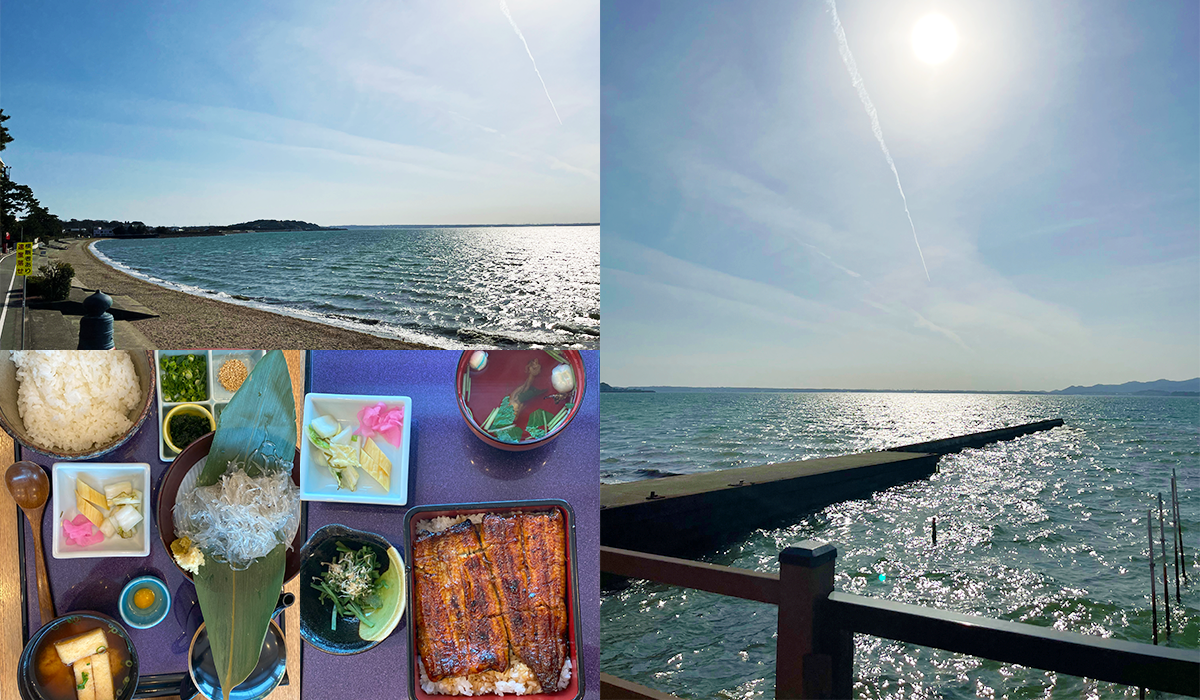
A three-photo collage from a stop in Hamamatsu on the drive from Tokyo to Kyoto. The top left photo shows a sandy beach curving along calm, sun-glittered water, with a quiet road and pine trees at the shore's edge. The large photo on the right looks out from a wooden terrace over a wide, sparkling bay, where a long concrete breakwater juts into the water under a bright sun and a single contrail. The bottom left photo looks straight down at a Japanese meal spread across a table. The centerpiece is unagi: broiled eel glazed a deep caramel brown, served over rice in a red and black lacquered box. Around it are a bowl of white rice, miso soup with tofu, cold soba noodles on a big green leaf, a raw egg yolk in a small cup, and little dishes of pickles and greens.
A three-photo collage from a stop in Hamamatsu on the drive from Tokyo to Kyoto. The top left photo shows a sandy beach curving along calm, sun-glittered water, with a quiet road and pine trees at the shore's edge. The large photo on the right looks out from a wooden terrace over a wide, sparkling bay, where a long concrete breakwater juts into the water under a bright sun and a single contrail.
The bottom left photo looks straight down at a Japanese meal spread across a table. The centerpiece is unagi: broiled eel glazed a deep caramel brown, served over rice in a red and black lacquered box. Around it are a bowl of white rice, miso soup with tofu, cold soba noodles on a big green leaf, a raw egg yolk in a small cup, and little dishes of pickles and greens.
Teks yang terlihat pada gambar
No clearly readable text.
Naik Shinkansen ke Kyoto
Jika Anda menuju ke Kyoto, Anda pasti harus naik Shinkansen—kereta super cepat milik Jepang. Dengan kecepatan tertinggi hingga 320 km/jam, kereta ini membawa Anda ke Kyoto dalam waktu kurang dari tiga jam. Begitu berada di dalam, Anda akan langsung merasakan betapa luas dan nyamannya kursinya. Dengan Wi-Fi dan colokan listrik di setiap kursi, Anda bisa terus bekerja atau sekadar bersantai selama perjalanan.
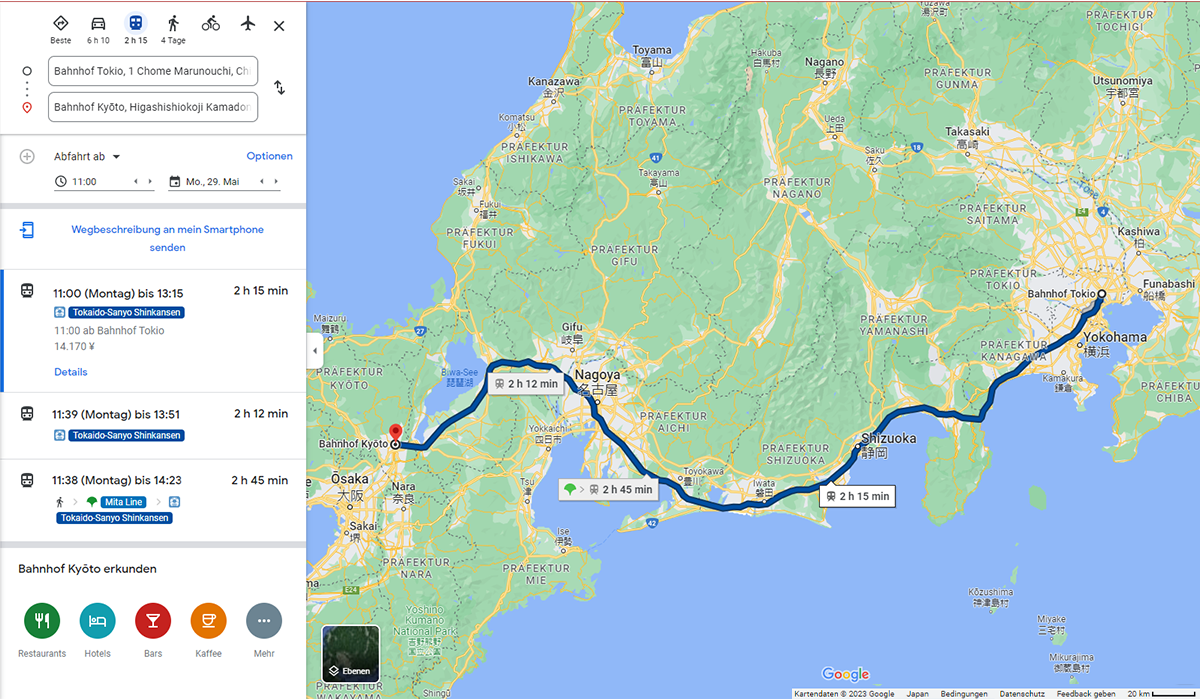
A Google Maps route planning screenshot showing the Shinkansen connection from Tokyo to Kyoto. The map fills most of the frame, covering central Japan from Tokyo Bay to the Osaka area, with prefecture labels such as Präfektur Shizuoka, Präfektur Aichi, and Präfektur Kyōto. A thick dark blue line traces the rail route along the Pacific coast, passing Yokohama, Shizuoka, and Nagoya before ending at a red pin at Kyoto Station. Small white badges along the route mark travel times of 2h 15 min, 2h 12 min, and 2h 45 min for different segments. The sidebar on the left is in German. At the top, mode icons compare options: car at 6h 10, train at 2h 15, walking at 4 days, plus cycling and flights. The start and destination fields read "Bahnhof Tokio, 1 Chome Marunouchi" and "Bahnhof Kyōto, Higashishiojokamado", with departure set to 11:00 on Monday, May 29. Below, three itinerary cards list Tokaido-Sanyo Shinkansen departures, the first running 11:00 to 13:15 for 2h 15 min at a fare of 14,170 ¥. At the bottom, a "Bahnhof Kyōto erkunden" section offers icons for restaurants, hotels, bars, and coffee near the destination.
A Google Maps route planning screenshot showing the Shinkansen connection from Tokyo to Kyoto. The map fills most of the frame, covering central Japan from Tokyo Bay to the Osaka area, with prefecture labels such as Präfektur Shizuoka, Präfektur Aichi, and Präfektur Kyōto. A thick dark blue line traces the rail route along the Pacific coast, passing Yokohama, Shizuoka, and Nagoya before ending at a red pin at Kyoto Station. Small white badges along the route mark travel times of 2h 15 min, 2h 12 min, and 2h 45 min for different segments.
The sidebar on the left is in German. At the top, mode icons compare options: car at 6h 10, train at 2h 15, walking at 4 days, plus cycling and flights. The start and destination fields read "Bahnhof Tokio, 1 Chome Marunouchi" and "Bahnhof Kyōto, Higashishiojokamado", with departure set to 11:00 on Monday, May 29. Below, three itinerary cards list Tokaido-Sanyo Shinkansen departures, the first running 11:00 to 13:15 for 2h 15 min at a fare of 14,170 ¥. At the bottom, a "Bahnhof Kyōto erkunden" section offers icons for restaurants, hotels, bars, and coffee near the destination.
Teks yang terlihat pada gambar
Beste
6 h 10
2 h 15
4 Tage
Bahnhof Tokio, 1 Chome Marunouchi, Ch
Bahnhof Kyōto, Higashiokioki Kamado
Abfahrt ab
Optionen
11:00
Mo., 29. Mai
Wegbeschreibung an mein Smartphone
senden
11:00 (Montag) bis 13:15
2 h 15 min
Tokaido-Sanyo Shinkansen
11:00 ab Bahnhof Tokio
14.170 ¥
Details
11:39 (Montag) bis 13:51
2 h 12 min
Tokaido-Sanyo Shinkansen
11:38 (Montag) bis 14:23
2 h 45 min
Mifa Line
Tokaido-Sanyo Shinkansen
Bahnhof Kyōto erkunden
Restaurants
Hotels
Bars
Kaffee
Mehr
Toyama
Hakuba
Nagano
Kanazawa
Komatsu
PRAFEKTUR TOYAMA
Utsunomiya
PRAFEKTUR TOCHIGI
PRAFEKTUR GUNMA
PRAFEKTUR ISHIKAWA
Takasaki
PRAFEKTUR FUKUI
Takayama
PRAFEKTUR NAGANO
PRAFEKTUR SAITAMA
Kashiwa
PRAFEKTUR GIFU
PRAFEKTUR YAMANASHI
Bahnhof Tokio
Funabashi
Gifu
Yokohama
PRAFEKTUR KANAGAWA
PRAFEKTUR KYOTO
Biwa-See
2 h 12 min
Nagoya
PRAFEKTUR AICHI
Bahnhof Kyōto
Yokkaichi
Shizuoka
PRAFEKTUR SHIZUOKA
Ōsaka
Nara
2 h 45 min
Toyokawa
2 h 15 min
Iwata
Sakai
PRAFEKTUR NARA
PRAFEKTUR MIE
Yoshino
Kumano Natio
nal Park
Kōzushima
Miyake
Mikurajima
Ebenen
Google
Kartendaten ©2023 Google Japan Bedingungen Datenschutz Feedback geben 20 km
Tempat Wisata Terbaik di Kyoto
Anda akhirnya tiba di Kyoto dan bertanya-tanya tempat wisata mana saja yang wajib dikunjungi? Berikut adalah 5 rekomendasi terbaik kami:
Arashiyama: Hutan Bambu
Jika Anda mendambakan alam dan ketenangan, Arashiyama adalah tempat yang sempurna untuk Anda. Di sini Anda akan menemukan hutan bambu yang bisa Anda jelajahi sambil berjalan-jalan.
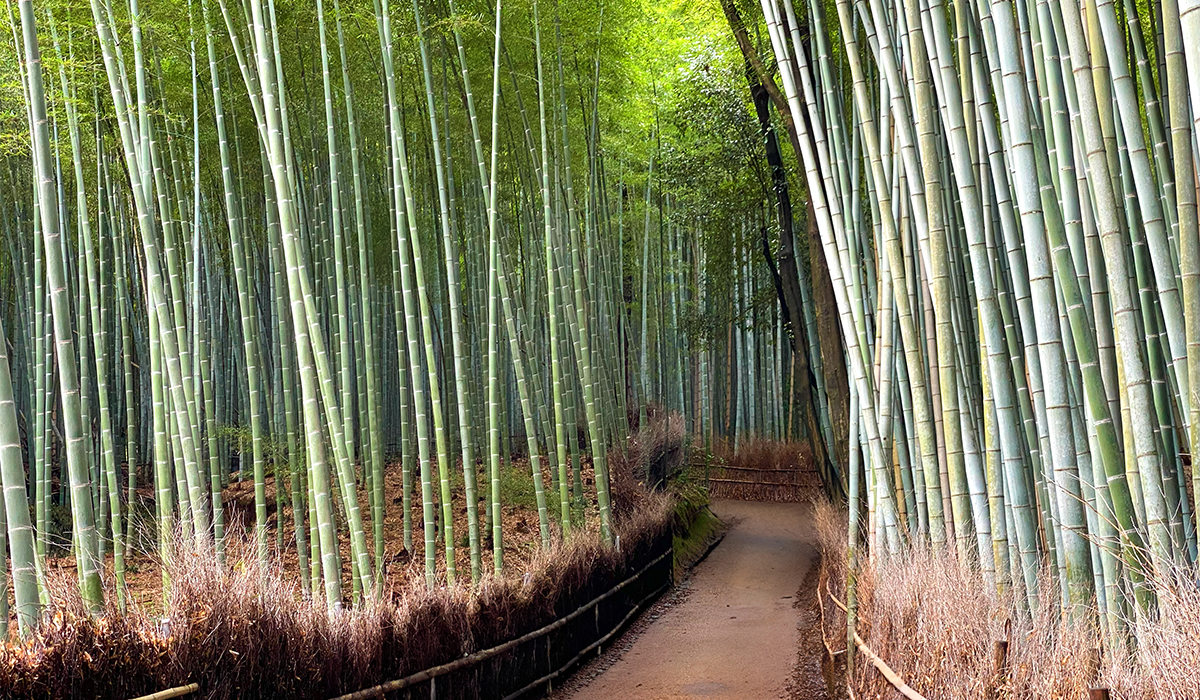
A narrow dirt path curves through the dense bamboo grove of Arashiyama in Kyoto. Tall, pale green bamboo stalks rise on both sides, leaning slightly inward and closing over the walkway so their leaves filter the light into a soft green glow. The path itself is empty and fades into the thicket a short distance ahead, while low fences woven from dried brush and bamboo line its edges.
A narrow dirt path curves through the dense bamboo grove of Arashiyama in Kyoto. Tall, pale green bamboo stalks rise on both sides, leaning slightly inward and closing over the walkway so their leaves filter the light into a soft green glow. The path itself is empty and fades into the thicket a short distance ahead, while low fences woven from dried brush and bamboo line its edges.
Teks yang terlihat pada gambar
There is no clearly readable text in this image.
Tur Jalan Kaki Arashiyama – Bambu, Kuil & Monyet
Temukan distrik Arashiyama di Kyoto melalui tur berpemandu: Berjalan-jalan melalui hutan bambu yang terkenal, kunjungi kuil Tenryu-ji, dan pendakian ke taman monyet dengan pemandangan kota. Ideal untuk pecinta alam dan budaya. (Agoda)
*Tautan afiliasi: Jika Anda memesan aktivitas melalui widget atau tautan saya di viator.com, saya menerima komisi kecil. Tidak ada biaya tambahan bagi Anda dan Anda mendukung blog saya. Saya sangat berterima kasih dan berharap Anda bersenang-senang saat bepergian (^_^)
Nishiki Market: Pasar Terkenal untuk Kuliner dan Suvenir
Jika Anda mencari pengalaman yang autentik, kunjungi Nishiki Market. Di sini Anda akan menemukan kuliner lokal dan suvenir yang bisa dibawa pulang.
Kami harap 5 rekomendasi terbaik kami membantu membuat perjalanan Anda ke Kyoto menjadi tak terlupakan.
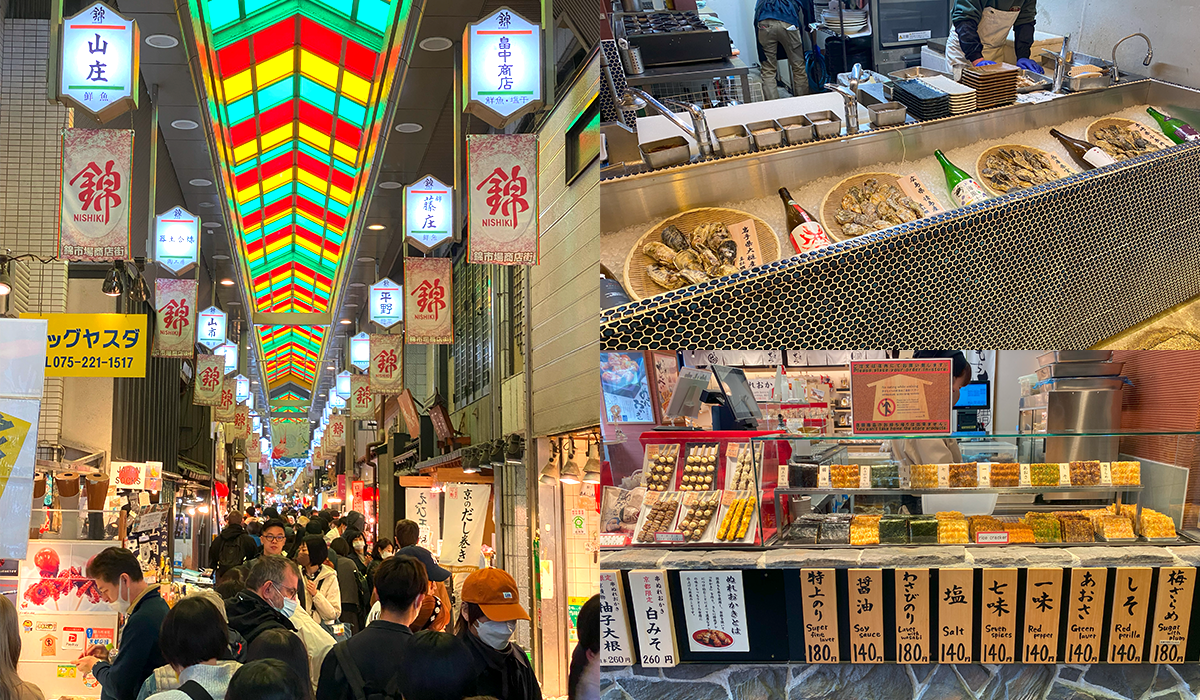
A side-by-side view of Nishiki Market in Kyoto, the covered shopping street known as "Kyoto's kitchen." The left photo looks down the narrow arcade, packed with shoppers in jackets, several wearing face masks. Overhead, the ceiling is lined with striking red, green, and yellow chevron-patterned light panels, and red-and-white fabric banners reading "NISHIKI" with the kanji 錦 hang alongside shop signs and paper lanterns on both sides. The right photo shows one of the market's food stalls up close. An ice-filled counter displays oysters and other shellfish on woven trays next to bottles of sake, with a vendor in an apron working behind it. In front, glass cases hold skewers and neat rows of bite-sized cubes in soy, seaweed, and sesame coatings, and a handwritten price board lists flavors like soy sauce, wasabi, salt, seven spice, and perilla starting at 140 yen.
A side-by-side view of Nishiki Market in Kyoto, the covered shopping street known as "Kyoto's kitchen." The left photo looks down the narrow arcade, packed with shoppers in jackets, several wearing face masks. Overhead, the ceiling is lined with striking red, green, and yellow chevron-patterned light panels, and red-and-white fabric banners reading "NISHIKI" with the kanji 錦 hang alongside shop signs and paper lanterns on both sides.
The right photo shows one of the market's food stalls up close. An ice-filled counter displays oysters and other shellfish on woven trays next to bottles of sake, with a vendor in an apron working behind it. In front, glass cases hold skewers and neat rows of bite-sized cubes in soy, seaweed, and sesame coatings, and a handwritten price board lists flavors like soy sauce, wasabi, salt, seven spice, and perilla starting at 140 yen.
Teks yang terlihat pada gambar
錦
山庄
鮮魚
錦
NISHIKI
錦市場商店街
昌早商店
鮮魚
グヤスタ
075-221-1517
京だし巻
白みそ 260円
特上 Sweet soy 180円
醬油 Soy sauce 140円
塩 Salt 140円
七味 Seven spices 140円
一味 Red pepper 140円
あさつき Green leek 140円
しそ Red perilla 140円
Sweet perilla 180円
Sungai Kamo 鴨川
Jika Anda mencari tempat relaksasi dan keindahan di Kyoto, maka Anda pasti harus mengunjungi Sungai Kamo. Ini merupakan perubahan yang menyenangkan dari kuil-kuil dan kesibukan kota.
Terutama di musim semi, ada beberapa titik di sepanjang sungai dengan pohon Sakura yang indah yang mengubah lanskap menjadi lautan warna pink dan putih yang memukau.
Meskipun ada banyak tempat wisata hebat di Kyoto, Sungai Kamo pasti layak untuk dikunjungi. Apakah Anda ingin bersepeda di sepanjang sungai atau sekadar berjalan-jalan, Anda pasti akan terkesan oleh keindahan tempat ini.
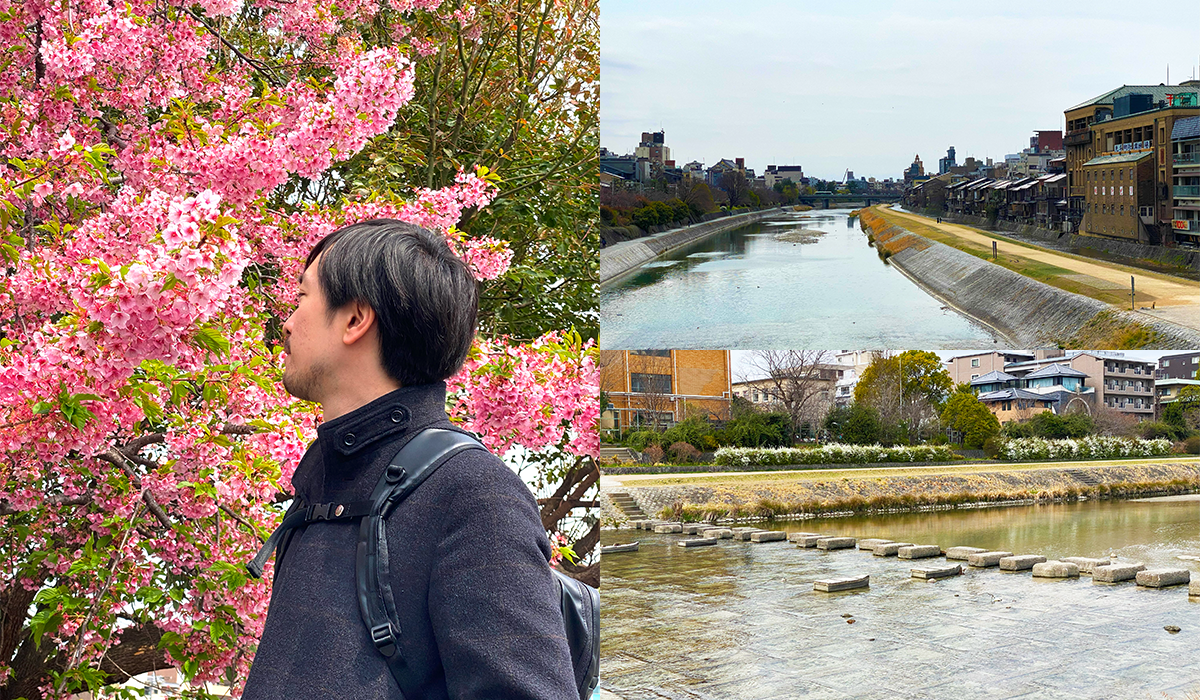
A collage of three photos from the Kamo River in Kyoto. On the left, a man in a dark wool coat with a black backpack stands in profile among dense clusters of pink cherry blossoms, looking up into the flowers. The right side shows the river itself in two views. The upper shot looks along the channelized river toward the city skyline, with sloped concrete embankments, a walking path, and low buildings lining the banks under an overcast sky. The lower shot captures the shallow water near the bank, where rows of square stepping stones cross the river, backed by apartment buildings, bare trees, and a strip of riverside greenery.
A collage of three photos from the Kamo River in Kyoto. On the left, a man in a dark wool coat with a black backpack stands in profile among dense clusters of pink cherry blossoms, looking up into the flowers.
The right side shows the river itself in two views. The upper shot looks along the channelized river toward the city skyline, with sloped concrete embankments, a walking path, and low buildings lining the banks under an overcast sky. The lower shot captures the shallow water near the bank, where rows of square stepping stones cross the river, backed by apartment buildings, bare trees, and a strip of riverside greenery.
Teks yang terlihat pada gambar
No clearly readable text.
Mengunjungi Kuil-Kuil di Kyoto
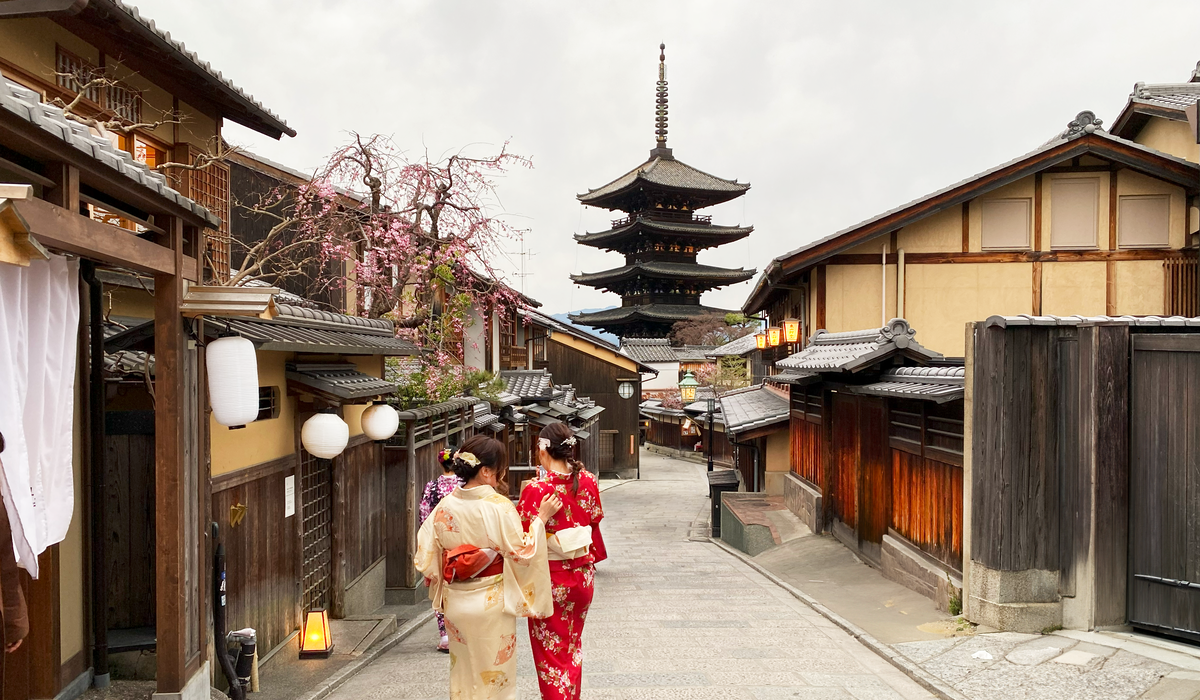
Goju-no-to Kyoto
Goju-no-to Kyoto adalah bangunan yang mengesankan di Kyoto. Bangunan ini adalah menara pagoda lima lantai yang merupakan bagian dari kuil Tō-ji. Menara ini dibangun pada tahun 1644 dan merupakan bagian penting dari warisan budaya kota. Menara ini paling dikenal karena ukuran dan keindahannya, serta banyaknya patung Buddha yang disimpan di dalamnya. Jika Anda berada di Kyoto, Anda pasti harus mengunjungi Goju-no-to Kyoto untuk melihat mercu tanda yang mengesankan ini.
Fushimi Inari-Taisha: Kuil Terkenal dengan Ribuan Gerbang Torii
Siap untuk pendakian yang mengesankan? Kunjungi Fushimi Inari-Taisha, kuil terkenal dengan ribuan gerbang Torii. Pendakiannya memakan waktu sekitar dua jam, tetapi pemandangan menakjubkan dan suasana uniknya menjadikannya pengalaman yang tak terlupakan.
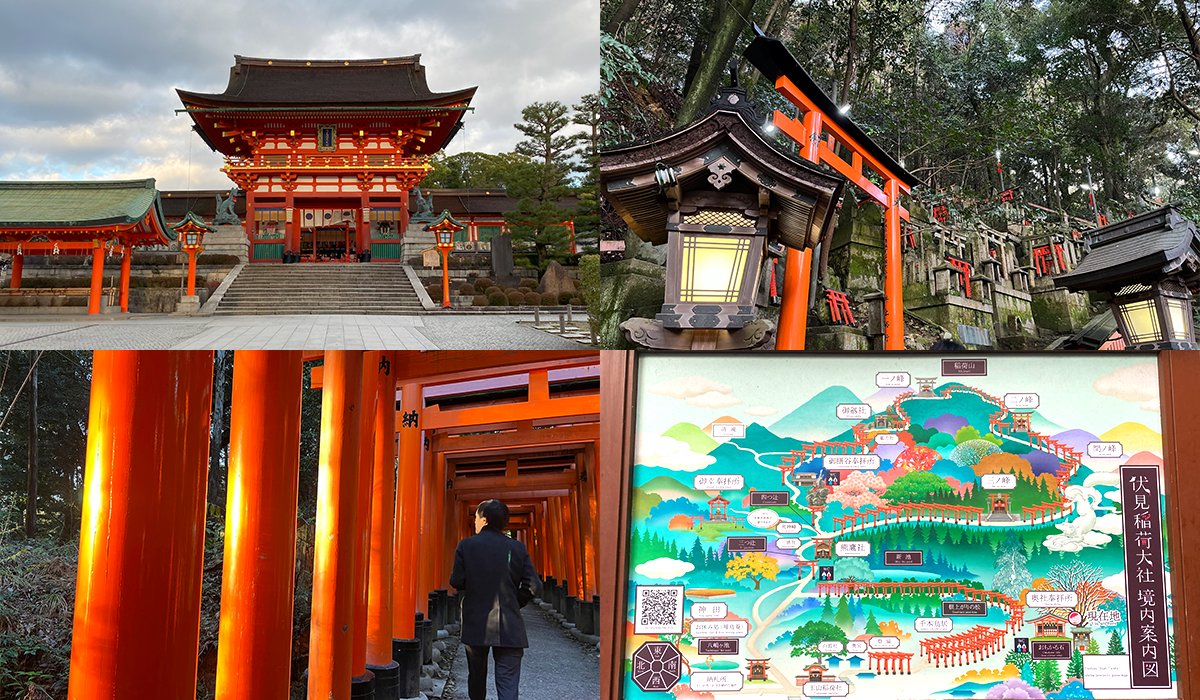
A four-photo collage from Fushimi Inari Taisha, the famous vermilion shrine in Kyoto. The top left photo shows the shrine's grand entrance gate, a two-story red structure with a sweeping dark roof, stone steps leading up to it, and lanterns flanking the approach under a cloudy sky. Top right, a tall torii gate rises from a wooded hillside dotted with small stone shrines and glowing lanterns tucked into the slope. The bottom left photo takes you inside the signature tunnel of closely packed orange torii gates, with a visitor in a dark coat walking away down the gravel path. The bottom right photo is an illustrated grounds map of the shrine complex, drawn in bright greens and reds, showing the hiking trails, sub-shrines, and the three peaks of Mount Inari with labels in Japanese.
A four-photo collage from Fushimi Inari Taisha, the famous vermilion shrine in Kyoto.
The top left photo shows the shrine's grand entrance gate, a two-story red structure with a sweeping dark roof, stone steps leading up to it, and lanterns flanking the approach under a cloudy sky. Top right, a tall torii gate rises from a wooded hillside dotted with small stone shrines and glowing lanterns tucked into the slope. The bottom left photo takes you inside the signature tunnel of closely packed orange torii gates, with a visitor in a dark coat walking away down the gravel path. The bottom right photo is an illustrated grounds map of the shrine complex, drawn in bright greens and reds, showing the hiking trails, sub-shrines, and the three peaks of Mount Inari with labels in Japanese.
Teks yang terlihat pada gambar
内
納
伏見稲荷大社境内案内図
稲荷山
一ノ峰
二ノ峰
三ノ峰
間ノ峰
四辻
手水舎
Fushimi Inari Taisha – Tur Setengah Hari Privat di Kyoto
Rasakan ikonnya Fushimi Inari Taisha dengan terowongan Torii merah yang tak berujung melalui tur setengah hari privat. Pemandu lokal akan menemani Anda menyusuri jalur-jalur bersejarah, menceritakan kisah di balik patung rubah (Kitsune), dan membawa Anda ke sudut-sudut tersembunyi yang jauh dari kerumunan wisatawan. Sempurna bagi siapa pun yang ingin menemukan jantung spiritual Kyoto secara intens dan personal.
Kinkaku-ji: Paviliun Emas
Paviliun Emas, juga dikenal sebagai Kinkaku-ji, adalah salah satu mercu tanda paling terkenal di Kyoto. Kuil ini dilapisi daun emas dan tercermin di air kolam yang tenang. Ini adalah suasana yang indah dan damai yang tidak boleh Anda lewatkan.
Tur Berpemandu di Kuil Kinkaku-ji
Tur berpemandu juga tersedia. Jika Anda ingin menjelajahi Kuil Kinkaku-ji bersama pemandu lokal, Anda dapat memesannya langsung di lokasi.
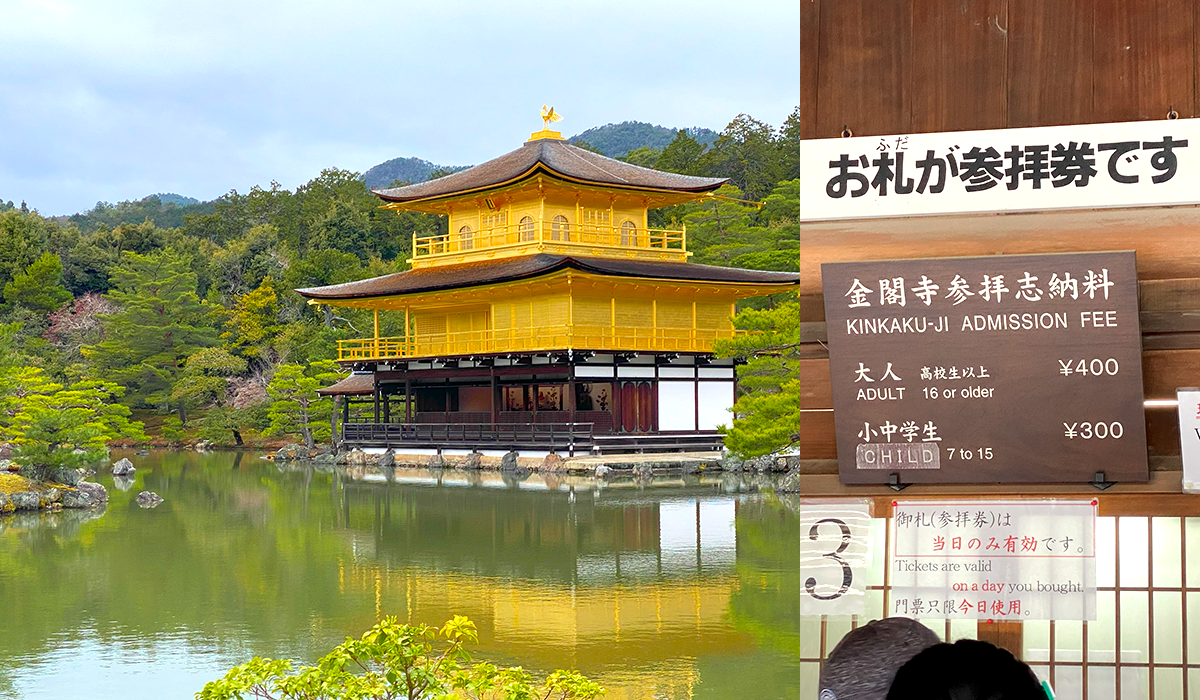
The photo is split into two scenes from a visit to Kinkaku-ji, the Golden Pavilion in Kyoto. On the left, the temple's top two floors gleam in gold leaf above a white-plastered ground level, standing at the edge of a still pond that mirrors the building almost perfectly. Dark tiled roofs stack in tiers, crowned by a small golden phoenix, and forested hills rise behind it under a grey sky. Pines and autumn-touched trees frame the shoreline. The right half shows the ticket counter. A wooden board lists the admission fee in Japanese and English: ¥400 for adults 16 and older, ¥300 for children 7 to 15. Above it, a white banner explains in Japanese that your receipt doubles as the admission ticket, and below, a smaller multilingual notice states tickets are valid only on the day of purchase. The top of a visitor's head is just visible at the bottom edge, waiting at window number 3.
The photo is split into two scenes from a visit to Kinkaku-ji, the Golden Pavilion in Kyoto. On the left, the temple's top two floors gleam in gold leaf above a white-plastered ground level, standing at the edge of a still pond that mirrors the building almost perfectly. Dark tiled roofs stack in tiers, crowned by a small golden phoenix, and forested hills rise behind it under a grey sky. Pines and autumn-touched trees frame the shoreline.
The right half shows the ticket counter. A wooden board lists the admission fee in Japanese and English: ¥400 for adults 16 and older, ¥300 for children 7 to 15. Above it, a white banner explains in Japanese that your receipt doubles as the admission ticket, and below, a smaller multilingual notice states tickets are valid only on the day of purchase. The top of a visitor's head is just visible at the bottom edge, waiting at window number 3.
Teks yang terlihat pada gambar
ふだ
お札が参拝券です
金閣寺参拝志納料
KINKAKU-JI ADMISSION FEE
大人 高校生以上 ¥400
ADULT 16 or older
小中学生 ¥300
CHILD 7 to 15
3
御札(参拝券)は
当日のみ有効です。
Tickets are valid
on a day you bought.
門票只限今日使用。
Kiyomizu-dera: Kuil di Atas Tiang
Kuil Kiyomizu-dera adalah permata lain di Kyoto. Kuil ini dibangun tanpa paku maupun sekrup dan berdiri di atas tiang. Dari sini Anda dapat menikmati pemandangan Kyoto yang menakjubkan.
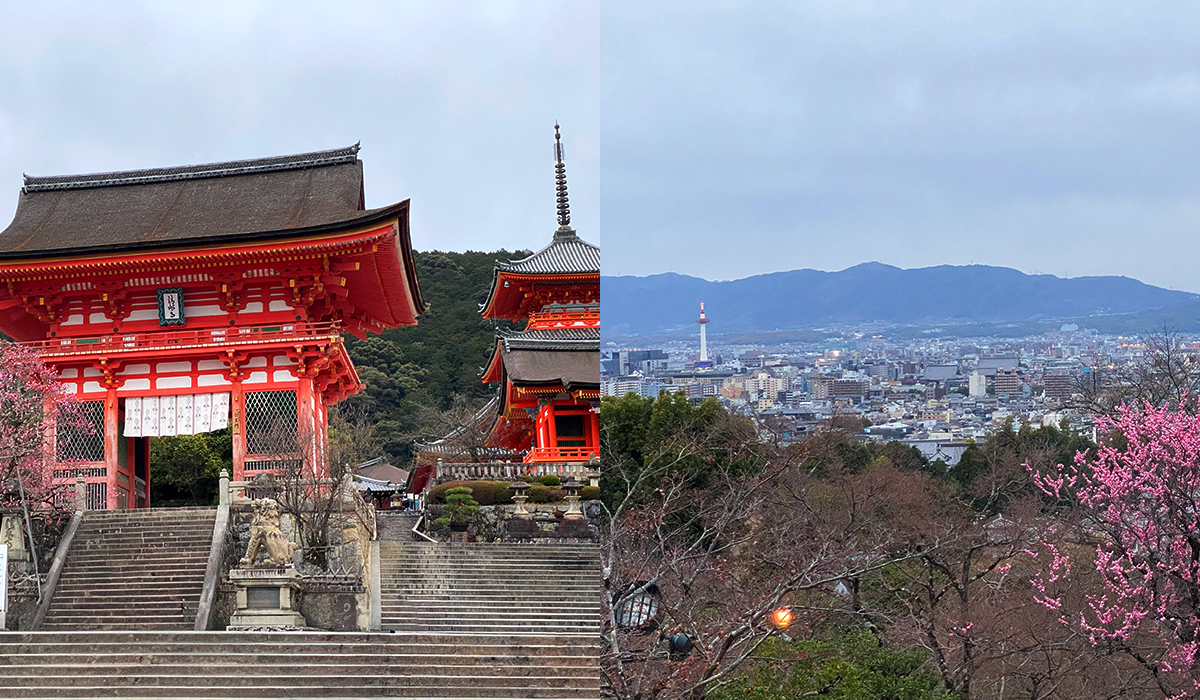
A two-part photo from Kyoto. On the left, the vermilion-red gate of Kiyomizu-dera temple rises above a wide flight of stone stairs. A guardian statue sits in a stone niche beside the steps, white banners hang in the gate's lower level, and the temple's three-storied pagoda stands on the slope behind it under an overcast sky, framed by dark green trees and pink blossoms. The right half shows the view from the hillside looking down over Kyoto: a dense spread of low city buildings stretching toward a band of blue-grey mountains, with the slender white-and-red Kyoto Tower rising near the center. Bare winter branches and bright pink plum blossoms fill the foreground.
A two-part photo from Kyoto. On the left, the vermilion-red gate of Kiyomizu-dera temple rises above a wide flight of stone stairs. A guardian statue sits in a stone niche beside the steps, white banners hang in the gate's lower level, and the temple's three-storied pagoda stands on the slope behind it under an overcast sky, framed by dark green trees and pink blossoms.
The right half shows the view from the hillside looking down over Kyoto: a dense spread of low city buildings stretching toward a band of blue-grey mountains, with the slender white-and-red Kyoto Tower rising near the center. Bare winter branches and bright pink plum blossoms fill the foreground.
Teks yang terlihat pada gambar
No text is clearly readable in the image.
Menjelajahi Kyoto dengan Sepeda
Jika Anda ingin menjelajahi Kyoto dengan cara yang istimewa, maka bersepeda menyusuri kota adalah apa yang Anda butuhkan. Dengan sepeda, Anda dapat dengan cepat dan mudah berpindah dari satu atraksi ke atraksi berikutnya dan merasakan keindahan kota dari sudut pandang yang berbeda. Kami merekomendasikan menyewa sepeda dan mengambil salah satu dari banyak rute sepeda yang melintasi kota. Dengan begitu, Anda dapat mengunjungi kuil-kuil terkenal, bersepeda melalui gang-gang sempit, dan merasakan budaya Jepang dari dekat. Tur sepeda melintasi Kyoto adalah pengalaman yang tak terlupakan dan cara yang hebat untuk menjelajahi kota.
Kyoto dan Bunga Sakura: Hanami di Ibukota Kuno
Kyoto indah di segala musim, tetapi saat musim bunga sakura, kota ini berubah menjadi negeri dongeng yang sesungguhnya.
Ada banyak tempat di Kyoto di mana Anda dapat mengagumi bunga sakura. Salah satu yang paling terkenal adalah Philosopher's Path, tempat Anda dapat berjalan di bawah pohon sakura yang sedang berbunga dan menikmati keindahan alam. Jalur ini dinamai menurut nama filsuf Nishida Kitaro, yang sering berjalan di sini untuk berpikir dan bermeditasi.
Jelajahi Kyoto Bersama Lokal – Tur Privat Sesuai Keinginan
Rasakan Kyoto seperti penduduk lokal: Tur privat ini disesuaikan secara individual dengan minat Anda—baik kuil-kuil terkenal, gang-gang tersembunyi, maupun sorotan kuliner. Pemandu Anda akan merencanakan rute bersama Anda sehingga Anda dapat menjelajahi kota sesuai keinginan Anda. Sempurna bagi siapa pun yang ingin merasakan Kyoto secara autentik dan fleksibel.
Sorotan Kyoto – Tur Sehari Privat
Sorotan Kyoto – Tur Sehari Privat: Jelajahi tempat-tempat paling terkenal di Kyoto dalam satu hari bersama pemandu privat—dari Paviliun Emas, hutan bambu Arashiyama, hingga Fushimi Inari dan distrik Gion. Sempurna untuk mengenal kota dengan cara yang ringkas dan tanpa stres.
*Tautan afiliasi: Jika Anda memesan aktivitas melalui widget atau tautan saya di viator.com, saya menerima komisi kecil. Tidak ada biaya tambahan bagi Anda dan Anda mendukung blog saya. Saya sangat berterima kasih dan berharap Anda bersenang-senang saat bepergian (^_^)
*Tautan afiliasi: Jika Anda memesan aktivitas melalui widget atau tautan saya di viator.com, saya menerima komisi kecil. Tidak ada biaya tambahan bagi Anda dan Anda mendukung blog saya. Saya sangat berterima kasih dan berharap Anda bersenang-senang saat bepergian (^_^)



Komentar