

विस्तृत विवरण
TL;DR
टोक्यो से सिर्फ 70 मिनट दूर ओगावा में कोई मशहूर मंदिर या फोटो स्पॉट नहीं है। यहाँ की असली खासियत है 1,300 साल पुरानी वाशी कागज़ बनाने की परंपरा और 203 मीटर का रोलर स्लाइड। अगर आपको शांत, बिना भीड़ वाला जापान चाहिए, तो यही टूर है।अनुक्रमणिका:

At dusk in Ogawa, a small Japanese town spreads across a valley floor, its low houses and shops with tiled and metal roofs clustering along quiet streets. Utility poles and a handful of larger flat-roofed buildings break up the residential patchwork, and a dark car sits parked near a small blue shed in the foreground. Behind the town, layers of forested hills give way to bigger blue-grey mountains that fill the horizon. The sky above is a soft wash of pale orange and grey, with the last light of day catching a faint cloud near the ridgeline, giving the whole scene a calm, end-of-summer evening feel.
At dusk in Ogawa, a small Japanese town spreads across a valley floor, its low houses and shops with tiled and metal roofs clustering along quiet streets. Utility poles and a handful of larger flat-roofed buildings break up the residential patchwork, and a dark car sits parked near a small blue shed in the foreground. Behind the town, layers of forested hills give way to bigger blue-grey mountains that fill the horizon. The sky above is a soft wash of pale orange and grey, with the last light of day catching a faint cloud near the ridgeline, giving the whole scene a calm, end-of-summer evening feel.
छवि में दिखाई देने वाला पाठ
No clearly readable text.
टोक्यो से सत्तर मिनट की दूरी पर एक ऐसा शहर है जिसे अधिकतर आगंतुक कभी नहीं देख पाएंगे। इसका कारण यह नहीं है कि यह छुपा हुआ है—बल्कि इसलिए क्योंकि वहां ऐसा कुछ नहीं है जो ध्यान आकर्षित करे। कोई प्रसिद्ध मंदिर नहीं। कोई वायरल फोटो स्पॉट नहीं। कोई वजह नहीं जाने की, जब तक आपके पास खुद कोई वजह न हो।
यह यात्रा उसी वजह के लिए है।
ओगावा-माची एक छोटी सी घाटी में बसा है, जो चिचीबु पर्वत की बाहरी श्रृंखलाओं से घिरा है। नदियाँ जंगलों की घाटियों को काटती हैं। पुराने लकड़ी के घर चुपचाप सड़कों के किनारे खड़े हैं। यहां की हवा अलग महकती है—ज्यादा साफ, और किसी तरह कुछ पुरानी। यह वही जापान है जो बुलेट ट्रेन के आने से पहले था, कनवीनियंस स्टोर्स के पहले, पर्यटन के लिए सबकुछ ऑप्टिमाइज़ होने से पहले।
वाशी की कला: 1,300 वर्षों की कागज़ बनाना परंपरा
ओगावा की कागज़ बनाना परंपरा 1,300 वर्षों से भी अधिक पुरानी है। यह तकनीक—जिसे होसोकावा-शी कहते हैं—सिर्फ तीन प्राकृतिक सामग्रियों का इस्तेमाल करती है: कोज़ो (मुलबेरी की छाल), स्थानीय नदियों का पानी, और सर्दियों की ठंड। 2014 में, इस शिल्प को [1] के रूप में सूचीबद्ध किया गया।
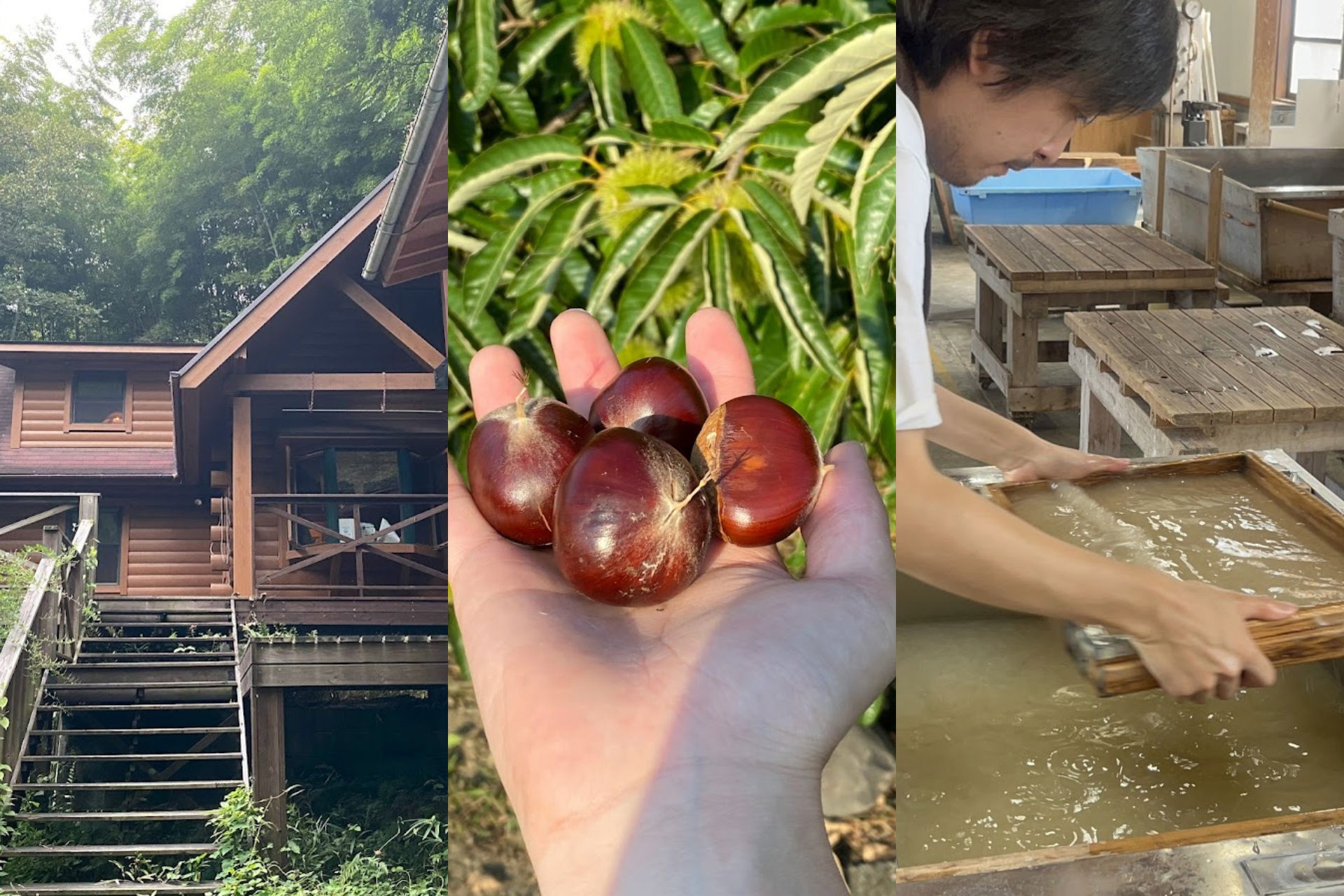
अगर आपकी रुचि हो, तो हम स्थानीय वर्कशॉप में जाकर खुद कागज़ बनाना आज़मा सकते हैं। यह प्रक्रिया अप्रत्याशित रूप से ध्यानमग्न करने वाली होती है: लकड़ी के फ्रेम को दूधिया रेशे के घोल में डुबाना, सही लय ढूँढना, और पतली परत को बनते देखना। आपके हाथ वह महसूस करते हैं, जो दिमाग पूरी तरह समझ नहीं पाता।

In a wood-beamed papermaking workshop, two men lean over a large stainless vat filled with cloudy pulp and water, lifting a wooden papermaking frame together. The older man, in a blue t-shirt, guides the younger one, who wears a white shirt with a towel slung around his neck, as they tilt the bamboo screen so the watery fibers spread evenly across it. A white ridge of pulp forms along one edge of the frame mid-motion. The space around them has the feel of a working craft studio: slatted wooden ceiling beams with strip lights, wooden work tables, blue plastic tubs, and a large window letting in daylight on the right. This is the traditional sheet-forming step of washi papermaking in Ogawa, where visitors try the craft under an instructor's hands.
In a wood-beamed papermaking workshop, two men lean over a large stainless vat filled with cloudy pulp and water, lifting a wooden papermaking frame together. The older man, in a blue t-shirt, guides the younger one, who wears a white shirt with a towel slung around his neck, as they tilt the bamboo screen so the watery fibers spread evenly across it. A white ridge of pulp forms along one edge of the frame mid-motion.
The space around them has the feel of a working craft studio: slatted wooden ceiling beams with strip lights, wooden work tables, blue plastic tubs, and a large window letting in daylight on the right. This is the traditional sheet-forming step of washi papermaking in Ogawa, where visitors try the craft under an instructor's hands.
छवि में दिखाई देने वाला पाठ
No text is clearly readable in the image.

A man in a blue t-shirt holds up a large wooden frame fitted with a finely woven bamboo screen, the traditional sieve used in Japanese washi papermaking. His hand is damp, and he lifts the frame above the deep vats that dominate the workshop: one lined with stainless steel, another painted blue, both set into long wooden stations where sheets of paper are formed. The room is a working craft studio with dark wood ceiling beams, bamboo poles, and drying racks hanging from above. Daylight pours in through a wall of windows, and shelves of plastic tubs and buckets line the back wall. The setting is a traditional washi paper workshop in Ogawa, where the pulp-and-water mixture is scooped and swayed in these screens to build each sheet by hand.
A man in a blue t-shirt holds up a large wooden frame fitted with a finely woven bamboo screen, the traditional sieve used in Japanese washi papermaking. His hand is damp, and he lifts the frame above the deep vats that dominate the workshop: one lined with stainless steel, another painted blue, both set into long wooden stations where sheets of paper are formed.
The room is a working craft studio with dark wood ceiling beams, bamboo poles, and drying racks hanging from above. Daylight pours in through a wall of windows, and shelves of plastic tubs and buckets line the back wall. The setting is a traditional washi paper workshop in Ogawa, where the pulp-and-water mixture is scooped and swayed in these screens to build each sheet by hand.
छवि में दिखाई देने वाला पाठ
No clearly readable text.

Freshly made sheets of washi paper rest on a wide wooden drying board in a traditional papermaking workshop. The pale, cream-colored sheets are still damp, laid over plastic sheeting: a small stack of rectangular pages on the left and one large, softly curving sheet on the right, its edges slightly wavy from drying. The board sits on a worn wooden worktable, and in the lower right corner a wooden tool handle juts into the frame. Behind the table, several flat papermaking brushes with pale bristles hang from the wall by their handles, next to a household washing machine that papermakers often use to press water from new sheets. The whole scene reads as the quiet aftermath of a morning's work in a washi workshop.
Freshly made sheets of washi paper rest on a wide wooden drying board in a traditional papermaking workshop. The pale, cream-colored sheets are still damp, laid over plastic sheeting: a small stack of rectangular pages on the left and one large, softly curving sheet on the right, its edges slightly wavy from drying. The board sits on a worn wooden worktable, and in the lower right corner a wooden tool handle juts into the frame. Behind the table, several flat papermaking brushes with pale bristles hang from the wall by their handles, next to a household washing machine that papermakers often use to press water from new sheets. The whole scene reads as the quiet aftermath of a morning's work in a washi workshop.
छवि में दिखाई देने वाला पाठ
45
अंत में, आपके हाथों का बना एक वाशी कागज होगा—अपूर्ण, व्यक्तिगत, और पूरी तरह आपका, जिसे आप घर लेकर जा सकते हैं। स्थानीय कारीगर पीढ़ियों से यह करते आ रहे हैं। कुछ वर्कशॉप में कागज़ के सैकड़ों साल पुराने नमूने प्रदर्शित किए गए हैं, जो आज भी संपूर्ण और सुंदर हैं। ऐसा कई बार विनम्र बना देने वाला अहसास होता है, जब आप कुछ ऐसा पकड़े होते हैं, जो आपसे भी ज़्यादा समय टिकेगा।

At a washi paper museum in Ogawa, a dark wooden display cabinet with a glass top holds an arrangement of traditional Japanese papers. The top layer is laid out like a paper merchant's stock: an open book of thick blank white sheets at the center, patterned folders in indigo and black stenciled designs beside it, a rolled scroll tied with cord, and stacks of aged, yellowed sheets and envelopes marked with Japanese calligraphy, including a label for a daifuku-chō, the old-style merchant account book. Below the glass, two shallow drawers stand open to show more of the collection: neat stacks of pink, olive, and gold papers, heavily textured cream sheets, small printed booklets, and a fat roll of white paper. The case presents washi as both a working material and a decorated craft, spanning plain writing stock to ornate patterned covers.
At a washi paper museum in Ogawa, a dark wooden display cabinet with a glass top holds an arrangement of traditional Japanese papers. The top layer is laid out like a paper merchant's stock: an open book of thick blank white sheets at the center, patterned folders in indigo and black stenciled designs beside it, a rolled scroll tied with cord, and stacks of aged, yellowed sheets and envelopes marked with Japanese calligraphy, including a label for a daifuku-chō, the old-style merchant account book. Below the glass, two shallow drawers stand open to show more of the collection: neat stacks of pink, olive, and gold papers, heavily textured cream sheets, small printed booklets, and a fat roll of white paper. The case presents washi as both a working material and a decorated craft, spanning plain writing stock to ornate patterned covers.
छवि में दिखाई देने वाला पाठ
武州封筒
大福帳

A large round wooden tea table sits on tatami flooring in a traditional Japanese room, set for a gathering. The table is dressed with handmade washi paper placemats in colorful tie-dye patterns, each holding a small ceramic cup and a plate. In the center, a rough paper-lined basket holds lacquerware bowls, and a rustic wooden tray carries a few wrapped candies. A teapot and a tall bottle wrapped in decorative dyed paper stand on a bamboo mat, next to a silver kettle. Four small drinking glasses are lined up in front, and a remote control rests at the table's edge. The scene has the warm, lived-in feel of a farmhouse tea service, likely part of a washi paper experience in the Ogawa area.
A large round wooden tea table sits on tatami flooring in a traditional Japanese room, set for a gathering. The table is dressed with handmade washi paper placemats in colorful tie-dye patterns, each holding a small ceramic cup and a plate. In the center, a rough paper-lined basket holds lacquerware bowls, and a rustic wooden tray carries a few wrapped candies. A teapot and a tall bottle wrapped in decorative dyed paper stand on a bamboo mat, next to a silver kettle. Four small drinking glasses are lined up in front, and a remote control rests at the table's edge. The scene has the warm, lived-in feel of a farmhouse tea service, likely part of a washi paper experience in the Ogawa area.
छवि में दिखाई देने वाला पाठ
No text is clearly readable in this image.
पहाड़, जंगल और प्रसिद्ध रोलर स्लाइड
ओगावा की खासियतों में से एक है माउंट सengen हिल व्यू पार्क, जो शहर से ऊपर स्थित है और एक आसान जंगल रास्ते से पहुँचा जा सकता है। अगर आप हल्की ट्रेकिंग के मूड में हैं (करीब 30–40 मिनट), तो इसका इनाम केवल दृश्य नहीं—बल्कि जो ऊपर आपका इंतज़ार करता है, वह है।
वह स्लाइड।
203 मीटर लंबी, यह जापान की सबसे लंबी रोलर स्लाइड्स में से एक है। आप एक मैट पकड़िए, बैठ जाइए, और गुरुत्वाकर्षण को अपना काम करने दीजिए। यह हास्यास्पद है। लेकिन सचमुच मजेदार है—वह मासूम आनंद, जो बड़े शायद ही कभी महसूस करते हैं। स्लाइड जंगल के बीच ढलानों में जाती है, और दो मिनट तक आप... बस फिसल रहे होते हैं। न मोबाइल। न कोई जिम्मेदारी। बस पेड़ जो आपके सामने से धुँधले गुज़रते हैं। मौसम अनुकूल रहा तो यह दिन का यादगार हिस्सा हो सकता है।

A long, turquoise roller slide winds down a forested hillside on tall green posts, curving from the left of the frame toward the lower right. At the upper left stands the wooden start platform, a two-story structure with large windows and a roof that shelters the top of the slide. The slide is railed along its whole length and supported on slender columns above dense summer greenery. Beyond the trees, the view opens onto a sprawling town in the valley below, with layers of hazy blue mountains on the horizon under a partly cloudy sky. Trunks of leafy trees frame the foreground, giving the scene a quiet, wooded overlook feel.
A long, turquoise roller slide winds down a forested hillside on tall green posts, curving from the left of the frame toward the lower right. At the upper left stands the wooden start platform, a two-story structure with large windows and a roof that shelters the top of the slide. The slide is railed along its whole length and supported on slender columns above dense summer greenery.
Beyond the trees, the view opens onto a sprawling town in the valley below, with layers of hazy blue mountains on the horizon under a partly cloudy sky. Trunks of leafy trees frame the foreground, giving the scene a quiet, wooded overlook feel.
छवि में दिखाई देने वाला पाठ
No clearly readable text.

A young man in a black t-shirt and dark shorts rides a long roller slide down a grassy slope, holding a small sled board flat across his lap as he glides toward the camera. The slide runs the full length of the frame, its green side rails framing rows of pale metal rollers, and it curves out of sight at the top of the hill behind him. Thick summer growth lines both sides: tall grass at the rails, dense trees beyond, with one tree near the crest covered in bright pink crepe myrtle blossoms. The scene is the leafy hillside of Ogawa's giant roller slide, a quiet green setting that makes the ride's length the clear centerpiece.
A young man in a black t-shirt and dark shorts rides a long roller slide down a grassy slope, holding a small sled board flat across his lap as he glides toward the camera. The slide runs the full length of the frame, its green side rails framing rows of pale metal rollers, and it curves out of sight at the top of the hill behind him. Thick summer growth lines both sides: tall grass at the rails, dense trees beyond, with one tree near the crest covered in bright pink crepe myrtle blossoms. The scene is the leafy hillside of Ogawa's giant roller slide, a quiet green setting that makes the ride's length the clear centerpiece.
छवि में दिखाई देने वाला पाठ
No text is clearly readable in the image.

A hand holds up a white plastic sliding board, the kind used for riding down a roller slide, gripping the rounded handle cutout at its top. The sled, with its wide flat body and narrow neck, is viewed from behind and fills the left side of the frame. It stands on the dark wooden floor of an open observation tower built from heavy brown timbers with X-shaped cross bracing and slatted railings. Through the tower's open sides, sunlit green trees fill the view, and a faint hint of distant hills and countryside shows beyond the foliage, suggesting the slide starts high on a hillside. This is the sled for the giant roller slide in Ogawa, held at the top before the ride down.
A hand holds up a white plastic sliding board, the kind used for riding down a roller slide, gripping the rounded handle cutout at its top. The sled, with its wide flat body and narrow neck, is viewed from behind and fills the left side of the frame. It stands on the dark wooden floor of an open observation tower built from heavy brown timbers with X-shaped cross bracing and slatted railings. Through the tower's open sides, sunlit green trees fill the view, and a faint hint of distant hills and countryside shows beyond the foliage, suggesting the slide starts high on a hillside. This is the sled for the giant roller slide in Ogawa, held at the top before the ride down.
छवि में दिखाई देने वाला पाठ
No clearly readable text is present in the image.
स्थानीय खाना: साधारण, ईमानदार, स्वादिष्ट
ओगावा कोई खाने-पीने के लिए चर्चित जगह नहीं है। यहाँ कोई मिशलिन स्टार नहीं, कोई सेलिब्रिटी शेफ नहीं। इसकी बजाय, यहाँ वर्षों से—कभी-कभी पीढ़ियों से—एक जैसी डिश बनाने वाले लोग हैं।
आपकी पसंद पर निर्भर करते हुए हम हाथ से बने उदोन—मोटे गेहूं के नूडल्स, जो सरल शोरबे में परोसे जाते हैं और जितने अच्छे लगते हैं, उससे कहीं अधिक स्वादिष्ट होते हैं—चख सकते हैं। या फिर Kare Raisu, जो धीरे-धीरे पकाया जाता है और बिना किसी दिखावे के परोसा जाता है। जहां चलना है, यह उस दिन, आपकी पसंद और कौन सी जगह खुली है, उस पर निर्भर करता है। यही अनुभव की खूबी है: वहाँ खाना जहां स्थानीय खाते हैं, वहां नहीं जहां पर्यटकों के लिए जरूरत से ज्यादा सजावट होती है।

A generous bowl of udon sits on a dark wooden tray in a restaurant in Ogawa, Japan. The thick white noodles are mostly hidden under an abundance of toppings: a tall mound of golden, crispy tempura rises above the rim, while a bright green shiso leaf, a scatter of shredded nori seaweed, wispy pink bonito flakes, and a raw egg yolk rest across the center. The bowl itself is white ceramic with fine vertical blue stripes around its sides. At the lower left edge of the frame, a small pile of pale grated condiment with a tiny ceramic spoon sits ready as a garnish, and the dark wood of the table around the tray gives the meal a warm, traditional feel.
A generous bowl of udon sits on a dark wooden tray in a restaurant in Ogawa, Japan. The thick white noodles are mostly hidden under an abundance of toppings: a tall mound of golden, crispy tempura rises above the rim, while a bright green shiso leaf, a scatter of shredded nori seaweed, wispy pink bonito flakes, and a raw egg yolk rest across the center. The bowl itself is white ceramic with fine vertical blue stripes around its sides. At the lower left edge of the frame, a small pile of pale grated condiment with a tiny ceramic spoon sits ready as a garnish, and the dark wood of the table around the tray gives the meal a warm, traditional feel.
छवि में दिखाई देने वाला पाठ
No text is clearly readable in the image.

A generous curry platter is served on a wide, pale green stoneware plate set on a dark wooden table at a restaurant in Ogawa, Japan. Shredded, spiced meat curry is mounded over a large blanched green leaf, studded with three glossy quail eggs and finished with pink peppercorns and crumbled dried herbs. Around it are arranged smaller components: a minced keema style curry topped with a dark berry, a scoop of creamy white rice porridge, golden curried chickpeas, a small pile of shredded cabbage and carrot with a dark purple wrapped bite, a dollop of orange pickle, and a white ramekin of clear, herb flecked broth. Amber curry sauce pools around the meat, and water glasses with an iced drink sit softly out of focus at the top of the frame.
A generous curry platter is served on a wide, pale green stoneware plate set on a dark wooden table at a restaurant in Ogawa, Japan. Shredded, spiced meat curry is mounded over a large blanched green leaf, studded with three glossy quail eggs and finished with pink peppercorns and crumbled dried herbs. Around it are arranged smaller components: a minced keema style curry topped with a dark berry, a scoop of creamy white rice porridge, golden curried chickpeas, a small pile of shredded cabbage and carrot with a dark purple wrapped bite, a dollop of orange pickle, and a white ramekin of clear, herb flecked broth. Amber curry sauce pools around the meat, and water glasses with an iced drink sit softly out of focus at the top of the frame.
छवि में दिखाई देने वाला पाठ
There is no clearly readable text in this image.
शांत कोने: मंदिर एवं छुपे मार्ग
गतिविधियों के बीच, हमेशा भटकने के लिए जगह है—और ओगावा में, यह सबसे खास खोजें करवाता है। यहाँ छोटे मंदिर हैं जो घरों के बीच छुपे हुए हैं, रास्ते हैं जो नदियों तक ले जाते हैं, दृश्य हैं जो अचानक खुल जाते हैं। इनमें से कुछ भी पर्यटकों के लिए दर्शाया या साइनबोर्ड पर नहीं लिखा। अधिकतर तो ऐसे, जिन्हें आप जानकर न देखें तो बिना रुके निकल जाएँगे।
यदि आप चाहें, तो मैं आपको अपने पसंदीदा शांत कोनों में ले जा सकता हूँ। या फिर हम बस अपनी जिज्ञासा का अनुसरण करें और देखें दिन हमें कहाँ ले जाता है।

A two-story wooden temple bell tower stands at the center of the frame in Ogawa, Japan, framed by forested green hills. The dark timber structure has two tiers of tiled roofs with upswept eaves, and a bronze bell hangs in the open upper level beneath a plaque bearing Japanese calligraphy. A concrete path leads straight through the open ground floor of the tower, flanked by two stone lanterns and low trimmed shrubs. To the right, a tree with soft pink blossoms leans over a white-walled temple building with a dark tiled roof, while a wooden information signboard stands in a planted bed to the left. The wide gravel courtyard in the foreground and the quiet, tree-covered hills behind give the scene the calm, rural temple atmosphere of the Ogawa countryside.
A two-story wooden temple bell tower stands at the center of the frame in Ogawa, Japan, framed by forested green hills. The dark timber structure has two tiers of tiled roofs with upswept eaves, and a bronze bell hangs in the open upper level beneath a plaque bearing Japanese calligraphy. A concrete path leads straight through the open ground floor of the tower, flanked by two stone lanterns and low trimmed shrubs. To the right, a tree with soft pink blossoms leans over a white-walled temple building with a dark tiled roof, while a wooden information signboard stands in a planted bed to the left. The wide gravel courtyard in the foreground and the quiet, tree-covered hills behind give the scene the calm, rural temple atmosphere of the Ogawa countryside.
छवि में दिखाई देने वाला पाठ
瑞龍山
यह यात्रा सभी के लिए नहीं है
मैं सीधे शब्दों में कहूँ: यदि आप मुख्य आकर्षण ढूँढ रहे हैं, तो आपके लिए यह जगह नहीं। यहाँ कोई हजारों तोरी गेट वाला मंदिर नहीं है। कोई सोशल मीडिया पर ट्रेंड होता दृश्य नहीं है। ऐसा कुछ नहीं जिसे सूचीबद्ध किया जाए।
ओगावा जो देता है, वह धीमा है। सूक्ष्म है। यह गीले कागज के रेशों का स्पर्श है। स्थानीय ब्रेवरी में किण्वित चावल की खुशबू। बस हवा और पानी की आवाज़। ये चीज़ें तस्वीरों में नहीं आतीं। ये कंटेंट नहीं बनतीं। लेकिन ये आपके साथ रह जाती हैं।
यह यात्रा किनके लिए है
| यह यात्रा आपके लिए है अगर... | यह यात्रा आपके लिए नहीं है अगर... |
|---|---|
| आप पारंपरिक शिल्प और निर्माण प्रक्रियाओं के प्रति जिज्ञासु हैं | आप प्रसिद्ध स्थलों को देखना चाहते हैं |
| आप प्रकृति, ट्रेकिंग और बाहर रहना पसंद करते हैं | आप शहरी क्षेत्रों में ही रहना पसंद करते हैं |
| आप धीमे, शांत दिनों में सहज हैं | आपको लगातार उत्तेजना चाहिए |
| आप जापान को टूरिस्ट ट्रेल से परे अनुभव करना चाहते हैं | आप इंस्टाग्राम योग्य यात्रा कार्यक्रम चाहते हैं |
| आप लंबे समय तक पैदल चलने और खड़े रहने में सहज हैं | आपके पास महत्वपूर्ण गतिशीलता संबंधी परेशानियाँ हैं |
व्यवहारिक जानकारी
क्या लाएँ
- असमतल और जंगल के रास्तों पर चलने के लिए आरामदायक जूते
- ऐसे कपड़े जो गीले हो सकते हैं (वाशी बनाना पानी के संपर्क में लाता है)
- स्लाइड के लिए लंबी पैंट पहनना बेहतर है
- नकद (कुछ स्थानीय दुकानों पर कार्ड स्वीकार नहीं किया जाता)
शारीरिक आवश्यकताएँ
इस यात्रा में लगभग 3–4 घंटे चलना व खड़े रहना होगा, जिसमें स्लाइड तक 30–40 मिनट का जंगल ट्रेक शामिल है। रास्ता में कुछ कच्चे पगडंडियाँ और सीढ़ियाँ भी हैं। यदि आपको गतिशीलता को लेकर कोई चिंता है, तो बुकिंग से पहले जरूर संपर्क करें।
मौसम
यात्राएँ बारिश या धूप दोनों में होती हैं—ओगावा किसी भी मौसम में खूबसूरत है। पहाड़ों पर धुंध, और पुराने लकड़ी की खुशबू में बारिश। हम मौसम के अनुसार दिनचर्या में बदलाव करेंगे: हल्की बारिश में स्लाइड चालू रहती है, लेकिन तेज़ तूफान में बंद हो जाती है। कुछ गतिविधियाँ कुछ मौसम में बेहतर होती हैं, उसी अनुसार हम समायोजन करेंगे। उपयुक्त कपड़े लाएँ।
ओगावा के बारे में और पढ़ें
क्या आप यात्रा में शामिल होने से पहले ओगावा के बारे में और जानना चाहते हैं? मेरी विस्तार से यात्रा गाइड देखें:
स्रोत:
- यूनेस्को अमूर्त सांस्कृतिक धरोहर: https://ich.unesco.org/en/RL/01001...


टिप्पणियाँ