अनुक्रमणिका:
TL;DR
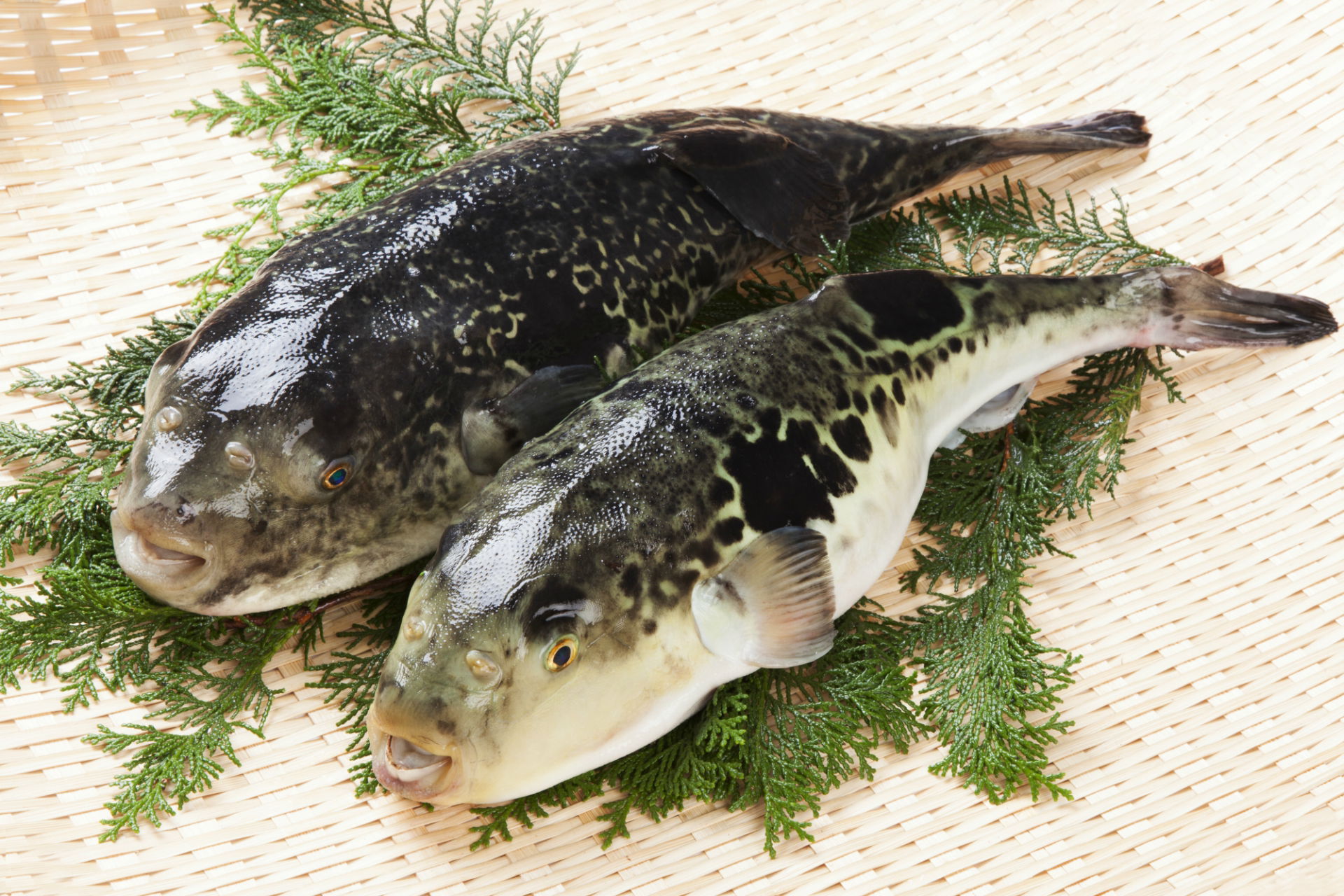
फुगु यानी जहरीली पफरफिश को जापान में बड़े चाव से खाया जाता है। इसका ज़हर ज्यादातर लीवर और अंडाशय में होता है और उसका कोई एंटीडोट नहीं है, लेकिन सिर्फ लाइसेंसधारी शेफ ही इसे सुरक्षित तरीके से बना सकते हैं। यह सैशिमी, करागे या सूप के रूप में खाया जाता है और जनवरी-फरवरी में इसका स्वाद सबसे बढ़िया माना जाता है।फुगु (जापानी: 河豚) एक पफरफिश है, जिसके शरीर के कुछ हिस्से अत्यंत विषैले होते हैं। शायद इसी वजह से यह जापान में इतना लोकप्रिय है? फुगु का स्वाद भी बहुत अच्छा माना जाता है! मैंने फुगु को एक बार सुशी में खाया था, लेकिन उसका स्वाद ज्यादा स्पष्ट नहीं महसूस हुआ। हालांकि, सूप में फुगु खासतौर पर स्वादिष्ट होता है।
फुगु का सीजन अक्टूबर से फरवरी तक होता है। लेकिन जनवरी और फरवरी के बीच फुगु सबसे बेहतरीन माना जाता है। इसका मांस बहुत घना होता है और इसमें अन्य सफेद मछलियों की तुलना में प्रोटीन अधिक तथा वसा कम होती है। पहले ज्यादातर जंगली फुगु ही खाया जाता था, लेकिन अब बहुत सी फुगु-फार्म्स हो गई हैं। खास तौर पर पाले गए फार्म-फुगु तेजी से लोकप्रिय हो रहा है, क्योंकि यह एक तरफ तो सस्ता है, दूसरी तरफ जंगली फुगु के मुकाबले कम खतरनाक भी है। दरअसल, पफरफिश का जहर उसकी खुराक पर निर्भर करता है कि वह कितना तीव्र विकसित होगा।
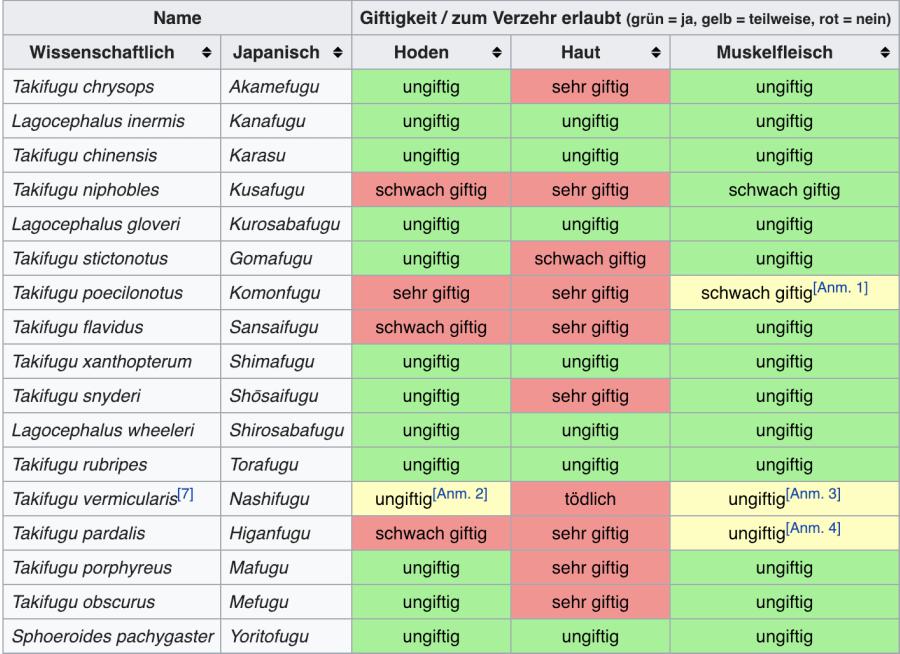
The image is a German-language table comparing the toxicity of different fugu (pufferfish) species by body part. It has 18 rows, one per species, each showing the scientific name (for example *Takifugu rubripes*) next to its Japanese name (Torafugu). The header explains the color code: green means a part is safe to eat, yellow means only partly allowed, red means not allowed. The three toxicity columns cover Hoden (testes), Haut (skin), and Muskelfleisch (muscle meat). Most muscle meat cells are green, which reflects why the fish is eaten at all, but the skin column is dotted with red "sehr giftig" (highly toxic) entries, especially across the Takifugu species. A few rows stand out: Nashifugu (*Takifugu vermicularis*) has skin marked "tödlich" (lethal), Komonfugu has highly toxic testes, and Kanafugu (*Lagocephalus inermis*) and Torafugu are green across all three parts, making them the safest choices. Yellow cells with footnote references mark a handful of exceptions where edibility depends on preparation or specific conditions.
The image is a German-language table comparing the toxicity of different fugu (pufferfish) species by body part. It has 18 rows, one per species, each showing the scientific name (for example *Takifugu rubripes*) next to its Japanese name (Torafugu). The header explains the color code: green means a part is safe to eat, yellow means only partly allowed, red means not allowed. The three toxicity columns cover Hoden (testes), Haut (skin), and Muskelfleisch (muscle meat).
Most muscle meat cells are green, which reflects why the fish is eaten at all, but the skin column is dotted with red "sehr giftig" (highly toxic) entries, especially across the Takifugu species. A few rows stand out: Nashifugu (*Takifugu vermicularis*) has skin marked "tödlich" (lethal), Komonfugu has highly toxic testes, and Kanafugu (*Lagocephalus inermis*) and Torafugu are green across all three parts, making them the safest choices. Yellow cells with footnote references mark a handful of exceptions where edibility depends on preparation or specific conditions.
छवि में दिखाई देने वाला पाठ
| Name | | Giftigkeit / zum Verzehr erlaubt (grün = ja, gelb = teilweise, rot = nein) | | |
|---|---|---|---|---|
| **Wissenschaftlich** | **Japanisch** | **Hoden** | **Haut** | **Muskelfleisch** |
| Takifugu chrysops | Akamefugu | ungiftig | sehr giftig | ungiftig |
| Lagocephalus inermis | Kanafugu | ungiftig | ungiftig | ungiftig |
| Takifugu chinensis | Karasu | ungiftig | ungiftig | ungiftig |
| Takifugu niphobles | Kusafugu | schwach giftig | sehr giftig | schwach giftig |
| Lagocephalus gloveri | Kurosabafugu | ungiftig | ungiftig | ungiftig |
| Takifugu stictonotus | Gomafugu | ungiftig | schwach giftig | ungiftig |
| Takifugu poecilonotus | Komonfugu | sehr giftig | sehr giftig | schwach giftig[Anm. 1] |
| Takifugu flavidus | Sansaifugu | schwach giftig | sehr giftig | ungiftig |
| Takifugu xanthopterum | Shimafugu | ungiftig | ungiftig | ungiftig |
| Takifugu snyderi | Shōsaifugu | ungiftig | sehr giftig | ungiftig |
| Lagocephalus wheeleri | Shirosabafugu | ungiftig | ungiftig | ungiftig |
| Takifugu rubripes | Torafugu | ungiftig | ungiftig | ungiftig |
| Takifugu vermicularis[7] | Nashifugu | ungiftig[Anm. 2] | tödlich | ungiftig[Anm. 3] |
| Takifugu pardalis | Higanfugu | schwach giftig | sehr giftig | ungiftig[Anm. 4] |
| Takifugu porphyreus | Mafugu | ungiftig | sehr giftig | ungiftig |
| Takifugu obscurus | Mefugu | ungiftig | sehr giftig | ungiftig |
| Sphoeroides pachygaster | Yoritofugu | ungiftig | ungiftig | ungiftig |
स्रोत: https://de.wikipedia.org/wiki/Fugu
फुगु में क्या ख़तरनाक है?
पफरफिश की त्वचा और आंतरिक अंग विषैले होते हैं। सबसे ज्यादा जहर अंडाशय और जिगर में होता है। जापान में मछलियों का जिगर आमतौर पर खूब खाया जाता है। लेकिन फुगु की त्वचा और अंगों में एक न्यूरोटॉक्सिन पाया जाता है, जिसे खाने से तुरंत मौत हो सकती है, क्योंकि यह नसों और मांसपेशियों को लकवा मार देता है – और इससे दिल भी रुक सकता है। इसका कोई एंटी डोट भी नहीं है! वैसे, नर फुगु के शुक्राणु ग्रंथि (होडे़) अविषैली होते हैं और इन्हें डेलिकेसी माना जाता है!
पहले जब लोग गलत तरीके से तैयार फुगु खाने से मर जाते थे, तो अब सरकार ने फुगु के व्यापार और उसकी तैयारी पर नियंत्रण लगाना शुरू कर दिया है। रेस्तरां या शेफ, जो फुगु पकाना और परोसना चाहते हैं, उनके पास एक विशेष लाइसेंस होना जरूरी है, जो केवल एक कोर्स के दौरान ही मिलता है। इस कोर्स का अंत में एक टेस्ट भी होता है। केवल इस आधिकारिक लाइसेंस के साथ ही आप कच्चा फुगु खरीद और तैयार कर सकते हैं। यह भी सख्त नियम है कि फुगु के आंतरिक अंगों का निष्पादन कैसे किया जाए। इन कानूनों की वजह से जापान में फुगु विषाक्तता से होने वाली मौतें लगभग शून्य हो गई हैं।
फुगु के व्यंजन
फुगु को उदाहरण के लिए कच्चा साशिमी के रूप में खाया जा सकता है। इस दौरान मछली को बहुत पतला काटा जाता है, जिससे वह लगभग पारदर्शी दिखाई देती है। चॉपस्टिक्स से पांच से दस फुगु-साशिमी के टुकड़े लिए जाते हैं, उन्हें सोया सॉस में डुबोकर खाया जाता है। आप फुगु को तला हुआ भी खा सकते हैं। इसे तब कराआगे कहा जाता है (हमारे ब्लॉग पर चिकन-कराआगे की रेसिपी भी है)। आप फुगु को सूप (नाबे) के रूप में भी खा सकते हैं – इसमें इसका मांस बहुत कोमल माना जाता है!
टिप्पणियाँ
मैं इसे कहाँ खरीद सकता हूँ?
Hallo Melanie, जर्मनी में फुगु पाना बहुत मुश्किल है और मुझे इसमें कोई अनुभव भी नहीं है, अर्थात मैंने अब तक जर्मनी में कभी नहीं खरीदा। जापान में फुगु को कभी-कभी सामान्य सुपरमार्केट में भी खरीदा जा सकता है, क्योंकि बहुत से लोगों के पास लाइसेंस होता है। प्यारे शुभकामनाएँ, र्यूसेई