
अनुक्रमणिका:
TL;DR
मिसो एक किण्वित सोयाबीन पेस्ट है जो सूप और नूडल्स में गहरा उमामी स्वाद जोड़ता है, लेकिन सबसे ज़रूरी बात यह है कि इसे कभी उबालें नहीं, हमेशा आँच बंद करने के बाद ही डालें ताकि इसका स्वाद और पोषक तत्व बने रहें।किण्वित पेस्ट का इस्तेमाल कई जापानी व्यंजनों में किया जाता है। आप इसे सूप, सॉस या डिप के रूप में पा सकते हैं। मिसो विशेष रूप से सूप में बहुउपयोगी है, जैसे मिसो शिरू या प्रसिद्ध नूडल सूप रेमन। मिसो-रेमन में शोरबा सोयाबीन पेस्ट से बनाया जाता है। लेकिन ऐसे कई अन्य रेमन भी हैं जिनमें मिसो का उपयोग किया जाता है। यह पेस्ट डिप के रूप में भी उपयुक्त है। अपनी उच्च लवणता के कारण, मिसो अच्छी तरह से संरक्षित रहता है। इसलिए, मिसो शिरू (मिसो सूप) बनाते समय, आमतौर पर इस नमकीन पेस्ट की केवल थोड़ी-सी मात्रा का ही प्रयोग किया जाता है।
मिसो से बनी डिशेज़
मिसो बेहद बहुमुखी है और जापानी खानपान में इसकी केंद्रीय भूमिका है। सबसे प्रसिद्ध व्यंजन शायद मिसो शिरू है, वह क्लासिक मिसो सूप जो लगभग हर जापानी नाश्ते में परोसा जाता है। टोफू, वाकामे सीवीड और हरे प्याज के साथ, यह दिन की शुरुआत के लिए हल्का ठीक उसी तरह पौष्टिक तरीका है। नूडल पसंद करने वालों के लिए, मिसो रेमन एक ज़रूर आज़माने लायक है: शोरबा को इसका समृद्ध, उमामी स्वाद मिलता है सही मात्रा में मिसो पेस्ट से, जिसे अक्सर डाशी के साथ मिलाया जाता है। रेमन की एक सरल रेसिपी मेरे ब्लॉग पर मिल सकती है।
लेकिन मिसो केवल सूप तक ही सीमित नहीं है। मिसो क्यूरी एक ताजा साइड डिश है जिसमें खीरे की स्टिक मिसो डिप के साथ परोसी जाती है। अगर आप मछली पसंद करते हैं तो मिसो बटर के साथ साल्मन ट्राय करें, जिसमें पेस्ट उमामी ग्लेज़ बना देता है। मिसो नाबे (जापानी हॉटपॉट) में भी बहुत अच्छा काम करता है, शोरबे को गहराई देता है। अन्य क्लासिक व्यंजन हैं मिसो डेंगाकू (ग्रिल्ड टोफू या बैंगन पर मीठा मिसो ग्लेज), टोंजिरू (सब्जियों के साथ पोर्क मिसो सूप), और मिसो मैरीनेटेड ग्रिल्ड फिश जैसे सैइक्यो याकी। अगर आप जापानी किण्वन में रूचि रखते हैं, तो मिसो इस अद्भुत पाक परंपरा को जानने की बढ़िया शुरुआत है।
जरूरी खाना पकाने की टिप: मिसो को कभी भी उबालें नहीं!
मिसो के साथ पकाने में सबसे जरूरी बात: इसे कभी भी न उबालें! मिसो शिरू या अन्य डिशेज़ बनाते समय, मिसो पेस्ट हमेशा अंत में ही डालें और तुरंत बर्तन को आँच से हटा लें। उबालने से इसका नाज़ुक स्वाद और मूल्यवान पोषक गुण, विशेषकर बिना पाश्चुरीकरण वाले मिसो में होने वाले लाभकारी एन्ज़ाइम्स और प्रोबायोटिक्स नष्ट हो जाते हैं। बस पेस्ट को गरम (लेकिन उबलता नहीं) तरल पदार्थ में घोलें जब तक वह पूरी तरह डिज़ॉल्व न हो जाए। इस तरह आपको पूरी उमामी स्वाद और सभी स्वास्थ्य लाभ मिलेंगे।
मिसो पेस्ट के प्रकार
मिसो को उसके घटकों, रंग, और स्वाद के अनुसार अलग-अलग श्रेणियों में बांटा जाता है। बेस सामग्री हमेशा सोयाबीन होती है। ममेमिसो (豆味噌 = बीन मिसो) में केवल सोयाबीन का उपयोग होता है। कोमेमिसो (米味噌 = राइस मिसो) में चावल भी मिलाया जाता है, और मुगीमिसो (麦味噌 = ग्रेन/बार्ली मिसो) में जौ इस्तेमाल होता है। रंग में भी विभिन्नताएँ हैं, जो मुख्य रूप से किण्वन की अवधि पर निर्भर करती हैं। मिसो को आप कई सालों, यहाँ तक कि दशकों तक भी स्टोर कर सकते हैं। केवल एक बात ध्यान रखने की है - पेस्ट को एयरटाइट स्टोर करें। स्टोरेज टाइम के मामले में एक बात पर ध्यान दें: वर्षों के साथ स्वाद की तीव्रता बढ़ती जाती है।
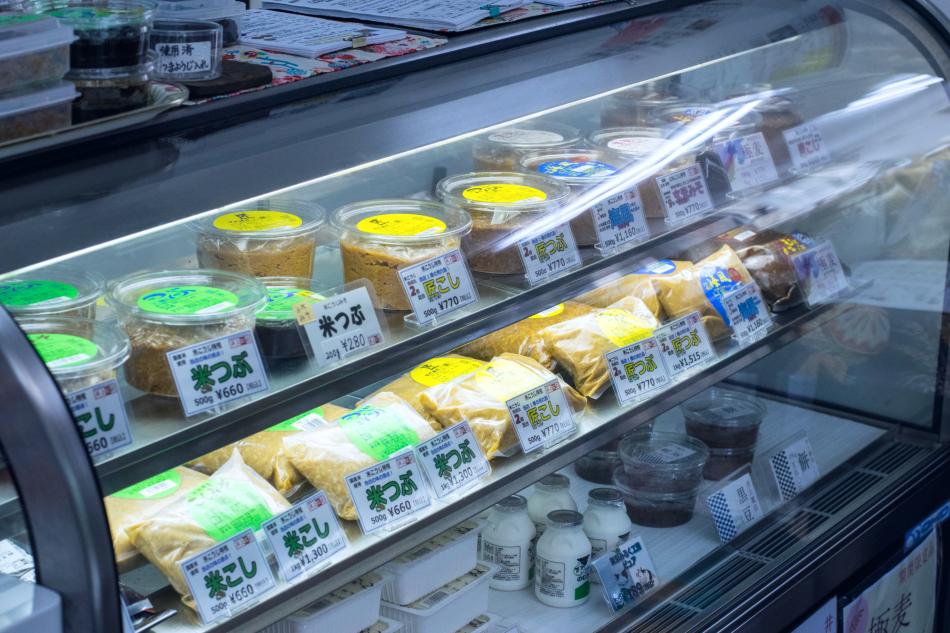
A refrigerated display case in a Japanese specialty shop, packed with tubs and bags of miso. Clear plastic containers sit on angled glass shelves under a bright strip of light, each topped with a hand-lettered price tag in Japanese. The labels distinguish varieties by their koji: rice koji (米こうじ) and barley koji (麦こうじ), with prices like ¥660 and ¥770 for 500-gram tubs and darker, pricier pastes on the upper shelves reaching over ¥1,800. The lower shelves hold soft pouches of pale yellow miso, some with green and yellow stickers, alongside small plastic bottles of a milky white drink and a few tubs of dark paste. The curved glass front reflects the light, giving the case the look of a deli counter, but everything inside is soybean paste in its many forms.
A refrigerated display case in a Japanese specialty shop, packed with tubs and bags of miso. Clear plastic containers sit on angled glass shelves under a bright strip of light, each topped with a hand-lettered price tag in Japanese. The labels distinguish varieties by their koji: rice koji (米こうじ) and barley koji (麦こうじ), with prices like ¥660 and ¥770 for 500-gram tubs and darker, pricier pastes on the upper shelves reaching over ¥1,800. The lower shelves hold soft pouches of pale yellow miso, some with green and yellow stickers, alongside small plastic bottles of a milky white drink and a few tubs of dark paste. The curved glass front reflects the light, giving the case the look of a deli counter, but everything inside is soybean paste in its many forms.
छवि में दिखाई देने वाला पाठ
味噌汁
米こうじ 500g ¥280
麹こし 500g ¥770
米こうじ 500g ¥770
米こうじ 500g ¥660
麹こうじ 500g ¥1,150
麹こし 500g ¥770
米こうじ 500g ¥1,300
米こうじ 500g ¥660
米こうじ 500g ¥770
麹こうじ 500g ¥1,150
豆
सबसे शुरू में, पेस्ट सफेद होता है जिसे शिरो-मिसो (白味噌) कहते हैं। इसमें अब भी सोयाबीन का स्वाद आ सकता है, इसलिए यह काफी न्यूट्रल रहता है। लाल मिसो को आका-मिसो (赤味噌) कहा जाता है और यह फर्मेंटेशन के बीच के चरण में होता है। मिसो जो बहुत लंबे समय तक फर्मेंट होता है वह और भी गहरा हो जाता है और उसका स्वाद अधिक तीव्र हो जाता है। एक प्रसिद्ध उदाहरण है हाचो-मिसो (八丁味噌) जो आइची से आता है और कम से कम दो साल के लिए किण्वित किया जाता है। रंग और स्वाद के भी अन्य रूप हैं: तीखा (करा-मिसो 辛味噌), मीठा (अमा-मिसो 甘味噌) और अलग-अलग प्रकारों का मिश्रण (आवासे-मिसो 合わせ味噌)।
मिसो कितना स्वास्थ्यवर्धक है?
सामान्यतः, मिसो अन्य किण्वित खाद्य पदार्थों की तरह काफी स्वास्थ्यवर्धक है। पेस्ट में प्रोटीन, विटामिन B2, विटामिन E, विभिन्न एन्ज़ाइम, आइसोफ्लेवोन्स, कोलीन और लेसिथिन जैसे पोषक तत्व शामिल होते हैं। हालांकि, यह केवल ताजे मिसो पर लागू होता है। चूंकि इसका स्वाद लगातार बदलता रहता है, ताजा किस्म सुपरमार्केट में बेचना उपयुक्त नहीं है। ऐसा न हो इसलिए मिसो को अक्सर पाश्चुरीकृत किया जाता है। इसके बाद, मिसो पेस्ट अब किण्वित नहीं होता और वही स्वाद बनाए रखता है। पाश्चुरीकरण के दौरान उत्पाद खूब अधिक तापमान पर गर्म किया जाता है जिससे कई पोषक तत्व नष्ट हो जाते हैं। इसलिए आपको ताजा किस्म ही चुननी चाहिए। अगर आप इसे प्राप्त कर सकते हैं, तो यह इतना सस्ता नहीं है। इसका शेल्फ लाइफ भी छोटा होता है। आपको इसे जल्दी उपयोग करना होता है वरना खोलने के बाद फफूंदी लगने का खतरा होता है। या शायद कभी-कभी आप जानबूझकर अधिक तीव्र स्वाद चाहते हों।
अक्सर पूछे जाने वाले सवाल: मिसो के बारे में
क्या मिसो वेगन है? हाँ, खुद मिसो पूरी तरह वेगन है क्योंकि इसमें केवल सोयाबीन, कोजी, नमक और कभी-कभी चावल या जौ ही होते हैं। हालांकि, रेडीमेड मिसो उत्पादों से सावधान रहें: कुछ विशेष रूप से मिसो शिरू के लिए डिजाइन किए गए होते हैं और पहले से ही डाशी (फिश स्टॉक) शामिल कर सकते हैं। अगर आप पूरी तरह पौधों पर आधारित विकल्प चाहते हैं तो हमेशा इन्ग्रेडियेंट्स जरूर देखें।
खुला हुआ मिसो कितने समय तक चलेगा? इसकी उच्च लवणता के कारण, मिसो बेहद टिकाऊ होता है। आप इसे रेफ्रिजरेटर में कई महीनों तक, कभी-कभी एक साल तक भी खुला हुआ स्टोर कर सकते हैं। बस ध्यान रखें कि हमेशा साफ चमच का इस्तेमाल करें और कंटेनर अच्छी तरह से बंद रखें। अगर सतह पर फफूंदी दिखे तो मिसो को तुरंत फेंक दें।
क्या आप मिसो को फ्रीज कर सकते हैं? हाँ, आप मिसो को फ्रिज़ में रख सकते हैं! क्योंकि मिसो में बहुत कम पानी होता है, यह बिल्कुल सख्त नहीं जमता और फ्रीजर से निकालकर भी आसानी से भागों में बाँटा जा सकता है। फ्रीज़िंग शेल्फ लाइफ बढ़ा सकता है और यदि बिना-पाश्चुरीकृत मिसो है तो यह फर्मेंटेशन प्रक्रिया को लगभग पूरी तरह रोक सकता है। यह प्रैक्टिकल है यदि आप एक खास तीव्रता वाला स्वाद संरक्षित रखना चाहते हैं।
एक वर्कशॉप: खुद बनाएं मिसो

Blocks of koji rice are stacked in neat rows behind the glass of a refrigerated display case. Each block is wrapped in plastic and looks like a dense, crumbly pale beige cake, with the fine fuzzy texture of mold-grown rice visible across the surface. Two rows of the cakes sit on white shelves, and a faint reflection in the glass shows the space in front of the case. A strip of Japanese labels runs along the bottom edge of the case. It reads as a shop or production setting in Japan where koji, the fermented rice used as the base for miso and other Japanese ferments, is sold by the block.
Blocks of koji rice are stacked in neat rows behind the glass of a refrigerated display case. Each block is wrapped in plastic and looks like a dense, crumbly pale beige cake, with the fine fuzzy texture of mold-grown rice visible across the surface. Two rows of the cakes sit on white shelves, and a faint reflection in the glass shows the space in front of the case. A strip of Japanese labels runs along the bottom edge of the case. It reads as a shop or production setting in Japan where koji, the fermented rice used as the base for miso and other Japanese ferments, is sold by the block.
छवि में दिखाई देने वाला पाठ
*No text is clearly readable in this image.*
जापान में कुकिंग क्लासेज़ काफी आम बात है। यहाँ तक कि स्कूली बच्चों के लिए भी यह नियमित पढ़ाई से एक अच्छा बदलाव माना जाता है। मिसो वर्कशॉप में हिस्सा लेना बिल्कुल फायदे का है, क्योंकि इस लोकप्रिय पेस्ट के निर्माण की जानकारी ज़्यादातर लोगों को नहीं होती। आपको कुछ भी लाने की आवश्यकता नहीं है, सभी सामग्री और बर्तन उपलब्ध कराए जाते हैं। एक बात ध्यान रखें: ये वर्कशॉप सामान्यतः केवल जापानी में होती हैं, तो भाषा की बुनियादी समझ या ट्रांसलेशन ऐप मददगार हो सकता है।
यहां एक बात पहले से जान लें: यह वर्कशॉप मेहनत भरी होती है और आप अपना बनाया मिसो तुरंत चख नहीं सकते। आप अपनी बनाई मिसो पेस्ट का इस्तेमाल कम से कम आधे साल या शायद पूरे साल बाद ही कर पाएँगे।
तो आइए, वर्कशॉप को समझते हैं। सबसे पहले हाथों से सोयाबीन को मैश करके प्यूरी बनाई जाती है। फिर इसे छोटे बॉल्स में बनाकर एक बाल्टी में लेयर किया जाता है। इसके बाद डाला जाता है कोजी: ये वो फंगस हैं जो किण्वन को संभव बनाते हैं। इनका काम बस खाने के वक्त या पाश्चुरीकरण से रोका जाता है। फिर नमक डाला जाता है, जो स्वाद और संरक्षण दोनों के लिए जरूरी है। अंत में बाल्टी को सील कर दिया जाता है।
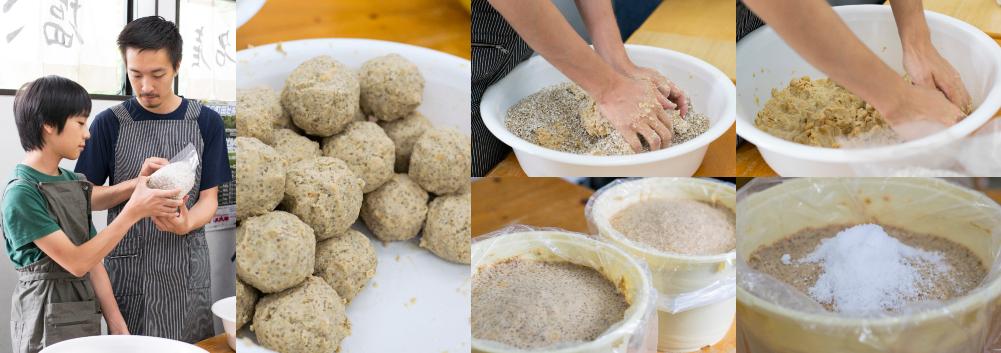
This collage shows a hands-on miso-making course in six photos. In the largest shot, a young man in a striped apron holds up a clear bag of koji rice while a boy in a green shirt and dark apron watches closely, both standing in a workshop with Japanese calligraphy on the wall behind them. The other panels follow the process. Hands knead a coarse, grainy mixture of mashed soybeans and koji in wide white basins, working it until it comes together. A bowl holds finished miso rolled into uniform round balls. The last two photos show the paste packed into plastic fermentation containers, smoothed down, sealed with plastic wrap, and topped with a mound of coarse white salt, ready for storage.
This collage shows a hands-on miso-making course in six photos. In the largest shot, a young man in a striped apron holds up a clear bag of koji rice while a boy in a green shirt and dark apron watches closely, both standing in a workshop with Japanese calligraphy on the wall behind them.
The other panels follow the process. Hands knead a coarse, grainy mixture of mashed soybeans and koji in wide white basins, working it until it comes together. A bowl holds finished miso rolled into uniform round balls. The last two photos show the paste packed into plastic fermentation containers, smoothed down, sealed with plastic wrap, and topped with a mound of coarse white salt, ready for storage.
छवि में दिखाई देने वाला पाठ
No clearly readable text.
अब आपको धैर्य रखना होगा: कम से कम छह महीने तक इंतजार करना होगा, तब जाकर आप अपनी मिसो पेस्ट का स्वाद चख सकते हैं। तब तक इसे ज़मीन के नीचे बनाए गए स्टोरेज शाफ्ट में रखा जाता है, जहाँ यह हमेशा ठंडी बनी रहती है।
वर्कशॉप के बाद मिसो फैक्ट्री का एक छोटा दौरा भी होता है, जहाँ बिक्री के लिए मिसो बनाई जाती है। आप अलग-अलग परिपक्वता स्तर के पेस्ट देख सकते हैं। चाहें तो आप विभिन्न मिसो उत्पाद भी खरीद सकते हैं। ये स्वाद में अधिक तीव्र और एरोमैटिक होते हैं, जो सुपरमार्केट के प्रोडक्ट्स में नहीं मिलते।
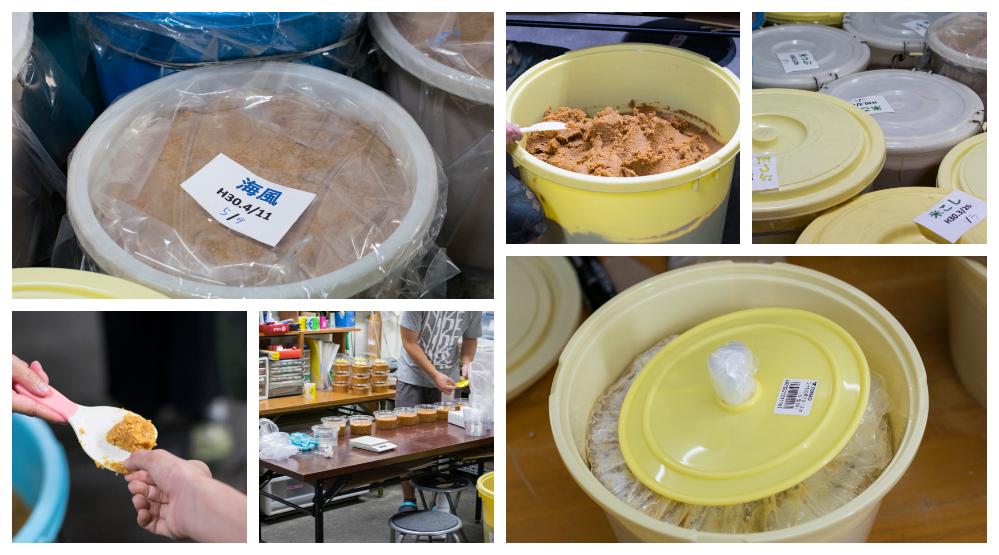
A six-photo collage from a miso workshop in Japan, built around big buckets of fermenting soybean paste. The largest frame shows an open white bucket packed with dense brown miso, its surface sealed under plastic wrap and marked with a handwritten Japanese label carrying a date. Next to it, rows of white and yellow lidded tubs hold other batches, one labeled in Japanese as rice koji. The remaining close-ups stay tight on the paste: a yellow bucket filled with smooth, caramel-colored miso with a small spoon resting in it, and a large yellow tub with its lid pushed aside to reveal plastic-wrapped miso inside. Two frames bring people in. One shows a hand offering a scoop of miso on a white spatula with a pink handle, held out over a blue bucket for a taste. In the other, a man in a gray t-shirt stands at a long table portioning miso into neat rows of small plastic containers, with shelves and a whiteboard behind him.
A six-photo collage from a miso workshop in Japan, built around big buckets of fermenting soybean paste. The largest frame shows an open white bucket packed with dense brown miso, its surface sealed under plastic wrap and marked with a handwritten Japanese label carrying a date. Next to it, rows of white and yellow lidded tubs hold other batches, one labeled in Japanese as rice koji. The remaining close-ups stay tight on the paste: a yellow bucket filled with smooth, caramel-colored miso with a small spoon resting in it, and a large yellow tub with its lid pushed aside to reveal plastic-wrapped miso inside.
Two frames bring people in. One shows a hand offering a scoop of miso on a white spatula with a pink handle, held out over a blue bucket for a taste. In the other, a man in a gray t-shirt stands at a long table portioning miso into neat rows of small plastic containers, with shelves and a whiteboard behind him.
छवि में दिखाई देने वाला पाठ
海風
H30.4.11
इस वर्कशॉप के बारे में मेरी राय:

A man and a woman stand behind a table, each holding up a small round container of miso paste toward the camera. The man on the left wears a dark top with a black shoulder bag across his chest and holds a container of pale yellow miso. The woman on the right wears a dark shirt under a light apron and presents a container of darker reddish-brown miso. On the table in front of them sit a few more containers, one holding what looks like miso mixed with other ingredients. Behind them, the wall is covered with printed posters carrying Japanese text, one with a bright green title, suggesting a workshop or classroom setting for a miso-making course.
A man and a woman stand behind a table, each holding up a small round container of miso paste toward the camera. The man on the left wears a dark top with a black shoulder bag across his chest and holds a container of pale yellow miso. The woman on the right wears a dark shirt under a light apron and presents a container of darker reddish-brown miso. On the table in front of them sit a few more containers, one holding what looks like miso mixed with other ingredients. Behind them, the wall is covered with printed posters carrying Japanese text, one with a bright green title, suggesting a workshop or classroom setting for a miso-making course.
छवि में दिखाई देने वाला पाठ
普通の我が家です
天然酵母パン教室
यदि आप जापानी व्यंजनों में रुचि रखते हैं और आपको ऐसी किसी मिसो वर्कशॉप में भाग लेने का मौका मिले, तो जरूर इसकी कोशिश करें। मैं कभी कल्पना भी नहीं कर सकता था कि एक साधारण सा दिखने वाला उत्पाद, मिसो बनाने में इतनी मेहनत लगती है। सबसे मज़ेदार अनुभव विभिन्न किस्मों के बारे में जानना और उनकी श्रेणियाँ समझना था। और हमारे लिए सबसे महत्वपूर्ण: यह सीखना कि मिसो का उपयोग पकाने में कैसे किया जाए ताकि वह वास्तव में स्वादिष्ट बने।
टोक्यो में मेरे साथ मिसो का अनुभव लें!
अगर आप जापान की यात्रा की योजना बना रहे हैं और मिसो की दुनिया में गहराई तक जाना चाहते हैं, तो मैं एक टोक्यो मिसो टूर आयोजित करता हूँ! साथ में हम स्पेशलिटी मिसो शॉप्स का दौरा करेंगे, विभिन्न प्रकार चखेंगे, और आप अपनी खुद की मिसो पेस्ट भी बना सकते हैं जिसे अपने साथ ले जा सकते हैं। यह एक हैंड्स-ऑन अनुभव है जिसमें मैं जापानी किण्वन संस्कृति के बारे में अपना ज्ञान साझा करता हूँ और आपको टूरिस्ट स्पॉट्स के परे असली स्वादों से रूबरू कराता हूँ। चाहे आप मिसो के शुरुआती हों या फैन, यह आधे दिन का टूर उन सभी के लिए परफेक्ट है जो जापानी फूड कल्चर को नजदीक से अनुभव करना चाहते हैं।

टिप्पणियाँ
सुंदर लेख। मैं अपना मिसो खुद बनाता हूँ, क्योंकि यहाँ आसपास मुझे अच्छी क्वालिटी का नहीं मिलता। यह एक बिल्कुल अलग अनुभव है, जिससे आप वास्तव में इस प्रोडक्ट और इसकी विविधता को जान पाते हैं। मैं हर उस व्यक्ति को इसे आज़माने की सलाह दूँगा जो जापानी खाने और शानदार स्वादों का शौकीन है।
हाय किलियन, यह बहुत अच्छा सुनाई देता है, कृपया अपनी सफलताएँ हमारी फेसबुक पेज पर पोस्ट करें :) शुभकामनाएँ, मथियास
मिसो गूगल सर्च पर आपके ब्लॉग पर पहुँचा – बहुत प्रेरणादायक :-) मैंने अभी-अभी आपकी कोरिया पुस्तक ऑर्डर की है, उत्साहित हूँ!
Hallo Birgit, यह बहुत बढ़िया है और हमें बहुत खुशी हुई, हमने पूरी कोशिश की :) समर्थन के लिए बहुत-बहुत धन्यवाद। सादर, रयुसेई, रयूकोच की तरफ से
बहुत ही विस्तार से लिखा गया लेख। लेकिन जब मिसो को, जैसे कि सूप में, पकाया जाता है, तो उसमें मौजूद लैक्टिक एसिड बैक्टीरिया का क्या होता है? मुझे तो लैक्टिक एसिड बैक्टीरिया में ही रुचि है, लेकिन अगर ये गर्म करने पर नष्ट हो जाते हैं, तो मिसो का जो वादा है, वह फिर बाकी नहीं रहता।
Hallo Klaus, सबसे पहले बहुत धन्यवाद, हमने पूरी कोशिश की थी। अधिकांश मिल्क एसिड बैक्टीरिया पहले ही चले जाते हैं। ठीक वैसे ही जैसे Sauerkraut के साथ होता है, Miso को भी pasteurize किया जाता है। इसका मतलब है कि उसे तेज़ी से गर्म किया जाता है, ताकि किण्वन आगे ना बढ़े। इसका फायदा यह है कि फर्मेंटेशन आगे नहीं बढ़ता और सारे उत्पाद एक जैसे स्वादिष्ट रहते हैं। समस्या यह है कि इससे कुछ विटामिन और मिल्क एसिड बैक्टीरिया नष्ट हो जाते हैं। मान लीजिए, आपके पास ऐसा Miso है जिसे pasteurize नहीं किया गया, तो Miso Shiru (Miso सूप) बनाते समय, आपको अंत में Miso डालना चाहिए। बहुत जरूरी है, सूप को कुछ मिनटों से उबाला नहीं गया हो। क्योंकि फिर सूप 70 डिग्री से अधिक गर्म नहीं होगी और मिल्क एसिड बैक्टीरिया और विटामिन लगभग सही सलामत रहेंगे। यह तरीका मैं सामान्य तौर पर भी सुझाता हूँ, क्योंकि इस तरह सुगंध भी सूप में बेहतर बनी रहती है, बजाय इसके कि आप Miso को उबालें। Miso सूप रेसिपी: https://ryukoch.com/de/rezepte/miso-shiru/ आशा है यह आपके लिए मददगार रहा होगा :) शुभकामनाओं सहित, Ryusei, RyuKoch की ओर से