
अनुक्रमणिका:
| मुख्य मौसम: | शरद ऋतु |
|---|---|
| श्रेणी: | सब्ज़ी |
| अन्य नाम: | Daikon-रेटिच, जापानी या चीनी रेटिच, विंटर रेटिच |
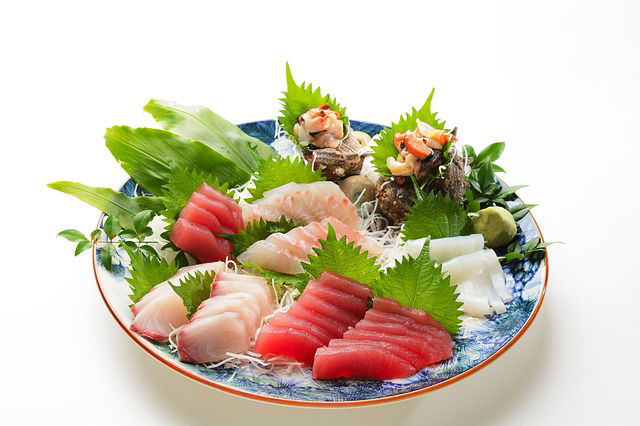
A round plate of assorted sashimi sits on a white surface. The plate is decorated in blue and white patterns with an orange rim, and its base is covered with fine shredded daikon radish. On top are slices of raw fish arranged in small fanned groups: deep red tuna, pale pink and white fish, and translucent squares of squid. Two pieces near the back are topped with a small seafood mixture, and a mound of green wasabi rests at the right edge. Jagged-edged green shiso leaves are tucked between the fish, with a few broader leaves and sprigs filling out the arrangement.
A round plate of assorted sashimi sits on a white surface. The plate is decorated in blue and white patterns with an orange rim, and its base is covered with fine shredded daikon radish. On top are slices of raw fish arranged in small fanned groups: deep red tuna, pale pink and white fish, and translucent squares of squid. Two pieces near the back are topped with a small seafood mixture, and a mound of green wasabi rests at the right edge. Jagged-edged green shiso leaves are tucked between the fish, with a few broader leaves and sprigs filling out the arrangement.
छवि में दिखाई देने वाला पाठ
No text is clearly readable in the image.
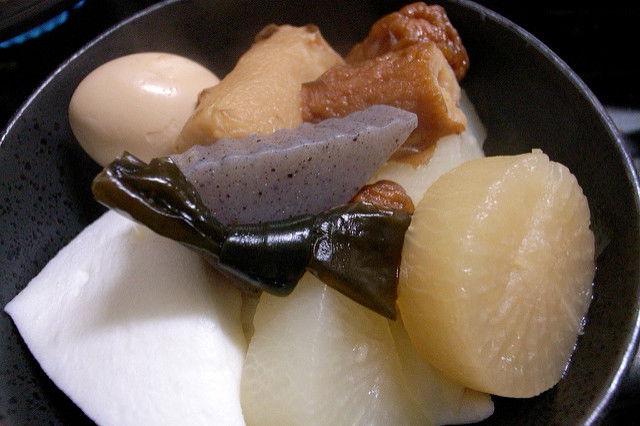
A close-up of a dark bowl filled with oden, the Japanese simmered dish, packed so the pieces nearly fill the frame. A thick round slice of daikon radish sits on the right, cooked to a translucent pale yellow, with a wedge of white daikon at the lower left. Beside them rest a whole boiled egg tinted light brown from the broth, a gray speckled triangle of konjac, a folded piece of dark kombu seaweed tied like a knot, and several browned fish cakes crowded at the top. Everything glistens with simmering broth, giving the dish a soft, stewed look.
A close-up of a dark bowl filled with oden, the Japanese simmered dish, packed so the pieces nearly fill the frame. A thick round slice of daikon radish sits on the right, cooked to a translucent pale yellow, with a wedge of white daikon at the lower left. Beside them rest a whole boiled egg tinted light brown from the broth, a gray speckled triangle of konjac, a folded piece of dark kombu seaweed tied like a knot, and several browned fish cakes crowded at the top. Everything glistens with simmering broth, giving the dish a soft, stewed look.
छवि में दिखाई देने वाला पाठ
No text is clearly readable in this image.
Daikon (जाप. だいこん या फिर 大根 जिसका शाब्दिक अर्थ है "बड़ी जड़") एक रेटिच है जो पूर्वी एशिया में पाया जाता है। यह जापानी व्यंजनों का एक मुख्य हिस्सा है और इसे अनदेखा नहीं किया जा सकता। इसी वजह से, इस रेटिच के कई नाम हैं जैसे: Daikon-रेटिच, जापानी या चीनी रेटिच या फिर विंटर रेटिच। Daikon को तैयार करने के कई तरीके हैं जो इसके स्वाद को अलग-अलग तरह से निखारते हैं। उदाहरण के लिए, Daikon को बारीक काटकर सुखाया जाता है, जिसे Kiriboshi Daikon (切干大根, "कट और सूखा हुआ Daikon") कहा जाता है। इसमें रेटिच का बहुत सारा पानी निकल जाता है, जिससे इसका स्वाद और भी गहरा हो जाता है। सलाद या सशिमी के साथ साइड डिश के रूप में भी Daikon बहुत अच्छा रहता है। इसमें यह ध्यान रखना जरूरी है कि Daikon को बहुत पतली स्ट्रिप्स में काटा जाए, क्योंकि अगर स्ट्रिप्स मोटी हों तो सलाद बहुत तीखा लगेगा। इसकी तीखापन भी मौसम के अनुसार बदलती है – मेरे अनुभव के अनुसार सर्दियों में Daikons हल्के स्वाद के और बेहतर होते हैं। Daikon के पत्तों को भी इस्तेमाल किया जा सकता है। यदि आप इसके ऊपर का करीब 3 सेमी हिस्सा काटकर पानी में डालते हैं, तो यह फिर से उग सकता है। अब Daikon जर्मन सुपरमार्केट में भी मिलने लगा है। खरीदते समय यह देखना जरूरी है कि यह कड़ा हो और रबर जैसा नरम न हो, वरना इसका स्वाद अच्छा नहीं रहेगा।
टिप्पणियाँ