अनुक्रमणिका:
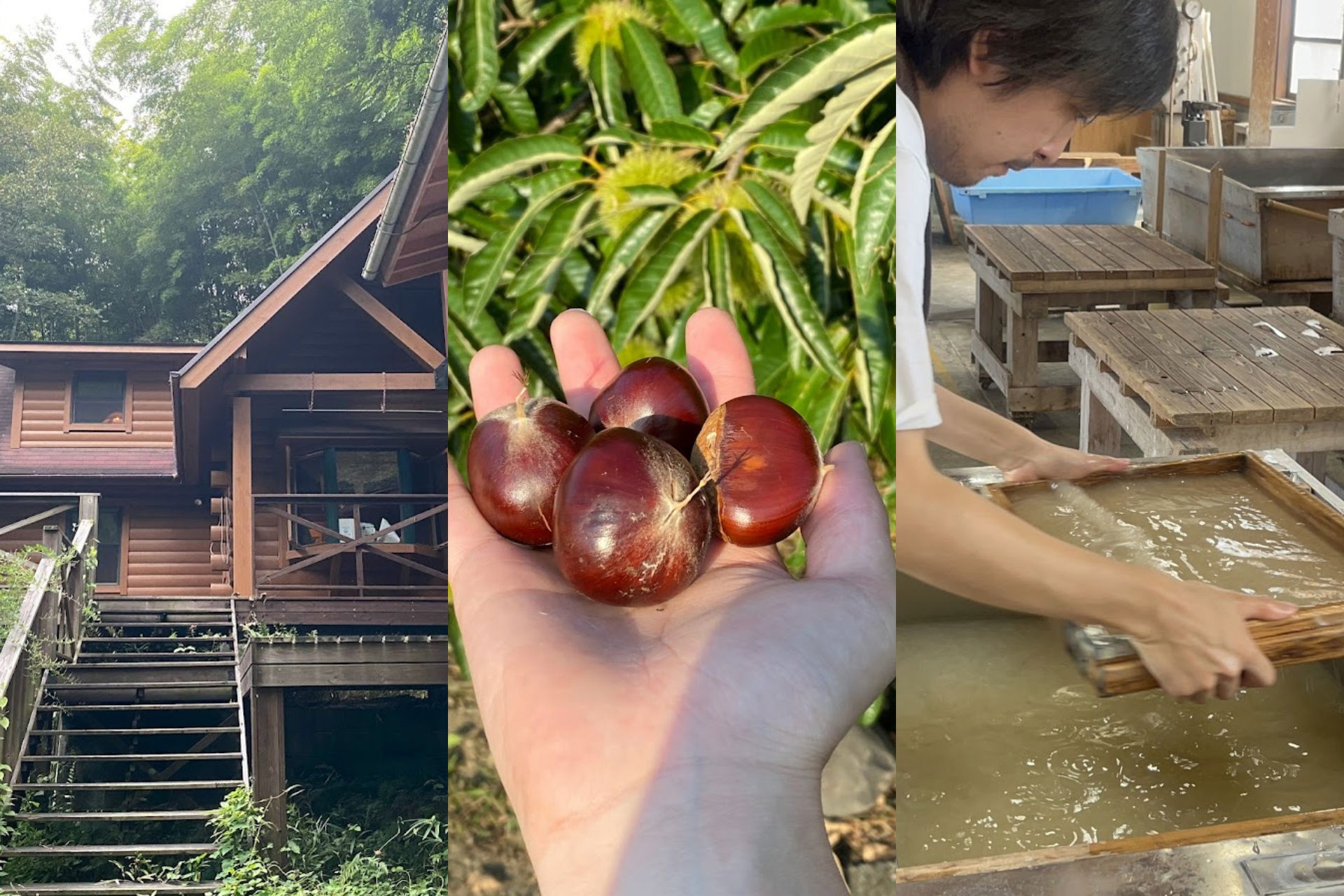
इस ब्लॉग पोस्ट में मैं अपने ओगावा, सैतामा यात्रा के बारे में बता रहा हूँ! टोक्यो की पड़ोसी प्रान्त पहली नजर में शायद कुछ साधारण लगे, लेकिन यहाँ ढेर सारी गतिविधियाँ और स्वादिष्ट व्यंजन हैं। खासकर प्रकृति प्रेमियों के लिए और उन सभी के लिए जो Washi (परंपरागत कागज) बनाने की प्रक्रिया में रूचि रखते हैं, यह लेख बहुत दिलचस्प है।
टोक्यो से ओगावा तक
कार से
अगर आप कार से यात्रा करना चाहते हैं, तो टोक्यो से ओगावा तक की यात्रा का समय लगभग 1.5 से 2 घंटे है। यानी बिलकुल ट्रेन जितना ही समय लगता है। यात्रा आरामदायक है, हालांकि रास्ते में टोल प्लाज़ा आते हैं। सबसे अच्छा है कि आप पहले ही Google Maps की सहायता से संभावित खर्च या टोल की जानकारी ले लें। टोक्यो शहर में ऐसे कई स्थान हैं जहाँ से आप माइटवॉगेन किराए पर ले सकते हैं। क्योंकि ओगावा काफ़ी ग्रामीण क्षेत्र में स्थित है, कार से वहाँ की यात्रा करने से आप ज़्यादा स्वतंत्र रहते हैं।
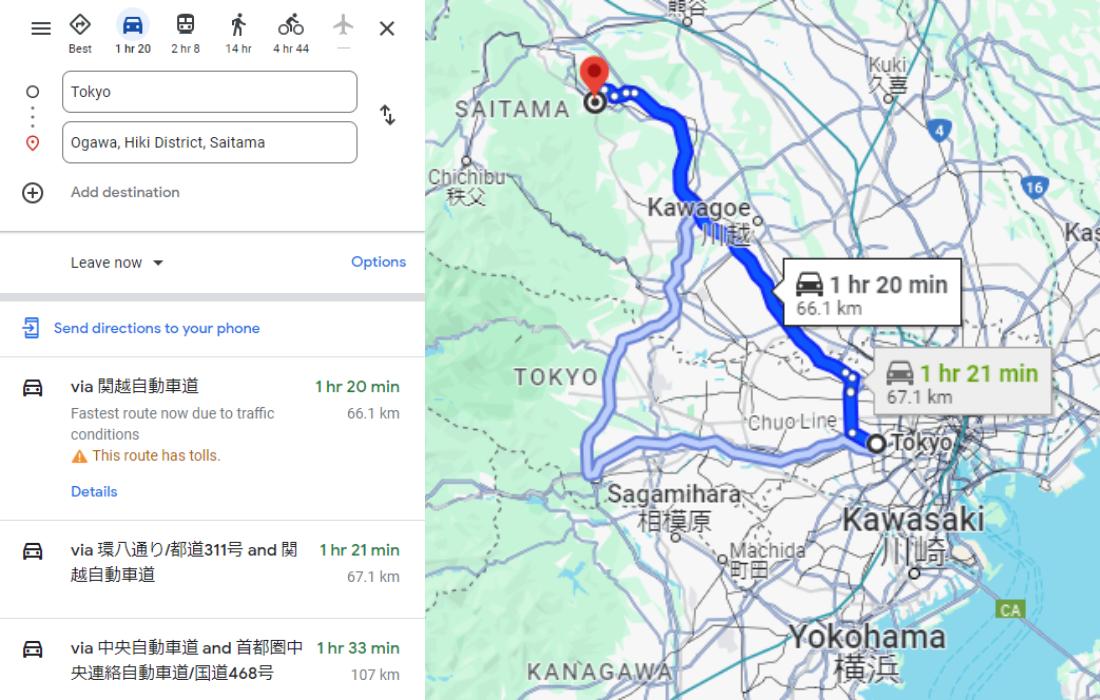
A screenshot of a driving directions search from Tokyo to Ogawa in Saitama Prefecture. The left panel lists three car routes: the fastest takes 1 hr 20 min over 66.1 km via the Kan-Etsu Expressway and is marked with a warning that the route has tolls, while the alternatives run 1 hr 21 min for 67.1 km and 1 hr 33 min for 107 km. A row of icons at the top compares other ways to travel, with transit at 2 hr 8, cycling at 4 hr 44, and walking at 14 hr. On the map itself, a thick blue route line runs northwest out of central Tokyo, passes the Kawagoe area, and ends at a red destination pin in Saitama, with a callout confirming the 1 hr 20 min, 66.1 km trip. A lighter alternate route swings much farther west through Sagamihara before rejoining near Tokyo. Labels for Kawasaki, Yokohama, and the prefectures of Saitama, Tokyo, and Kanagawa give the wider geographic context.
A screenshot of a driving directions search from Tokyo to Ogawa in Saitama Prefecture. The left panel lists three car routes: the fastest takes 1 hr 20 min over 66.1 km via the Kan-Etsu Expressway and is marked with a warning that the route has tolls, while the alternatives run 1 hr 21 min for 67.1 km and 1 hr 33 min for 107 km. A row of icons at the top compares other ways to travel, with transit at 2 hr 8, cycling at 4 hr 44, and walking at 14 hr.
On the map itself, a thick blue route line runs northwest out of central Tokyo, passes the Kawagoe area, and ends at a red destination pin in Saitama, with a callout confirming the 1 hr 20 min, 66.1 km trip. A lighter alternate route swings much farther west through Sagamihara before rejoining near Tokyo. Labels for Kawasaki, Yokohama, and the prefectures of Saitama, Tokyo, and Kanagawa give the wider geographic context.
छवि में दिखाई देने वाला पाठ
Best
1 hr 20
2 hr 8
14 hr
4 hr 44
Tokyo
Ogawa, Hiki District, Saitama
Add destination
Leave now
Options
Send directions to your phone
via 関越自動車道 1 hr 20 min
Fastest route now due to traffic conditions 66.1 km
This route has tolls.
Details
via 環八通り/都市311号 and 関越自動車道 1 hr 21 min
67.1 km
via 中央自動車道 and 首都圏中央連絡自動車道/国道468号 1 hr 33 min
107 km
SAITAMA
Kuki
久喜
Chichibu
秩父
Kawagoe
川越
TOKYO
1 hr 20 min
66.1 km
1 hr 21 min
67.1 km
Chuo Line
Tokyo
Sagamihara
相模原
Machida
町田
Kawasaki
川崎
Yokohama
横浜
KANAGAWA
4
16
CA
ट्रेन से
टोक्यो से ओगावा तक यात्रा बहुत आरामदायक है और लोकल ट्रेन से केवल करीब 2 घंटे लगते हैं। ध्यान दें कि ओगावा और इसके आसपास के रेलवे स्टेशनों पर प्रवेश द्वार (गेट्स) नहीं हैं। इसका मतलब है कि आपको प्लेटफॉर्म पर जाने या निकलने के लिए टिकट नहीं दिखाना होता। इसके बजाय स्टेशनों पर IC कार्ड जैसे कि PASMO या SUICA के लिए मशीनें मिल जाएंगी, जिनका उपयोग आप अपनी यात्रा का भुगतान करने के लिए कर सकते हैं।
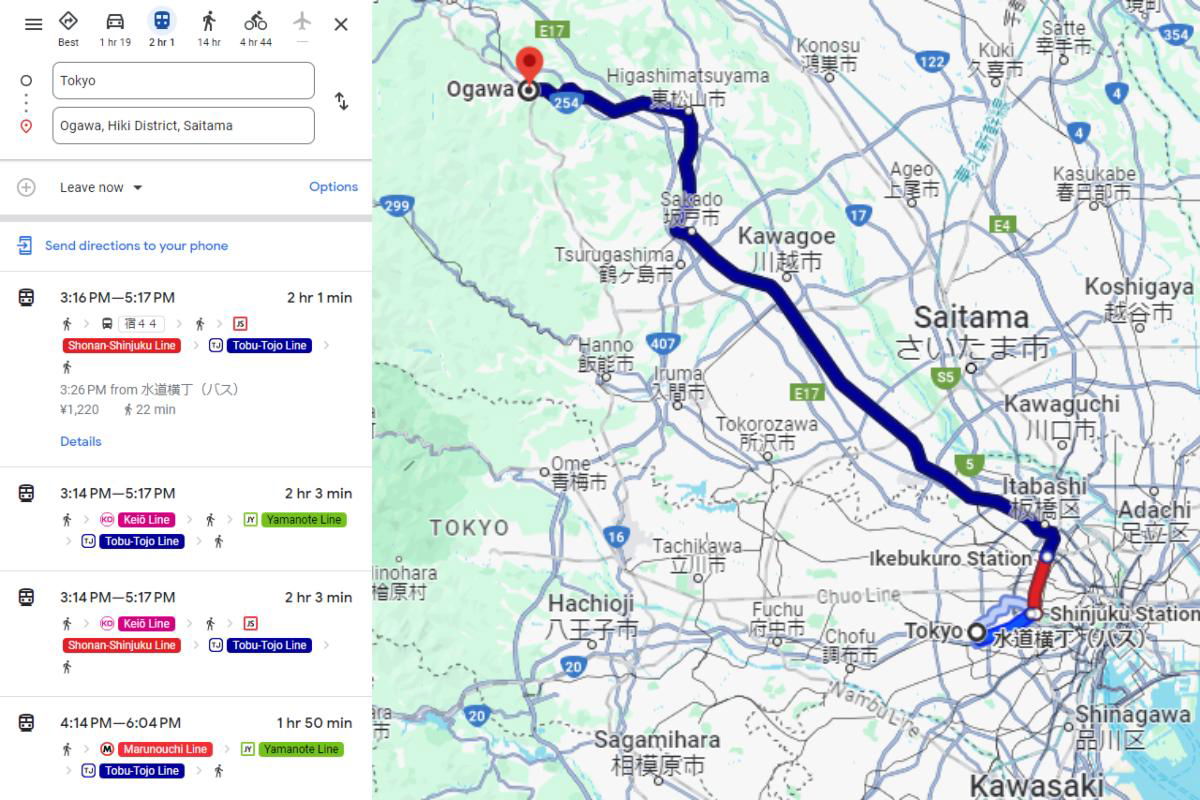
A Google Maps directions screenshot showing train routes from Tokyo to Ogawa in Saitama. The left panel lists four transit options, all leaving in the mid to late afternoon and taking roughly two hours. The fastest suggestion runs from 3:16 PM to 5:17 PM via the Shonan-Shinjuku Line and Tobu-Tojo Line for ¥1,220; the others use combinations of the Keio, Yamanote, Marunouchi, and Tobu-Tojo lines, with the quickest at 1 hour 50 minutes. The map on the right covers the greater Tokyo area and Saitama Prefecture, with city labels for Kawagoe, Saitama, Kawaguchi, and Hachioji. A thick dark blue route line traces the trip northwest from central Tokyo through Ikebukuro and Sakado, ending at a red pin in Ogawa, while a short red segment near Shinjuku Station marks the first stretch of the journey.
A Google Maps directions screenshot showing train routes from Tokyo to Ogawa in Saitama. The left panel lists four transit options, all leaving in the mid to late afternoon and taking roughly two hours. The fastest suggestion runs from 3:16 PM to 5:17 PM via the Shonan-Shinjuku Line and Tobu-Tojo Line for ¥1,220; the others use combinations of the Keio, Yamanote, Marunouchi, and Tobu-Tojo lines, with the quickest at 1 hour 50 minutes.
The map on the right covers the greater Tokyo area and Saitama Prefecture, with city labels for Kawagoe, Saitama, Kawaguchi, and Hachioji. A thick dark blue route line traces the trip northwest from central Tokyo through Ikebukuro and Sakado, ending at a red pin in Ogawa, while a short red segment near Shinjuku Station marks the first stretch of the journey.
छवि में दिखाई देने वाला पाठ
Tokyo
Ogawa, Hiki District, Saitama
Leave now
Options
Send directions to your phone
Best
1 hr 19
2 hr 1
14 hr
4 hr 44
3:16 PM—5:17 PM 2 hr 1 min
宿4 4
Shonan-Shinjuku Line
Tobu-Tojo Line
3:26 PM from 水道橋丁 (バス)
¥ 1,220 22 min
Details
3:14 PM—5:17 PM 2 hr 3 min
Keiō Line
Yamanote Line
Tobu-Tojo Line
3:14 PM—5:17 PM 2 hr 3 min
Keiō Line
Shonan-Shinjuku Line
Tobu-Tojo Line
4:14 PM—6:04 PM 1 hr 50 min
Marunouchi Line
Yamanote Line
Tobu-Tojo Line
E17
Ogawa
Higashimatsuyama
東松山市
254
Konosu
鴻巣市
Satte
幸手市
354
Kuki
久喜市
122
4
Ageo
上尾市
Kasukabe
春日部市
4
299
Sakado
坂戸市
Kawagoe
川越市
17
Tsurugashima
鶴ヶ島市
E4
Koshigaya
越谷市
Saitama
さいたま市
Hanno
飯能市
407
Iruma
入間市
E17
S5
Kawaguchi
川口市
Tokorozawa
所沢市
5
Ome
青梅市
TOKYO
16
Tachikawa
立川市
Ikebukuro Station
Itabashi
板橋区
Adachi
足立区
inohara
檜原村
Hachioji
八王子市
Fuchu
府中市
Chuo Line
Chofu
調布市
Tokyo
水道橋丁 (バス)
Shinjuku Station
20
Nambu Line
Shinagawa
品川区
Sagamihara
相模原市
Kawasaki
20
ओगावा शहर
ओगावा, सैतामा प्रान्त का एक आकर्षक छोटा शहर है, जो काफी ग्रामीण है और टोक्यो की तुलना में शांत और छोटा है। प्रकृति से घिरे इस क्षेत्र में आउटडोर गतिविधियों के कई अवसर हैं, मुझे यहाँ रहना बहुत अच्छा लगा! अगली अनुभागों में आप जानेंगे कि ओगावा में आप क्या क्या कर सकते हैं।
Udon के साथ एक ताज़ा भोजन
ओगावा पहुंचने के बाद हमने अपने लिए एक Udon रेस्तरां का नाम 武州めん 本店 (Bushu Men) चुना। आश्चर्यजनक रूप से, यहाँ मुझे हाल के समय का सबसे बेहतरीन Udon मिला! यह रेस्तरां अपने असली पकवानों और सामग्री की गुणवत्ता के लिए जाना जाता है। अगर आपको जापानी खाना पसंद है या बस स्वादिष्ट Udon आज़माना है तो मैं 武州めん 本店 रेस्टोरेंट ज़रूर सुझाऊँगा।
Google Maps: https://maps.app.goo.gl/bjcx9nAQ9AWuPT2f6
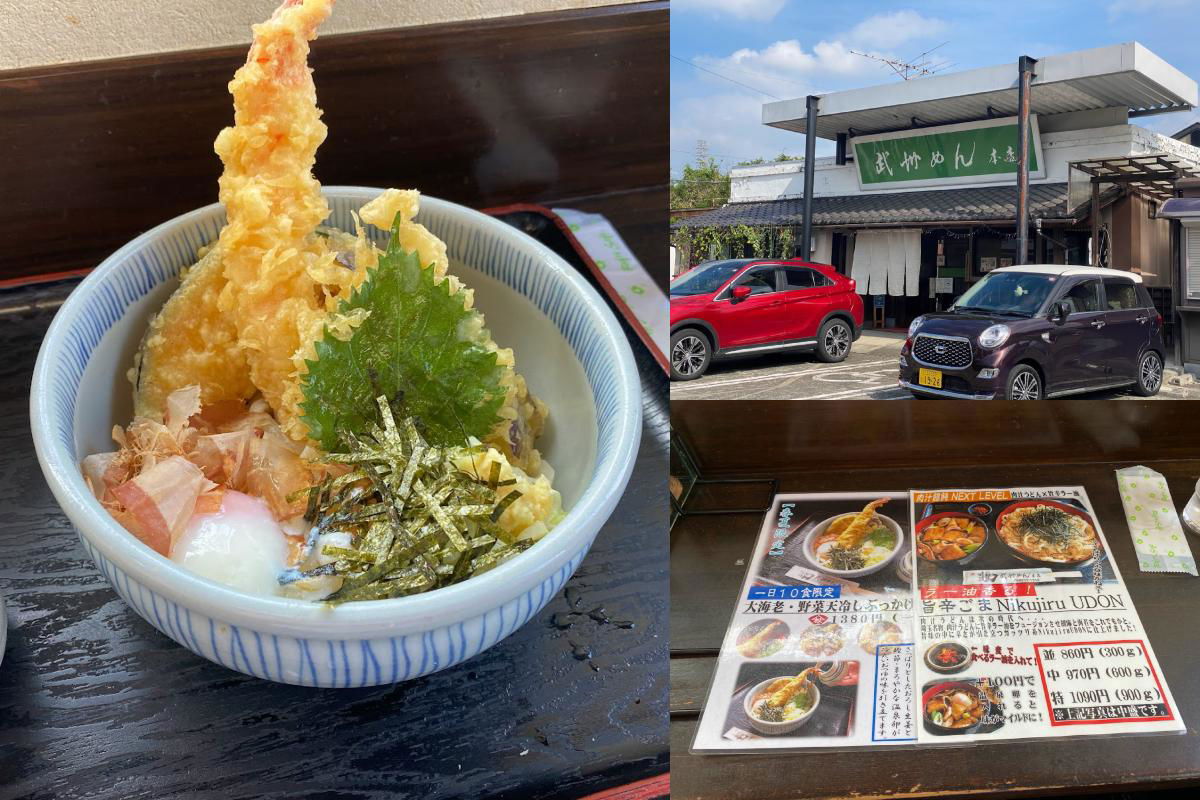
A three-photo collage from a udon restaurant in Ogawa, Saitama. The large photo on the left is the star: a blue-and-white striped ceramic bowl of cold udon piled with toppings, dominated by a tall, lacy golden shrimp tempura standing upright. Around it sit a raw egg yolk, bonito flakes, shredded nori seaweed, grated toppings, and a bright green shiso leaf. The bowl rests on a dark lacquered tray. The top right photo shows the shop itself, a low single-story building with a green Japanese sign over a doorway hung with white noren curtains and two cars parked out front under a blue sky. The bottom right photo shows a laminated menu lying on the wooden table, illustrated with photos of noodle dishes and listing the Nikujiru UDON in three sizes: 300 g for 800 yen, 600 g for 970 yen, and 900 g for 1,090 yen.
A three-photo collage from a udon restaurant in Ogawa, Saitama. The large photo on the left is the star: a blue-and-white striped ceramic bowl of cold udon piled with toppings, dominated by a tall, lacy golden shrimp tempura standing upright. Around it sit a raw egg yolk, bonito flakes, shredded nori seaweed, grated toppings, and a bright green shiso leaf. The bowl rests on a dark lacquered tray.
The top right photo shows the shop itself, a low single-story building with a green Japanese sign over a doorway hung with white noren curtains and two cars parked out front under a blue sky. The bottom right photo shows a laminated menu lying on the wooden table, illustrated with photos of noodle dishes and listing the Nikujiru UDON in three sizes: 300 g for 800 yen, 600 g for 970 yen, and 900 g for 1,090 yen.
छवि में दिखाई देने वाला पाठ
ラー油 NEXT LEVEL
一日10食限定
大海老・野菜天冷しうどん 1380円
旨辛ごま Ni.kujiru UDON
並 800円(300g)
中 970円(600g)
特 1090円(900g)
旨辛月見は中華です
+100円で麺を替えられます
Washi 和紙 (परंपरागत कागज) का निर्माण
ओगावा में हमने पारंपरिक जापानी कागज बनाने का मौका लिया, जिसे 和紙 (Washi) कहते हैं। यह कागज एक विशेष रेशे से बनता है, जो कोजो पेड़ की छाल से प्राप्त होता है। इस रेशे को हाथ से छाना और पारंपरिक तरीके से तैयार किया जाता है, ताकि उच्च गुणवत्ता और मजबूत कागज मिले। Washi कई उद्देश्यों के लिए इस्तेमाल होता है, जैसे कि कला प्रोजेक्ट, पत्र लेखन, ओरिगामी और ऐतिहासिक दस्तावेजों की मरम्मत तक। यह अपनी उच्च गुणवत्ता, मजबूती और अनूठे टेक्सचर के लिए जाना जाता है, जिससे इसे एक खास आकर्षण मिलता है। Washi का निर्माण एक कला है, जो सदियों से जापान में संरक्षित है और संस्कृति की दृष्टि से बहुत महत्वपूर्ण है।
Google Maps: https://maps.app.goo.gl/Km5owQ73wS95kR9J7
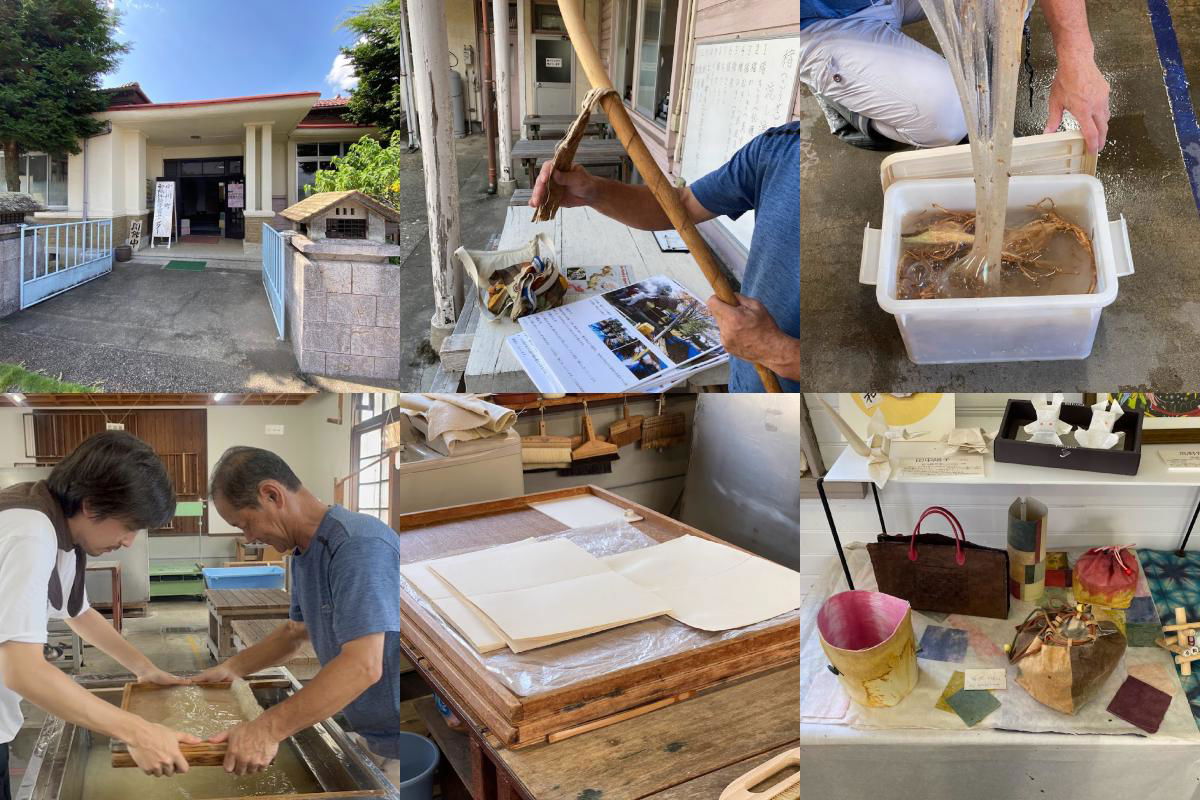
A six-photo collage captures a visit to a Washi paper workshop in Ogawa, Saitama. The top row shows the single-story workshop building with a noren curtain over its entrance and stone gateposts out front, a man in a blue shirt pulling strips of bark fiber off a long bamboo pole outside, and a pair of hands lifting a rootlike bundle of fiber from a white tub of cloudy water. The bottom row moves inside. Two men raise a bamboo papermaking screen together from a vat, water and pulp streaming beneath it. Next to that, fresh white sheets of paper lie stacked on a large wooden board, with brushes and paddles hanging on the wall above. The last photo shows the shop display: a brown washi handbag with red handles, a pink and yellow cylinder box, colorful paper squares, and small folded paper ornaments arranged on a black tray.
A six-photo collage captures a visit to a Washi paper workshop in Ogawa, Saitama. The top row shows the single-story workshop building with a noren curtain over its entrance and stone gateposts out front, a man in a blue shirt pulling strips of bark fiber off a long bamboo pole outside, and a pair of hands lifting a rootlike bundle of fiber from a white tub of cloudy water.
The bottom row moves inside. Two men raise a bamboo papermaking screen together from a vat, water and pulp streaming beneath it. Next to that, fresh white sheets of paper lie stacked on a large wooden board, with brushes and paddles hanging on the wall above. The last photo shows the shop display: a brown washi handbag with red handles, a pink and yellow cylinder box, colorful paper squares, and small folded paper ornaments arranged on a black tray.
छवि में दिखाई देने वाला पाठ
見学中
जंगल में एयरबीएनबी में रात बिताना
मेरी छोटी यात्रा का एक बड़ा खास पल था जंगल में एयरबीएनबी में रात गुज़ारना। हमारी ठहरने की जगह एक आरामदायक लकड़ी की झोपड़ी थी जो पूरी तरह प्रकृति के बीच में थी - लेकिन उसमें एयर कंडीशनर नहीं था। बाहर का तापमान 33 डिग्री था और कोई एसी नहीं था, फिर भी यह अनुभव बहुत अनूठा और अविस्मरणीय था। क्योंकि मुझे प्रकृति से प्यार है, मुझे यह अनुभव सबसे ज़्यादा पसंद आया। प्रकृति के बीच रात बिताने का मौका बार-बार नहीं मिलता।
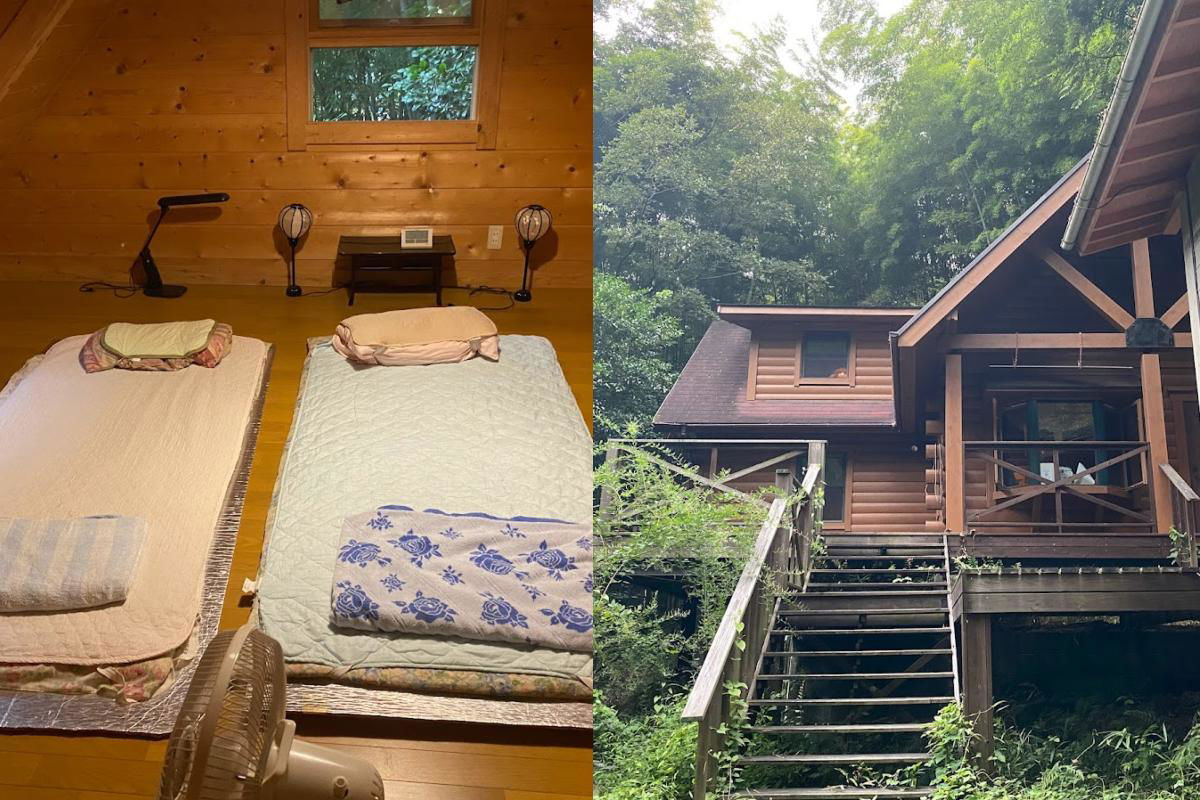
A side-by-side pair of photos showing a cozy wooden cabin stay in Ogawa, Saitama. On the left, a loft-style bedroom with warm pine walls and ceiling, two futons laid out on the wood floor, a small black side table with a clock, a reading lamp, and an electric fan in the foreground. On the right, the cabin's exterior seen from below: a log-style building with a dark shingled roof and a wooden deck and staircase, surrounded by dense green trees and bamboo on a hillside.
A side-by-side pair of photos showing a cozy wooden cabin stay in Ogawa, Saitama. On the left, a loft-style bedroom with warm pine walls and ceiling, two futons laid out on the wood floor, a small black side table with a clock, a reading lamp, and an electric fan in the foreground. On the right, the cabin's exterior seen from below: a log-style building with a dark shingled roof and a wooden deck and staircase, surrounded by dense green trees and bamboo on a hillside.
छवि में दिखाई देने वाला पाठ
No clearly readable text is present in the image.
ओगावा में और होटल ढूंढें
एफिलिएट लिंक: अगर आप मेरे विजेट या लिंक से Booking.com पर होटल बुक करते हैं, तो मुझे एक छोटा कमीशन मिलता है। आपके लिए किसी भी तरह की अतिरिक्त लागत नहीं होगी और आप मेरे ब्लॉग का समर्थन करते हैं। इसके लिए मैं आभारी हूँ और आपको यात्रा के लिए शुभकामनाएँ देता हूँ (^_^)Mt Sengen Hill View Park
अगर आपको प्रकृति में गतिविधियाँ पसंद हैं तो Mt Sengen Hill View Park (Sengenyama Miharashi no Oka Koen) एक सच्ची सिफारिश है! इस पार्क से न केवल सैतामा की खूबसूरत घाटी का जबरदस्त नज़ारा मिलता है, बल्कि यहाँ एक स्लाइड भी है। यहाँ स्लाइड से फिसलने का अनुभव बहुत मजेदार था, और यह हर उम्र के लोगों के लिए एक खास अनुभव है। हालांकि, गर्मी में यहाँ पैदल जाना थोड़ा मुश्किल था, क्योंकि पार्क नजदीकी स्टेशन से 45 मिनट की पैदल दूरी पर स्थित है। आलोचि सितंबर महीने में, पार्क के आस-पास कुछ बड़े बड़े शहतूत मिले।
Google Maps: https://maps.app.goo.gl/fyGuCrxfrQaLKnez7
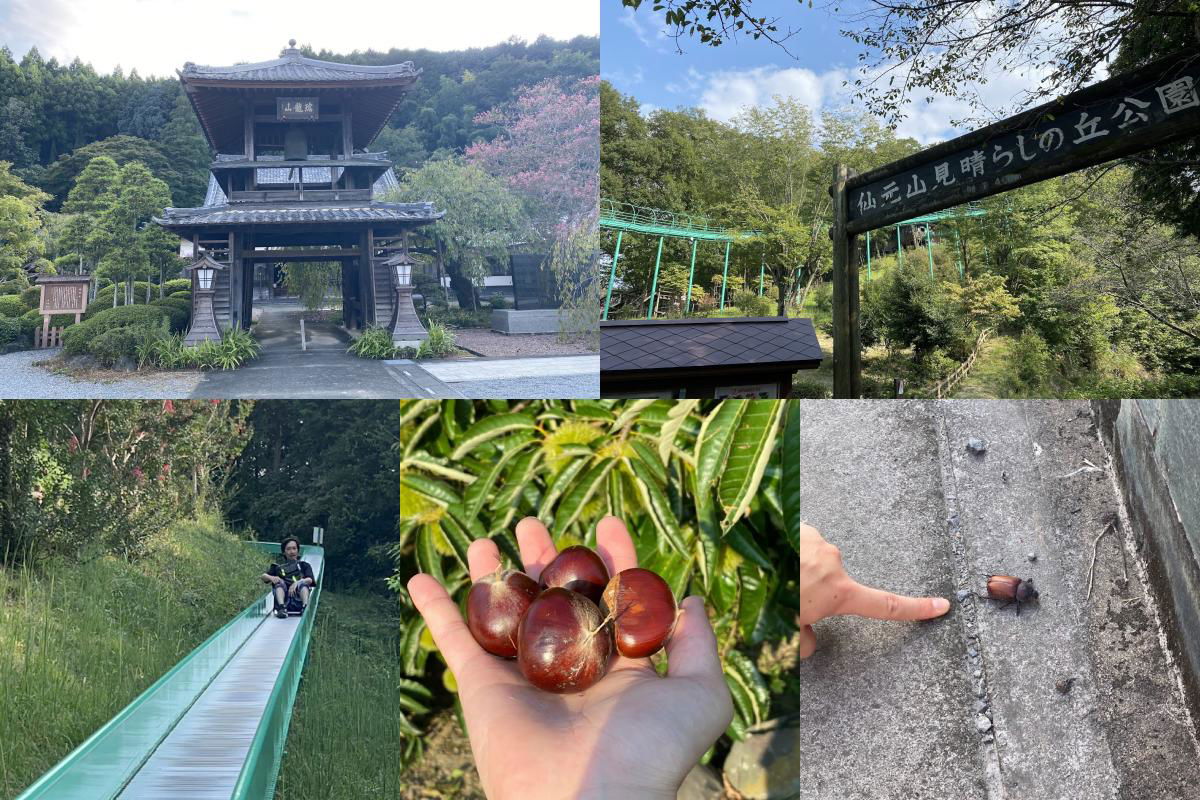
A five-photo collage from Mt. Sengen Hill View Park in Ogawa, Saitama, mixing temple scenery with small moments from a day out. The top left photo shows a wooden temple gate with a two-tiered tiled roof and a bell hanging beneath the upper story. Stone lanterns stand at the entrance, a willow and a tree with pink blossoms frame the scene, and forested hills rise behind it. In the top right, a dark wooden sign bears the park's Japanese name, 仙元山見晴らしの丘公園, while a long green roller slide snakes down the tree-covered slope in the background. The bottom row captures the visit itself. A rider in dark clothes speeds down that same roller slide as it cuts through a grassy hillside. A hand holds a few glossy brown chestnuts, with spiky green burrs still clustered on the branch behind them. In the last shot, a finger points at a rhinoceros beetle making its way across a concrete path.
A five-photo collage from Mt. Sengen Hill View Park in Ogawa, Saitama, mixing temple scenery with small moments from a day out.
The top left photo shows a wooden temple gate with a two-tiered tiled roof and a bell hanging beneath the upper story. Stone lanterns stand at the entrance, a willow and a tree with pink blossoms frame the scene, and forested hills rise behind it. In the top right, a dark wooden sign bears the park's Japanese name, 仙元山見晴らしの丘公園, while a long green roller slide snakes down the tree-covered slope in the background.
The bottom row captures the visit itself. A rider in dark clothes speeds down that same roller slide as it cuts through a grassy hillside. A hand holds a few glossy brown chestnuts, with spiky green burrs still clustered on the branch behind them. In the last shot, a finger points at a rhinoceros beetle making its way across a concrete path.
छवि में दिखाई देने वाला पाठ
仙元山見晴らしの丘公園
CURRY&NOBLE में करी
मेरी एक और खाने की सिफारिश है CURRY&NOBLE में करी। यह रेस्टोरेंट बहुत ही आरामदायक है और यहाँ का स्टाफ बहुत ही विनम्र और ध्यान देने वाला था। मेन्यू में करी के कई विकल्प हैं और Google पर मिली पॉजिटिव रिव्यू बिलकुल सही हैं!
Google Maps: https://maps.app.goo.gl/vd3yg9QMhTfDgvzp9
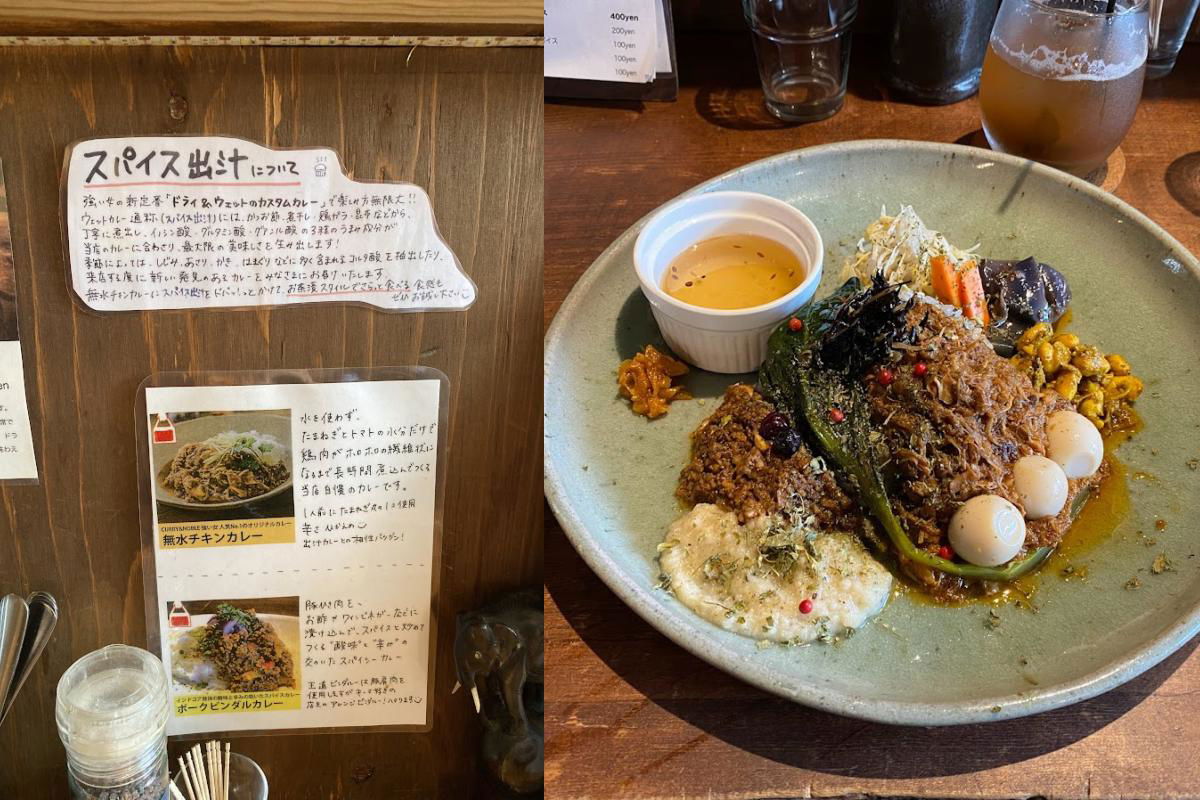
A plate of curry is the focus, served on a wide rustic green ceramic dish. The curry itself is a dark, richly spiced keema-style scoop laid over wilted leafy greens, surrounded by three peeled quail eggs, yellow pickles, shredded vegetables, a slice of carrot, pink peppercorns, and a pale scoop flecked with dried herbs. A small white ramekin of golden broth sits at the top of the plate. On the wooden table behind it are drinking glasses, one filled with an amber beverage, and a small price list. The left half of the photo shows the restaurant's wooden wall, covered with handwritten Japanese notes about the spice broth that forms the base of the curry, along with printed menu cards featuring a chicken curry and a pork vindaloo curry. The scene is from a cozy spice curry restaurant in Ogawa, Saitama.
A plate of curry is the focus, served on a wide rustic green ceramic dish. The curry itself is a dark, richly spiced keema-style scoop laid over wilted leafy greens, surrounded by three peeled quail eggs, yellow pickles, shredded vegetables, a slice of carrot, pink peppercorns, and a pale scoop flecked with dried herbs. A small white ramekin of golden broth sits at the top of the plate. On the wooden table behind it are drinking glasses, one filled with an amber beverage, and a small price list.
The left half of the photo shows the restaurant's wooden wall, covered with handwritten Japanese notes about the spice broth that forms the base of the curry, along with printed menu cards featuring a chicken curry and a pork vindaloo curry. The scene is from a cozy spice curry restaurant in Ogawa, Saitama.
छवि में दिखाई देने वाला पाठ
スパイス出汁 にこむ
400yen
200yen
100yen
100yen
100yen
当店自慢のカレーです
辛双子キノンカレー
ポークビンダルカレー
योरीई में याकिनिकु
पास के शहर योरीई में हमने बहुत स्वादिष्ट Yakiniku खाया। खास बात यह थी कि यहाँ ग्रिल्ड मछली थी, जो बहुत ही ताज़ा और चावल के साथ शानदार स्वाद वाली थी। मछली को खुद ग्रिल करना एक खास और अनोखा अनुभव है! अगर आप मछली खाना पसंद करते हैं तो एक बार जरूर ट्राई करें।
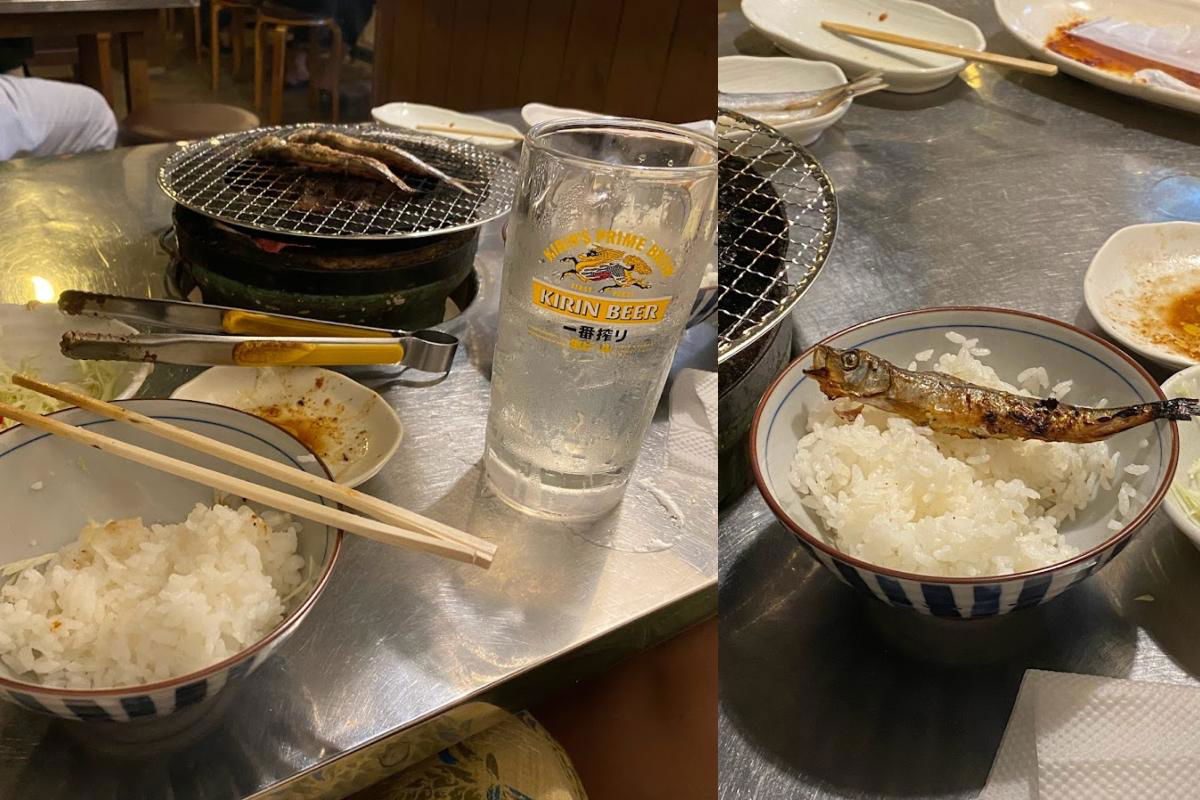
Two side-by-side shots from the same dinner at a casual izakaya. In the left photo a small tabletop charcoal grill sits on a steel table, its wire rack holding split salt-grilled fish with a second fish beside it. Metal tongs with yellow handles rest in front, and a tall frosted glass of Kirin Ichiban Shibori beer stands next to the grill. A striped ceramic bowl of white rice with wooden chopsticks across it sits in the foreground, alongside small sauce dishes and shredded cabbage. The right photo focuses on the bowl itself: a whole grilled fish, head and tail intact, laid across a mound of white rice. Behind it the edge of another charcoal grill peeks in, with empty plates, leftover fish bones, and chopsticks scattered on the steel table. The wooden walls and stools in the background give the scene a relaxed, well-used restaurant feel.
Two side-by-side shots from the same dinner at a casual izakaya. In the left photo a small tabletop charcoal grill sits on a steel table, its wire rack holding split salt-grilled fish with a second fish beside it. Metal tongs with yellow handles rest in front, and a tall frosted glass of Kirin Ichiban Shibori beer stands next to the grill. A striped ceramic bowl of white rice with wooden chopsticks across it sits in the foreground, alongside small sauce dishes and shredded cabbage.
The right photo focuses on the bowl itself: a whole grilled fish, head and tail intact, laid across a mound of white rice. Behind it the edge of another charcoal grill peeks in, with empty plates, leftover fish bones, and chopsticks scattered on the steel table. The wooden walls and stools in the background give the scene a relaxed, well-used restaurant feel.
छवि में दिखाई देने वाला पाठ
KIRIN BEER
一番搾り
निष्कर्ष
मेरी ओगावा, सैतामा यात्रा एक अविस्मरणीय अनुभव था जिसे मैं हर किसी को सुझाऊँगा। खासकर जंगल में लकड़ी की झोपड़ी में ठहरना मेरे लिए सबसे बड़ा आकर्षण रहा। पारंपरिक कागज (Washi) बनाना यहां का एक अनोखा अनुभव था। खाने के लिहाज से भी सैतामा प्रान्त बहुत खास है और मेरी तरफ से जरूर विजिट करने लायक है!


टिप्पणियाँ