Tabla de contenidos:
TL;DR
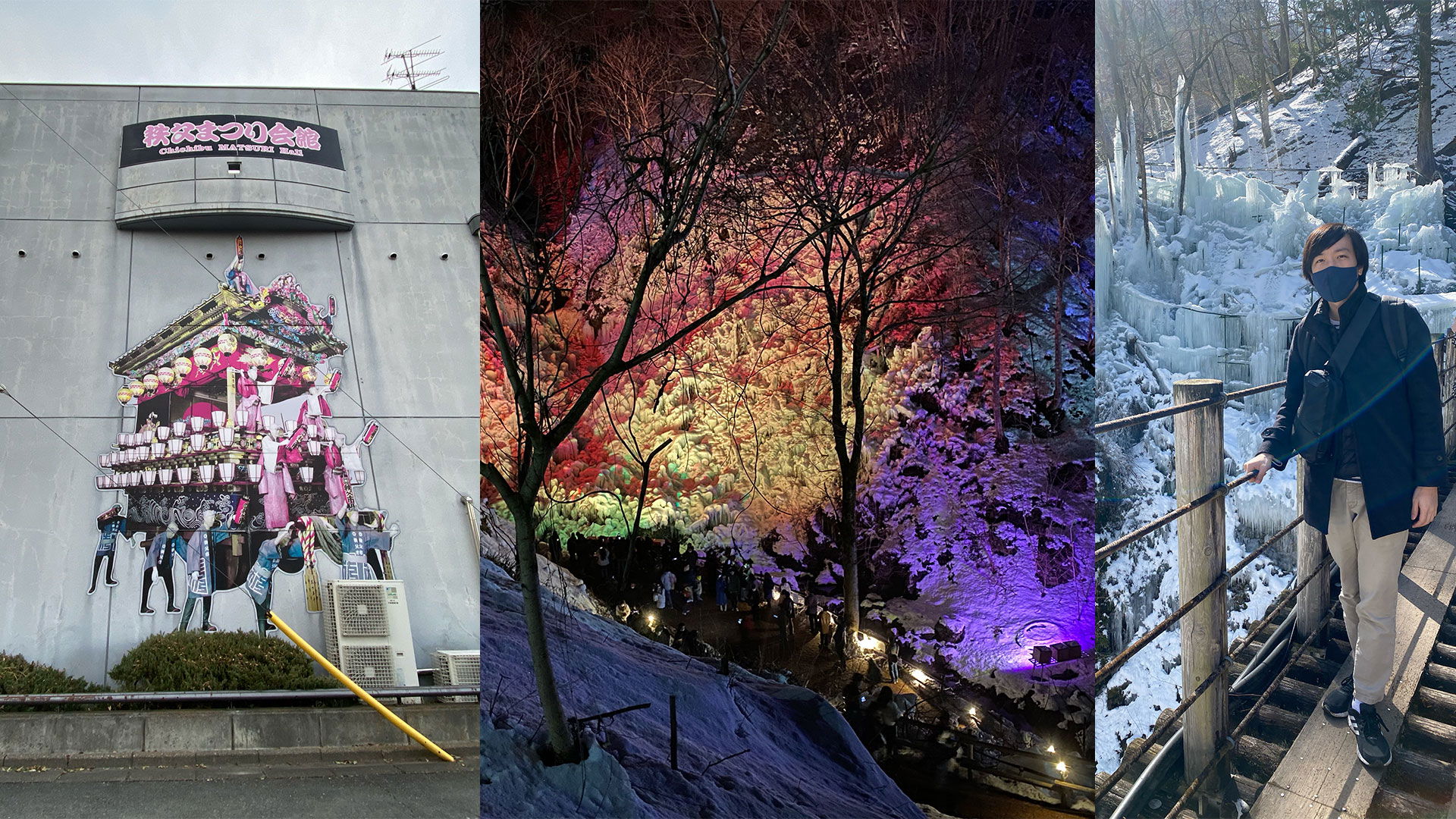
En este blog, el autor comparte su experiencia de dos días en Chichibu, Saitama, comenzando con su viaje en tren desde Tokio, donde descubre cómo llegar fácilmente y los aspectos a tener en cuenta al comprar boletos. Destaca la belleza del Bahnhof Chichibu, que combina elementos modernos y tradicionales, y su ambiente mágico por la noche, junto con las diversas tiendas y opciones gastronómicas disponibles. El blog también presenta dos atracciones naturales: los Eiszapfen de Ashigakubo y Onouchi Gorge, detallando la experiencia de visitar estos impresionantes fenómenos de hielo, incluyendo información sobre tarifas de entrada, horarios de los trenes y recomendaciones para garantizar el acceso. Se anima a los visitantes a consultar los enlaces proporcionados para obtener más información y planificar su visita.En esta entrada de blog, te cuento sobre mi viaje de dos días a Chichibu y comparto mis experiencias. Te relato cómo llegué de Tokio a Chichibu y lo que viví en la estación y en la ciudad. Además, te doy consejos sobre algunos lugares de interés, como los templos de Chichibu y los carámbanos de Ashigakubo y de la Garganta Onouchi. También te hablo de mi hotel, la comida tradicional, los cafés y catas de vino que visité. ¡Sigue leyendo para conocer más sobre mi experiencia de viaje en Chichibu!
De Tokio a Chichibu
Si quieres viajar de Tokio a Chichibu en tren, el Limited Express es una buena opción. El boleto cuesta 710 yenes y es importante tener en cuenta que se necesita un boleto especial y Pasmo (u otra tarjeta IC). Por suerte, puedes comprar el boleto especial en la taquilla después de pasar el torniquete. Si te preocupa orientarte, puedes usar Google Maps para encontrar una ruta práctica.
Aquí encuentras la estación de Chichibu (¡ojo que hay dos!):
La estación de Chichibu
La estación de Chichibu es un lugar hermoso que puedes visitar tanto de día como de noche. Por la noche, las luces frente a la estación son especialmente bonitas y crean una atmósfera mágica.
La estación es una exitosa mezcla de elementos modernos y tradicionales. La arquitectura es impresionante y el mobiliario ofrece comodidad y estilo.
Junto a la estación hay muchas tiendas donde puedes disfrutar de deliciosa comida o comprar recuerdos. La oferta es amplia y hay algo para todos los gustos.
Hay dos estaciones en Chichibu, pero la estación Seibu-Chichibu es la que deberías visitar. Puedes encontrarla en este enlace:
Una visita a la estación de Chichibu es una experiencia que no deberías perderte.
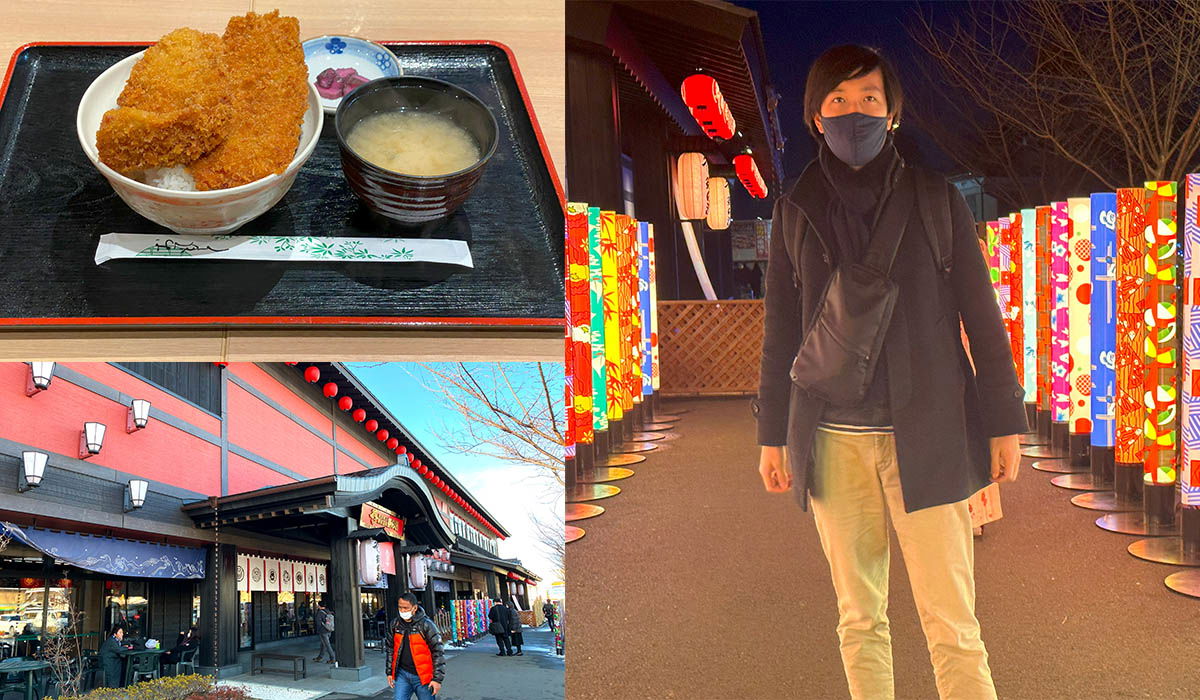
A three-photo collage from Chichibu in Saitama, Japan. The top left photo shows a meal served on a black lacquered tray: a bowl of rice topped with a golden, crispy breaded cutlet (katsudon), a bowl of light soup, a small dish of pickles, and a paper chopstick sleeve printed with green bamboo. Below it, a photo of a traditional-style station building with a bright red facade, black wooden beams, and rows of round red lanterns strung along the eaves; a blue banner with wave patterns hangs over the entrance and a few people walk across the plaza in winter jackets. The right half of the collage is a tall night shot of a person standing on a walkway between two rows of glowing, cylindrical lantern pillars covered in vivid red, orange, blue, and pink patterns. The person wears a dark winter coat, a face mask, khaki pants, and a small black crossbody bag, with more red lanterns hanging overhead and bare winter trees in the background.
A three-photo collage from Chichibu in Saitama, Japan.
The top left photo shows a meal served on a black lacquered tray: a bowl of rice topped with a golden, crispy breaded cutlet (katsudon), a bowl of light soup, a small dish of pickles, and a paper chopstick sleeve printed with green bamboo. Below it, a photo of a traditional-style station building with a bright red facade, black wooden beams, and rows of round red lanterns strung along the eaves; a blue banner with wave patterns hangs over the entrance and a few people walk across the plaza in winter jackets.
The right half of the collage is a tall night shot of a person standing on a walkway between two rows of glowing, cylindrical lantern pillars covered in vivid red, orange, blue, and pink patterns. The person wears a dark winter coat, a face mask, khaki pants, and a small black crossbody bag, with more red lanterns hanging overhead and bare winter trees in the background.
Texto visible en la imagen
No text is clearly readable in the image.
Sake & Paseo por la ciudad de Chichibu – Vive la tradición de cerca
Descubre Chichibu con un paseo relajado visitando una tradicional cervecería de Sake – incluida la degustación y una visión de la cultura local.
*Enlace de afiliado: Si reservas una actividad en viator.com a través de mi widget o enlace, recibo una pequeña comisión. Para ti no implica ningún coste adicional y apoyas mi blog. ¡Te lo agradezco mucho y te deseo un gran viaje (^_^)
Los carámbanos de Ashigakubo (Icicles of Ashigakubo)
¿Eres amante de la naturaleza y buscas una experiencia única? ¡Entonces los carámbanos de Ashigakubo son lo ideal para ti! La entrada cuesta solo 500 yenes y puedes disfrutar durante unos 30 minutos a una hora de la belleza de los carámbanos.
Si quieres llegar en tren, debes tener en cuenta que los trenes solo circulan hasta aproximadamente las 19:30. La estación de tren está justo en la entrada de los carámbanos y no debes preocuparte si llegas en tren, ya que no necesitas hacer reserva. Si vas en coche o taxi, sí se recomienda reservar.
Para asegurarte de que los carámbanos estén abiertos, deberías consultar la página web oficial, ya que pueden cerrar por mal tiempo. La web ofrece actualizaciones diarias y la puedes encontrar aquí: https://www.yokoze.org/hyouchuu/
También puedes encontrar fácilmente los carámbanos de Ashigakubo en Google Maps:
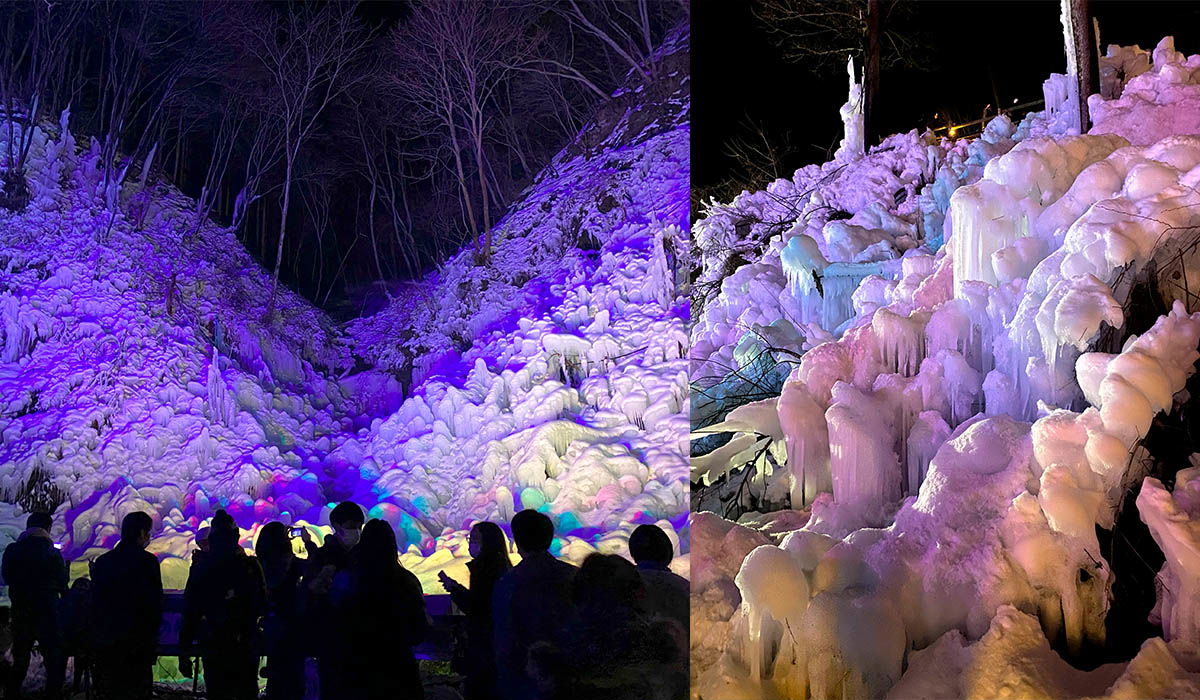
Two night views of the Ashigakubo Icicles in Chichibu, Saitama, shown side by side. On the left, a steep hillside covered in frozen columns and snow drifts glows in saturated purple, blue, and hints of green, with bare winter trees along the top of the slope. Dark silhouettes of visitors stand along a railing at the bottom, one holding up a phone to photograph the lights. On the right, a close view of the same ice wall shows thick icicles hanging in rows, lit from below in white and soft pink against the black night sky, with a few snow-covered branches and a wooden post at the top edge. The pairing gives both the scale of the lit valley and the detail of the ice itself.
Two night views of the Ashigakubo Icicles in Chichibu, Saitama, shown side by side. On the left, a steep hillside covered in frozen columns and snow drifts glows in saturated purple, blue, and hints of green, with bare winter trees along the top of the slope. Dark silhouettes of visitors stand along a railing at the bottom, one holding up a phone to photograph the lights. On the right, a close view of the same ice wall shows thick icicles hanging in rows, lit from below in white and soft pink against the black night sky, with a few snow-covered branches and a wooden post at the top edge. The pairing gives both the scale of the lit valley and the detail of the ice itself.
Texto visible en la imagen
No clearly readable text found in the image.
Los carámbanos de la Garganta Onouchi (Icicles of Onouchi Gorge)
Los carámbanos de la Garganta Onouchi son un espectáculo natural precioso que definitivamente debes visitar. La garganta está aproximadamente a 1 hora y 20 minutos en autobús desde la estación de Chichibu. Aunque está un poco alejado, merece la pena ir y disfrutar la belleza de la naturaleza.
Sin embargo, hay algunas cosas a tener en cuenta. Por un lado, desde la parada de autobús hay que subir andando unos 15 minutos hasta la garganta. Por otro lado, el autobús solo pasa unas 4 veces al día, lo que significa que debes estar atento a los horarios de salida.
Una vez en la garganta, puedes permanecer ahí alrededor de una hora para contemplar los carámbanos y comer un poco. Sin embargo, es importante no perder el autobús de regreso, ya que de lo contrario puede que tengas que esperar mucho tiempo.
También hay algunas cosas en las que hay que fijarse cuando visitas los carámbanos de la Garganta Onouchi. Por ejemplo, si hace mal tiempo, puede que la garganta esté cerrada. Por ello es importante informarse antes sobre las condiciones actuales. Puedes encontrar más información en la web: https://www.nishichichibu.or.jp/onouchi-turara/
Si planeas visitar los carámbanos de la Garganta Onouchi, también se recomienda usar Google Maps para encontrar la ubicación exacta. Aquí tienes el enlace al mapa:
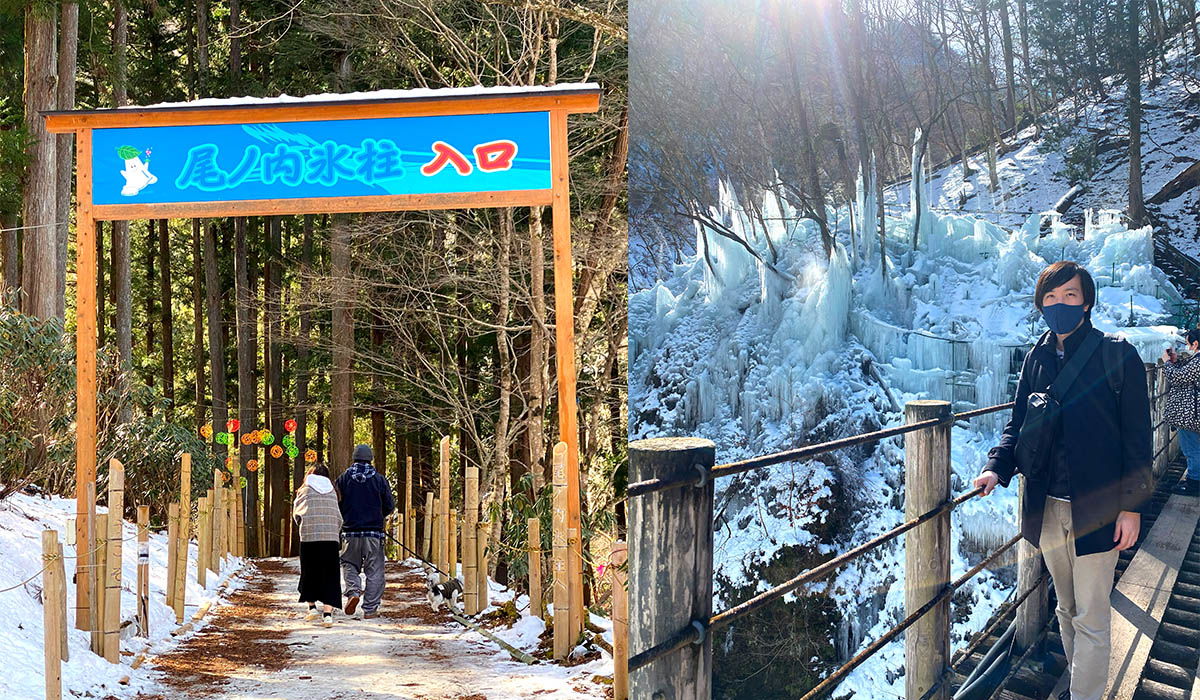
A two-part photo from the Onouchi Icicles in Chichibu, Saitama. On the left, a wooden entrance gate stands at the start of a snowy forest path, topped with a blue banner that reads 尾ノ内氷柱 入口, meaning Onouchi Icicles Entrance. Two visitors walk away down the trail, one holding a small dog on a leash, with bamboo stakes lining the snow-covered ground and tall cedars rising on both sides. On the right, the destination itself: a steep hillside draped in thick ice formations and long icicles, glowing blue-white in the sun. A man in a dark coat, face mask, and crossbody bag stands at a wooden railing along the walkway, looking toward the camera, with other visitors photographing the ice behind him.
A two-part photo from the Onouchi Icicles in Chichibu, Saitama. On the left, a wooden entrance gate stands at the start of a snowy forest path, topped with a blue banner that reads 尾ノ内氷柱 入口, meaning Onouchi Icicles Entrance. Two visitors walk away down the trail, one holding a small dog on a leash, with bamboo stakes lining the snow-covered ground and tall cedars rising on both sides.
On the right, the destination itself: a steep hillside draped in thick ice formations and long icicles, glowing blue-white in the sun. A man in a dark coat, face mask, and crossbody bag stands at a wooden railing along the walkway, looking toward the camera, with other visitors photographing the ice behind him.
Texto visible en la imagen
尾之内氷柱 入口
El Hotel / Ryokan - Echigoya en Ogano
Tuve el placer de hospedarme en el Hotel Echigoya en Ogano y se lo recomiendo a cualquiera que busque una experiencia japonesa auténtica. El hotel tradicional incluye cena y desayuno en el precio, para que puedas disfrutar de platos japoneses tradicionales, incluyendo el popular Konyaku. El hotel también cuenta con un baño tradicional, similar a un Onsen, pero más pequeño. Aquí puedes relajarte y disfrutar del ambiente tradicional japonés. El personal fue muy amable y servicial, y me sentí casi como en casa. Aunque el hotel está algo alejado, es más económico y se puede llegar muy bien en autobús. Además, el entorno es precioso y ofrece muchas posibilidades para hacer senderismo y descubrir. Recomiendo encarecidamente el Hotel Echigoya y me encantaría volver a alojarme allí. En el momento del viaje, pagué 24.000 yenes por dos personas.
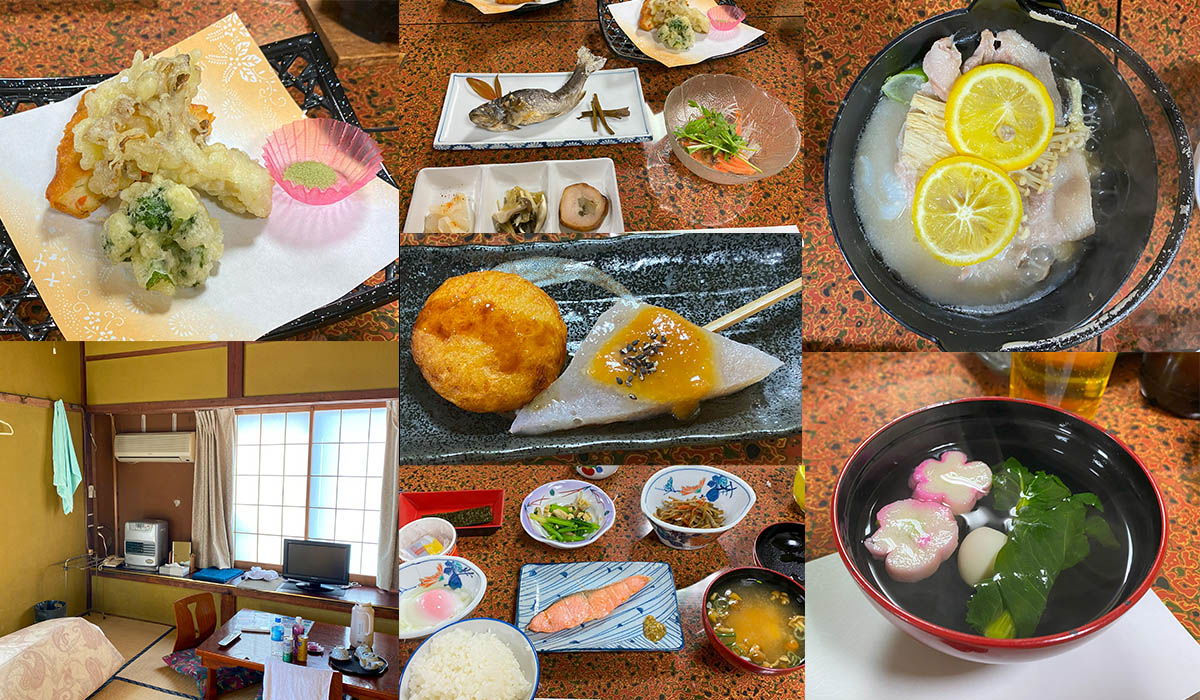
A collage of meals and a guest room from a stay at Ryokan Echigoya in Ogano, Chichibu. Four food photos sit around the edges: golden tempura on a black lacquer tray, a whole grilled fish served with pickles and small side dishes, a simmering hot pot topped with two lemon slices and pork, and a red bowl of clear soup holding a pink flower-shaped fish cake, leafy greens, and a boiled egg. In the center, a skewer holds a grilled dango dumpling and a triangle of kiritoshi mochi glazed with sweet miso and sesame. The largest photo at the bottom shows a traditional Japanese breakfast laid out on a low table: grilled salmon, white rice, miso soup, raw egg, pickles, and tiny blue-and-white dishes of vegetables. The remaining photo shows the tatami guest room itself, with a shoji window, a small TV, and futon bedding along the wall. Together it reads as a classic ryokan stay, dinner and breakfast served in the room.
A collage of meals and a guest room from a stay at Ryokan Echigoya in Ogano, Chichibu. Four food photos sit around the edges: golden tempura on a black lacquer tray, a whole grilled fish served with pickles and small side dishes, a simmering hot pot topped with two lemon slices and pork, and a red bowl of clear soup holding a pink flower-shaped fish cake, leafy greens, and a boiled egg. In the center, a skewer holds a grilled dango dumpling and a triangle of kiritoshi mochi glazed with sweet miso and sesame.
The largest photo at the bottom shows a traditional Japanese breakfast laid out on a low table: grilled salmon, white rice, miso soup, raw egg, pickles, and tiny blue-and-white dishes of vegetables. The remaining photo shows the tatami guest room itself, with a shoji window, a small TV, and futon bedding along the wall. Together it reads as a classic ryokan stay, dinner and breakfast served in the room.
Texto visible en la imagen
No clearly readable text found.
Encuentra más hoteles cercanos
Enlace de afiliado: Si reservas un hotel en Booking.com a través de mi widget o enlace, recibo una pequeña comisión. Para ti no tiene coste adicional y apoyas mi blog. Te lo agradezco mucho y te deseo un feliz viaje (^_^) .Parque de los ciervos (Ogano Deer Park)
El Ogano Deer Park es un lugar hermoso que invita a relajarse. Con entrada gratuita, es un lugar genial para una breve parada en tu viaje. Si te gustan los animales, te encantarán los muchos ciervos en el parque.
Además de ver los ciervos, tienes la opción de comprar comida para ellos solo por 50 yenes.
Si quieres visitar el parque, te recomendamos guiarte con Google Maps. Solo sigue este enlace:
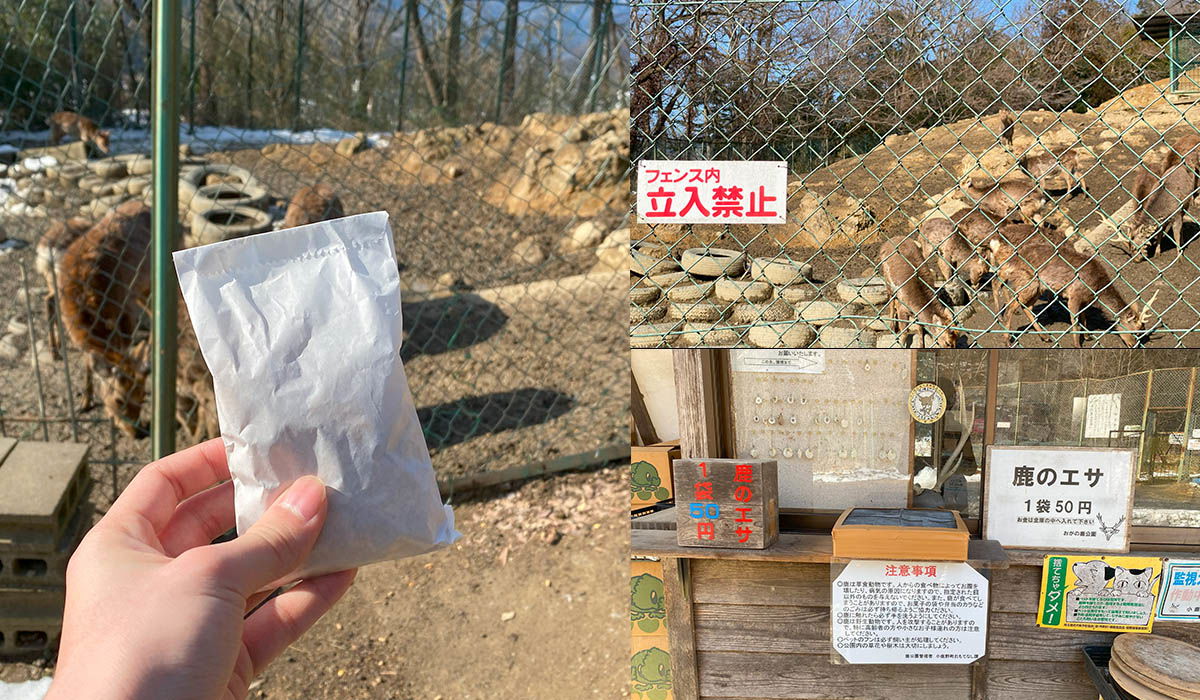
A three-photo collage from Ogano Deer Park in Chichibu, Saitama, on a clear winter day. On the left, a hand holds up a small white paper bag of deer feed in front of a chain-link enclosure where several brown deer move across bare dirt with patches of leftover snow. The top-right photo shows the herd up close, heads down feeding along the fence near a row of half-buried old tires, with a white sign warning visitors not to step inside the fence. The bottom-right photo shows the feed stand itself: a rustic wooden counter selling deer snacks at 50 yen a bag, with a precautions notice on the counter, mounted antlers above, keychains hanging on display, and cartoon deer mascot signs tacked to the sides.
A three-photo collage from Ogano Deer Park in Chichibu, Saitama, on a clear winter day.
On the left, a hand holds up a small white paper bag of deer feed in front of a chain-link enclosure where several brown deer move across bare dirt with patches of leftover snow. The top-right photo shows the herd up close, heads down feeding along the fence near a row of half-buried old tires, with a white sign warning visitors not to step inside the fence. The bottom-right photo shows the feed stand itself: a rustic wooden counter selling deer snacks at 50 yen a bag, with a precautions notice on the counter, mounted antlers above, keychains hanging on display, and cartoon deer mascot signs tacked to the sides.
Texto visible en la imagen
フェンス内
立入禁止
1袋50円
鹿のエサ
鹿のエサ
1袋 50円
注意事项
Santa Café
Santa Café es una cafetería acogedora que ofrece café y pasteles. Es ideal para una tarde relajada al sol. Aunque había nieve en el suelo, la terraza era muy agradable gracias al cálido sol. La ubicación de la cafetería es muy conveniente, ya que está cerca de transporte público y también es posible aparcar en la zona. Si quieres visitar Santa Café, solo tienes que usar Google Maps para llegar. Aquí tienes el enlace: https://maps.app.goo.gl/VZKHdDguihnJKLrf9?g_st=ic
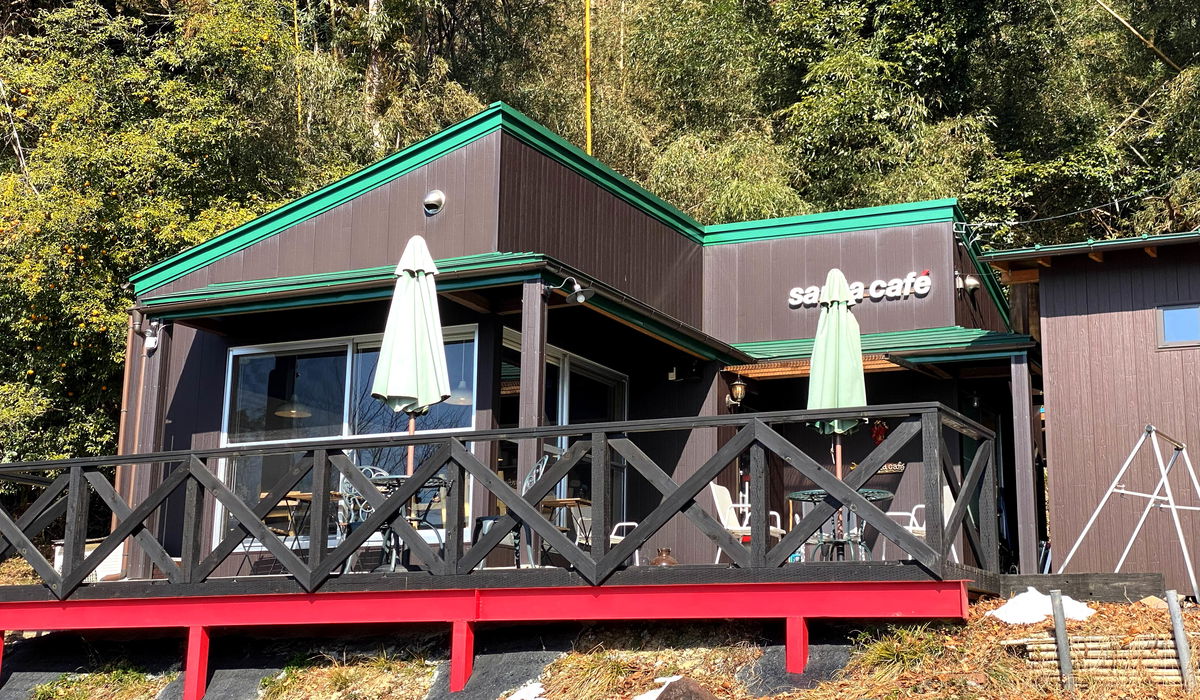
A small hillside cafe in Chichibu called santa cafe, a single-story building with dark brown siding, bright green roof trim, and a red-painted wooden deck base. Two closed pale green patio umbrellas stand on the deck, one partially hiding the white lettering of the sign on the front gable. Black cross-braced railings surround the deck, where white plastic chairs, small tables, and a couple of metal chairs wait behind sliding glass doors. Steep ground drops away below the red deck supports, with a few patches of leftover snow and dry grass. Dense green trees and a fruit-heavy persimmon tree fill the slope behind and beside the building, and a simple white swing frame sits at the right edge of the property.
A small hillside cafe in Chichibu called santa cafe, a single-story building with dark brown siding, bright green roof trim, and a red-painted wooden deck base. Two closed pale green patio umbrellas stand on the deck, one partially hiding the white lettering of the sign on the front gable. Black cross-braced railings surround the deck, where white plastic chairs, small tables, and a couple of metal chairs wait behind sliding glass doors. Steep ground drops away below the red deck supports, with a few patches of leftover snow and dry grass. Dense green trees and a fruit-heavy persimmon tree fill the slope behind and beside the building, and a simple white swing frame sits at the right edge of the property.
Texto visible en la imagen
sa
a café
Vino de Chichibu
El vino de Chichibu es un vino elaborado con uvas locales. Las uvas se cultivan y cosechan en la zona. La bodega local también está allí y se puede visitar. También hay posibilidad de degustar el vino. Es una excelente oportunidad para disfrutar de la vinicultura local y aprender más al respecto. Si quieres visitar la bodega, aquí tienes el lugar:
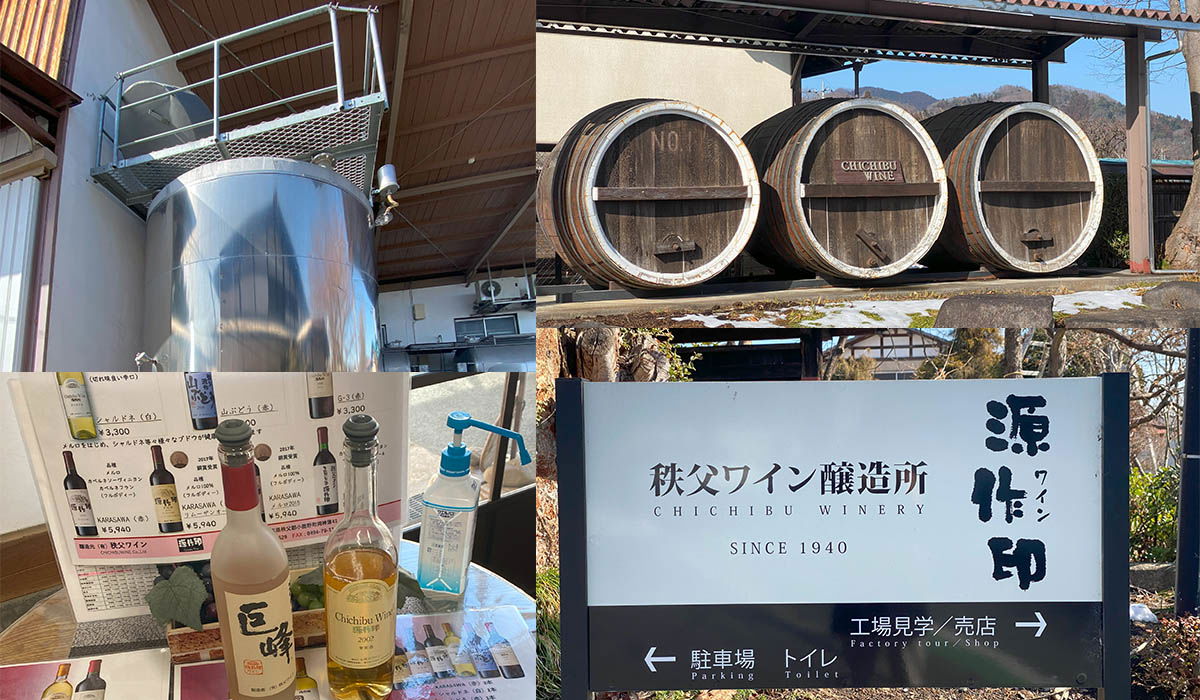
A four-photo collage from Chichibu Winery in Chichibu, Saitama. The top left shows the production side: a large mirrored stainless steel fermentation tank standing under a wooden-beamed roof, with a metal catwalk and railings running above it. The top right shows three huge wooden aging barrels resting on a stone base outdoors, their ends stenciled with "NO. 1" and a small "CHICHIBU WINE" plaque, with wooded hills and a patch of snow behind them. The bottom half covers the tasting experience. On the left, two bottles sit on a table in front of a laminated price list of the winery's wines: one bottle of pale grape wine labeled Kyocho (巨峰) and a golden Chichibu Wine, next to a pump bottle of hand sanitizer. On the right, the winery's white entrance sign reads "秩父ワイン醸造所 / CHICHIBU WINERY" with "SINCE 1940" underneath, and arrows pointing to the parking, toilets, and the factory tour and shop, with a vertical calligraphy mark of the winery's seal at its side.
A four-photo collage from Chichibu Winery in Chichibu, Saitama. The top left shows the production side: a large mirrored stainless steel fermentation tank standing under a wooden-beamed roof, with a metal catwalk and railings running above it. The top right shows three huge wooden aging barrels resting on a stone base outdoors, their ends stenciled with "NO. 1" and a small "CHICHIBU WINE" plaque, with wooded hills and a patch of snow behind them.
The bottom half covers the tasting experience. On the left, two bottles sit on a table in front of a laminated price list of the winery's wines: one bottle of pale grape wine labeled Kyocho (巨峰) and a golden Chichibu Wine, next to a pump bottle of hand sanitizer. On the right, the winery's white entrance sign reads "秩父ワイン醸造所 / CHICHIBU WINERY" with "SINCE 1940" underneath, and arrows pointing to the parking, toilets, and the factory tour and shop, with a vertical calligraphy mark of the winery's seal at its side.
Texto visible en la imagen
NO.1
CHICHIBU WINE
シャルドネ(白)
¥3,300
山ぶどう(赤)
¥3,300
巨峰
KAMIKAWA (Hokkaido) (赤)
¥5,940
甲州
¥5,940
2015年
2019年
巨峰
Chichibu Wine
秩父ワイン醸造所
CHICHIBU WINERY
SINCE 1940
源作印
ワイン
← 駐車場
Parking
トイレ
Toilet
工場見学/売店 →
Factory tour / Shop
Conclusión del viaje a Chichibu
Lugares visitados y maravillas naturales sorprendentes (aunque debo admitir que los carámbanos fueron agrandados artificialmente). La ciudad también es conocida por su cultura tradicional y su gastronomía. El hotel en el que me alojé fue también uno de los puntos destacados de mi viaje, ya que tuve una experiencia japonesa auténtica. Si necesitas un descanso del bullicio de la ciudad y quieres pasar tiempo en la naturaleza, entonces Chichibu es el lugar perfecto para ti. Hay muchos lugares y actividades que puedes explorar. Por eso te recomiendo que aproveches la oportunidad y disfrutes todo lo que Chichibu tiene para ofrecerte.
Comentarios