Table of contents:
TL;DR
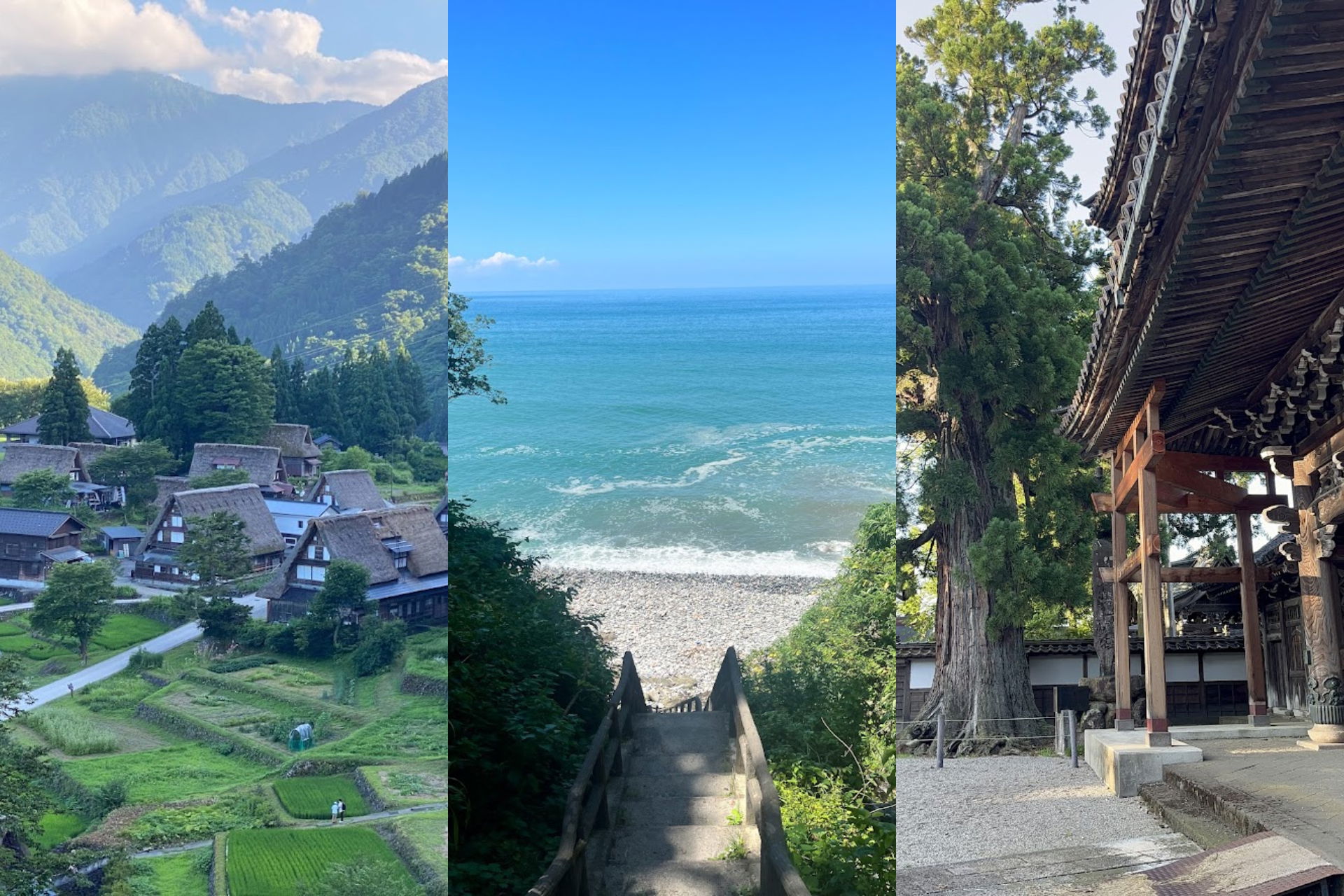
Explore the stunning Toyama Prefecture, a unique travel destination boasting breathtaking landscapes, distinctive rocky beaches, historic villages, and beautiful nature year-round. This guide provides essential tips for traveling from Tokyo to Toyama, highlighting the advantages of driving a rental car, which offers greater flexibility for exploring the region, as opposed to taking the Shinkansen, despite the latter being a faster alternative. Recommended accommodations include the APA Hotel Takaoka Ekimae, conveniently located near Takaoka Station, providing a comfortable stay at a reasonable price. Additionally, the picturesque Gokayama village is a must-visit for its charm. Enjoy an unforgettable trip with this comprehensive overview of travel logistics, lodging, and local attractions in Toyama.In this post about Toyama Prefecture, I will show you numerous tips and information about getting there, accommodation, and exciting activities on site. Toyama is an incomparable travel destination with breathtaking scenery, unique pebble beaches, historic villages, and beautiful nature in every season.
From Tokyo to Toyama
By Car
There are various ways to get to Toyama. The best option is definitely by car. You can rent a car from the many rental car companies in Tokyo. There are also other options like the high-speed train ( Shinkansen[/link] ), but this is not as recommendable as the car, as you are less flexible on site. If you choose to drive, the journey takes about 5 1/2 hours. During the journey, you can enjoy the beautiful scenery and stop at various rest stops to take a break. Toll fees are incurred during the journey, but you can already find out about the costs in advance. For example, you can use Google Maps to estimate the toll fees.
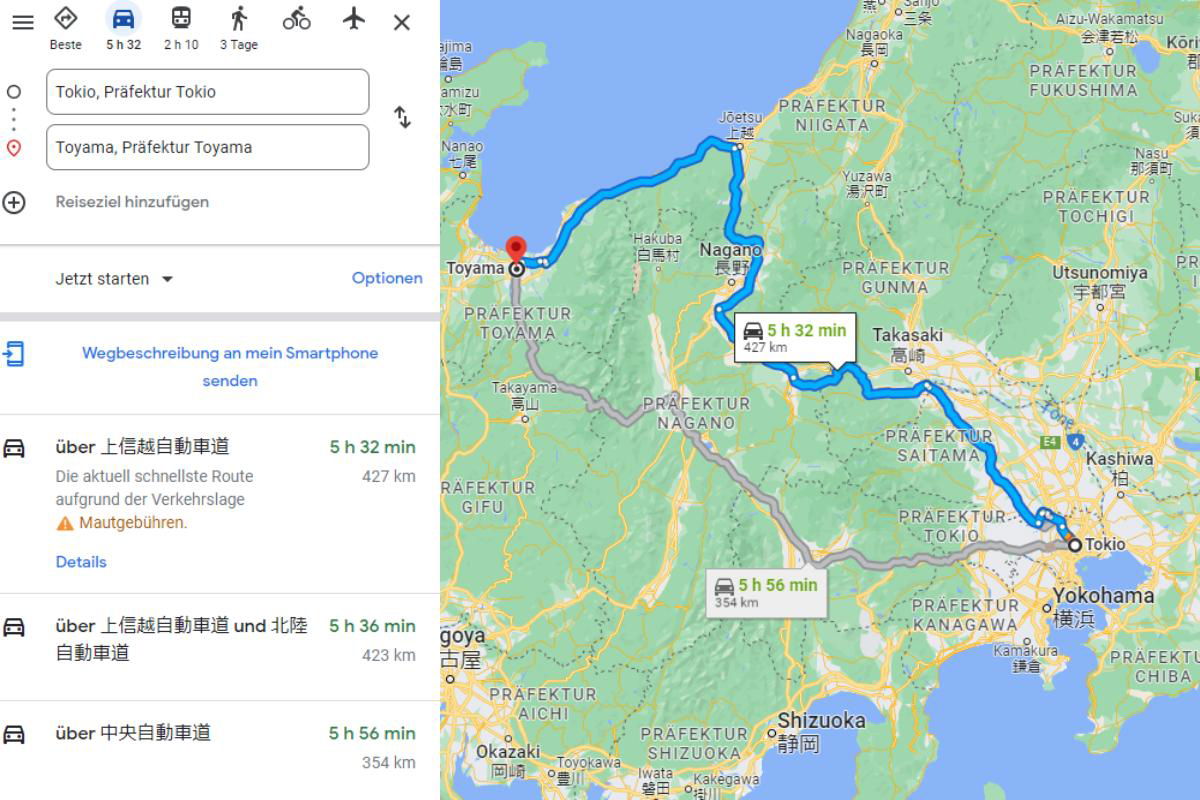
A Google Maps route screenshot in German shows a driving route from Tokio to Toyama. The left panel lists the starting point and destination input fields, plus three route options with travel times and distances: the fastest route via the Jōshin-etsu Expressway takes 5 hours 32 minutes and covers 427 km, with a note about toll charges. Two alternatives come in at 5 h 36 min and 5 h 56 min. The map itself covers central Japan, with the highlighted blue route winding north from Tokio through Gunma and Nagano before reaching Toyama on the coast. A second, shorter route (354 km, 5 h 56 min) is shown in gray along a more southern path. Prefecture labels like Nagano, Gunma, and Niigata are visible, and mode-of-travel icons at the top show the car option selected alongside train, walking, cycling, and flight.
A Google Maps route screenshot in German shows a driving route from Tokio to Toyama. The left panel lists the starting point and destination input fields, plus three route options with travel times and distances: the fastest route via the Jōshin-etsu Expressway takes 5 hours 32 minutes and covers 427 km, with a note about toll charges. Two alternatives come in at 5 h 36 min and 5 h 56 min.
The map itself covers central Japan, with the highlighted blue route winding north from Tokio through Gunma and Nagano before reaching Toyama on the coast. A second, shorter route (354 km, 5 h 56 min) is shown in gray along a more southern path. Prefecture labels like Nagano, Gunma, and Niigata are visible, and mode-of-travel icons at the top show the car option selected alongside train, walking, cycling, and flight.
Visible text in the image
Beste
5 h 32
2 h 10
3 Tage
Tokio, Präfektur Tokio
Toyama, Präfektur Toyama
Reiseziel hinzufügen
Jetzt starten
Optionen
Wegbeschreibung an mein Smartphone senden
über 上信越自動車道
5 h 32 min
427 km
Die aktuell schnellste Route aufgrund der Verkehrslage
Mautgebühren.
Details
über 上信越自動車道 und 北陸自動車道
5 h 36 min
423 km
über 中央自動車道
5 h 56 min
354 km
Aizu-Wakamatsu
会津若松
Kōr
PRAFEKTUR FUKUSHIMA
Nagaoka
長岡
Sanj
PRAFEKTUR NIIGATA
Jōetsu
上越
Nanao
七尾
Yuzawa
湯沢町
Nasu
PRAFEKTUR TOCHIGI
Hakuba
白馬村
Nagano
長野
Toyama
PRAFEKTUR TOYAMA
Utsunomiya
宇都宮
PRAFEKTUR GUNMA
Takasaki
高崎
5 h 32 min
427 km
Takayama
高山
PRAFEKTUR NAGANO
PRAFEKTUR SAITAMA
Kashiwa
柏
PRAFEKTUR TOKIO
Tokio
RAFEKTUR GIFU
5 h 56 min
354 km
goya
古屋
Yokohama
横浜
PRAFEKTUR KANAGAWA
Kamakura
鎌倉
PRAFEKTU
CHIBA
Shizuoka
静岡
PRAFEKTUR AICHI
Okazaki
岡崎
Toyokawa
豊川
PRAFEKTUR SHIZUOKA
Iwata
磐田
Kakegawa
掛川
By Train
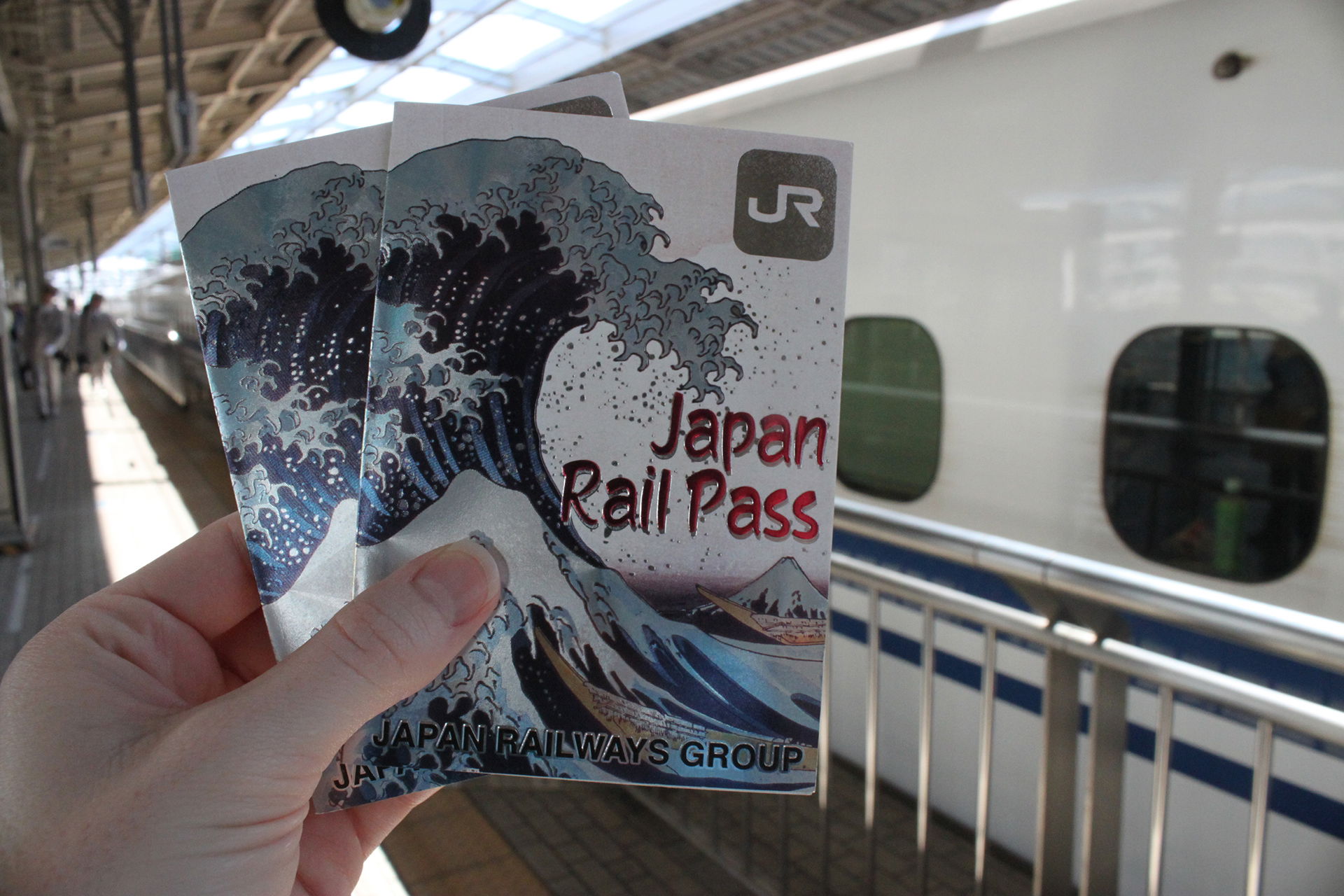
In principle, there is the possibility of traveling to Toyama by high-speed train, the Shinkansen[/link] . The journey time is about 2 1/2 hours, which is significantly shorter than by car. The cost is about 12,750 Yen per journey according to Google Maps. Alternatively, as a tourist, you can use the Japan Rail Pass . However, the Shinkansen only goes directly to Toyama City. However, if you want to explore the entire Toyama Prefecture, you definitely need a car on site, as there is hardly any public transport. A car ultimately not only offers more flexibility, but also allows you to fully explore the prefecture and enjoy the region's picturesque landscapes.
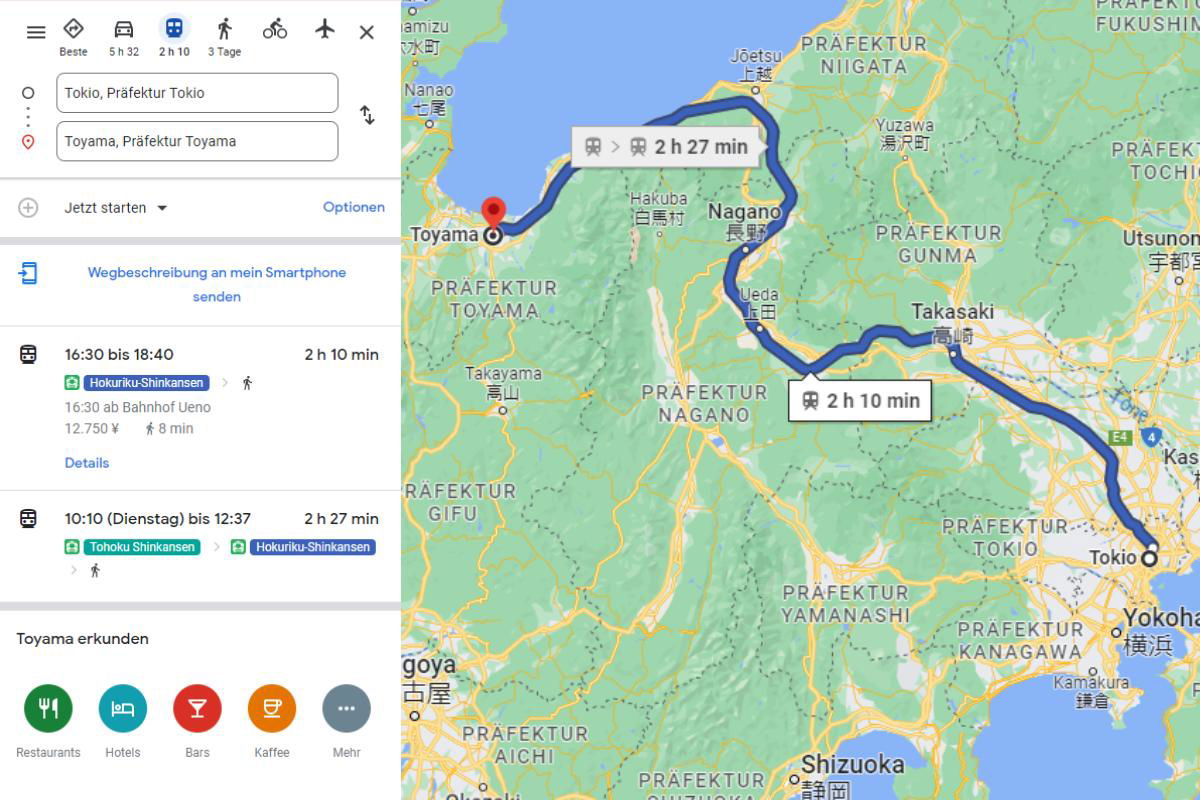
This is a Google Maps screenshot, set to German, showing train directions from Tokio to Toyama. A blue route line traces the path across central Japan, running from Tokyo northwest through Takasaki and Ueda to Nagano, then north past Jōetsu before ending at a red pin in Toyama on the coast. White badges on the map mark travel times of 2 h 27 min and 2 h 10 min, and prefecture labels such as Präfektur Nagano, Präfektur Toyama, and Präfektur Gunma cover the green terrain. The left sidebar lists the two route options. The faster one runs from 16:30 to 18:40, takes 2 h 10 min on the Hokuriku-Shinkansen departing from Bahnhof Ueno, costs 12.750 ¥, and includes an 8-minute walk. The second leaves at 10:10 on Tuesday and arrives at 12:37, taking 2 h 27 min with a transfer from the Tohoku-Shinkansen to the Hokuriku-Shinkansen. Above the routes are mode selectors with driving at 5 h 32 and transit at 2 h 10, the address fields for origin and destination, and a link to send the directions to a smartphone. At the bottom, a "Toyama erkunden" section offers category buttons for Restaurants, Hotels, Bars, Kaffee, and Mehr.
This is a Google Maps screenshot, set to German, showing train directions from Tokio to Toyama. A blue route line traces the path across central Japan, running from Tokyo northwest through Takasaki and Ueda to Nagano, then north past Jōetsu before ending at a red pin in Toyama on the coast. White badges on the map mark travel times of 2 h 27 min and 2 h 10 min, and prefecture labels such as Präfektur Nagano, Präfektur Toyama, and Präfektur Gunma cover the green terrain.
The left sidebar lists the two route options. The faster one runs from 16:30 to 18:40, takes 2 h 10 min on the Hokuriku-Shinkansen departing from Bahnhof Ueno, costs 12.750 ¥, and includes an 8-minute walk. The second leaves at 10:10 on Tuesday and arrives at 12:37, taking 2 h 27 min with a transfer from the Tohoku-Shinkansen to the Hokuriku-Shinkansen. Above the routes are mode selectors with driving at 5 h 32 and transit at 2 h 10, the address fields for origin and destination, and a link to send the directions to a smartphone. At the bottom, a "Toyama erkunden" section offers category buttons for Restaurants, Hotels, Bars, Kaffee, and Mehr.
Visible text in the image
Beste
5 h 32
2 h 10
3 Tage
Tokio, Präfektur Tokio
Toyama, Präfektur Toyama
Jetzt starten
Optionen
Wegbeschreibung an mein Smartphone
senden
16:30 bis 18:40 2 h 10 min
Hokuriku-Shinkansen
16:30 ab Bahnhof Ueno
12.750 ¥ 8 min
Details
10:10 (Dienstag) bis 12:37 2 h 27 min
Tohoku Shinkansen
Hokuriku-Shinkansen
Toyama erkunden
Restaurants
Hotels
Bars
Kaffee
Mehr
PRÄFEKTUR FUKUSHIM
水町
PRÄFEKTUR NIIGATA
Jōetsu
上越
Nanao
七尾
Yuzawa
湯沢町
2 h 27 min
PRÄFEKT
TOCHI
Hakuba
白馬村
Nagano
長野
Toyama
Utsunom
宇都
PRÄFEKTUR TOYAMA
PRÄFEKTUR GUNMA
Ueda
上田
Takasaki
高崎
2 h 10 min
E4
4
Kas
Takayama
高山
PRÄFEKTUR NAGANO
RÄFEKTUR
GIFU
PRÄFEKTUR TOKIO
Tokio
PRÄFEKTUR YAMANASHI
goya
古屋
PRÄFEKTUR AICHI
Oki
PRÄFEKTUR KANAGAWA
Yokoha
横浜
Kamakura
鎌倉
Shizuoka
静岡
PRÄFEKTUR
SHIZUOKA
Our Accommodation: APA Hotel Takaoka Ekimae
We chose to stay in Takaoka because the location was practical and the cost of accommodation was relatively cheap. Here we slept in the APA Hotel Takaoka Ekimae * and paid about 7,000 Yen per night for two people (cost via Google Maps). It is a 3-star hotel located directly at Takaoka Station. The hotel chain always offers a consistent standard and we can recommend it to anyone looking for comfortable and affordable accommodation.
Google Maps: https://goo.gl/maps/pPg5kNtkN3yHaM7M9
Booking.com: Takaoka Eki APA Hotel
*Affiliate Link
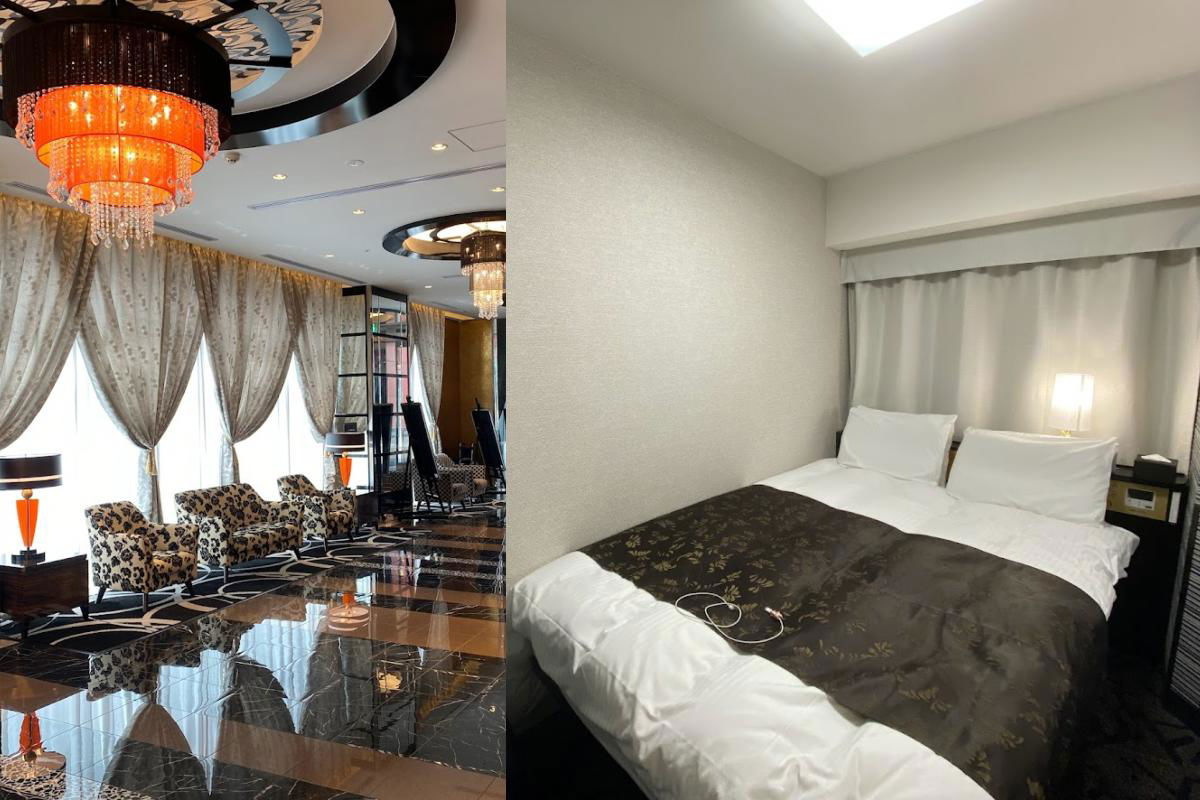
A side-by-side look at a Japanese business hotel. On the left, the lobby goes for glamour: a large chandelier with glowing orange shades and hanging crystals, mirrored circular ceiling panels, floor-to-ceiling patterned curtains, and leopard-print armchairs arranged on a highly polished black and beige marble floor that reflects everything above it. On the right, a guest room is far simpler, with a double bed dressed in white linens and a dark brown throw with a gold leaf pattern, pillows propped against a white curtain that runs behind the headboard, and a small lit lamp on the nightstand beside it. The pairing captures the hotel's split personality: a showy entrance area and a plain, functional room, in this case the APA Hotel Takaoka Ekimae in Toyama.
A side-by-side look at a Japanese business hotel. On the left, the lobby goes for glamour: a large chandelier with glowing orange shades and hanging crystals, mirrored circular ceiling panels, floor-to-ceiling patterned curtains, and leopard-print armchairs arranged on a highly polished black and beige marble floor that reflects everything above it. On the right, a guest room is far simpler, with a double bed dressed in white linens and a dark brown throw with a gold leaf pattern, pillows propped against a white curtain that runs behind the headboard, and a small lit lamp on the nightstand beside it. The pairing captures the hotel's split personality: a showy entrance area and a plain, functional room, in this case the APA Hotel Takaoka Ekimae in Toyama.
Visible text in the image
No text is clearly readable in the image.
The Historic Village of Gokayama
In Toyama Prefecture is the picturesque village of Gokayama, which is known for its historical significance. It lies in a remote mountain region and is rich in traditional farmhouses built in the unique Gasshō architectural style. This special style is deeply rooted in the local culture and is a major attraction for visitors who travel to this region every year. Gokayama has its own charm in every season: in spring and summer you are enchanted by the vibrant green landscape, while autumn offers a colorful foliage panorama. The winter months envelop the village in a fairytale snowscape that exudes an incomparable charm. Notably, no entry fee is required for this impressive experience.
Once there, we strengthened ourselves with Udon , which was prepared with local ingredients such as tofu, mushrooms, and various vegetables. A shaved ice - the Kakigori - was of course not to be missed. The ice was served with Mochi and red beans.
Here too, I recommend you travel by car. There is a public bus connection from Takaoka, but the journey time is very long.
Google Maps: https://maps.app.goo.gl/dSzJTKPkB6s74V5TA


Johanabetsuin-Zentokuji Temple
On our way back from Gokayama Village, we made a stop at the Zentokuji Temple in Nanto. This Buddhist temple is over 500 years old and impresses with its beautiful architecture. Particularly noteworthy is the temple's elaborately designed woodwork, which is definitely worth a visit.
Daily opening hours: 09:00 - 17:00
Google Maps: https://goo.gl/maps/fRSv416vu2PwHzxV6
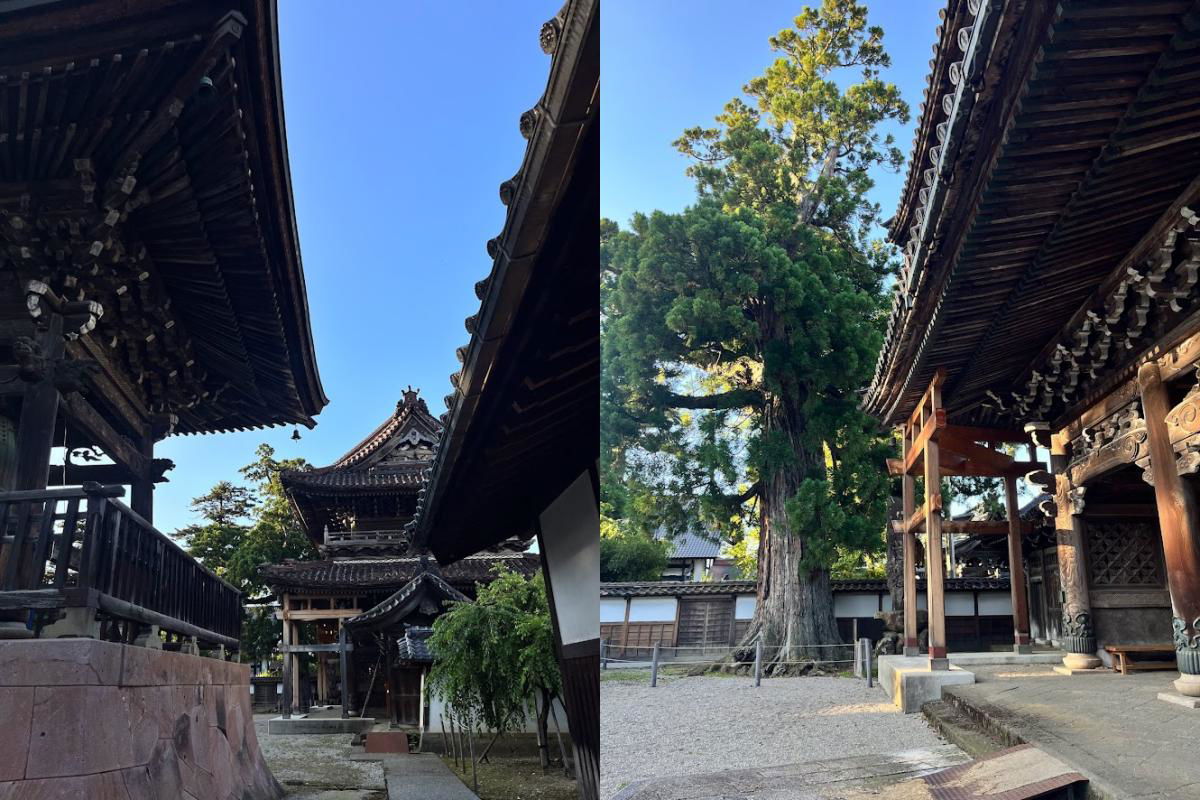
A two-photo side-by-side view of Zentokuji, a Buddhist temple in Toyama, Japan, shot on a clear sunny day. The left photo looks across the temple grounds from the edge of a wooden veranda toward the main hall, a dark timber structure with a layered tiled roof and carved details, framed by the deep eaves of adjacent buildings under a bright blue sky. The right photo shows a different angle along the temple corridor, where a massive old cedar tree towers over the grounds, its trunk thicker than anything around it and roped off near the base. Warm late-afternoon light hits the intricately carved wooden beams and pillars of the covered walkway on the right, contrasting with the deep green of the tree filling the background.
A two-photo side-by-side view of Zentokuji, a Buddhist temple in Toyama, Japan, shot on a clear sunny day. The left photo looks across the temple grounds from the edge of a wooden veranda toward the main hall, a dark timber structure with a layered tiled roof and carved details, framed by the deep eaves of adjacent buildings under a bright blue sky.
The right photo shows a different angle along the temple corridor, where a massive old cedar tree towers over the grounds, its trunk thicker than anything around it and roped off near the base. Warm late-afternoon light hits the intricately carved wooden beams and pillars of the covered walkway on the right, contrasting with the deep green of the tree filling the background.
Visible text in the image
No clearly readable text is present in the image.
Fishing in Toyama
As Toyama Prefecture is located directly on the Sea of Japan, it is the perfect place for fishing. There are numerous spots that you can explore and enjoy. If you arrive by car, you can look forward to many affordable or even free parking spaces. In principle, I would recommend arriving by car, as many fishing spots are not accessible by public transport. At our fishing spot there were even free foot baths!
On our fishing trip, we caught some fascinating fish, including a Japanese whitefish, a flounder, and an octopus. Fishing was an unforgettable experience that we will remember for a long time. But the best was yet to come: we spontaneously bought a gas grill for 2,500 Yen and turned the caught fish into fried fish. The taste was incredibly good and made us even more enthusiastic about Toyama.
To make our dinner perfect, we bought a bento box from the konbini.
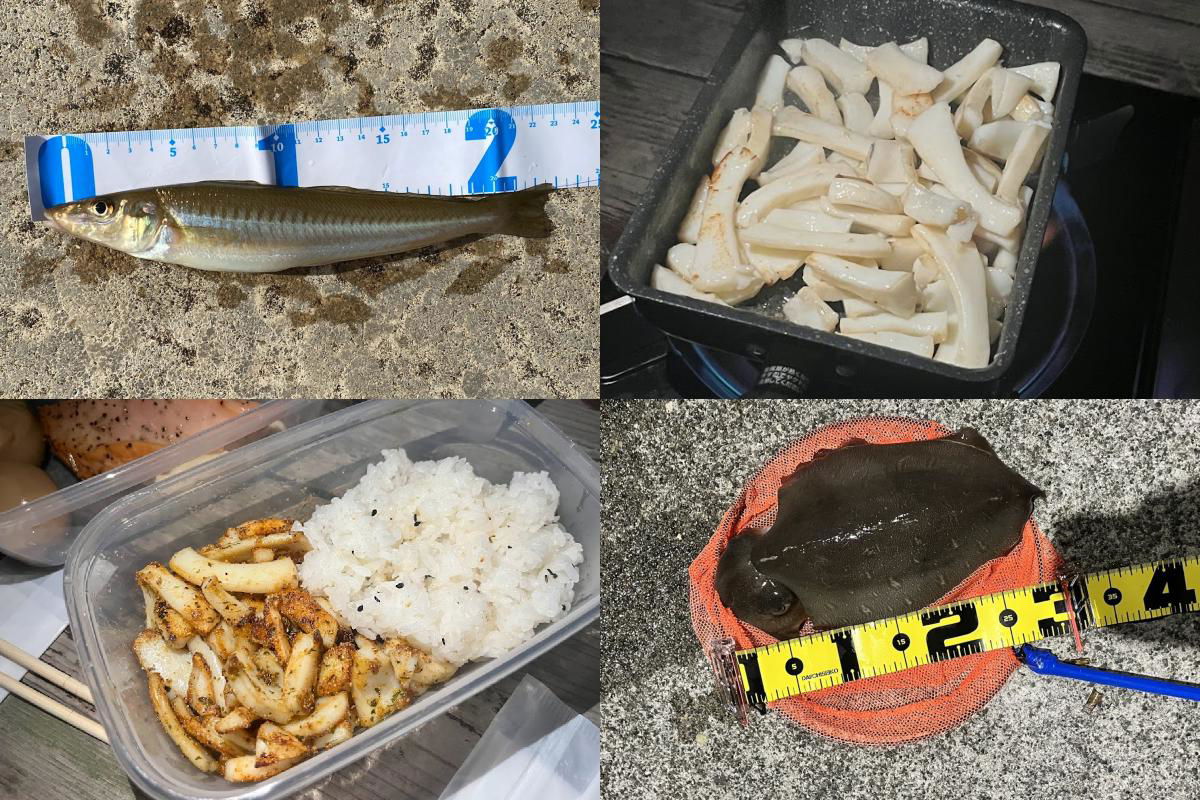
A four-photo collage from a fishing trip in Toyama, Japan. In the top left, a slender silver-green fish about 22 cm long lies on wet sand beside a white and blue measuring tape. The top right shows strips of white fish meat grilling in a black square pan on a portable gas stove. The bottom left panel shows the finished meal packed in a clear plastic container: seasoned, golden-grilled fish pieces next to a mound of white rice sprinkled with furikake. In the bottom right, a dark flatfish rests in an orange landing net on wet gravel, stretched out with a yellow measuring tape that reads roughly 36 cm.
A four-photo collage from a fishing trip in Toyama, Japan. In the top left, a slender silver-green fish about 22 cm long lies on wet sand beside a white and blue measuring tape. The top right shows strips of white fish meat grilling in a black square pan on a portable gas stove.
The bottom left panel shows the finished meal packed in a clear plastic container: seasoned, golden-grilled fish pieces next to a mound of white rice sprinkled with furikake. In the bottom right, a dark flatfish rests in an orange landing net on wet gravel, stretched out with a yellow measuring tape that reads roughly 36 cm.
Visible text in the image
1 5 10 15 17 20 22 2
1 5 2 3 4 25 30 35 5 15
Oyashirazu Cliffs
The coast to the Sea of Japan offers a breathtaking landscape surrounded by rocky cliffs. These cliffs are overgrown with lush green plants and a staircase leads to a unique pebble beach. What is special about this beach are the many round stones that have been rounded by the water over many years. When the stones are set in motion by the waves, it creates a unique, "clicking" sound.
The combination of the roar of the waves and the sound of the stones creates a calming and relaxing atmosphere that is so incomparable. This place in Toyama was one of my favorites.
Google Maps: https://goo.gl/maps/TMf1fsvv8ukeUWQt9
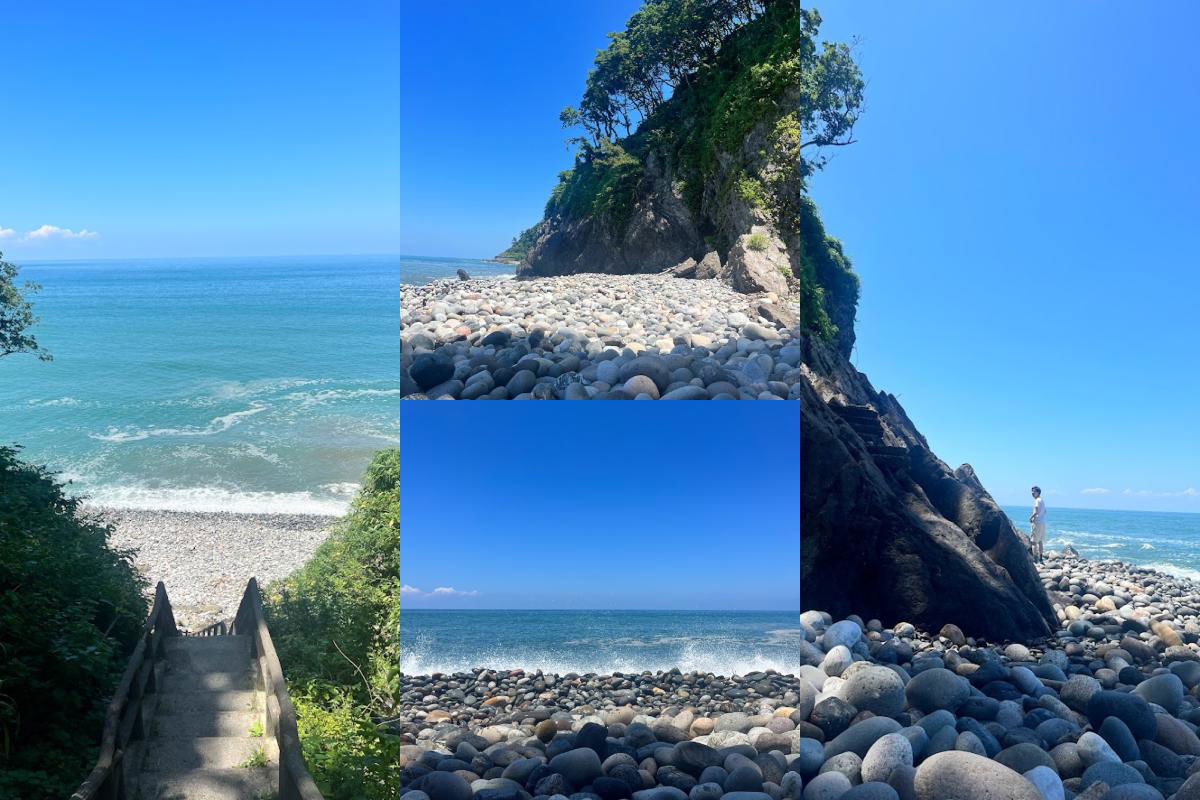
A four-photo collage of the Oyashirazu coast in Toyama Prefecture, where steep cliffs drop straight to a pebble beach on the Sea of Japan. On the left, a narrow concrete staircase with a simple handrail descends between thick green shrubs toward the shore, opening onto pale pebbles and turquoise water with small waves breaking under a clear blue sky. The top middle photo looks along the beach to a rocky cliff crowned with dense trees. Below it, waves wash up onto a shore of smooth, rounded stones in shades of grey, white, and rust. The right photo shows the cliff at close range: a dark, rugged rock face with steps carved into it, and a person in a white shirt and light shorts standing on the pebbles beneath it, facing the sea.
A four-photo collage of the Oyashirazu coast in Toyama Prefecture, where steep cliffs drop straight to a pebble beach on the Sea of Japan.
On the left, a narrow concrete staircase with a simple handrail descends between thick green shrubs toward the shore, opening onto pale pebbles and turquoise water with small waves breaking under a clear blue sky. The top middle photo looks along the beach to a rocky cliff crowned with dense trees. Below it, waves wash up onto a shore of smooth, rounded stones in shades of grey, white, and rust. The right photo shows the cliff at close range: a dark, rugged rock face with steps carved into it, and a person in a white shirt and light shorts standing on the pebbles beneath it, facing the sea.
Visible text in the image
No clearly readable text is present in the image.
A specialty from Toyama: Masuzushi
We adapted to the scenery and ate fresh sushi. It is known that the fish from the Sea of Japan tastes fresher than elsewhere, which we can confirm. We tried sushi with fish roe and two types of salmon from the local supermarket, but also a true specialty of Toyama Prefecture.
This is Masuzushi, a pressed sushi made from trout and rice that is marinated in salt, wrapped in bamboo leaves, and packed in a wooden container called Wagemono. With a small bamboo knife provided, the round sushi is cut into fan-shaped pieces.
The taste of the trout is rather sour due to the marination and gives this specialty a special note. The wooden packaging of the Masuzushi is not only beautiful to look at, but also practical for transport and enjoyment on the go.
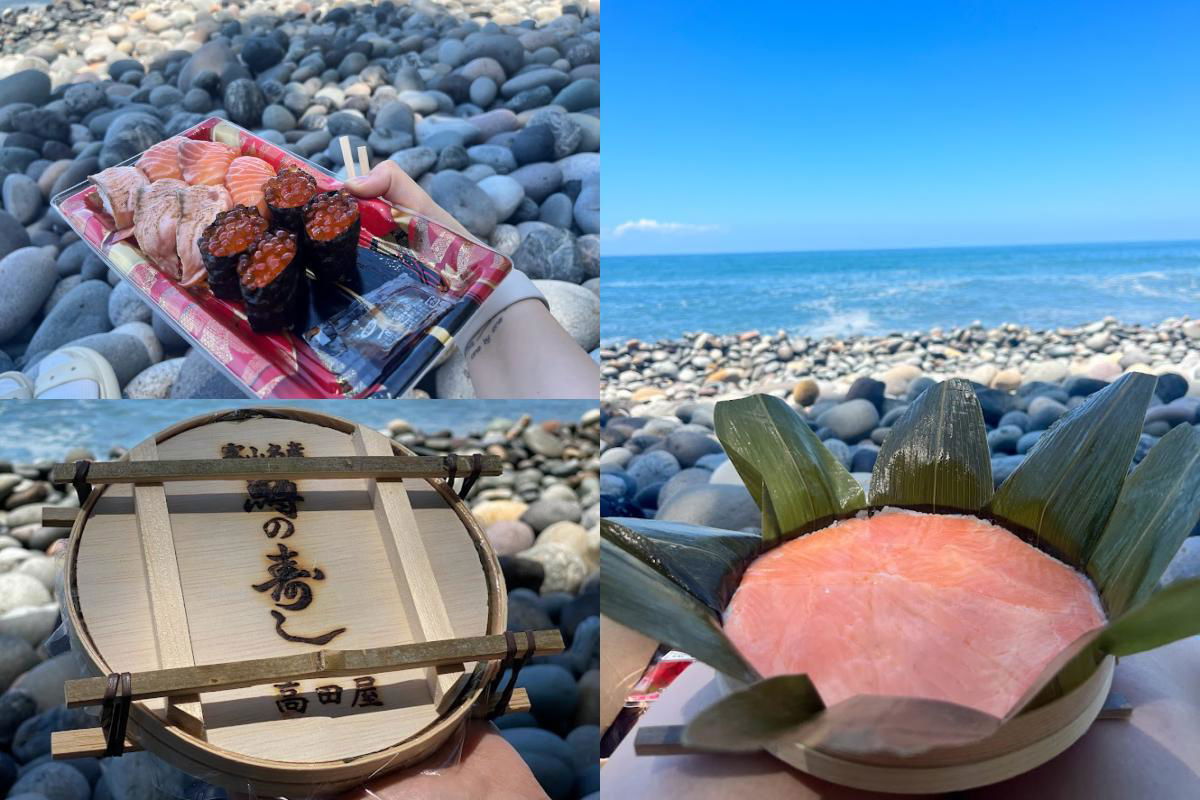
A four-photo collage of a sushi picnic on a pebble beach in Toyama. In the top left, a hand holds up a plastic takeout tray of nigiri: salmon slices, seared salmon, and ikura gunkan rolls filled with orange salmon roe. Smooth grey and white stones fill the whole background. The top right photo shows the setting itself, a deep blue sky over a choppy sea washing onto the rocky shore. The bottom two photos feature Masu no Sushi from Takadaya, a round cedar box of pressed trout sushi that is a Toyama specialty. One shot shows the wooden lid, its burned-in Japanese calligraphy naming the dish and the shop. In the other, the box is open and held above the pebbles, revealing a disc of pale pink fish pressed over rice and framed by folded bamboo leaves.
A four-photo collage of a sushi picnic on a pebble beach in Toyama. In the top left, a hand holds up a plastic takeout tray of nigiri: salmon slices, seared salmon, and ikura gunkan rolls filled with orange salmon roe. Smooth grey and white stones fill the whole background. The top right photo shows the setting itself, a deep blue sky over a choppy sea washing onto the rocky shore.
The bottom two photos feature Masu no Sushi from Takadaya, a round cedar box of pressed trout sushi that is a Toyama specialty. One shot shows the wooden lid, its burned-in Japanese calligraphy naming the dish and the shop. In the other, the box is open and held above the pebbles, revealing a disc of pale pink fish pressed over rice and framed by folded bamboo leaves.
Visible text in the image
鮭の壽し
高田屋
Conclusion of the Toyama Trip
Toyama is a beautiful prefecture in Japan that will especially convince nature lovers and fishing enthusiasts. However, I strongly recommend traveling by car, as Toyama does not have a well-developed public transport network. The unique landscape, the historic village of Gokayama, and the coastal landscape around the Oyashirazu cliffs are places that are definitely worth visiting. It is also a popular fishing destination with many culinary possibilities. Whether in the warm or cold season - Toyama always shows its best side and convinces you to visit the prefecture several times to get to know it in a variety of ways.


Comments