Table of contents:
TL;DR
Explore the charming town of Ogawa in Saitama, Japan, through a captivating journey filled with activities and culinary delights. Just a 1.5 to 2-hour drive or a convenient 2-hour train ride from Tokyo, Ogawa offers a refreshing escape into nature. Begin your adventure with a delicious meal at Bushu Men, renowned for its authentic Udon. Experience the art of Washi-making using traditional techniques to create high-quality Japanese paper from the Kozo tree. A highlight of the trip is an overnight stay in a cozy Airbnb nestled in the woods, allowing for an immersive experience in this serene environment. Whether you're a nature lover or interested in Japanese culture, Ogawa promises a worthwhile visit.In this blog post, I'm sharing my experience traveling to Ogawa in Saitama! Tokyo's neighboring prefecture might seem a bit inconspicuous at first glance, but it has plenty of activities and culinary delights to offer. This post is particularly interesting for nature lovers and anyone curious about the making of Washi (traditional paper).
From Tokyo to Ogawa
By Car
If you're planning to travel by car, the drive from Tokyo to Ogawa takes about 1.5 to 2 hours. So almost the same amount of time as by train. The journey is pleasant, but there are toll booths along the way. It's best to check Google Maps beforehand for any potential costs or toll booths. In Tokyo itself, there are many places where you can rent a car. Since Ogawa is quite rural, it naturally has the advantage that you're much more flexible with a car on site.
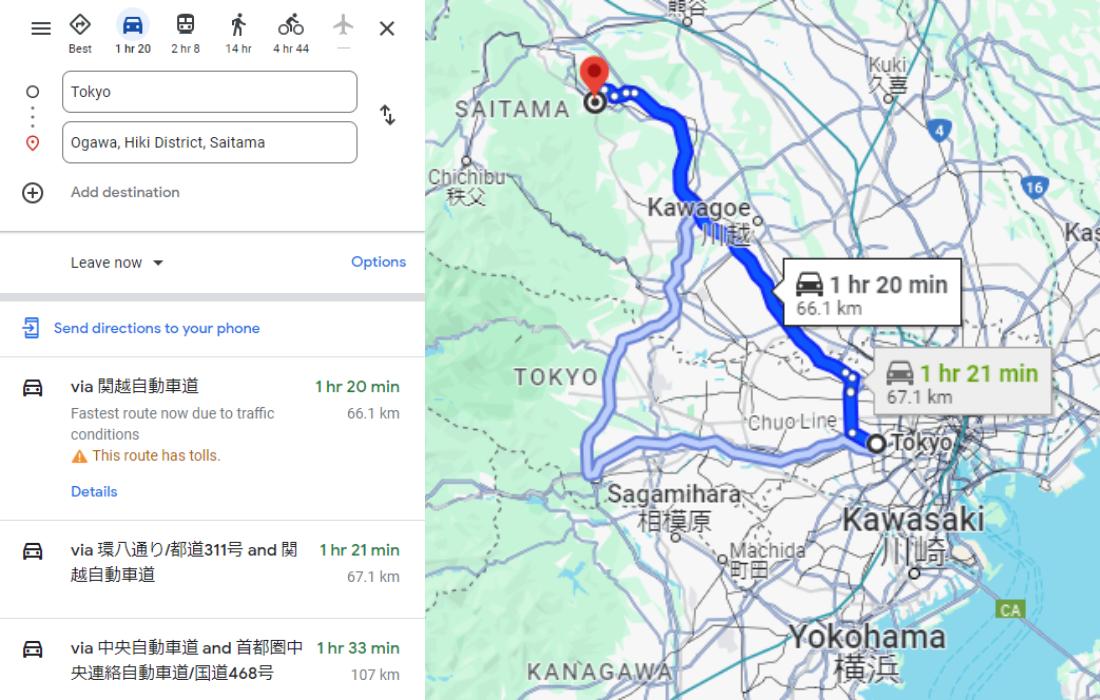
A screenshot of a driving directions search from Tokyo to Ogawa in Saitama Prefecture. The left panel lists three car routes: the fastest takes 1 hr 20 min over 66.1 km via the Kan-Etsu Expressway and is marked with a warning that the route has tolls, while the alternatives run 1 hr 21 min for 67.1 km and 1 hr 33 min for 107 km. A row of icons at the top compares other ways to travel, with transit at 2 hr 8, cycling at 4 hr 44, and walking at 14 hr. On the map itself, a thick blue route line runs northwest out of central Tokyo, passes the Kawagoe area, and ends at a red destination pin in Saitama, with a callout confirming the 1 hr 20 min, 66.1 km trip. A lighter alternate route swings much farther west through Sagamihara before rejoining near Tokyo. Labels for Kawasaki, Yokohama, and the prefectures of Saitama, Tokyo, and Kanagawa give the wider geographic context.
A screenshot of a driving directions search from Tokyo to Ogawa in Saitama Prefecture. The left panel lists three car routes: the fastest takes 1 hr 20 min over 66.1 km via the Kan-Etsu Expressway and is marked with a warning that the route has tolls, while the alternatives run 1 hr 21 min for 67.1 km and 1 hr 33 min for 107 km. A row of icons at the top compares other ways to travel, with transit at 2 hr 8, cycling at 4 hr 44, and walking at 14 hr.
On the map itself, a thick blue route line runs northwest out of central Tokyo, passes the Kawagoe area, and ends at a red destination pin in Saitama, with a callout confirming the 1 hr 20 min, 66.1 km trip. A lighter alternate route swings much farther west through Sagamihara before rejoining near Tokyo. Labels for Kawasaki, Yokohama, and the prefectures of Saitama, Tokyo, and Kanagawa give the wider geographic context.
Visible text in the image
Best
1 hr 20
2 hr 8
14 hr
4 hr 44
Tokyo
Ogawa, Hiki District, Saitama
Add destination
Leave now
Options
Send directions to your phone
via 関越自動車道 1 hr 20 min
Fastest route now due to traffic conditions 66.1 km
This route has tolls.
Details
via 環八通り/都市311号 and 関越自動車道 1 hr 21 min
67.1 km
via 中央自動車道 and 首都圏中央連絡自動車道/国道468号 1 hr 33 min
107 km
SAITAMA
Kuki
久喜
Chichibu
秩父
Kawagoe
川越
TOKYO
1 hr 20 min
66.1 km
1 hr 21 min
67.1 km
Chuo Line
Tokyo
Sagamihara
相模原
Machida
町田
Kawasaki
川崎
Yokohama
横浜
KANAGAWA
4
16
CA
By Train
Traveling from Tokyo to Ogawa by train is very comfortable and only takes about 2 hours on the local train. However, note that the stations in and around Ogawa do not have gates. This means you don't need to show tickets to enter or leave the platform. Instead, you'll find machines at the stations for IC cards like PASMO or SUICA, which you can use to pay for your journey.
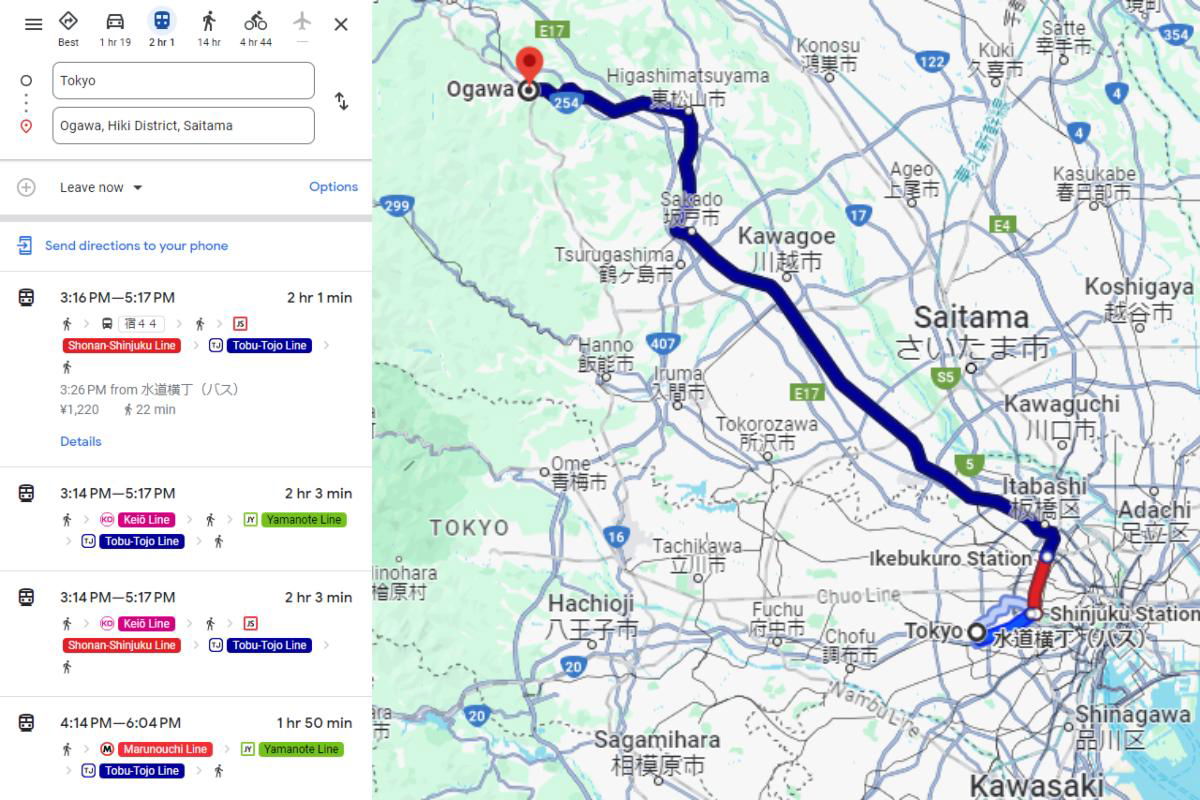
A Google Maps directions screenshot showing train routes from Tokyo to Ogawa in Saitama. The left panel lists four transit options, all leaving in the mid to late afternoon and taking roughly two hours. The fastest suggestion runs from 3:16 PM to 5:17 PM via the Shonan-Shinjuku Line and Tobu-Tojo Line for ¥1,220; the others use combinations of the Keio, Yamanote, Marunouchi, and Tobu-Tojo lines, with the quickest at 1 hour 50 minutes. The map on the right covers the greater Tokyo area and Saitama Prefecture, with city labels for Kawagoe, Saitama, Kawaguchi, and Hachioji. A thick dark blue route line traces the trip northwest from central Tokyo through Ikebukuro and Sakado, ending at a red pin in Ogawa, while a short red segment near Shinjuku Station marks the first stretch of the journey.
A Google Maps directions screenshot showing train routes from Tokyo to Ogawa in Saitama. The left panel lists four transit options, all leaving in the mid to late afternoon and taking roughly two hours. The fastest suggestion runs from 3:16 PM to 5:17 PM via the Shonan-Shinjuku Line and Tobu-Tojo Line for ¥1,220; the others use combinations of the Keio, Yamanote, Marunouchi, and Tobu-Tojo lines, with the quickest at 1 hour 50 minutes.
The map on the right covers the greater Tokyo area and Saitama Prefecture, with city labels for Kawagoe, Saitama, Kawaguchi, and Hachioji. A thick dark blue route line traces the trip northwest from central Tokyo through Ikebukuro and Sakado, ending at a red pin in Ogawa, while a short red segment near Shinjuku Station marks the first stretch of the journey.
Visible text in the image
Tokyo
Ogawa, Hiki District, Saitama
Leave now
Options
Send directions to your phone
Best
1 hr 19
2 hr 1
14 hr
4 hr 44
3:16 PM—5:17 PM 2 hr 1 min
宿4 4
Shonan-Shinjuku Line
Tobu-Tojo Line
3:26 PM from 水道橋丁 (バス)
¥ 1,220 22 min
Details
3:14 PM—5:17 PM 2 hr 3 min
Keiō Line
Yamanote Line
Tobu-Tojo Line
3:14 PM—5:17 PM 2 hr 3 min
Keiō Line
Shonan-Shinjuku Line
Tobu-Tojo Line
4:14 PM—6:04 PM 1 hr 50 min
Marunouchi Line
Yamanote Line
Tobu-Tojo Line
E17
Ogawa
Higashimatsuyama
東松山市
254
Konosu
鴻巣市
Satte
幸手市
354
Kuki
久喜市
122
4
Ageo
上尾市
Kasukabe
春日部市
4
299
Sakado
坂戸市
Kawagoe
川越市
17
Tsurugashima
鶴ヶ島市
E4
Koshigaya
越谷市
Saitama
さいたま市
Hanno
飯能市
407
Iruma
入間市
E17
S5
Kawaguchi
川口市
Tokorozawa
所沢市
5
Ome
青梅市
TOKYO
16
Tachikawa
立川市
Ikebukuro Station
Itabashi
板橋区
Adachi
足立区
inohara
檜原村
Hachioji
八王子市
Fuchu
府中市
Chuo Line
Chofu
調布市
Tokyo
水道橋丁 (バス)
Shinjuku Station
20
Nambu Line
Shinagawa
品川区
Sagamihara
相模原市
Kawasaki
20
The Town of Ogawa
Ogawa is a charming little town in Saitama Prefecture, located in a rural setting and naturally much smaller and more relaxed than Tokyo. Surrounded by nature and many opportunities for outdoor activities, I really enjoyed my stay here! In the next sections, you'll learn everything there is to do in Ogawa.
Fueling Up with Udon
Upon arriving in Ogawa, we decided to grab a bite to eat at an Udon restaurant called 武州めん 本店 (Bushu Men). Unexpectedly, I had some of the best Udon I've had in a while here! The restaurant is known for its authentic food and the quality of its ingredients. If you like Japanese food or simply want to try a delicious Udon dish, I highly recommend the 武州めん 本店 restaurant.
Google Maps: https://maps.app.goo.gl/bjcx9nAQ9AWuPT2f6
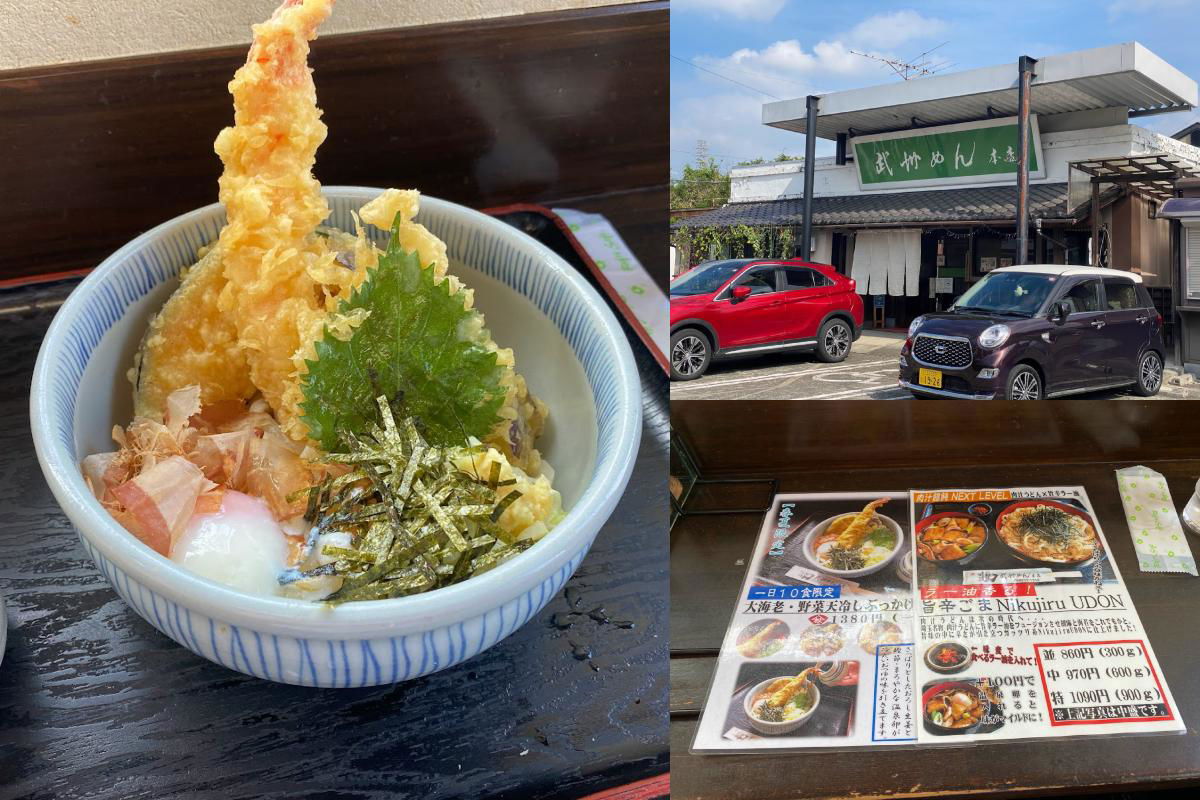
A three-photo collage from a udon restaurant in Ogawa, Saitama. The large photo on the left is the star: a blue-and-white striped ceramic bowl of cold udon piled with toppings, dominated by a tall, lacy golden shrimp tempura standing upright. Around it sit a raw egg yolk, bonito flakes, shredded nori seaweed, grated toppings, and a bright green shiso leaf. The bowl rests on a dark lacquered tray. The top right photo shows the shop itself, a low single-story building with a green Japanese sign over a doorway hung with white noren curtains and two cars parked out front under a blue sky. The bottom right photo shows a laminated menu lying on the wooden table, illustrated with photos of noodle dishes and listing the Nikujiru UDON in three sizes: 300 g for 800 yen, 600 g for 970 yen, and 900 g for 1,090 yen.
A three-photo collage from a udon restaurant in Ogawa, Saitama. The large photo on the left is the star: a blue-and-white striped ceramic bowl of cold udon piled with toppings, dominated by a tall, lacy golden shrimp tempura standing upright. Around it sit a raw egg yolk, bonito flakes, shredded nori seaweed, grated toppings, and a bright green shiso leaf. The bowl rests on a dark lacquered tray.
The top right photo shows the shop itself, a low single-story building with a green Japanese sign over a doorway hung with white noren curtains and two cars parked out front under a blue sky. The bottom right photo shows a laminated menu lying on the wooden table, illustrated with photos of noodle dishes and listing the Nikujiru UDON in three sizes: 300 g for 800 yen, 600 g for 970 yen, and 900 g for 1,090 yen.
Visible text in the image
ラー油 NEXT LEVEL
一日10食限定
大海老・野菜天冷しうどん 1380円
旨辛ごま Ni.kujiru UDON
並 800円(300g)
中 970円(600g)
特 1090円(900g)
旨辛月見は中華です
+100円で麺を替えられます
Making Washi 和紙 (traditional paper)
In Ogawa, we took the opportunity to make traditional Japanese paper, known as 和紙 (Washi). The paper is made from a special fiber extracted from the bark of the Kozo tree. This fiber is then hand-scooped and processed in a traditional way to create a high-quality and durable paper. Washi is used for a variety of purposes, such as art projects, stationery, origami, and even the restoration of historical documents. It's known for its high quality, strength, and unique texture that gives it a special charm. Washi making is an art form that has been cultivated in Japan for centuries and holds significant cultural importance.
Google Maps: https://maps.app.goo.gl/Km5owQ73wS95kR9J7
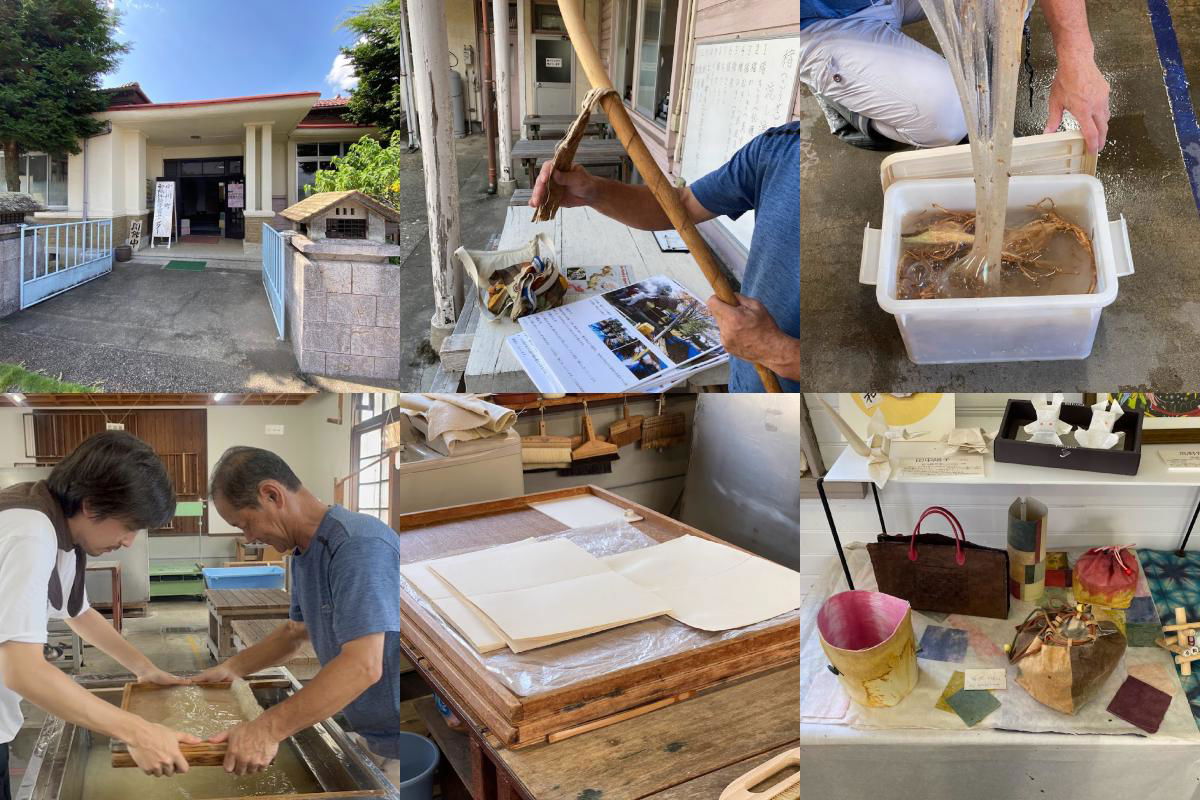
A six-photo collage captures a visit to a Washi paper workshop in Ogawa, Saitama. The top row shows the single-story workshop building with a noren curtain over its entrance and stone gateposts out front, a man in a blue shirt pulling strips of bark fiber off a long bamboo pole outside, and a pair of hands lifting a rootlike bundle of fiber from a white tub of cloudy water. The bottom row moves inside. Two men raise a bamboo papermaking screen together from a vat, water and pulp streaming beneath it. Next to that, fresh white sheets of paper lie stacked on a large wooden board, with brushes and paddles hanging on the wall above. The last photo shows the shop display: a brown washi handbag with red handles, a pink and yellow cylinder box, colorful paper squares, and small folded paper ornaments arranged on a black tray.
A six-photo collage captures a visit to a Washi paper workshop in Ogawa, Saitama. The top row shows the single-story workshop building with a noren curtain over its entrance and stone gateposts out front, a man in a blue shirt pulling strips of bark fiber off a long bamboo pole outside, and a pair of hands lifting a rootlike bundle of fiber from a white tub of cloudy water.
The bottom row moves inside. Two men raise a bamboo papermaking screen together from a vat, water and pulp streaming beneath it. Next to that, fresh white sheets of paper lie stacked on a large wooden board, with brushes and paddles hanging on the wall above. The last photo shows the shop display: a brown washi handbag with red handles, a pink and yellow cylinder box, colorful paper squares, and small folded paper ornaments arranged on a black tray.
Visible text in the image
見学中
Staying in an Airbnb in the Forest
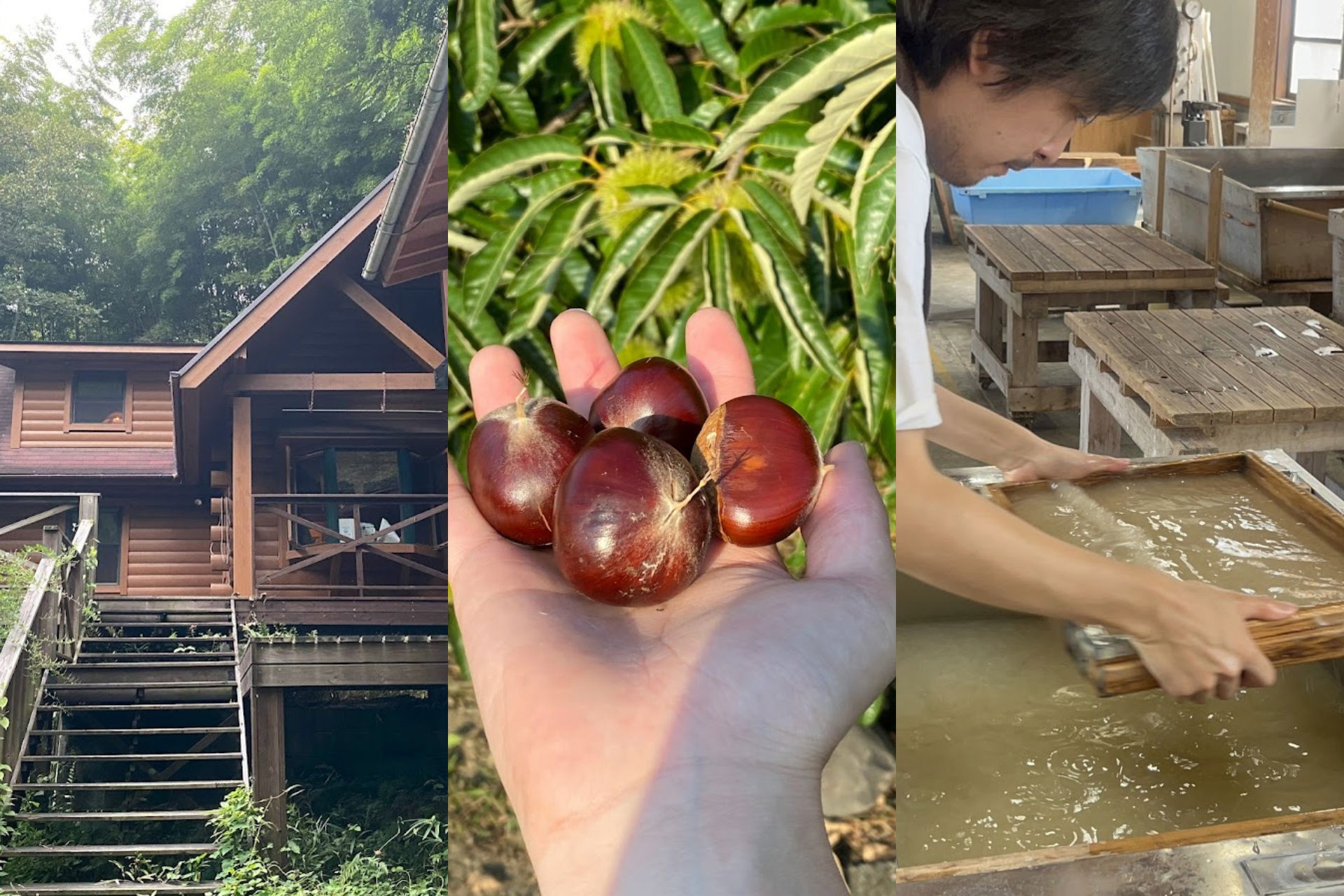
A definite highlight of my short trip was staying in an Airbnb in the forest. The accommodation was a cozy wooden cabin nestled in nature - but without the comfort of air conditioning. Despite the outside temperature of 33 degrees and the lack of air conditioning, the experience was unique and unforgettable. As a very nature-oriented person, I particularly enjoyed this stay. You don't often get the chance to spend the night in the middle of nature.
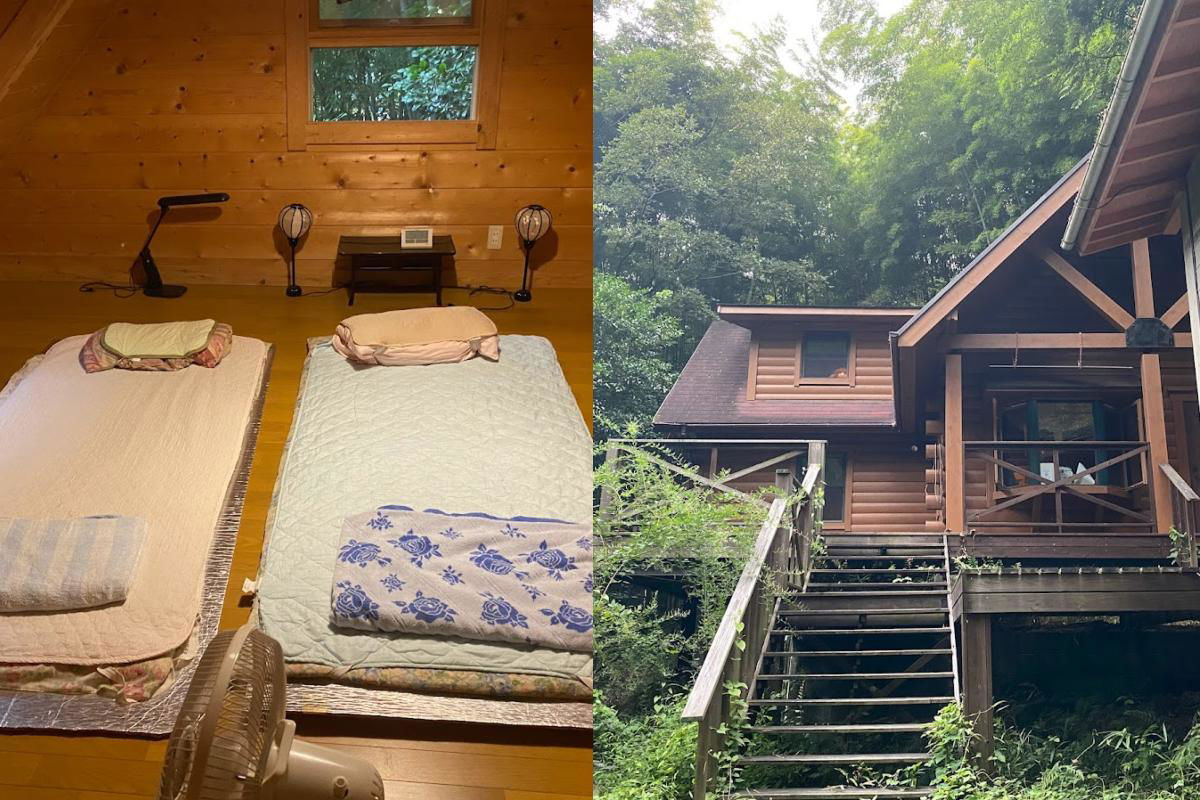
A side-by-side pair of photos showing a cozy wooden cabin stay in Ogawa, Saitama. On the left, a loft-style bedroom with warm pine walls and ceiling, two futons laid out on the wood floor, a small black side table with a clock, a reading lamp, and an electric fan in the foreground. On the right, the cabin's exterior seen from below: a log-style building with a dark shingled roof and a wooden deck and staircase, surrounded by dense green trees and bamboo on a hillside.
A side-by-side pair of photos showing a cozy wooden cabin stay in Ogawa, Saitama. On the left, a loft-style bedroom with warm pine walls and ceiling, two futons laid out on the wood floor, a small black side table with a clock, a reading lamp, and an electric fan in the foreground. On the right, the cabin's exterior seen from below: a log-style building with a dark shingled roof and a wooden deck and staircase, surrounded by dense green trees and bamboo on a hillside.
Visible text in the image
No clearly readable text is present in the image.
Find More Hotels in Ogawa
Affiliate Link: If you book a hotel on Booking.com through my widget or link, I receive a small commission. There are no additional costs for you, and you support my blog. I am very grateful and wish you lots of fun while traveling (^_^)Mt Sengen Hill View Park
If you enjoy outdoor activities, Mt Sengen Hill View Park (Sengenyama Miharashi no Oka Koen) is a real recommendation! The park not only offers breathtaking views of the beautiful Saitama landscape, but also a slide. Riding down this slide was a lot of fun and is definitely an experience for young and old. However, the "journey" on foot at 33 degrees was a real challenge, as the park is a good 45 minutes walk from the nearest train station. Since it was mid-September at the time, we found some very large chestnut trees around the park.
Google Maps: https://maps.app.goo.gl/fyGuCrxfrQaLKnez7
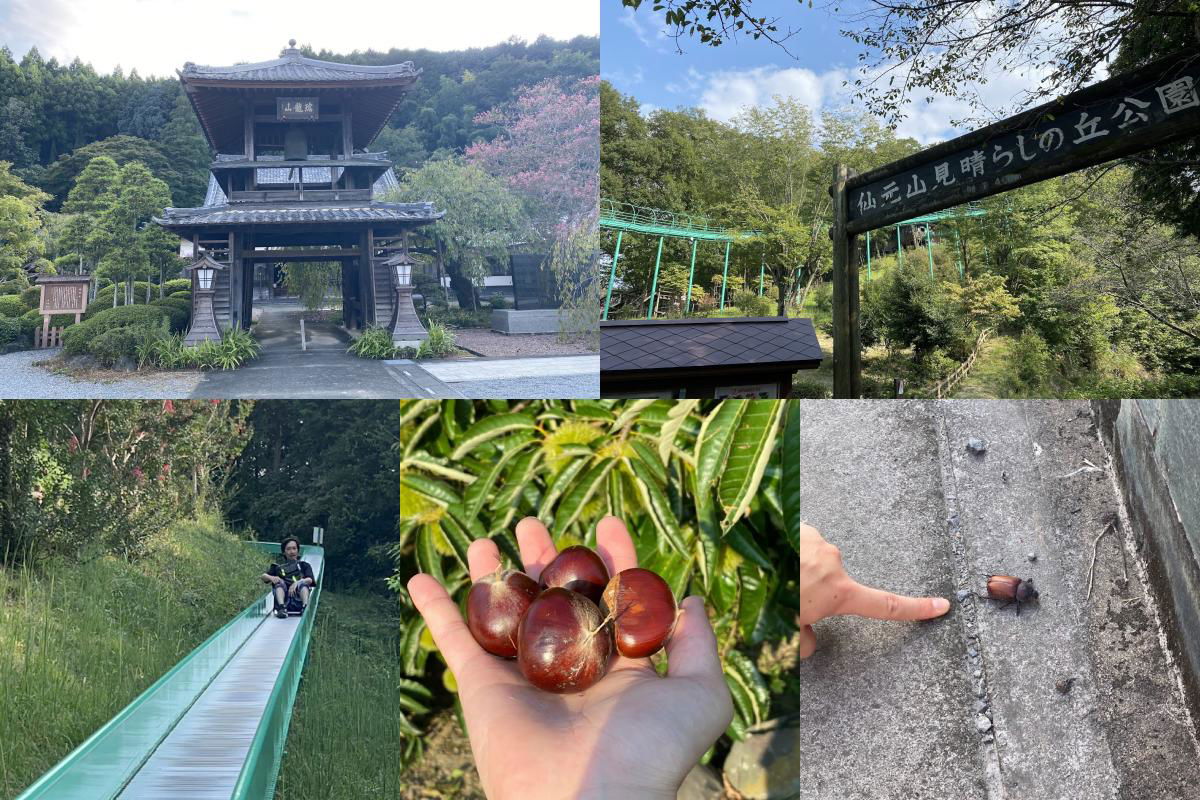
A five-photo collage from Mt. Sengen Hill View Park in Ogawa, Saitama, mixing temple scenery with small moments from a day out. The top left photo shows a wooden temple gate with a two-tiered tiled roof and a bell hanging beneath the upper story. Stone lanterns stand at the entrance, a willow and a tree with pink blossoms frame the scene, and forested hills rise behind it. In the top right, a dark wooden sign bears the park's Japanese name, 仙元山見晴らしの丘公園, while a long green roller slide snakes down the tree-covered slope in the background. The bottom row captures the visit itself. A rider in dark clothes speeds down that same roller slide as it cuts through a grassy hillside. A hand holds a few glossy brown chestnuts, with spiky green burrs still clustered on the branch behind them. In the last shot, a finger points at a rhinoceros beetle making its way across a concrete path.
A five-photo collage from Mt. Sengen Hill View Park in Ogawa, Saitama, mixing temple scenery with small moments from a day out.
The top left photo shows a wooden temple gate with a two-tiered tiled roof and a bell hanging beneath the upper story. Stone lanterns stand at the entrance, a willow and a tree with pink blossoms frame the scene, and forested hills rise behind it. In the top right, a dark wooden sign bears the park's Japanese name, 仙元山見晴らしの丘公園, while a long green roller slide snakes down the tree-covered slope in the background.
The bottom row captures the visit itself. A rider in dark clothes speeds down that same roller slide as it cuts through a grassy hillside. A hand holds a few glossy brown chestnuts, with spiky green burrs still clustered on the branch behind them. In the last shot, a finger points at a rhinoceros beetle making its way across a concrete path.
Visible text in the image
仙元山見晴らしの丘公園
Curry at CURRY&NOBLE
Another culinary recommendation from me is the curry at CURRY&NOBLE. The restaurant itself has a cozy atmosphere and the staff was very friendly and attentive. The menu features different types of curry and the many positive Google reviews are definitely justified!
Google Maps: https://maps.app.goo.gl/vd3yg9QMhTfDgvzp9
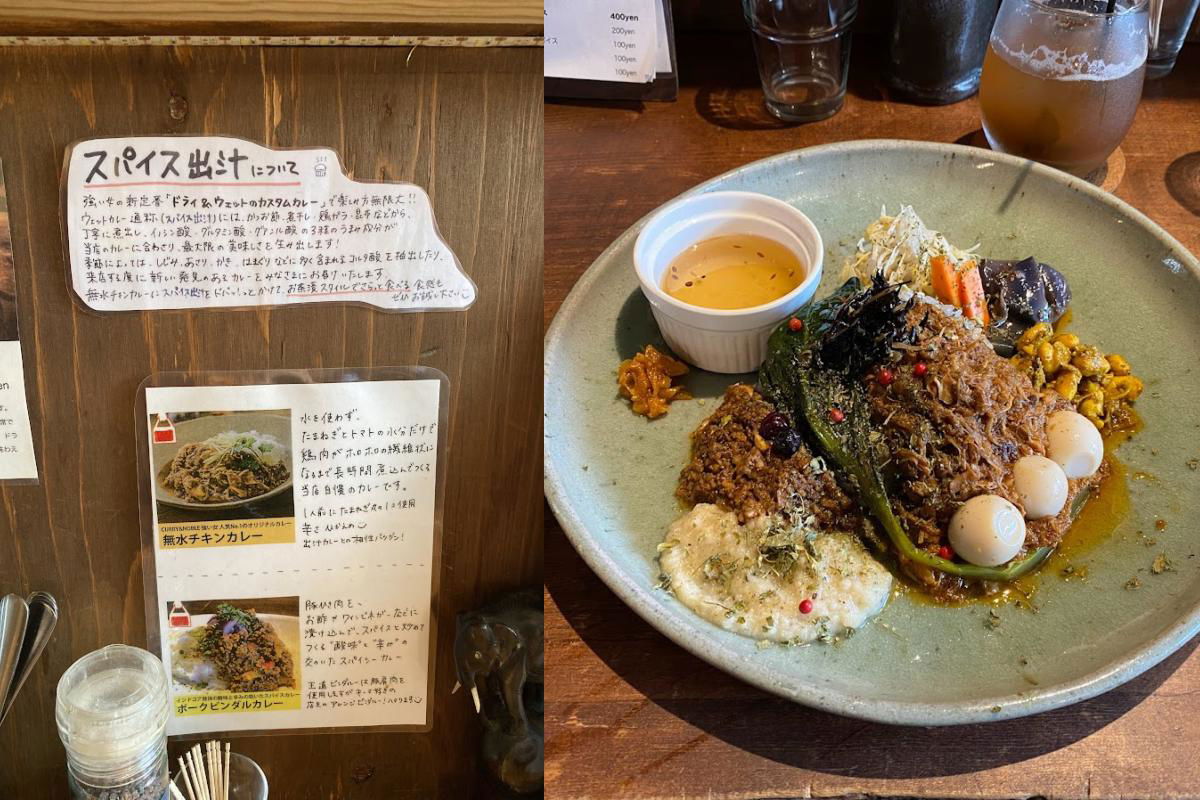
A plate of curry is the focus, served on a wide rustic green ceramic dish. The curry itself is a dark, richly spiced keema-style scoop laid over wilted leafy greens, surrounded by three peeled quail eggs, yellow pickles, shredded vegetables, a slice of carrot, pink peppercorns, and a pale scoop flecked with dried herbs. A small white ramekin of golden broth sits at the top of the plate. On the wooden table behind it are drinking glasses, one filled with an amber beverage, and a small price list. The left half of the photo shows the restaurant's wooden wall, covered with handwritten Japanese notes about the spice broth that forms the base of the curry, along with printed menu cards featuring a chicken curry and a pork vindaloo curry. The scene is from a cozy spice curry restaurant in Ogawa, Saitama.
A plate of curry is the focus, served on a wide rustic green ceramic dish. The curry itself is a dark, richly spiced keema-style scoop laid over wilted leafy greens, surrounded by three peeled quail eggs, yellow pickles, shredded vegetables, a slice of carrot, pink peppercorns, and a pale scoop flecked with dried herbs. A small white ramekin of golden broth sits at the top of the plate. On the wooden table behind it are drinking glasses, one filled with an amber beverage, and a small price list.
The left half of the photo shows the restaurant's wooden wall, covered with handwritten Japanese notes about the spice broth that forms the base of the curry, along with printed menu cards featuring a chicken curry and a pork vindaloo curry. The scene is from a cozy spice curry restaurant in Ogawa, Saitama.
Visible text in the image
スパイス出汁 にこむ
400yen
200yen
100yen
100yen
100yen
当店自慢のカレーです
辛双子キノンカレー
ポークビンダルカレー
Yakiniku in Yorii
In the neighboring town of Yorii, we ate very delicious Yakiniku. In this case, it was grilled fish, which was very fresh and tasted great with rice. Grilling the fish yourself is a great experience and unique too! If you like fish, you should definitely try this.
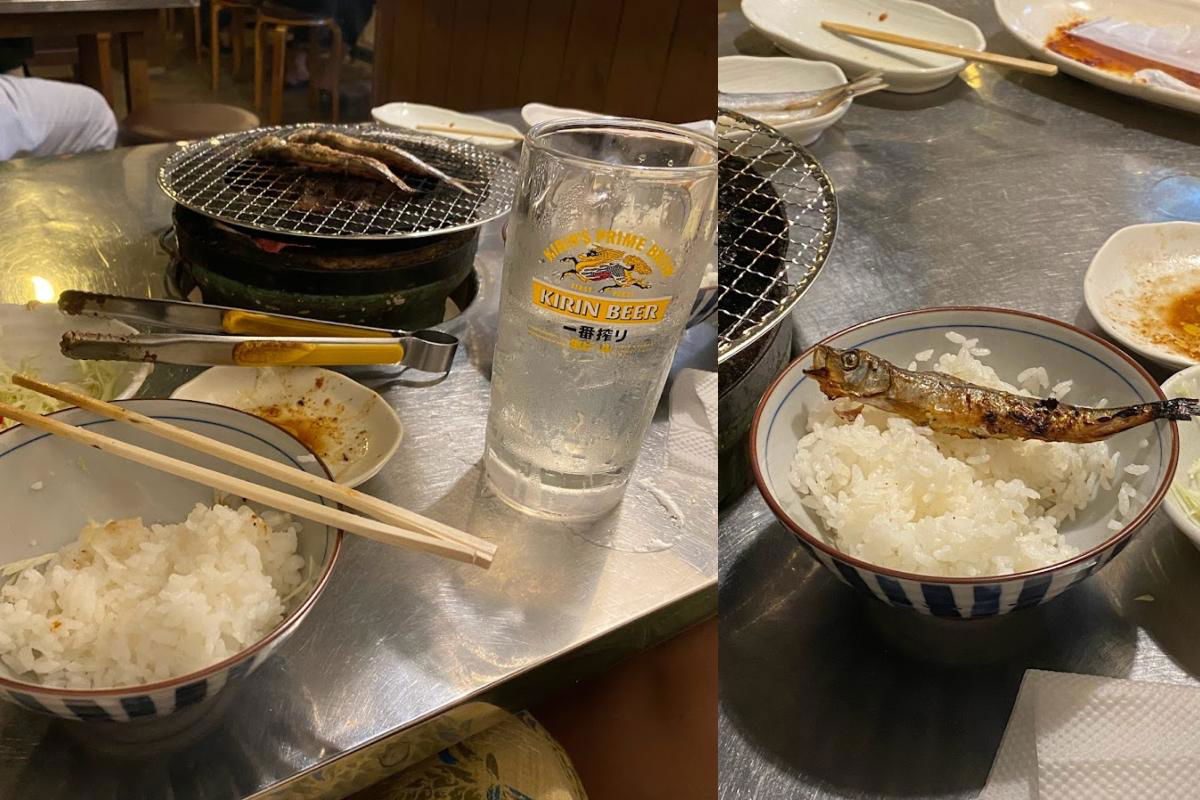
Two side-by-side shots from the same dinner at a casual izakaya. In the left photo a small tabletop charcoal grill sits on a steel table, its wire rack holding split salt-grilled fish with a second fish beside it. Metal tongs with yellow handles rest in front, and a tall frosted glass of Kirin Ichiban Shibori beer stands next to the grill. A striped ceramic bowl of white rice with wooden chopsticks across it sits in the foreground, alongside small sauce dishes and shredded cabbage. The right photo focuses on the bowl itself: a whole grilled fish, head and tail intact, laid across a mound of white rice. Behind it the edge of another charcoal grill peeks in, with empty plates, leftover fish bones, and chopsticks scattered on the steel table. The wooden walls and stools in the background give the scene a relaxed, well-used restaurant feel.
Two side-by-side shots from the same dinner at a casual izakaya. In the left photo a small tabletop charcoal grill sits on a steel table, its wire rack holding split salt-grilled fish with a second fish beside it. Metal tongs with yellow handles rest in front, and a tall frosted glass of Kirin Ichiban Shibori beer stands next to the grill. A striped ceramic bowl of white rice with wooden chopsticks across it sits in the foreground, alongside small sauce dishes and shredded cabbage.
The right photo focuses on the bowl itself: a whole grilled fish, head and tail intact, laid across a mound of white rice. Behind it the edge of another charcoal grill peeks in, with empty plates, leftover fish bones, and chopsticks scattered on the steel table. The wooden walls and stools in the background give the scene a relaxed, well-used restaurant feel.
Visible text in the image
KIRIN BEER
一番搾り
Conclusion
My trip to Ogawa Saitama was an unforgettable experience that I would recommend to anyone. Staying in a wooden log cabin in nature in particular was my personal highlight. Making traditional paper (Washi) was a unique experience that you can have in Ogawa. Culinarily, Saitama Prefecture has a lot to offer and is definitely worth a visit in my opinion!


Comments