
Table of contents:
TL;DR
Explore the stunning Niigata Prefecture in Japan with this comprehensive travel guide, focusing on unique glamping accommodations, local culinary delights, and remarkable natural attractions. Discover various transportation options from Tokyo to Niigata, including a scenic four-hour drive or a time-efficient two-hour ride on the popular Shinkansen high-speed train, along with tips for navigating costs and routes. For an unforgettable stay, experience a charming Tiny House designed for glamping, nestled near a serene lake, while enjoying amenities like a barbecue set. The guide provides practical details on check-in times, nearby amenities, and transportation logistics to ensure a smooth and memorable visit to this breathtaking region, perfect for nature lovers seeking adventure and tranquility.This article is about Niigata Prefecture in Japan, with tips on an extraordinary "glamping" style accommodation, local food spots, as well as special attractions and outdoor activities. In my opinion, Niigata is a unique prefecture with spectacular scenery that will especially inspire nature lovers.
From Tokyo to Niigata
By Car
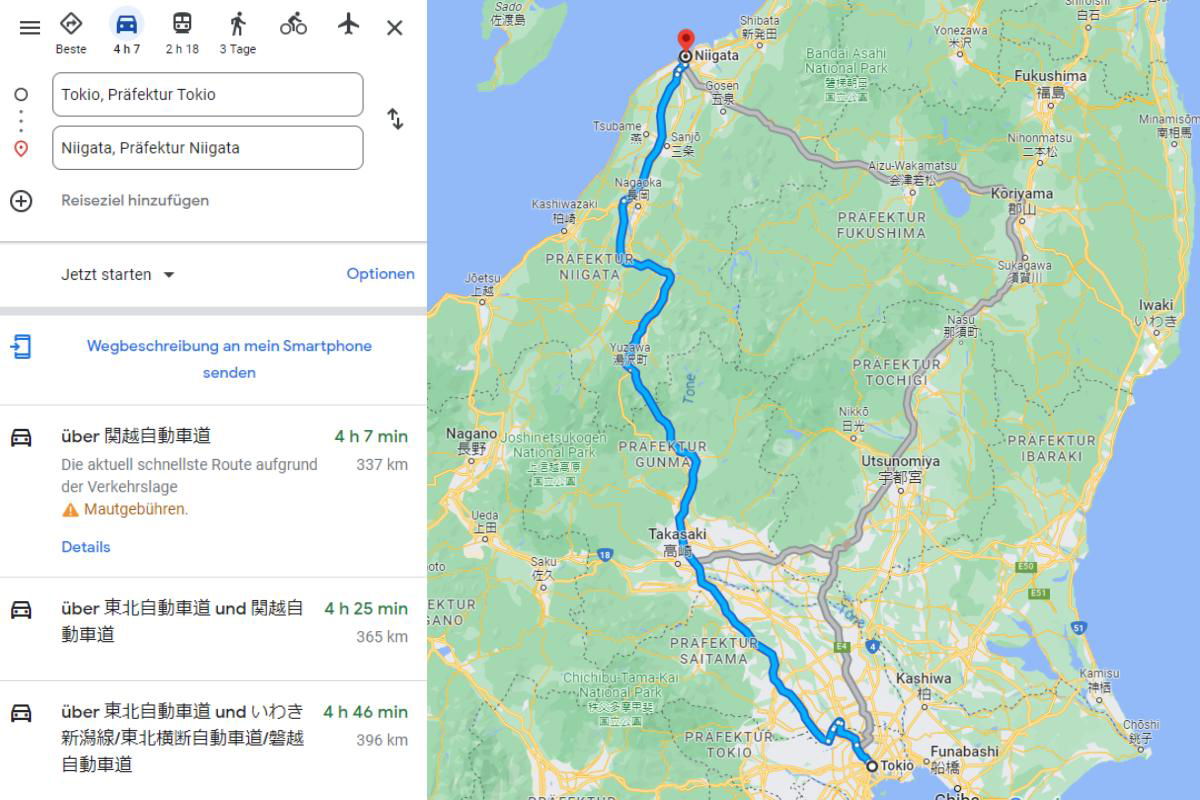
There are various ways to get from Tokyo to Niigata Prefecture. One of them is by rental car. We chose this option and rented a car for three days from the company “Toyota Rental Car.” The cost was about 35,500 yen.
The drive to Niigata takes about four hours. During the journey, you can enjoy the beautiful Japanese countryside.
However, there are tolls to pay. It's best to check the costs in advance using resources like Google Maps and look into available payment options so that your journey is smooth.
Here you can see how to get from Tokyo to Niigata by car.
A Google Maps screenshot in German shows a driving route from Tokyo to Niigata, marked as a thick blue line running north from Tokyo through Saitama and Gunma (passing Takasaki) before turning northwest to Niigata on the Sea of Japan coast, where a red pin marks the destination. The left panel has the two address fields, "Tokio, Präfektur Tokio" and "Niigata, Präfektur Niigata", with travel mode icons along the top showing car selected at 4 h 7, transit at 2 h 18, and walking at 3 days. Below, three route options are listed: the fastest via the Kan-Etsu Expressway at 4 h 7 min and 337 km, flagged as the quickest route under current traffic conditions with a toll warning; a second via the Tohoku and Kan-Etsu expressways at 4 h 25 min and 365 km; and a third at 4 h 46 min and 396 km. The map behind is labeled in German prefecture names such as Präfektur Niigata, Präfektur Fukushima, and Präfektur Gunma, with cities like Fukushima, Koriyama, Utsunomiya, and Nagano visible and a gray alternative route running further east.
A Google Maps screenshot in German shows a driving route from Tokyo to Niigata, marked as a thick blue line running north from Tokyo through Saitama and Gunma (passing Takasaki) before turning northwest to Niigata on the Sea of Japan coast, where a red pin marks the destination.
The left panel has the two address fields, "Tokio, Präfektur Tokio" and "Niigata, Präfektur Niigata", with travel mode icons along the top showing car selected at 4 h 7, transit at 2 h 18, and walking at 3 days. Below, three route options are listed: the fastest via the Kan-Etsu Expressway at 4 h 7 min and 337 km, flagged as the quickest route under current traffic conditions with a toll warning; a second via the Tohoku and Kan-Etsu expressways at 4 h 25 min and 365 km; and a third at 4 h 46 min and 396 km. The map behind is labeled in German prefecture names such as Präfektur Niigata, Präfektur Fukushima, and Präfektur Gunma, with cities like Fukushima, Koriyama, Utsunomiya, and Nagano visible and a gray alternative route running further east.
Visible text in the image
Beste
4 h 7
2 h 18
3 Tage
Tokio, Präfektur Tokio
Niigata, Präfektur Niigata
Reiseziel hinzufügen
Jetzt starten
Optionen
Wegbeschreibung an mein Smartphone senden
über 関越自動車道
4 h 7 min
337 km
Die aktuell schnellste Route aufgrund der Verkehrslage
Mautgebühren.
Details
über 東北自動車道 und 関越自動車道
4 h 25 min
365 km
über 東北自動車道 und いわき新線線/東北横断自動車道/磐越自動車道
4 h 46 min
396 km
佐渡島
Niigata
Shibata 新発田
Bandai Asahi National Park 磐梯朝日国立公園
Yonezawa 米沢
Fukushima 福島
Gosen 五泉
Tsubame 燕
Sanjō 三条
Nagaoka 長岡
Kashiwazaki 柏崎
Joetsu 上越
PRAFEKTUR NIIGATA
PRAFEKTUR FUKUSHIMA
Nihonmatsu 二本松
Minamisōma 南相馬
Aizu-Wakamatsu 会津若松
Kōriyama 郡山
Sukagawa 須賀川
Iwaki いわき
Nasu 那須町
Yuzawa 湯沢
Tone
PRAFEKTUR TOCHIGI
Nikkō 日光
PRAFEKTUR GUNMA
Nagano 長野
Jōshin'etsu-kōgen National Park 上信越高原国立公園
Utsunomiya 宇都宮
PRAFEKTUR IBARAKI
Ueda 上田
Takasaki 高崎
18
Saku 佐久
Chichibu-Tama National Park 秩父多摩甲斐国立公園
PRAFEKTUR TOKIO
PRAFEKTUR SAITAMA
16
4
E50
E51
Kashiwa 柏
Kamisu 神栖
Funabashi 船橋
Tokio
Chōshi 銚子
By Shinkansen
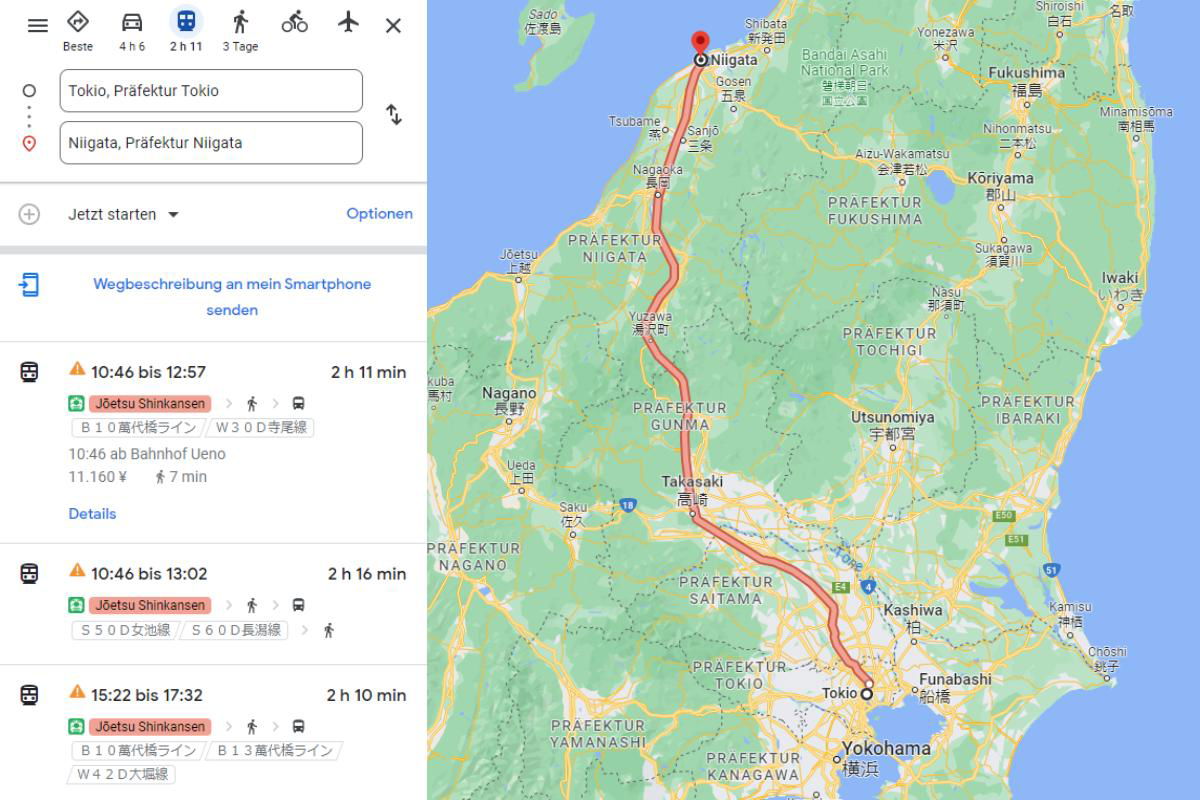
Another way to get to Niigata Prefecture is by train. I recommend you take the Shinkansen, a high-speed train that is very popular in Japan. Compared to the car, the ride on the Shinkansen is half as long and takes about two hours—there is a direct connection from Tokyo to Niigata city.
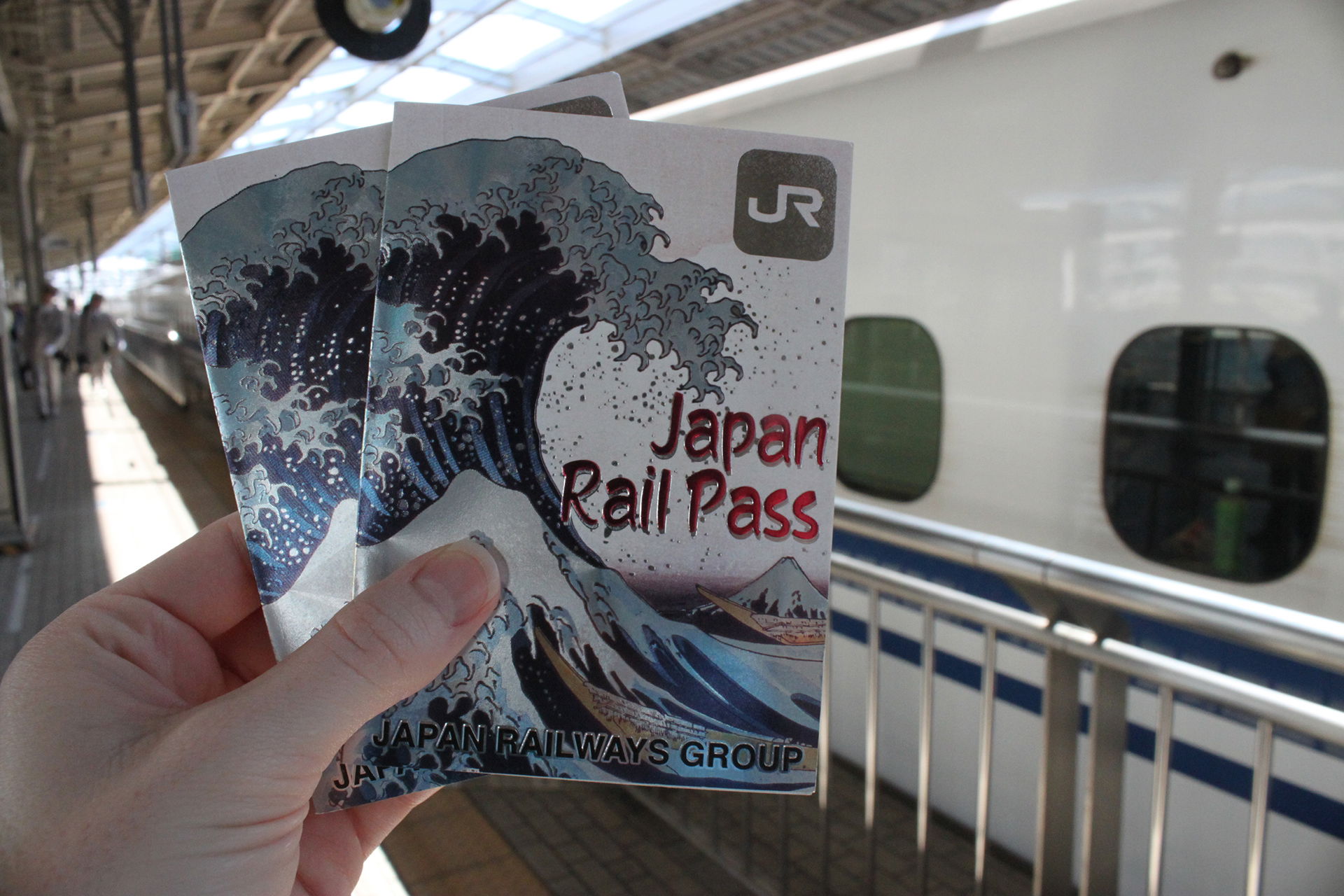
The price for Shinkansen tickets can vary. If you book your ticket early, you might be able to lower your costs. You can also check ticket price estimates on Google Maps. Another alternative is the Japan Rail Pass.
If you are visiting Japan as a tourist, this pass allows you unlimited rides on all JR network trains—including the Shinkansen—helping you save a lot of money.
Here you can see how to get from Tokyo to Niigata by Shinkansen.
A screenshot of Google Maps with a German interface, showing public transit directions from Tokio, Präfektur Tokio to Niigata, Präfektur Niigata. The left panel holds the two input fields for start and destination, a "Jetzt starten" button, and three train connections, all built around the Jōetsu Shinkansen. The top option runs from 10:46 to 12:57, takes 2 h 11 min, departs from Bahnhof Ueno, and costs 11.160 ¥ with a 7 minute walk included. Below it are two alternatives of 2 h 16 min and 2 h 10 min, each combining the Shinkansen with local bus lines. A link offers to send the directions to a smartphone. The map on the right traces the route as a thick line running north from Tokyo through Saitama and Gunma, passing Takasaki and the Yuzawa area, before reaching Niigata on the coast, where a red pin marks the destination. Neighboring regions such as Präfektur Fukushima, Tochigi, Nagano, and Kanagawa are labeled, with cities like Utsunomiya, Kōriyama, Nagano, and Yokohama filling out the surrounding area.
A screenshot of Google Maps with a German interface, showing public transit directions from Tokio, Präfektur Tokio to Niigata, Präfektur Niigata. The left panel holds the two input fields for start and destination, a "Jetzt starten" button, and three train connections, all built around the Jōetsu Shinkansen. The top option runs from 10:46 to 12:57, takes 2 h 11 min, departs from Bahnhof Ueno, and costs 11.160 ¥ with a 7 minute walk included. Below it are two alternatives of 2 h 16 min and 2 h 10 min, each combining the Shinkansen with local bus lines. A link offers to send the directions to a smartphone.
The map on the right traces the route as a thick line running north from Tokyo through Saitama and Gunma, passing Takasaki and the Yuzawa area, before reaching Niigata on the coast, where a red pin marks the destination. Neighboring regions such as Präfektur Fukushima, Tochigi, Nagano, and Kanagawa are labeled, with cities like Utsunomiya, Kōriyama, Nagano, and Yokohama filling out the surrounding area.
Visible text in the image
Beste 4 h 6 2 h 11 3 Tage
Tokio, Präfektur Tokio
Niigata, Präfektur Niigata
Jetzt starten ▾ Optionen
Wegbeschreibung an mein Smartphone senden
10:46 bis 12:57 — 2 h 11 min
Jōetsu Shinkansen
B 1 0 高代橋ライン W 3 0 D 寺尾線
10:46 ab Bahnhof Ueno
11.160 ¥ 7 min
Details
10:46 bis 13:02 — 2 h 16 min
Jōetsu Shinkansen
S 5 0 D 女池線 S 6 0 D 昆陽線
15:22 bis 17:32 — 2 h 10 min
Jōetsu Shinkansen
B 1 0 高代橋ライン B 1 3 高代橋ライン
W 4 2 D 太郎線
Sado 佐渡市
Shibata 新発田
Niigata 新潟
Bandai Asahi National Park
Yonezawa 米沢
Fukushima 福島
Shiroishi 白石
名取
Tsubame 燕
Sanjō 三条
Minamisōma 南相馬市
Nihonmatsu 二本松
Aizu-Wakamatsu 会津若松
Kōriyama 郡山
PRAFEKTUR FUKUSHIMA
PRAFEKTUR NIIGATA
Nagaoka 長岡
Sukagawa 須賀川
Jōetsu 上越
Iwaki いわき
Nasu 那須町
Yuzawa 湯沢町
PRAFEKTUR TOCHIGI
kuba
Nagano 長野
PRAFEKTUR GUNMA
Utsunomiya 宇都宮
PRAFEKTUR IBARAKI
Ueda 上田
Takasaki 高崎
Saku 佐久
11
E50
E51
PRAFEKTUR NAGANO
PRAFEKTUR SAITAMA
Kashiwa 柏
Kamisu 神栖
51
E51
E6
17
Funabashi 船橋
PRAFEKTUR TOKIO
Tokio
Chōshi 銚子
PRAFEKTUR YAMANASHI
Yokohama 横浜
PRAFEKTUR KANAGAWA
Our Glamping Accommodation: Tiny House
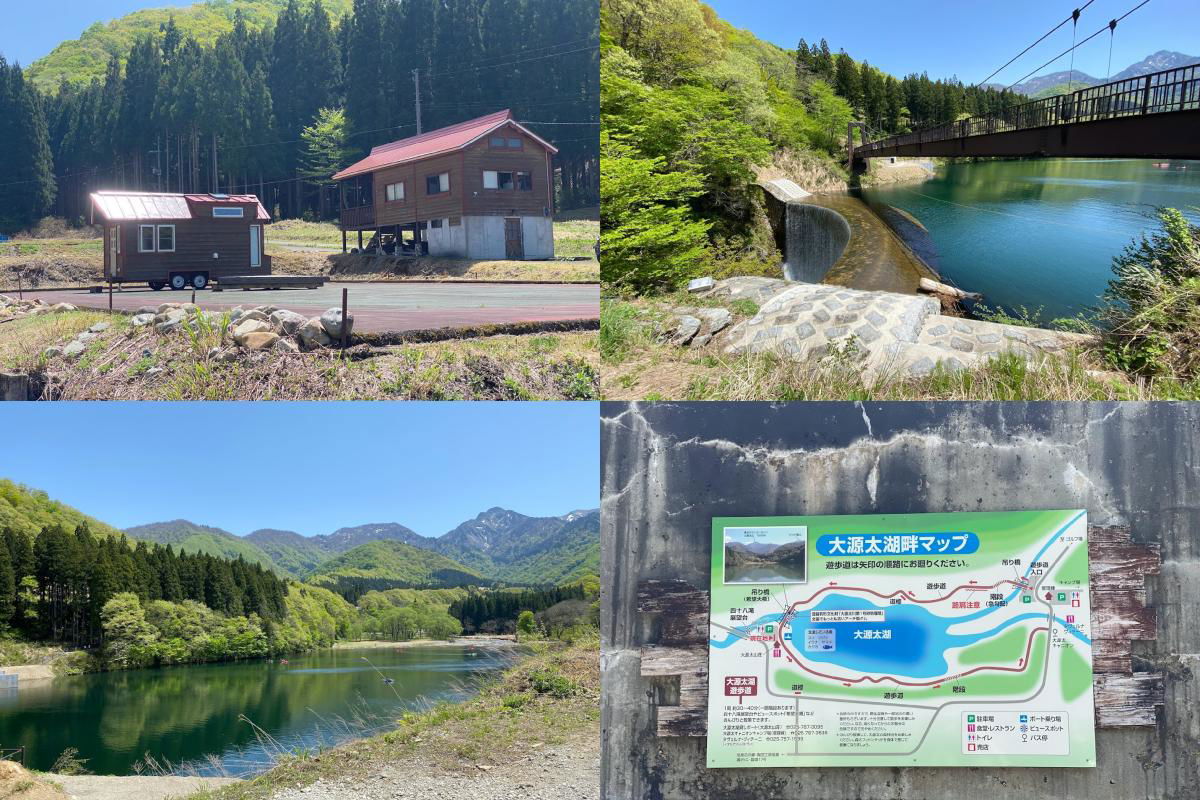
We chose a very special kind of accommodation: Glamping. This is "glamorous camping"—a mini-house in the middle of nature, within walking distance from a small lake. The toilet and shower are located in a building next door and not inside the accommodation itself.
Getting there is a bit tricky as public transportation is only partly available. Therefore, I recommend getting there by car.
When we arrived, we found that the Tiny House had not yet been prepared. Despite booking in advance on the provider's website and receiving confirmation, it seemed our reservation had not gone through. This meant we had to wait about two hours for everything to be ready. Despite the inconvenience, there were also positives: the owner spoke fluent English, which made communication very easy, and did his best to get everything ready for us as quickly as possible.
The accommodation includes a barbecue set for grilling, but you have to bring your own food. The nearest supermarket is about twenty minutes away by car.
Check-in starts from 3pm, and on departure day you should leave the Tiny House by 11am at the latest. The price for a two-person stay was a total of 52,500 yen for two nights.
Google Maps: https://goo.gl/maps/V6g3yKey4KsMZzYM6
A four-photo collage from a Japanese mountain lake area. Top left, a tiny house on wheels, dark timber with a red metal roof, sits on a paved lot next to a larger wooden cabin raised on posts, with a steep evergreen forest climbing the hillside behind both. Top right, a suspension bridge crosses a bright turquoise-green lake, and in the foreground a small weir spills water over a stone embankment. The bottom left is a wide view of the same calm lake ringed by forested mountains, with a few small boats out on the water under a clear sky. Bottom right, a close-up of an information sign on a concrete wall shows an illustrated lakeside trail map labeled in Japanese, with a red walking route circling the lake and icons for parking and facilities.
A four-photo collage from a Japanese mountain lake area. Top left, a tiny house on wheels, dark timber with a red metal roof, sits on a paved lot next to a larger wooden cabin raised on posts, with a steep evergreen forest climbing the hillside behind both. Top right, a suspension bridge crosses a bright turquoise-green lake, and in the foreground a small weir spills water over a stone embankment. The bottom left is a wide view of the same calm lake ringed by forested mountains, with a few small boats out on the water under a clear sky. Bottom right, a close-up of an information sign on a concrete wall shows an illustrated lakeside trail map labeled in Japanese, with a red walking route circling the lake and icons for parking and facilities.
Visible text in the image
大源太湖畔マップ
遊歩道は矢印の標識に沿って進んでください。
市有駐車場
樹海遊歩道
遊歩道
大源太湖
樹海遊歩道
大源太湖遊歩道
Restaurant Vitraux
Since our Tiny House had not yet been prepared on our arrival, we took the opportunity to eat at the restaurant “Vitraux.” This restaurant is close to Echigo Yuzawa station (the main Yuzawa train station) and offers western food with a Japanese twist.
Google Maps: https://goo.gl/maps/uFpBGxUpbNNjA5pz5
.jpg?width=1200)
A three-photo collage showcasing a restaurant in Niigata. The left panel is a night shot of the storefront: a black signboard reads Vitraux, with "Steak Pizza" underneath, over a rustic wooden entrance lit by warm lamps. Fairy lights wrap a small tree by the door, and a tall poster advertises beer, wine, steak, pizza, and pasta. In front sits a quirky little display piled with stacked firewood and blue-lit ornaments, like a tiny shrine of snacks. The right side shows the food. The top photo is a black rice bowl on a wooden tray, topped with slices of grilled steak scattered with chopped scallions, shredded egg, lettuce, tomato, and sautéed peppers. Below it, a pizza with a puffy, charred crust comes on a thick wooden board, covered in tomato sauce, folded slices of prosciutto, and curls of shaved cheese, with a knife resting beside it.
A three-photo collage showcasing a restaurant in Niigata. The left panel is a night shot of the storefront: a black signboard reads Vitraux, with "Steak Pizza" underneath, over a rustic wooden entrance lit by warm lamps. Fairy lights wrap a small tree by the door, and a tall poster advertises beer, wine, steak, pizza, and pasta. In front sits a quirky little display piled with stacked firewood and blue-lit ornaments, like a tiny shrine of snacks.
The right side shows the food. The top photo is a black rice bowl on a wooden tray, topped with slices of grilled steak scattered with chopped scallions, shredded egg, lettuce, tomato, and sautéed peppers. Below it, a pizza with a puffy, charred crust comes on a thick wooden board, covered in tomato sauce, folded slices of prosciutto, and curls of shaved cheese, with a knife resting beside it.
Visible text in the image
炭火料理
Vitraux
1-192 YUZAWA TOCHIOMACHI MINAMIUONUMA NIIGATA
Beer & Wine
Steak
Pizza
Pasta
À la carte
Mail
Echigo Hillside Park
Echigo Hillside Park is a large park with beautiful gardens and walking paths. It's open every day and usually the entrance fee is 450 yen. However, we were lucky enough to visit on a day when admission was free! The park is the perfect place to visit in spring, especially in May when the park is filled with beautiful flowers such as tulips.
Overall, Echigo Hillside Park is a lovely park for families or couples. With its huge green spaces and family-friendly activities, it's a great spot to spend a day or just a few hours to relax and enjoy nature.
Official website: https://echigo-park.jp/
.jpg?width=1200)
A six-photo collage of spring flowers at Echigo Hillside National Government Park in Niigata, Japan, all shot under clear blue skies. The center photo anchors the set: a cream-colored Dutch-style windmill with dark lattice blades standing behind beds of tulips and bright mixed flowers, with a cutout of a cow at the base. Around it, close-ups fill out the season. White snowball viburnum clusters glow against the sky in the top left. The top right shows long rows of red, white, and deep crimson tulips stretching toward wooded hills, with a few visitors walking among them. The bottom row has a close view of pink tulips with yellow pansies below, a dense flower bed of purple snapdragons, red and yellow pansies, and white daisies decorated with small painted animal figures, and finally a cluster of ruffled double tulips in hot pink edged with white.
A six-photo collage of spring flowers at Echigo Hillside National Government Park in Niigata, Japan, all shot under clear blue skies.
The center photo anchors the set: a cream-colored Dutch-style windmill with dark lattice blades standing behind beds of tulips and bright mixed flowers, with a cutout of a cow at the base. Around it, close-ups fill out the season. White snowball viburnum clusters glow against the sky in the top left. The top right shows long rows of red, white, and deep crimson tulips stretching toward wooded hills, with a few visitors walking among them. The bottom row has a close view of pink tulips with yellow pansies below, a dense flower bed of purple snapdragons, red and yellow pansies, and white daisies decorated with small painted animal figures, and finally a cluster of ruffled double tulips in hot pink edged with white.
Visible text in the image
No clearly readable text found in the image.
Teradomari Street Market (Sakana no Ameyoko)
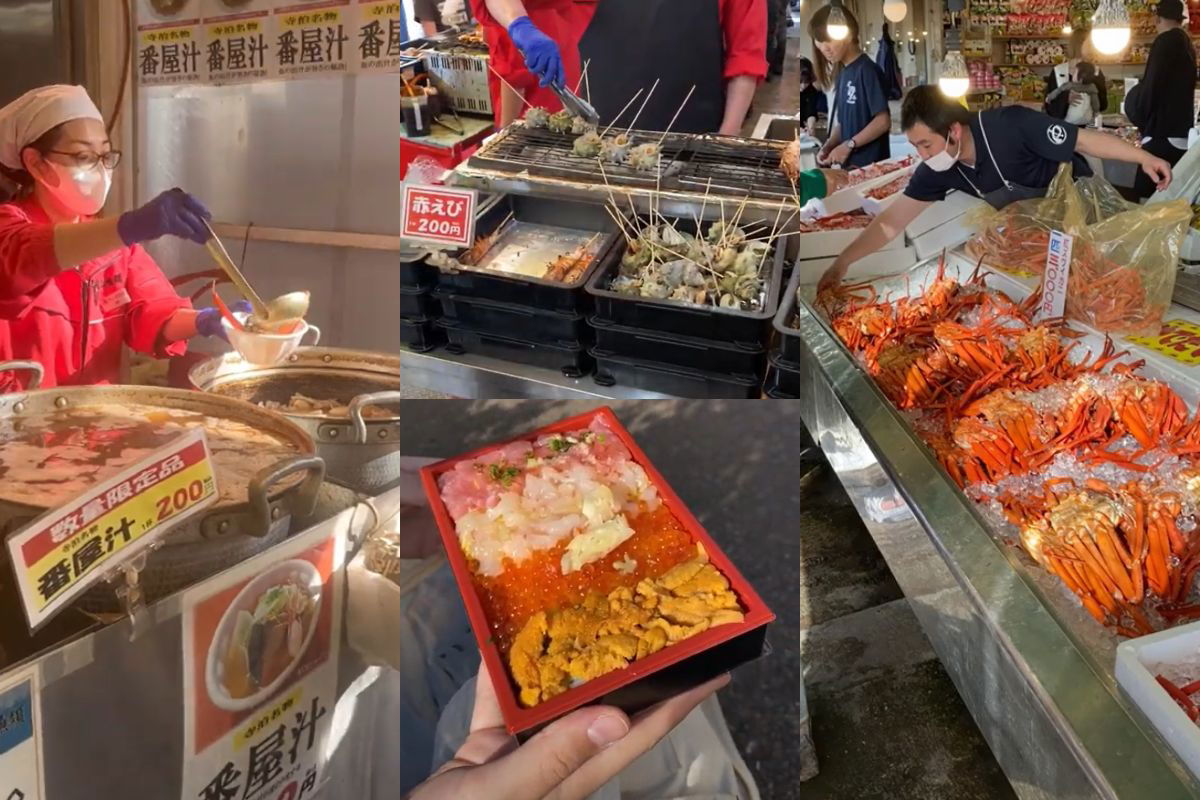
The Teradomari Fish Market is a key part of Niigata's local culture and a popular destination for tourists. Here you’ll find a wide variety of fresh fish, sold directly on site. It is said that fish from the nearby Sea of Japan tastes better because of its freshness compared to that from the Pacific—and I can definitely confirm that I really enjoyed the food here!
The many food stalls offer a range of fresh dishes—grilled fish is prepared in front of you, fish soup is served, and you can also find crab. We chose Donburi: a bowl of rice with two kinds of fish, uni (sea urchin), and fish roe. The market is right on the waterfront, so you can enjoy a beautiful view of the sea.
Getting to the market by public transportation can be challenging. Therefore, I recommend you travel by car. The fish market is open every day—holidays can affect opening times.
Google Maps: https://goo.gl/maps/r2ezbh1RSa1Zxdji7
A four-photo collage from a fish market in Niigata, Japan, showing vendors and seafood on sale. On the left, a woman in a red uniform, white head covering, and purple gloves ladles soup from a big metal pot into a paper cup. Signs around her stall read 番屋汁, a local fisherman's soup, priced at 200 yen. In the middle, a vendor in a red jacket grills shellfish and shrimp on skewers over a charcoal grill, with trays of raw scallops stacked below and a small red tag advertising red shrimp for 200 yen. Beneath that, a hand holds a red lacquered tray of kaisendon, a seafood rice bowl loaded with raw fish, bright orange salmon roe, and golden sea urchin. The right side shows a crab stall where a worker in a navy shirt and white face mask reaches over a bed of crushed ice piled with vivid orange crab legs, a yellow price sign standing among them.
A four-photo collage from a fish market in Niigata, Japan, showing vendors and seafood on sale. On the left, a woman in a red uniform, white head covering, and purple gloves ladles soup from a big metal pot into a paper cup. Signs around her stall read 番屋汁, a local fisherman's soup, priced at 200 yen. In the middle, a vendor in a red jacket grills shellfish and shrimp on skewers over a charcoal grill, with trays of raw scallops stacked below and a small red tag advertising red shrimp for 200 yen. Beneath that, a hand holds a red lacquered tray of kaisendon, a seafood rice bowl loaded with raw fish, bright orange salmon roe, and golden sea urchin. The right side shows a crab stall where a worker in a navy shirt and white face mask reaches over a bed of crushed ice piled with vivid orange crab legs, a yellow price sign standing among them.
Visible text in the image
番屋汁 番屋汁 番屋汁
番屋汁 1杯 200 ¥
番屋汁
赤えび ¥200円
Kakuda Misaki Lighthouse
The Kakuda Misaki Lighthouse stands on a picturesque viewpoint right by the sea. The idyllic landscape here is reminiscent of the beauty of Ireland—with gentle green hills and surrounded by rocky cliffs, you'll enjoy a beautiful view of the water—I recommend coming here at sunset for a perfect end to your day.
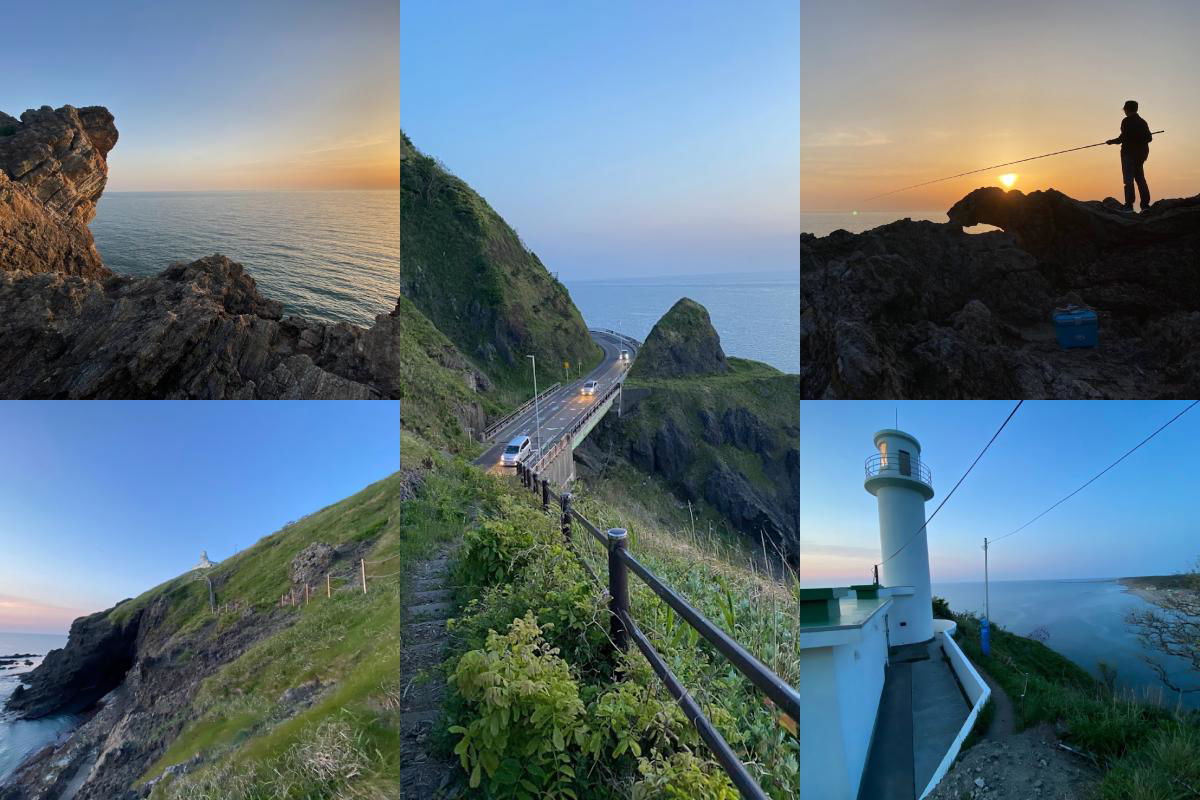
A collage of five coastal photos taken on the Sea of Japan shore in Niigata Prefecture, Japan, all shot around sunrise or sunset. The top left photo shows dark, jagged rock formations framing a calm sea under a soft orange sky. In the top right, a person stands silhouetted on rocks at sunset, holding a fishing rod out over the water with the sun low on the horizon and a blue bucket nearby. The tall center photo looks down a winding coastal road where a bridge carries cars with headlights on between steep green slopes and the ocean beyond. In the bottom left, a grassy headland glows in early morning light with a small white lighthouse perched on its crest. The bottom right photo shows that white lighthouse up close at dusk, standing on a cliff above the sea with its lantern room against a deep blue sky.
A collage of five coastal photos taken on the Sea of Japan shore in Niigata Prefecture, Japan, all shot around sunrise or sunset.
The top left photo shows dark, jagged rock formations framing a calm sea under a soft orange sky. In the top right, a person stands silhouetted on rocks at sunset, holding a fishing rod out over the water with the sun low on the horizon and a blue bucket nearby. The tall center photo looks down a winding coastal road where a bridge carries cars with headlights on between steep green slopes and the ocean beyond. In the bottom left, a grassy headland glows in early morning light with a small white lighthouse perched on its crest. The bottom right photo shows that white lighthouse up close at dusk, standing on a cliff above the sea with its lantern room against a deep blue sky.
Visible text in the image
No clearly readable text found in the image.
Yuzawa Kogen Ski Resort
Niigata Prefecture is a popular ski region that attracts many visitors in winter. It offers a variety of slopes and courses for skiers and snowboarders.
The Yuzawa Kogen Ski Resort is also a popular travel destination. For 1,400 yen, you can comfortably take the lift to the top. Once there, you'll also find a restaurant to refuel. If you visit the resort in summer, it's also a wonderful place to hike.
Even in summer, the ski resort offers various seasonal family activities such as summer bobsledding, where you hurtle down the mountain on a kind of toboggan. It's not just great fun for kids but for adults too. What really surprised me: even in May, there’s still a play area with snow!
Official website: https://www.yuzawakogen.com/
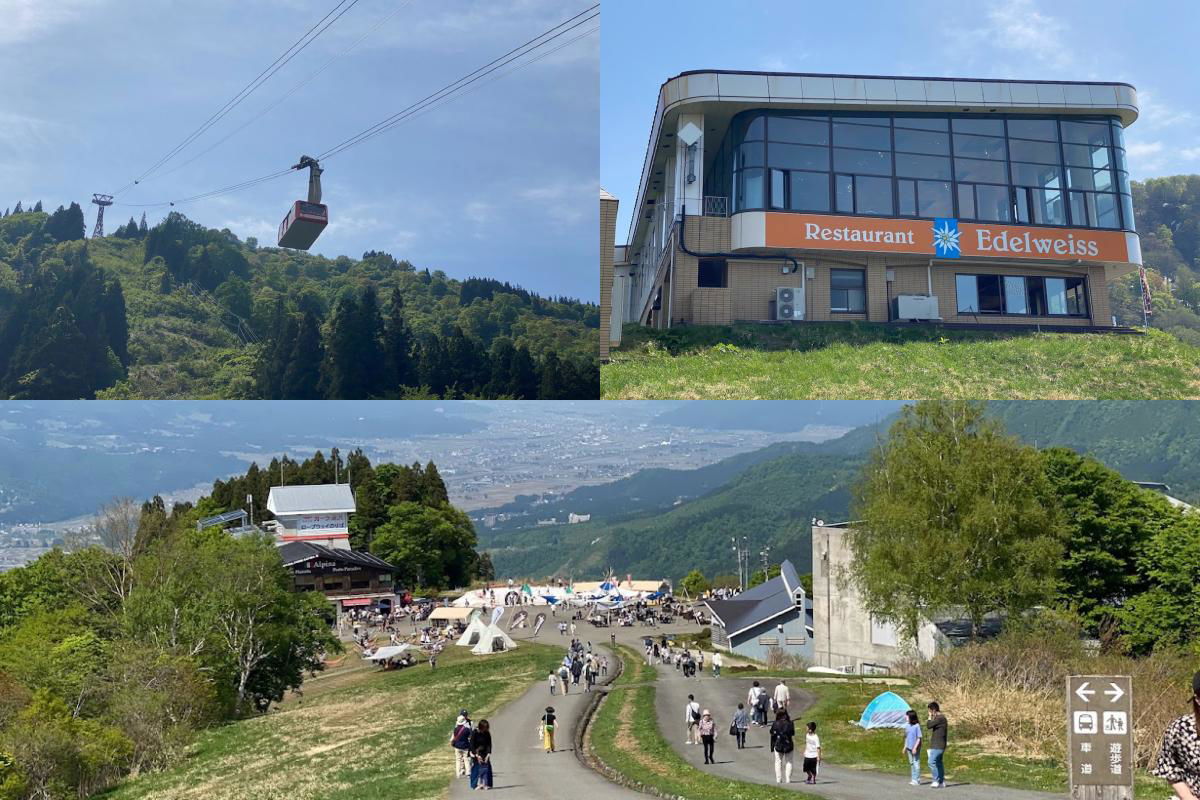
This is a three-photo collage from Yuzawa Ski Resort in Niigata, taken in the green season when the slopes are grassy rather than snowy. The top left shot shows a red-and-white ropeway cabin gliding over a dense forested hillside, its cables stretching up toward a support tower under a partly cloudy sky. The top right photo shows the resort's mountaintop restaurant building, a beige structure with a wall of curved windows and an orange banner reading "Restaurant Edelweiss" across the front, set on a bright green slope. The larger bottom photo looks down from the summit area over the resort grounds. Paved paths curve through the grass, crowded with visitors walking between lodges, small tents, and white canvas glamping tents pitched on the slope. Beyond the resort, the view opens onto a broad valley where a town spreads across the flatland, ringed by hazy green mountains.
This is a three-photo collage from Yuzawa Ski Resort in Niigata, taken in the green season when the slopes are grassy rather than snowy. The top left shot shows a red-and-white ropeway cabin gliding over a dense forested hillside, its cables stretching up toward a support tower under a partly cloudy sky. The top right photo shows the resort's mountaintop restaurant building, a beige structure with a wall of curved windows and an orange banner reading "Restaurant Edelweiss" across the front, set on a bright green slope.
The larger bottom photo looks down from the summit area over the resort grounds. Paved paths curve through the grass, crowded with visitors walking between lodges, small tents, and white canvas glamping tents pitched on the slope. Beyond the resort, the view opens onto a broad valley where a town spreads across the flatland, ringed by hazy green mountains.
Visible text in the image
Restaurant Edelweiss
Alpia
車道
遊歩道
Fishing in Niigata
Fishing is a very popular hobby in Japan. The Niigata area offers ideal conditions for fishing and we also tried our luck. Thanks to the many free parking spaces along the coastline, you'll quickly find the perfect fishing spot here.
We were able to catch small mackerel, which we later grilled in our accommodation using the included barbecue set.
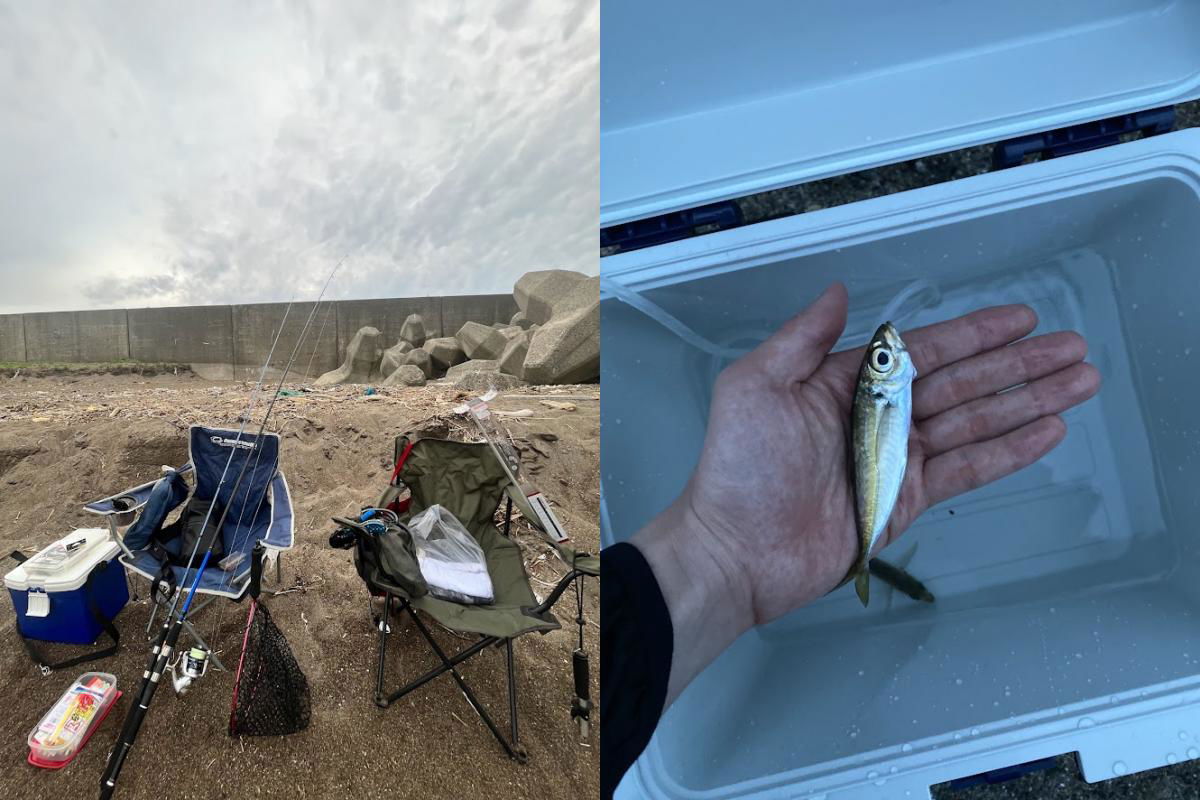
A two part photo from a fishing trip on the coast of Niigata, Japan. On the left, a fishing camp sits on sandy ground in front of a low concrete seawall and a pile of wave break blocks under a heavy overcast sky. Two folding chairs, one blue and one olive green, hold bags and gear, with fishing rods propped between them. A blue cooler, a red tackle box with lures, and a black landing net rest on the sand. On the right, the catch: an open hand holds a small silvery fish with a big eye and a forked dark tail, held over a white cooler box with a shallow pool of water at the bottom.
A two part photo from a fishing trip on the coast of Niigata, Japan. On the left, a fishing camp sits on sandy ground in front of a low concrete seawall and a pile of wave break blocks under a heavy overcast sky. Two folding chairs, one blue and one olive green, hold bags and gear, with fishing rods propped between them. A blue cooler, a red tackle box with lures, and a black landing net rest on the sand.
On the right, the catch: an open hand holds a small silvery fish with a big eye and a forked dark tail, held over a white cooler box with a shallow pool of water at the bottom.
Visible text in the image
No clearly readable text is present in the image.
Kiyotsu Gorge Tunnel
Kiyotsu Gorge is undoubtedly one of the most beautiful landscapes in Niigata. The gorge is surrounded by lush green forests—with a river winding through it creating a breathtaking setting.
The Kiyotsu Gorge Tunnel is located in this gorge and is a famous spot for tourists and locals alike. From here, you can marvel at the beauty of the gorge in its full splendor and there are regularly special art exhibitions. What we unfortunately didn’t know: you need a ticket to enter the tunnel! The ticket costs 1,000 yen and must be bought online in advance. But—a relaxing foot bath is included!
I recommend getting here by car, as there is very little public transit.
Official website (can be switched to English): https://nakasato-kiyotsu.com/
Opening hours: 9:00am–4:00pm daily
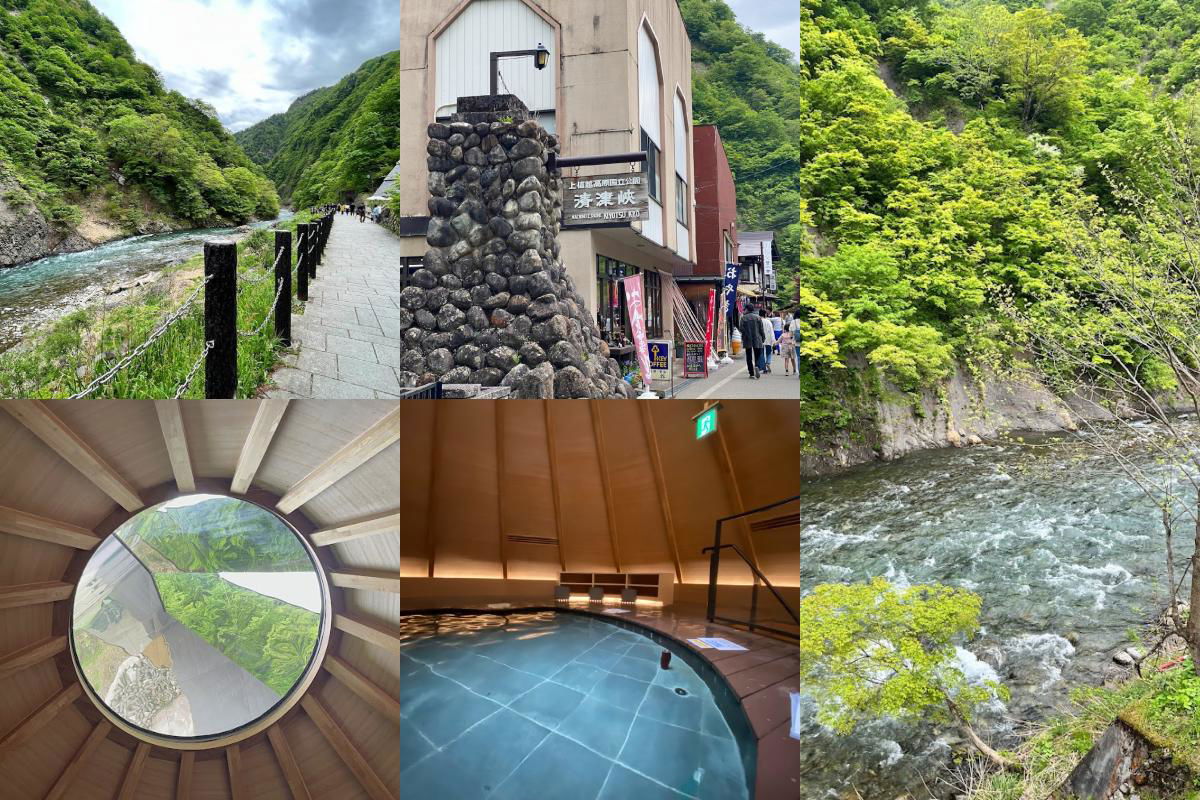
A five-photo collage from Kiyotsu Gorge in Niigata, Japan. Three panels show the gorge itself: a green-tinted river rushing between steep mountains thick with spring foliage, a paved riverside walkway where visitors stroll behind posts and chain railings, and a close view of the rapids breaking white over rocks below sunlit trees. The other two photos cover the attractions at the site. One shows the tunnel lookout, a round opening framed in pale wooden slats that looks straight out over the gorge and river far below. The other shows a circular indoor bath with milky blue water under a curved, warmly lit wooden ceiling, a small red bucket floating on the surface. A fifth panel captures the station building at the trail entrance, marked by a tall rough-stone chimney and a wooden sign reading 清津峡, Kiyotsu Gorge, with red noren curtains, small shop stalls, and a few visitors on the street outside.
A five-photo collage from Kiyotsu Gorge in Niigata, Japan. Three panels show the gorge itself: a green-tinted river rushing between steep mountains thick with spring foliage, a paved riverside walkway where visitors stroll behind posts and chain railings, and a close view of the rapids breaking white over rocks below sunlit trees.
The other two photos cover the attractions at the site. One shows the tunnel lookout, a round opening framed in pale wooden slats that looks straight out over the gorge and river far below. The other shows a circular indoor bath with milky blue water under a curved, warmly lit wooden ceiling, a small red bucket floating on the surface. A fifth panel captures the station building at the trail entrance, marked by a tall rough-stone chimney and a wooden sign reading 清津峡, Kiyotsu Gorge, with red noren curtains, small shop stalls, and a few visitors on the street outside.
Visible text in the image
上信越高原国立公園
湯畑展望台
YUBATAKE OBSERVATO
The Regional Specialty: Hegi Soba
As an enthusiastic foodie, I just had to try the local specialty. It’s called “Hegi Soba” and is a delicious soba noodle dish, topped with Nori (dried seaweed). The bite-sized noodles are served on a tray called “Hegi” and are cold, giving them a refreshing touch.
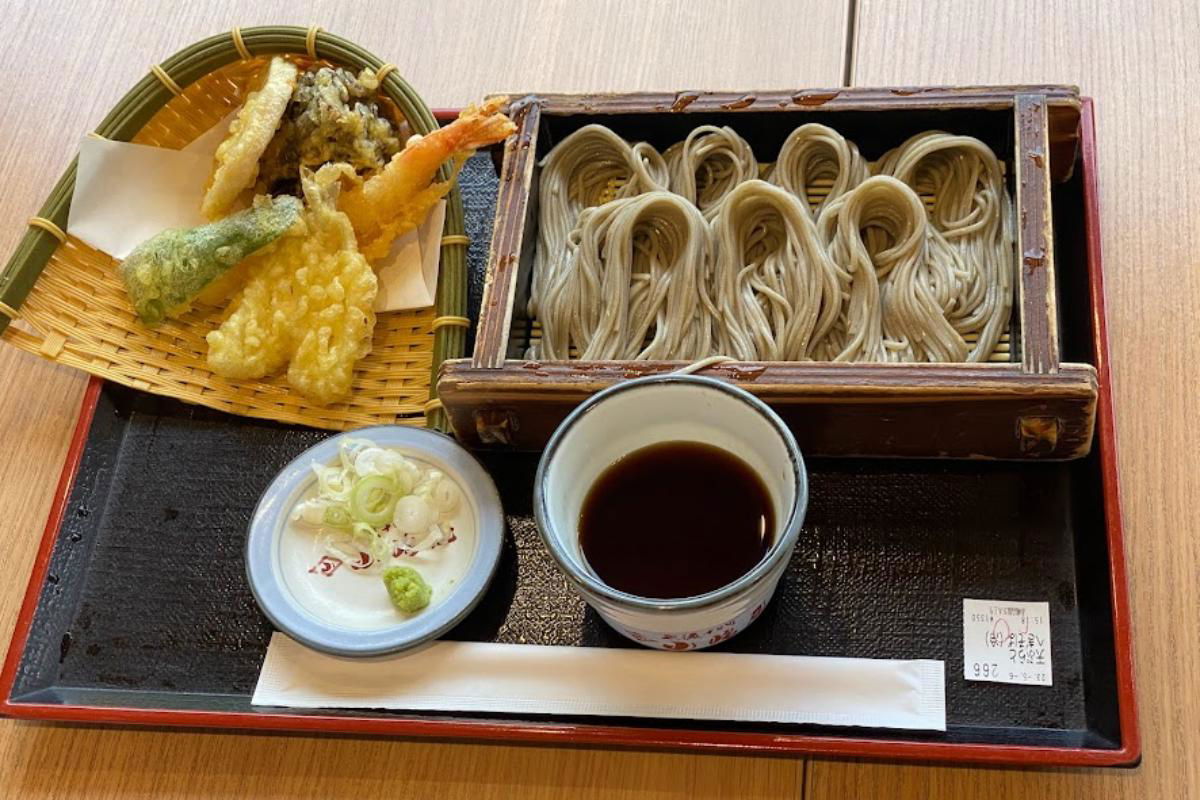
A cold soba set served on a black lacquered tray with red trim, photographed from above on a light wooden restaurant table. The gray-brown noodles sit in neat loops inside a rectangular wooden box lined with bamboo, the signature presentation for hegi soba, a Niigata specialty. Next to the box, a woven bamboo basket holds golden tempura, including a whole shrimp and pieces of battered vegetable. A small white dish holds sliced scallions, wasabi, and a mound of grated condiment for mixing into the dipping sauce, which comes in a ceramic cup of dark soy-based broth set in front of the noodles. A pair of chopsticks in a paper sleeve lies across the bottom edge of the tray.
A cold soba set served on a black lacquered tray with red trim, photographed from above on a light wooden restaurant table. The gray-brown noodles sit in neat loops inside a rectangular wooden box lined with bamboo, the signature presentation for hegi soba, a Niigata specialty. Next to the box, a woven bamboo basket holds golden tempura, including a whole shrimp and pieces of battered vegetable. A small white dish holds sliced scallions, wasabi, and a mound of grated condiment for mixing into the dipping sauce, which comes in a ceramic cup of dark soy-based broth set in front of the noodles. A pair of chopsticks in a paper sleeve lies across the bottom edge of the tray.
Visible text in the image
天せいろ
999
21-3-5
Conclusion of the Niigata Trip
Niigata Prefecture is an exceptional destination with spectacular scenery that has its charms in every season. From beautiful gardens and walking paths to ravines and a picturesque viewpoint by the sea, Niigata offers a wealth of sights. Whether in spring with all the blossoms, hiking in the summer mountains, admiring the colorful fall foliage, or as a popular ski area in winter—Niigata has something for everyone.
If you plan a trip to Niigata, keep in mind that public transportation in the countryside is rather limited. Therefore, I recommend coming by car to stay flexible.
Explore Niigata in the afternoon – you’ll learn about the history, eat really good sushi, and try delicious sake with a local guide.
*Affiliate link: If you book an activity at viator.com via my widget or link, I’ll receive a small commission. There are no additional costs for you and you support my blog. Thank you so much and enjoy your trip (^_^)


Comments