Table of contents:
TL;DR
Natto, a traditional Japanese dish made from fermented soybeans, has been cherished for over a thousand years, renowned for its numerous health benefits such as lowering blood pressure and aiding in detoxification. The fermentation process, facilitated by straw bacteria, gives Natto its unique slimy texture and characteristic odor, often likened to strong European cheeses. Commonly enjoyed over rice or sushi, it can also be seasoned with soy sauce, green onions, eggs, or kimchi. While available in frozen packs at Japanese and Korean supermarkets in Germany, Natto is also sold on platforms like Amazon, reflecting its growing popularity outside Japan. Although its taste and consistency may be unconventional for some, many Japanese people are devoted fans, making efforts to introduce Natto to wider markets in Europe and America amid declining domestic consumption.
Traditional Japanese Dish

A white bowl filled with plain white rice, topped with natto, the Japanese dish of fermented soybeans. The beans are brown and clump together in their characteristically sticky, stringy way, mounded over the center of the rice. Thinly sliced scallions in bright green rings are scattered generously over the top. The bowl sits on a plain white surface, photographed from directly above, so the whole frame reads as a simple, clean shot of the finished dish.
A white bowl filled with plain white rice, topped with natto, the Japanese dish of fermented soybeans. The beans are brown and clump together in their characteristically sticky, stringy way, mounded over the center of the rice. Thinly sliced scallions in bright green rings are scattered generously over the top. The bowl sits on a plain white surface, photographed from directly above, so the whole frame reads as a simple, clean shot of the finished dish.
Visible text in the image
No text is clearly readable in the image.
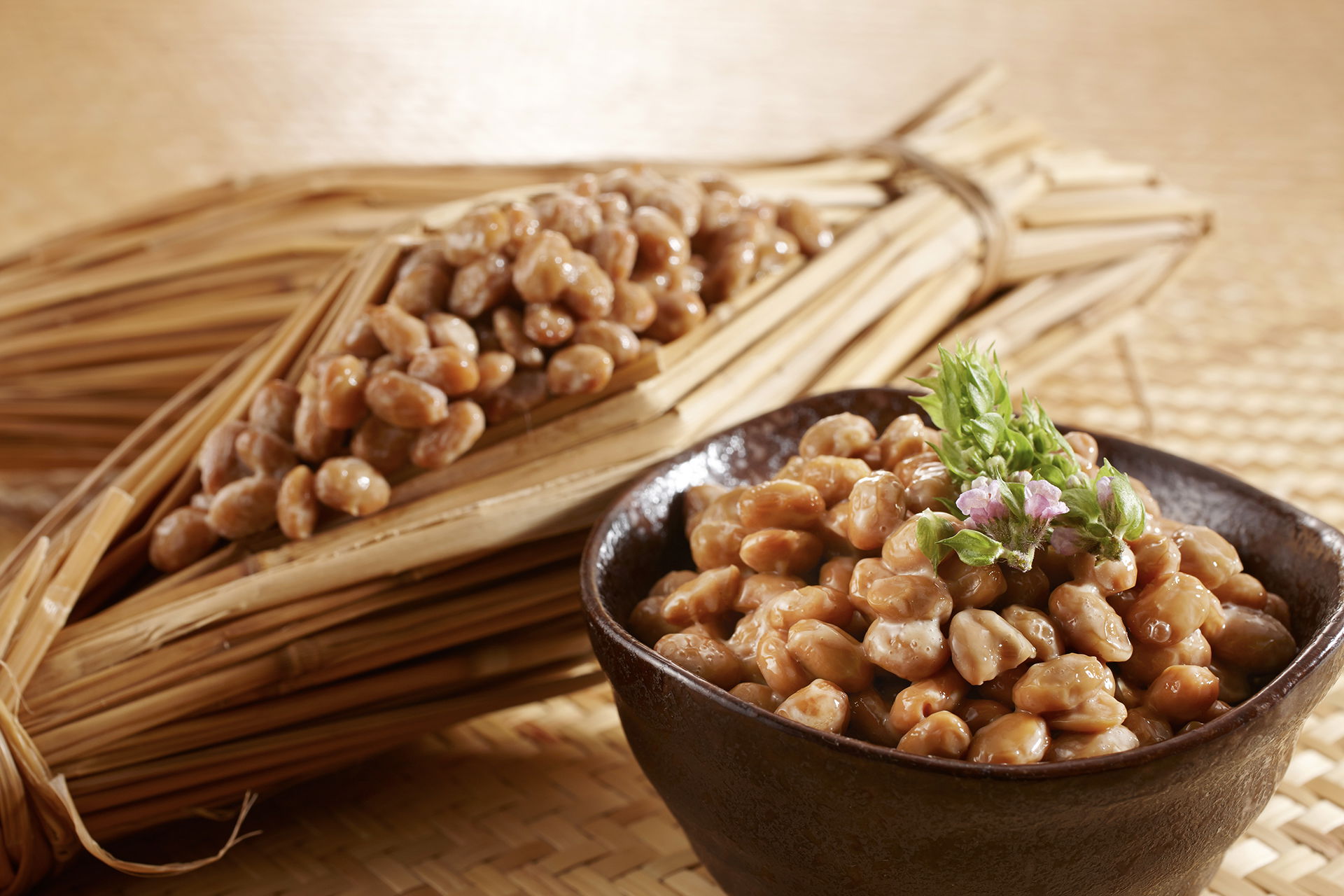
Natto (Nattō, Japanese: 納豆 or なっとう) is a Japanese dish known for over 1000 years, which consists of fermented soybeans. Natto is particularly known for its healthy effects on the body. They have been proven to lower blood pressure, help with osteoporosis and stomach ulcers and have detoxifying effects. Many Japanese swear by these healthy soybeans and some can't live without them.
The Fermentation
The fermentation makes the soybeans special. The straw bacteria contained in the rice straw ferment the soybeans, making them durable. This creates a slime that surrounds the beans and pulls the typical threads. That's why you learn how to eat Natto correctly from childhood. It's not easy to control the threads and the slippery surface of the beans. In addition, the strong smell of the Natto takes some getting used to. It's comparable to a good European stinky cheese.
How to eat Natto
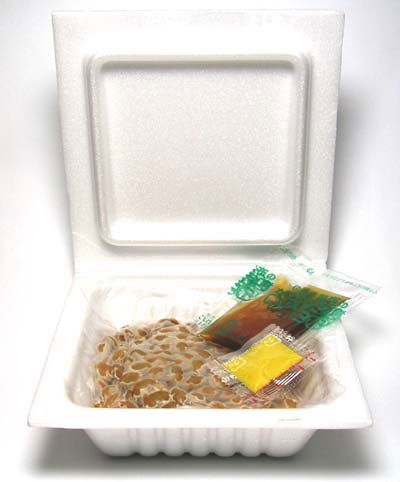
A white styrofoam container sits open against a plain white background, its lid propped upright. Inside rests natto, fermented soybeans recognizable by their tan color and the thin, sticky threads stretching between them. Two small sauce packets lie on top: a clear sachet of dark soy sauce with green Japanese printing and a small yellow packet of mustard, the condiments typically sold with this traditional Japanese dish.
A white styrofoam container sits open against a plain white background, its lid propped upright. Inside rests natto, fermented soybeans recognizable by their tan color and the thin, sticky threads stretching between them. Two small sauce packets lie on top: a clear sachet of dark soy sauce with green Japanese printing and a small yellow packet of mustard, the condiments typically sold with this traditional Japanese dish.
Visible text in the image
No clearly readable text.
The fermented soybeans, which you can buy in Germany, can be found in the freezer. Each Natto package contains small soy and mustard sachets that you can stir into the Natto when preparing them. Natto is often served with rice or sushi. Other seasonings include soy sauce, spring onions, egg or kimchi. The health benefits have been known for a very long time.
Where to buy Natto
Despite being imported from Japan, Natto is relatively inexpensive. 100g of Natto costs between 1 and 2 euros, depending on the supermarket. You can buy them in the freezer at Japanese or Korean supermarkets. Usually they are 3 small Natto packages tied together with a red ribbon.
Buy Natto on Amazon
Alternatively, Amazon offers fermented soybeans. This clearly shows that Natto is experiencing a trend. Give it a try yourself.
What do fermented soybeans taste like?
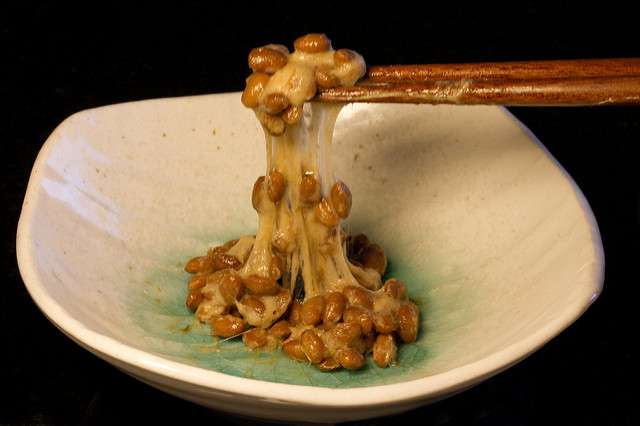
A small white ceramic bowl with a soft green glaze inside holds natto, the Japanese dish of fermented soybeans. A pair of wooden chopsticks lifts a clump of the brown beans from the bowl, stretching long, sticky, thread-like strands between the lifted portion and the rest below. The strings are the defining feature of the dish, and here they hang dramatically against a plain black background that makes the bowl and beans stand out.
A small white ceramic bowl with a soft green glaze inside holds natto, the Japanese dish of fermented soybeans. A pair of wooden chopsticks lifts a clump of the brown beans from the bowl, stretching long, sticky, thread-like strands between the lifted portion and the rest below. The strings are the defining feature of the dish, and here they hang dramatically against a plain black background that makes the bowl and beans stand out.
Visible text in the image
[No readable text in image]
Natto is very acquired and certainly not everyone's taste. You not only have to get used to the smell and taste, but also to the slimy consistency. The fermented soybeans pull long threads, which are created by the fermentation. For some people, the smell and appearance alone are not inviting to try. On the other hand, there are those who love Natto above all else. Many Japanese swear by these healthy beans and eat them frequently with rice. But due to the decline of the Japanese population, Natto consumption in Japan has also declined. For this reason, Japanese Natto manufacturers are trying to build up an export market for Natto abroad (Europe and America).
Who knows, maybe you'll find Natto in regular supermarkets soon
Comments
also, today I ate natto with jasmine rice for the very first time in my 70 years of life, seasoned with soy sauce and fish sauce. I thought it tasted excellent—I'm definitely going to eat it again. The flavor of the fermented beans is somehow ?, I would say it tastes like vanilla with something else ?, floral, I don't really know how to describe it, it just tastes amazing. I love Thai food, but I've never had anything like this there. My wife tried one natto bean and immediately said "yuck". Well, I like it, and I've got the natto bacillus and am starting a natto batch. Greetings, Paul
Hi Paul, great that you like Natto. Unfortunately, many people are put off by the many little strings :D Best regards, Ryu
hi everyone. it is a great site. thanks to all.
Hello, Thank You :)
Hi, I have read a lot about natto, that it smells very strong and also has an intense flavor. But since I like to try everything at least once, I decided to get some. And what a surprise—the natto had a light coffee aroma. It even tasted slightly like coffee. My question is: what is natto really supposed to smell and taste like? Because according to the media, it should apparently be quite a bit stronger (to put it mildly). Or was it perhaps not ripe yet? It definitely formed long threads.
Hallo Marcel, basically, Nattos taste and smell like beans that have been slightly fermented. So, the taste can also go well with coffee. I think things are really exaggerated in the media and especially on YouTube. After all, it brings more clicks... Best regards, Ryu from RyuKoch
Can you also ferment white beans, red beans, or giant beans with the natto bacillus? I am allergic to soy.
I would also like to try this NATTO, where can I get this fermentation starter and what is it called? I would also like a small recipe.
Hello Peter,
Making natto yourself is really difficult, since you need the Bacillus bacteria. I prefer to buy natto, since it’s also ready to eat without any additives :)
Best regards, Ryusei
I buy my natto from Makrobiotikversand and find that it tastes and smells a bit like spicy cheese. Very delicious with rice and a little soy sauce.
Hallo Herbert, I'm glad that you actually like Natto :) Best regards, Ryusei
I tried it today and except for the packaging (it came in styrofoam...) it was simply excellent!! I love it <3
I'm really glad you liked it! :) By the way, natto always comes in a Styrofoam package.