
Inhaltsverzeichnis:
TL;DR
Okome ist eine Plattform, die sich mit den verschiedenen Arten von Reis, insbesondere dem japanischen Rundkornreis, beschäftigt. Reis, auch bekannt als Gohan, ist ein Grundnahrungsmittel in der asiatischen Küche. In Japan wird überwiegend Rundkornreis verwendet, der durch seine klebrige Konsistenz zum Greifen geeignet ist und ideal für Sushi und Milchreis ist. Die Seite erklärt auch die Unterschiede zwischen Langkornreis, der in der chinesischen und indischen Küche verbreitet ist und nicht klebt, sowie speziellen Reissorten wie Mochigome, der für Mochi und Süßigkeiten verwendet wird, und Kodaimai, der für besondere Anlässe reserviert ist. Okome bietet somit einen fundierten Einblick in die Vielfalt und Bedeutung von Reis in der japanischen Küche.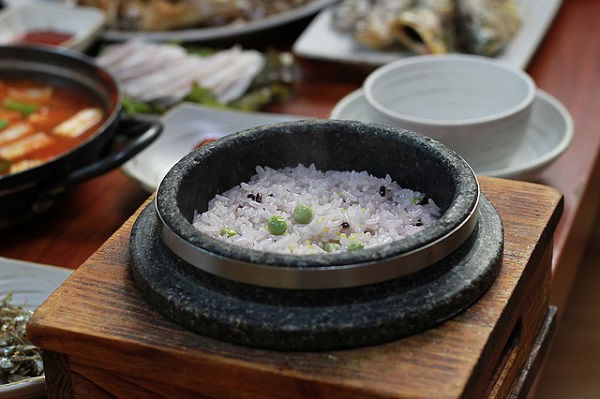
A rough gray stone bowl filled with steamed white rice sits front and center on a square wooden trivet. The rice is mixed with bright green peas and small dark beans, and a thin metal ring lines the rim of the stone. Around it the table is set for a shared meal: to the left a black stone pot holds a red, bubbling stew with tofu, and behind the bowl there is a plain white rice bowl on a saucer, a plate of sliced pink fish, and platters of cooked whole fish at the back of the table. Small side dishes peek in at the edges. The spread has the feel of a Korean or Japanese home-style dinner, with the hot rice pot as the centerpiece.
A rough gray stone bowl filled with steamed white rice sits front and center on a square wooden trivet. The rice is mixed with bright green peas and small dark beans, and a thin metal ring lines the rim of the stone. Around it the table is set for a shared meal: to the left a black stone pot holds a red, bubbling stew with tofu, and behind the bowl there is a plain white rice bowl on a saucer, a plate of sliced pink fish, and platters of cooked whole fish at the back of the table. Small side dishes peek in at the edges. The spread has the feel of a Korean or Japanese home-style dinner, with the hot rice pot as the centerpiece.
Sichtbarer Text im Bild
*No clearly readable text is present in the image.*
(O)kome auf japanisch Reis ist ein Hauptbestandteil der asiatischen Küche. Üblicherweise wird in Japan der Rundkornreis verwenden, hingegen in China und Indien der Langkornreis verwendet wird. Wie schon eben angeschnitten gibt es verschiedene Arten von Reis. Insgesamt ca. 120.000 Arten. Dennoch kann man zwischen 2 Grundarten unterscheiden. Einmal den Langkornreis er klebt nicht und wird in der Chinesischen und Indischen Küche benutzt. Zum anderen gibt es noch den Rundkornreis. Dieser klebt und ist dadurch in Deutschland auch als Milchreis bekannt. In Japan oder auch Korean sowie Thailand findet dieser Reis an Anwendung.
Lang-/ Spitzkornreis
Lang-/ spitzkornreis, dieser ist in der Chinesischen Küche sehr verbreitet. Wie der Name den Reis schon beschreibt ist dieser Reis länglich und Spitz. Die besondere Eigenschaft des Lang-/ Spitzkornreises ist das dieser selten klebt. Somit ist dieser z.B für Sushi nicht geeignet aber für eine Risotto oder Curry schon.
Rundkornreis
Die zweite Art ist Rund und klebt meistens. In der japanischen Küche wird fast ausschließlich dieser Reis benutzt. Durch die Klebeigenschaft ist dieser auch sehr leicht zu greifen. Außerdem ist Sushi mit diesen Reis möglich, da die Stärke die Reiskörner zusammenkleben lässt. In Milchreis wird ebenfalls Rundkornreis benutzt.
Verschiedene Reisarten in Japan.
Reiswein (Sake)
Diese Reissorte wird für Sake (Reiswein) gebraucht.
Mochigome
Mochigome ist ein trüber Reis und wird meist zerstampf und als Mochi oder Manjou verzehrt. Oftmals wird Mochi geröstet und mit Nori(Alge) und Shoyou(Sojasauce) verzerrt. Außerdem kann Mochi gesüßt auch als Süßspeise zubereiten. Eine Bekannte Süßigkeiten aus Mochireis wäre Beispielsweise Dango.
Kodaimai
Kodaimai wird meist mit normalen Reis gemischt, der der rote Reis sehr teuer ist. Außerdem wird dieser Reis nur für Spezielle Ereignisse gegessen.
Kommentare
Sehr informativ. Danke!
Hey Micha, vielen Dank für dein Feedback! Liebe Grüße Ryusei
Kommentar wurde noch nicht verifiziert.